

There are only two things in life that are unavoidable — death and taxes. And sometimes, it’s the latter that scares us more.
A new study from WalletHub shows that the share of income going toward state and local taxes varies widely across the country, with some residents paying nearly three times more than others depending on their state.
“It’s easy to be dismayed at tax time when you see just how much of your income you lose. Living in a state with a low tax burden can alleviate some of that stress,” said Chip Lupo, an analyst at WalletHub. “Some states charge no income tax or no sales tax, although all states have some form of property taxes and excise taxes.”
Instead of focusing on tax rates, which can vary based on income and personal circumstances, the study looks at overall “tax burden” — the percentage of total personal income that goes to taxes like property, income, and sales.
Which States Pay the Most — and the Least?
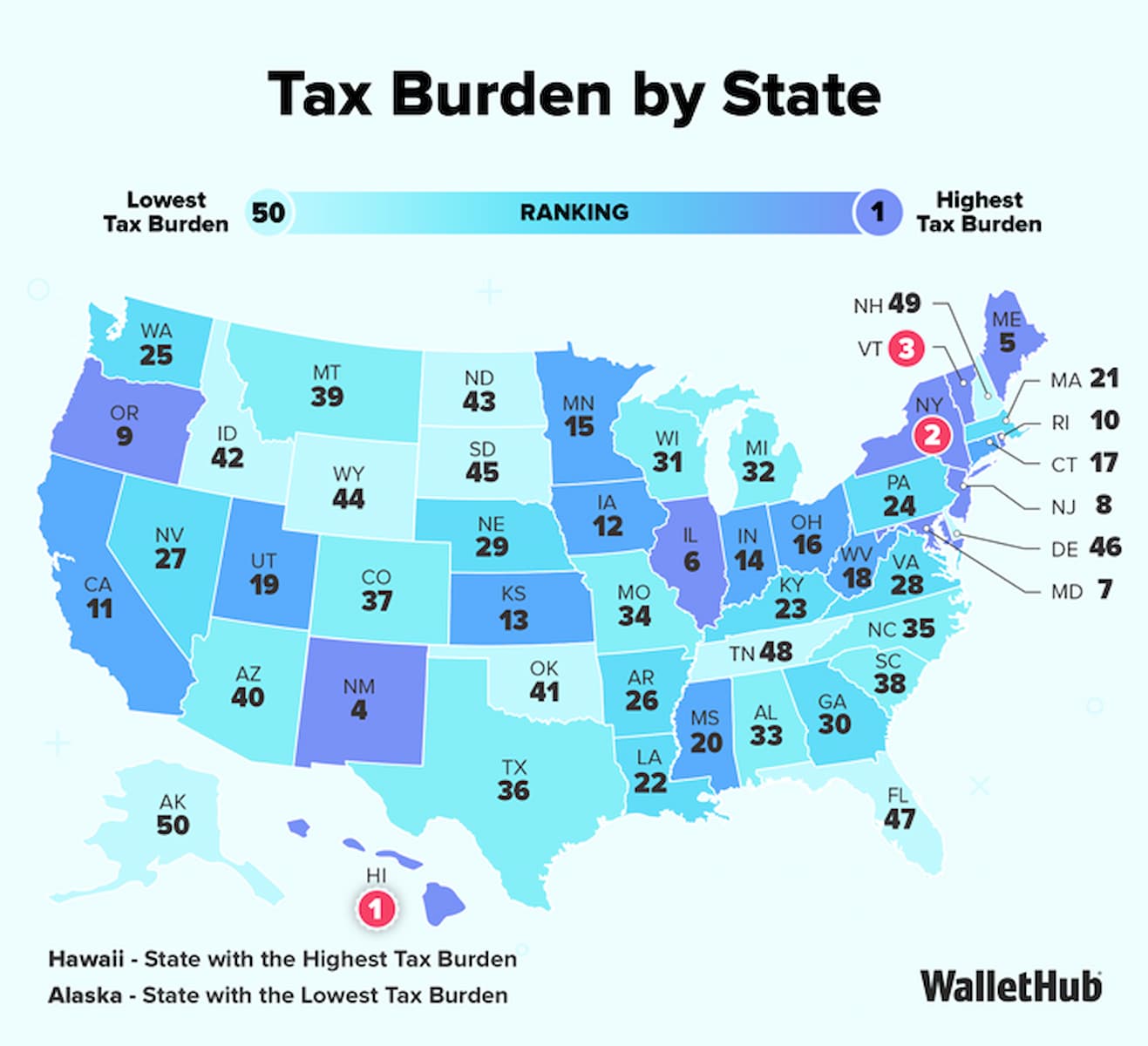
According to the report, Hawaii has the highest overall tax burden in the U.S., with residents paying more than 13% of their income toward state and local taxes. New York follows at just over 12%, while Vermont ranks third at around 11%.
At the other end of the spectrum, Alaska has the lowest tax burden, with residents paying less than 5% of their income. One of the main reasons is simple: the state does not collect income tax.
That puts it in a small group of states — including Texas, Florida, and Nevada — where residents don’t pay state income tax at all, significantly lowering their overall tax burden.
“Oregon has the highest individual income tax burden, while Vermont has the highest property tax burden, and Hawaii has the highest sales and excise tax burden. When considering all types of taxes together, Hawaii has the highest overall burden,” said Lupo.
Where Are Income Taxes the Highest — and Where Are They Zero?
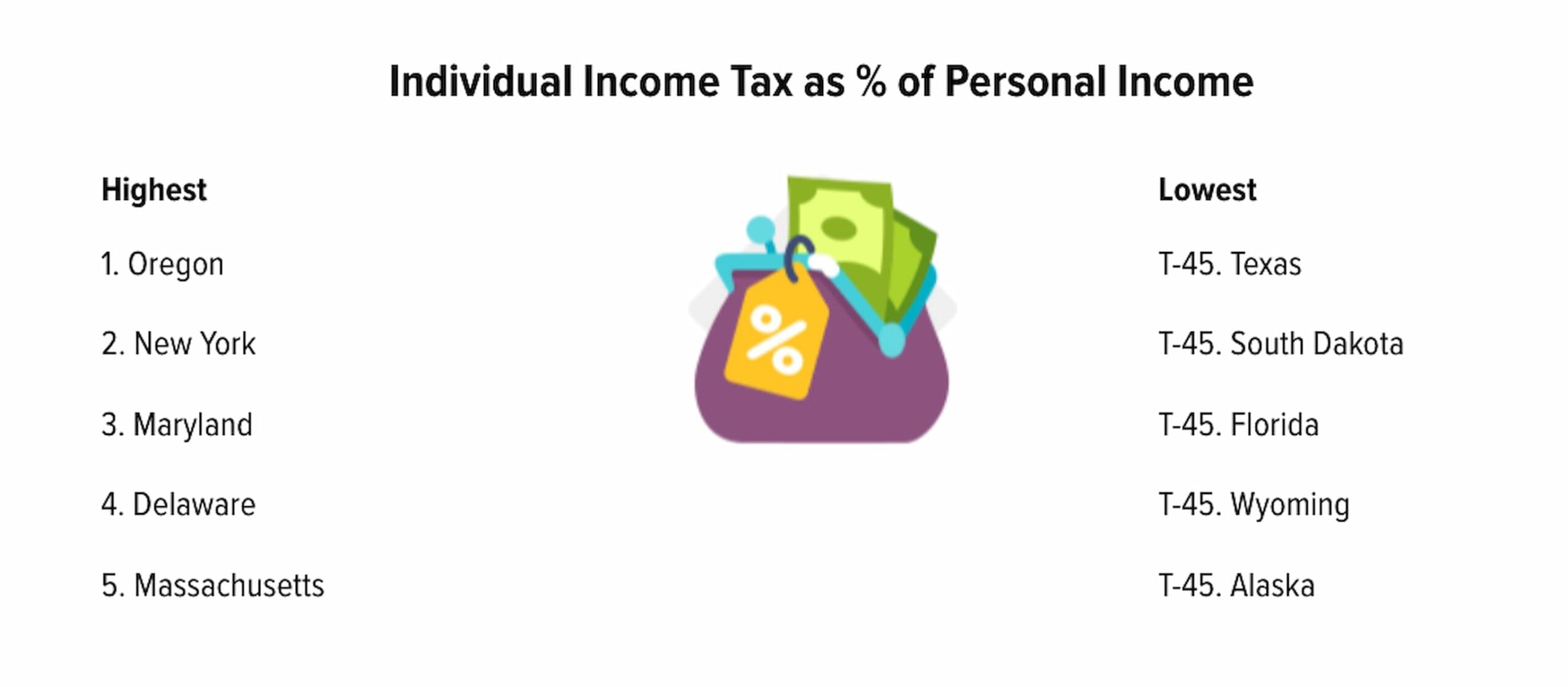
Income taxes vary dramatically depending on the state. Oregon has the highest income tax burden in the country, with residents paying about 4.8% of their income toward state and local income taxes alone.
Meanwhile, several states don’t charge any income tax at all, including Alaska, Florida, Nevada, South Dakota, Tennessee, Texas, and Wyoming, making them especially appealing for people looking to keep more of their paycheck.
Which States Rely the Most on Property Taxes?
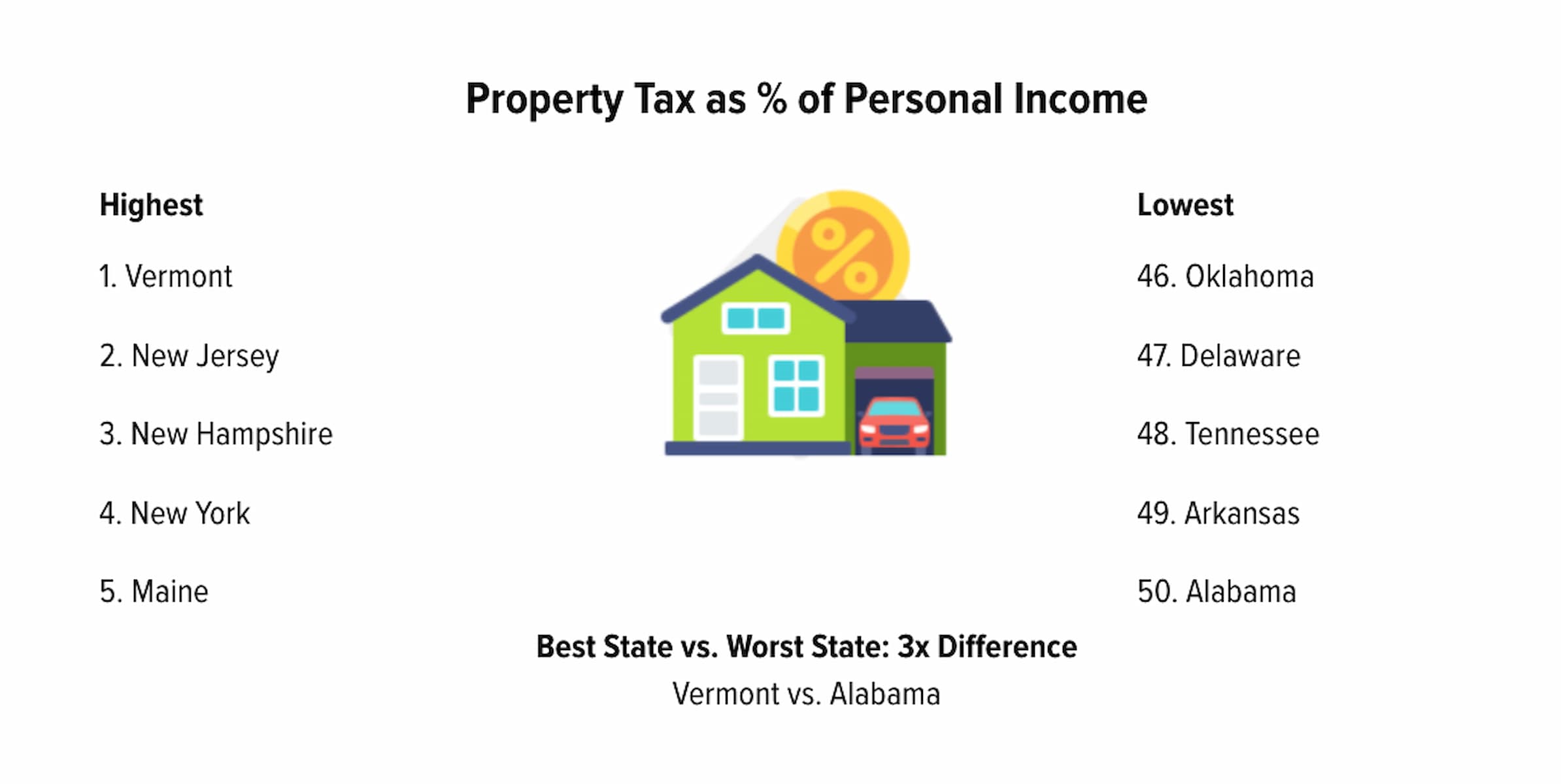
Property taxes are another major piece of the puzzle — and in some states, they carry the biggest weight. Vermont has the highest property tax burden, with residents paying around 4.9% of their income toward property taxes. On the other end, Alabama has the lowest, at just about 1.4%.
Since every state collects property taxes in some form, this category tends to hit homeowners across the board, regardless of where they live. But for Vermonters, it certainly hits a little harder.
More From Cheapism

- 1 in 3 Americans Spend Their Tax Refund Within a Week — A new tax refund survey shows most Americans spend their refunds in less than a week, revealing top spending habits and trends.
- The Best (and Worst) States for Income Tax — Every state has its own specific policy — with eight states not charging any income tax at all.
- 28 Ways Your Tax Return Could Trigger an IRS Audit — We spoke to several tax experts and found out just what the IRS is looking for when it’s considering an audit and how you can trigger an audit through mistakes, oversights, and not-so-brilliant deductions.