Before smartphones, streaming services, and social media feeds, having fun usually meant getting out of the house. For young adults in the 1950s, an evening might involve piling into a car, meeting friends at a diner, catching a movie at the drive-in, or spending a few hours dancing at a local hop.
The decade was also a turning point for American youth culture. Rock ’n’ roll gave younger listeners music that felt like their own, while growing car ownership offered a new level of independence. Bowling alleys, roller rinks, beaches, amusement parks, and soda fountains provided plenty of places to see friends — or hopefully run into someone you had a crush on.
Of course, the 1950s weren’t equally carefree for everyone, and access to many public spaces was shaped by segregation and other social barriers. Still, these 12 activities offer a glimpse at how many American teens and young adults spent their free time during the decade.
Going to Drive-In Movies
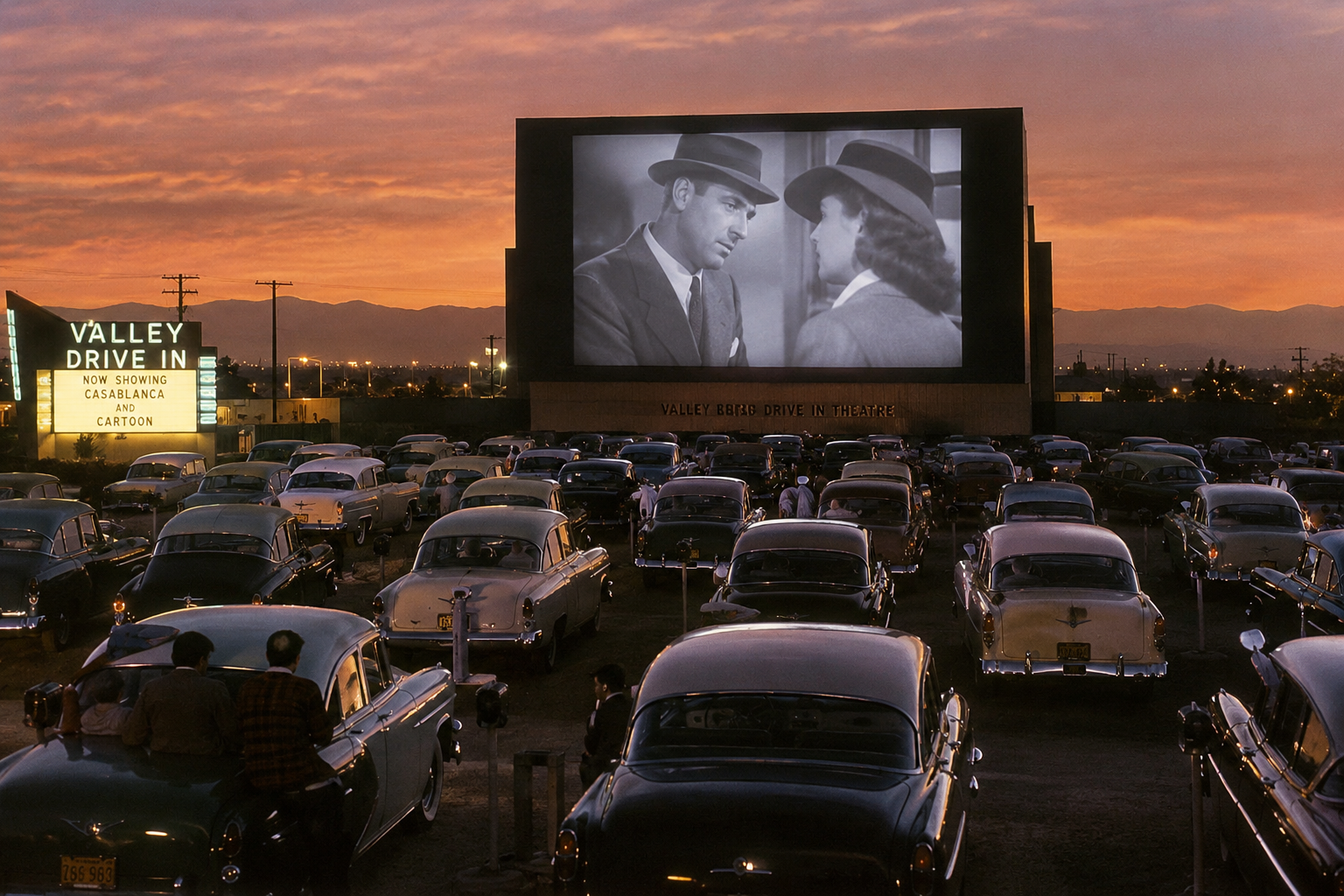
Few forms of 1950s entertainment combined as many teenage priorities as the drive-in: movies, cars, friends, snacks, and a little privacy from parents. Drive-in theaters expanded dramatically during the postwar years, with cars parked in neat rows facing a giant outdoor screen and individual speakers typically clipped onto the windows. For young couples, the movie wasn’t necessarily the main attraction. Drive-ins became such a fixture of dating culture that the image of two teenagers sharing popcorn in a parked car remains shorthand for the era.
Hanging Out at Diners and Soda Fountains
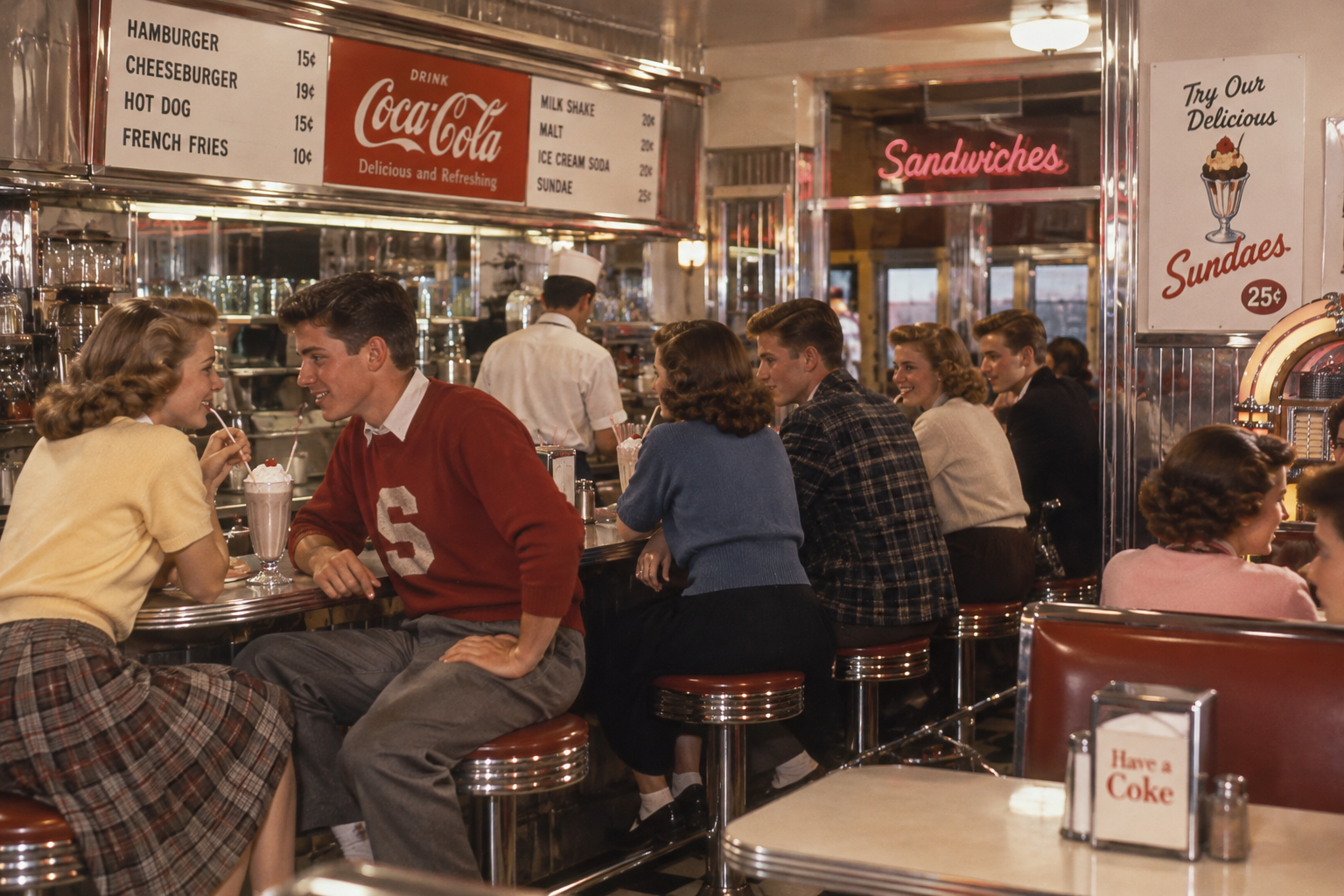
You didn’t necessarily need plans when there was a diner, malt shop, or drugstore soda fountain nearby. Young people could claim a booth or a few counter stools, order Cokes, burgers, fries, or milkshakes, and stretch a small amount of money into an evening with friends. Many hangouts also had jukeboxes, sometimes with small selectors right at the table, making the latest songs part of the experience. It was the 1950s version of hanging around your favorite coffee shop for hours — only with more chrome and considerably more milkshakes.
Dancing to Rock ’n’ Roll
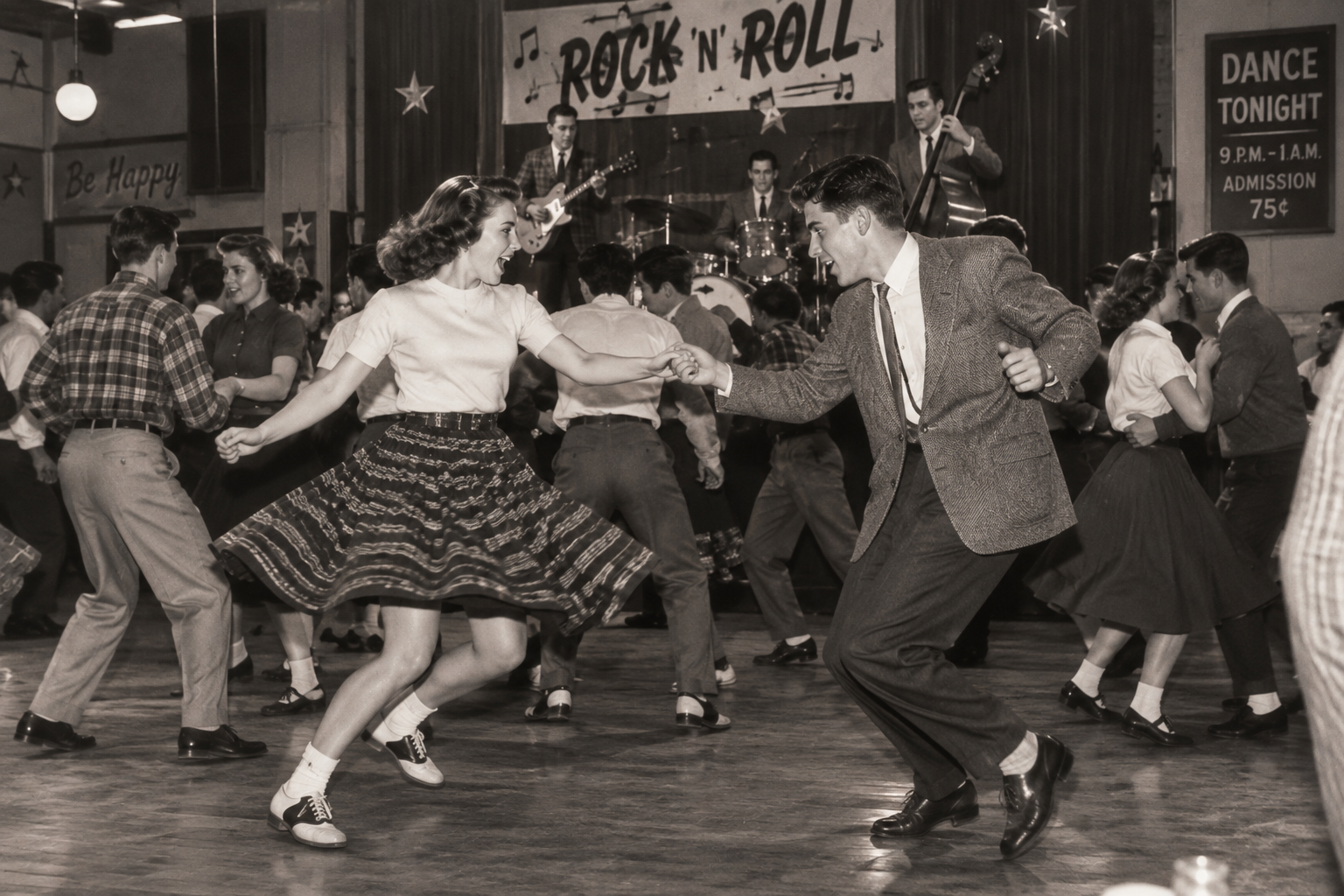
Rock ’n’ roll didn’t just change what young Americans listened to; it changed how they spent their free time. Artists including Chuck Berry, Little Richard, Elvis Presley, and Buddy Holly helped give the decade a soundtrack that parents didn’t always understand or appreciate. School dances, parties, and dance halls offered opportunities to actually move to those records, with teenagers borrowing from swing and jitterbug styles while developing new dances of their own. Turning up a favorite record and clearing enough floor space could turn almost any gathering into a party.
Going to Sock Hops
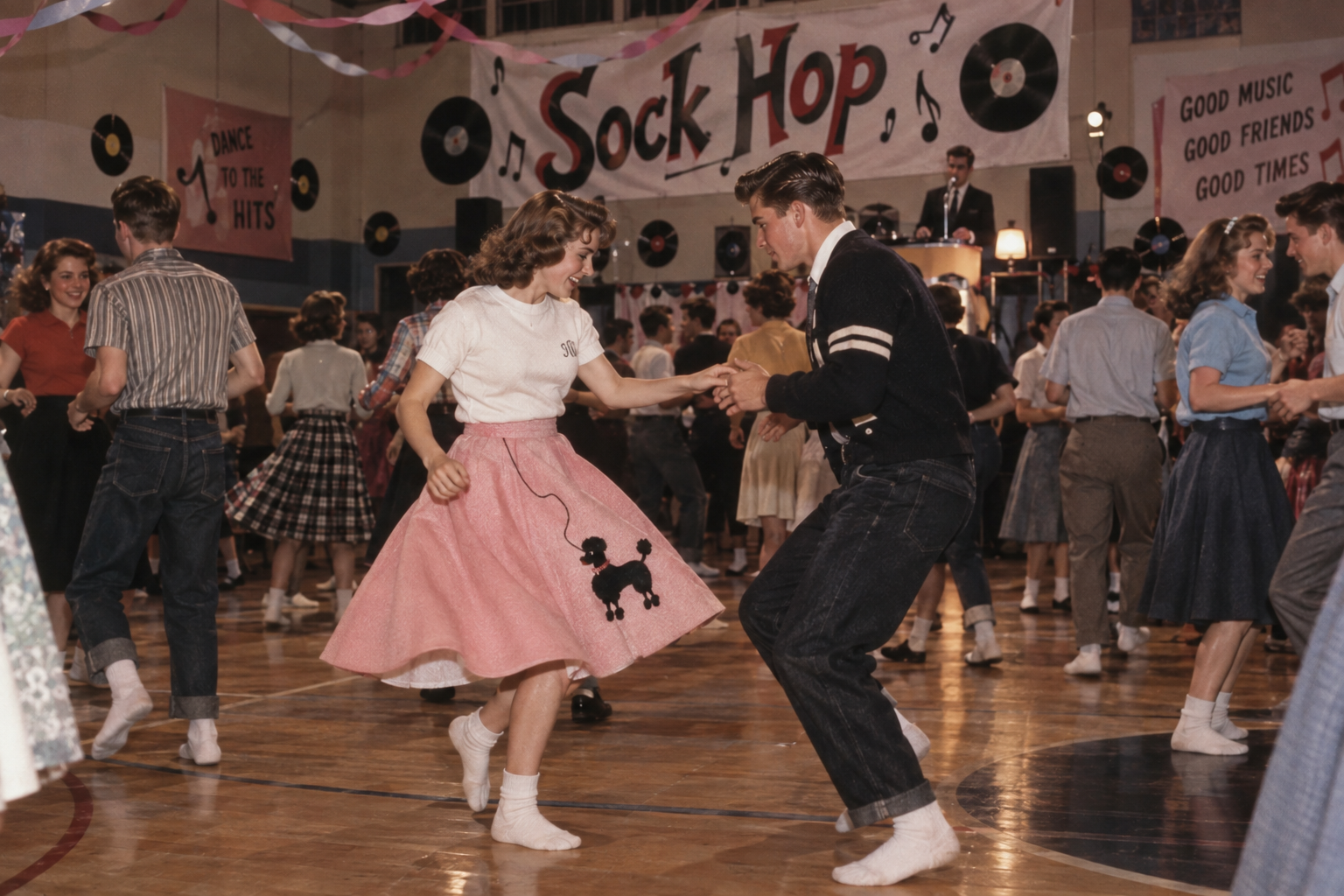
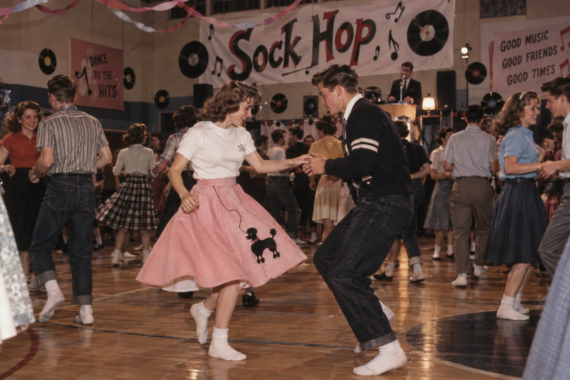
The sock hop might be one of the most unmistakably 1950s social events. These informal dances were commonly held in school gymnasiums, where students took off their shoes to protect the polished floors — hence all those socks. Records provided the music, admission could be inexpensive, and the gym became a social hub for a few hours. There were dances, crushes, awkward conversations, and plenty of standing around waiting for someone to make the first move. Some parts of being a teenager haven’t changed much.
Bowling
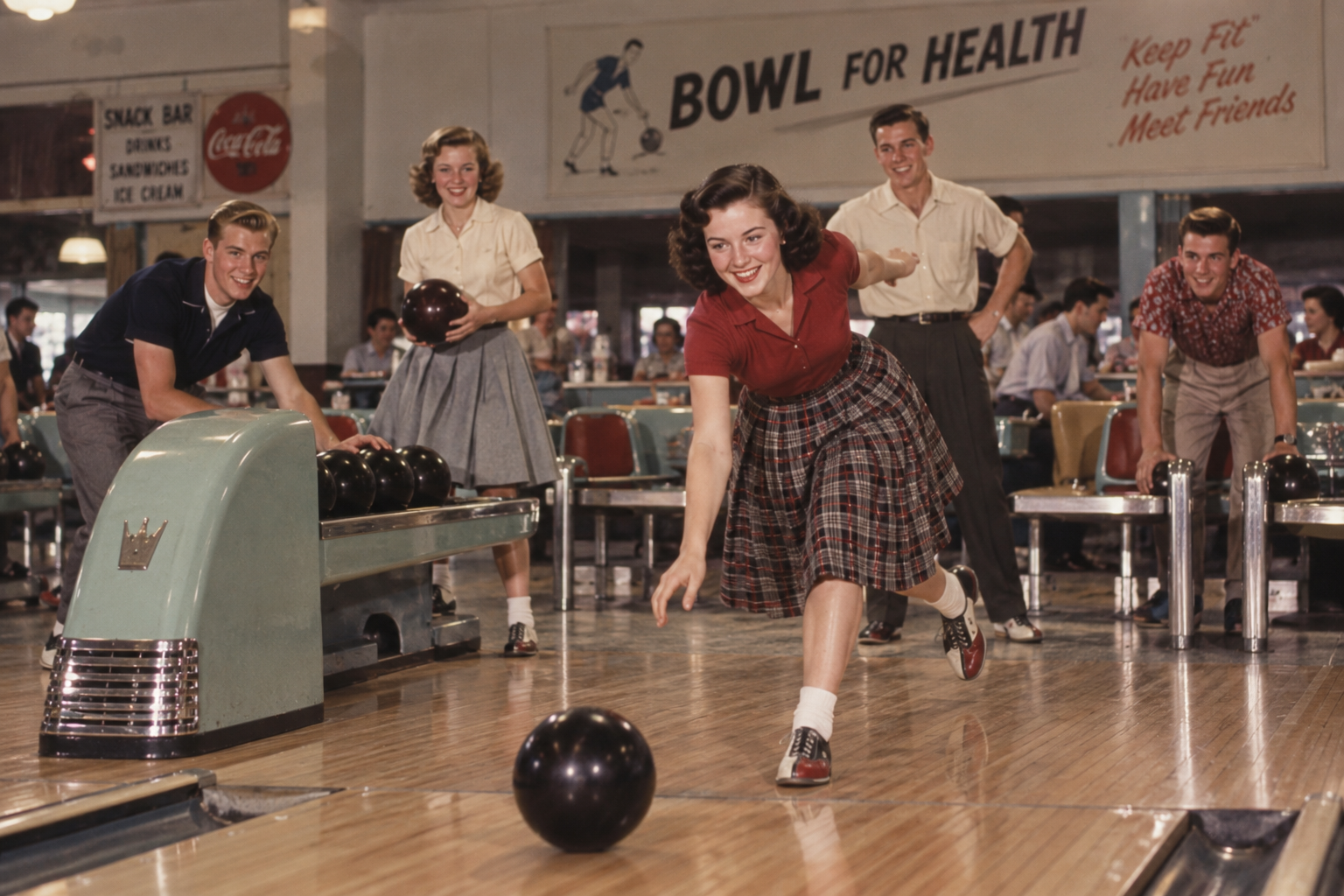
Bowling wasn’t just something to do on a rainy afternoon. During the postwar era, bowling alleys became major social destinations, helped along by the spread of automatic pinsetting equipment and organized leagues. Young adults could make a date out of a few games or arrive with an entire group, rent some shoes, grab food from the snack bar, and stay for hours. The cigarette smoke that filled many midcentury bowling alleys is thankfully less nostalgic, but the combination of friendly competition and inexpensive entertainment made bowling difficult to beat.
Trending on Cheapism
Cruising in Cars
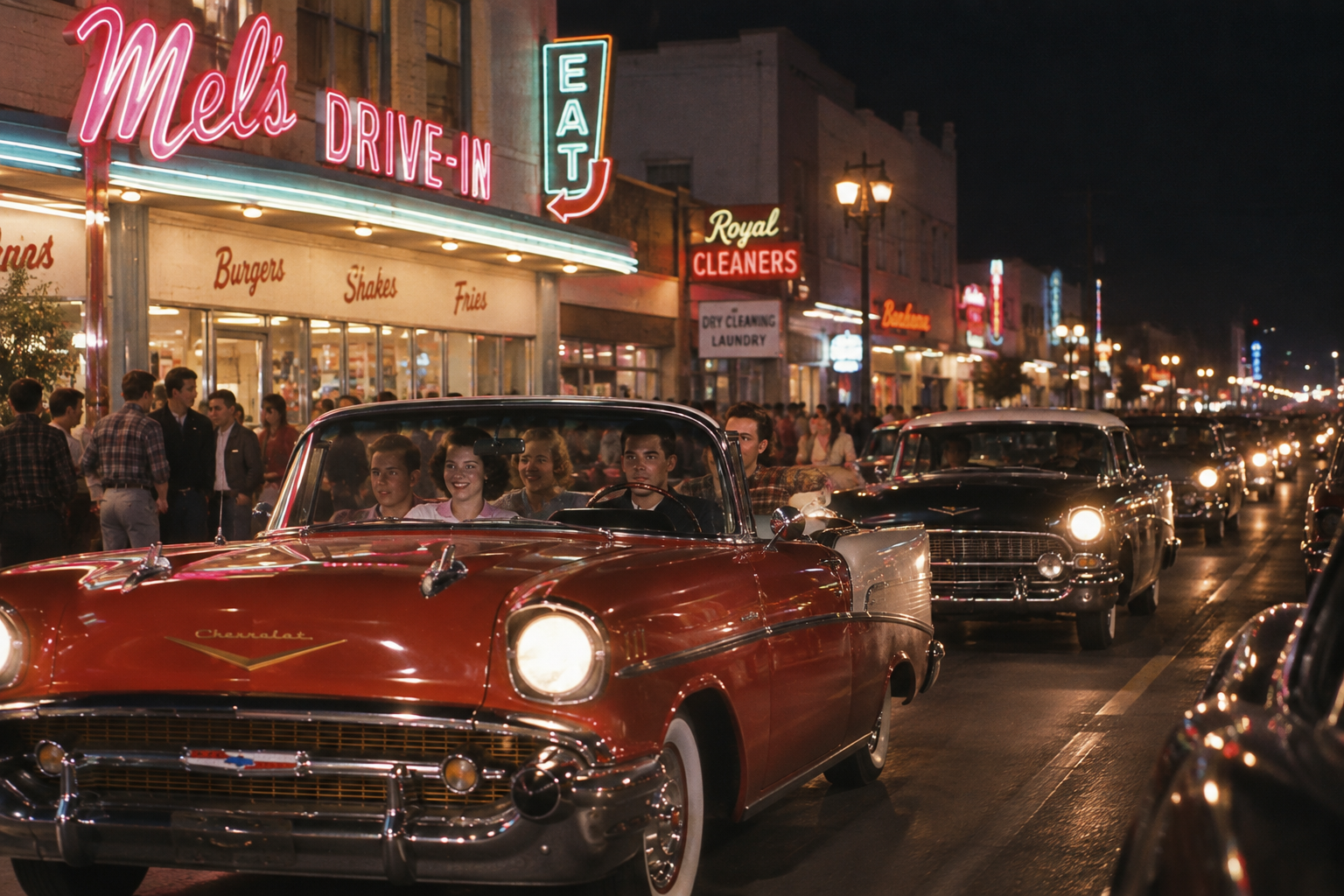
Sometimes there wasn’t even a destination. Once young people had access to a car, simply driving around could become the night’s entertainment. Cruising meant slowly making laps along a town’s main street or popular strip, usually with friends packed into the car and the radio playing. Drivers might stop for food, pull into a drive-in, talk to friends in another car, and then head right back out for another loop. Gas was part of the entertainment budget, and being seen could be just as important as actually going somewhere.
Going to Drive-In Restaurants
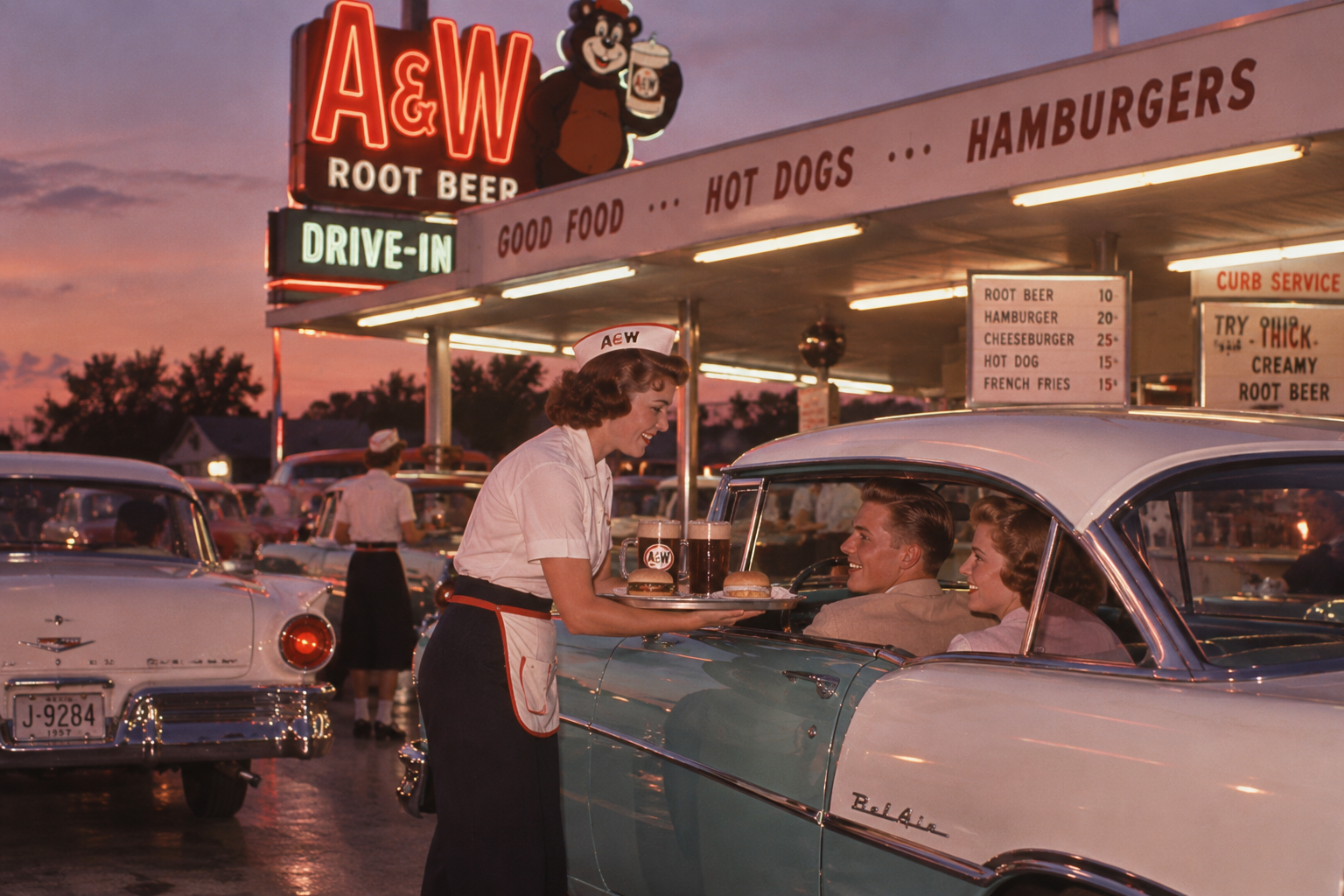
The 1950s love affair with cars extended all the way to dinner. At drive-in restaurants, customers could pull into a parking space, place an order, and have a carhop deliver burgers, fries, shakes, and sodas without anyone needing to leave the vehicle. Trays could be attached directly to car windows, turning the parking lot into a dining room filled with teenagers and young adults. Neon signs, rows of cars, and inexpensive fast food made these restaurants natural gathering places, especially when everyone was already out cruising.
Playing Records at Home
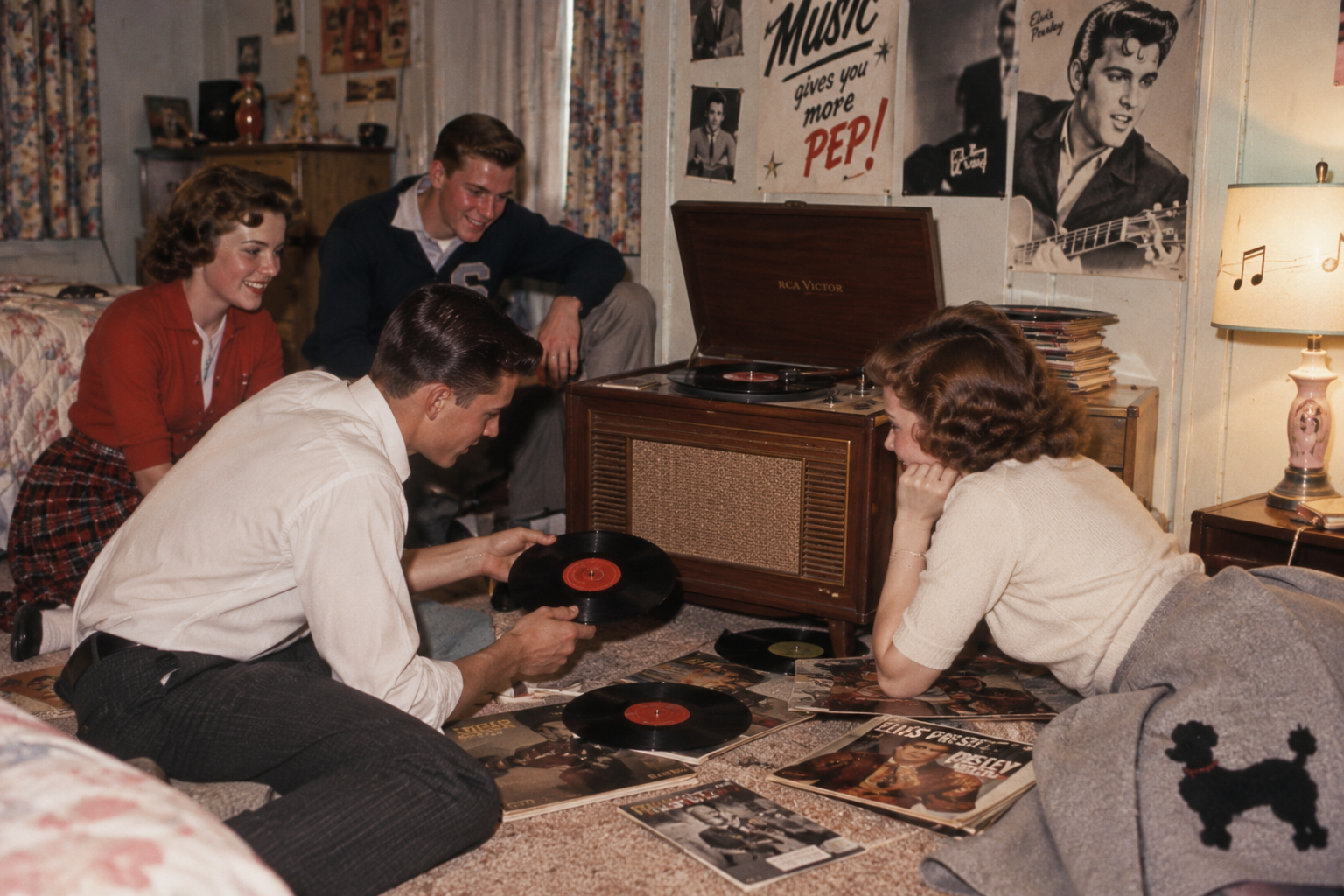
Going out wasn’t required when somebody had a record player and a decent stack of singles. The 45 rpm record became an important part of youth music culture during the decade, giving young listeners a relatively affordable way to buy the songs they heard on the radio. Friends could gather in a bedroom, basement, or living room and take turns choosing what played next. Long before anyone made a collaborative Spotify playlist, passing around a stack of records accomplished roughly the same thing — although changing songs required considerably more effort.
Sign up for our newsletter
Roller Skating
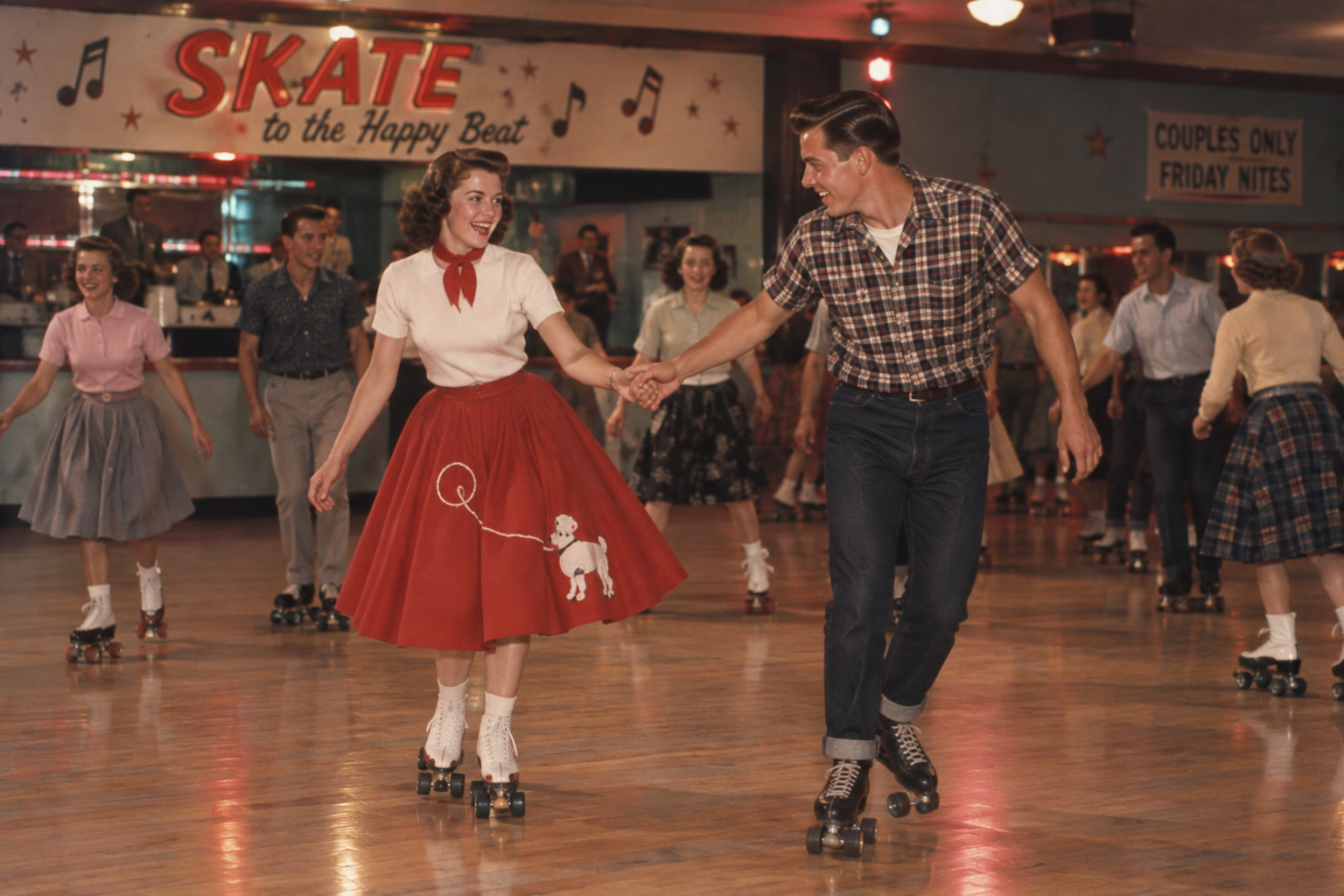
Roller rinks offered almost everything a group of young people needed for an inexpensive night out: music, snacks, movement, and plenty of opportunities to socialize. Indoor rinks typically had smooth wooden floors and rental skates, with organ music or popular records providing the soundtrack as skaters circled the floor. Couples skating together made rinks popular date spots, while group outings meant you didn’t need a date to participate. Outdoor skating was also popular in some communities, but the neighborhood rink provided the complete social experience.
Going to Baseball Games
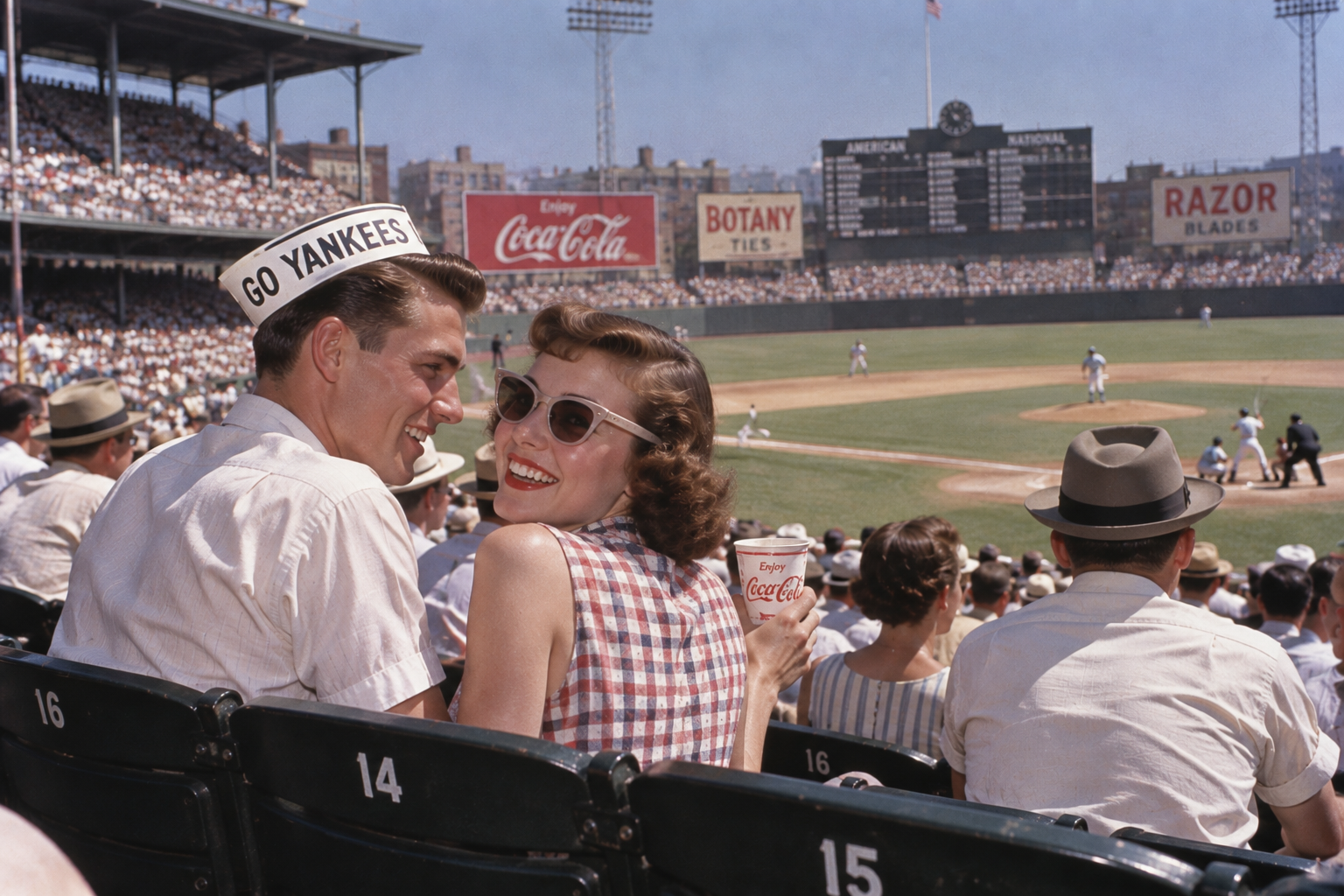
Baseball was already deeply woven into American life by the 1950s, and spending an afternoon or evening at the ballpark was a familiar form of entertainment. Major League Baseball had stars including Mickey Mantle, Willie Mays, and Jackie Robinson, but fans didn’t need access to a major-league stadium to watch a game. Minor-league clubs and local teams offered more opportunities to see baseball in person. A scorecard, a hot dog, and a few hours in the stands could make for an entire outing — while fans who stayed home often followed games closely on the radio.
Hanging Out at Amusement Parks and Fairs
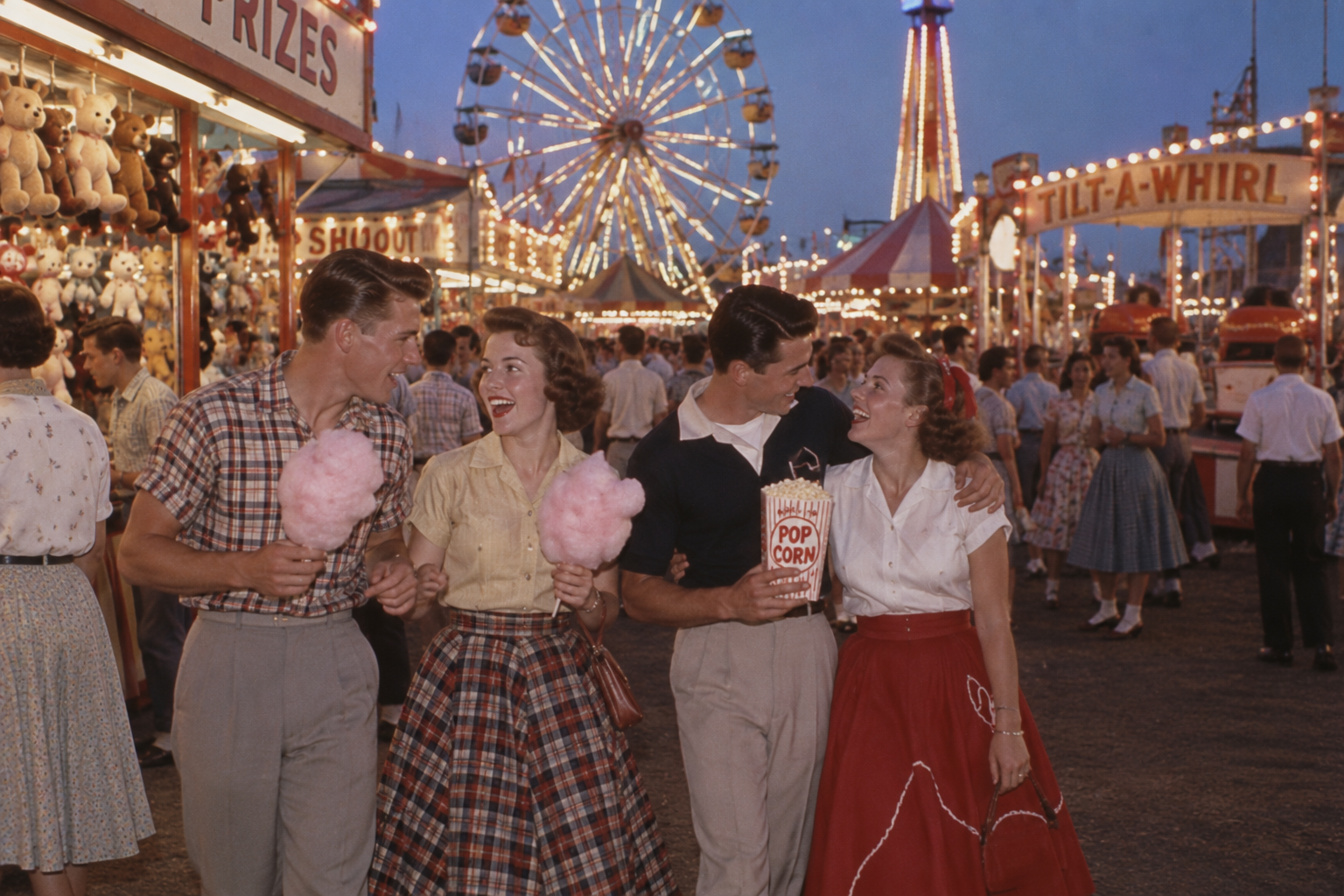
For a date with very little planning required, an amusement park, carnival, boardwalk, or state fair did most of the work for you. There were Ferris wheels and roller coasters to ride, midway games to lose money on, photo booths for documenting the evening, and plenty of cotton candy and other fair food. Local and regional amusement parks were especially important gathering places for young people who didn’t have today’s endless menu of entertainment options. Even if you didn’t win the giant stuffed animal, there was usually enough happening to fill an entire day.
Fun Meant Getting Out of the House
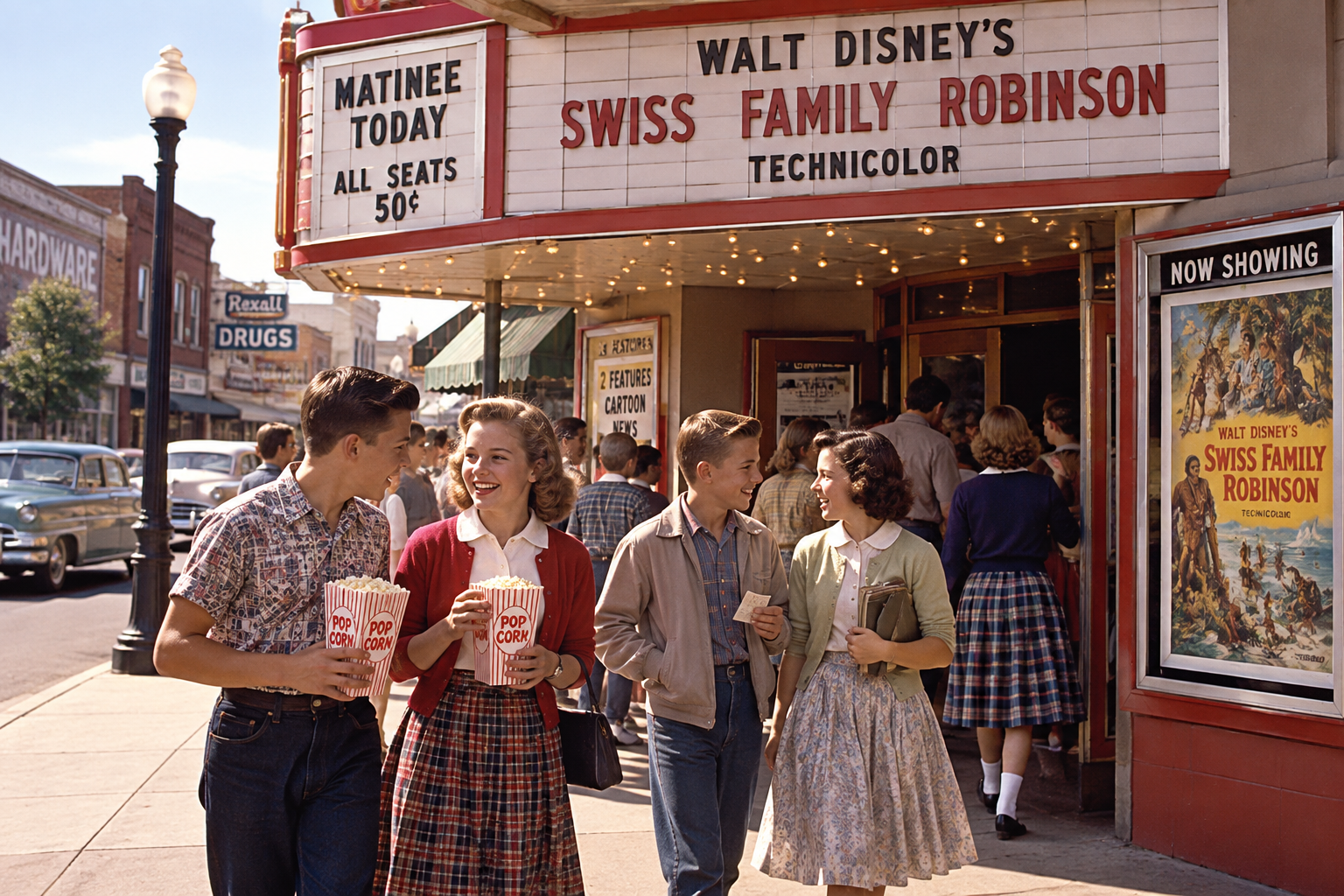
What stands out about so much 1950s entertainment is how often it required physically going somewhere and being around other people. Young adults met at diners, circled the same streets in their cars, fed coins into jukeboxes, crowded onto dance floors, and clipped speakers onto their windows at drive-ins.
Many of the individual activities haven’t disappeared. People still bowl, swim, go to baseball games, listen to music, and visit amusement parks. But the rituals surrounding them have changed. In the 1950s, there was no group chat to organize the evening or social feed to scroll when things got boring. Sometimes the entertainment really was cruising the same strip for the third time and hoping you’d spot someone you knew.