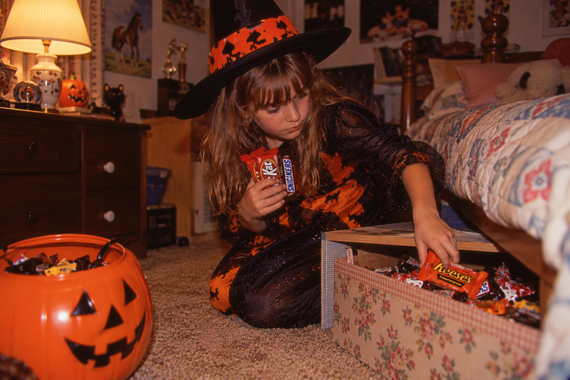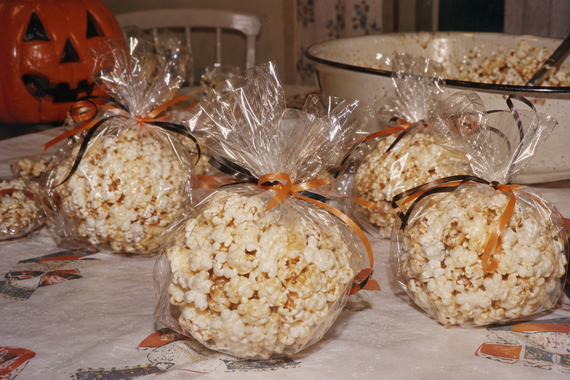
There was a time when trick-or-treating meant coming home with a lot more than miniature chocolate bars and individually wrapped candy. If you grew up in the 1940s, ’50s, or ’60s, you might remember neighbors handing out homemade popcorn balls, freshly baked cookies, or caramel apples wrapped in wax paper. Some families even spent hours in the kitchen preparing special treats for the neighborhood kids, turning Halloween into something of a community baking event.
Of course, not every house offered homemade goodies, and store-bought candy was already becoming increasingly popular by the middle of the 20th century. But before concerns about food tampering became widespread in the 1970s, accepting a homemade treat from a familiar neighbor wasn’t necessarily considered unusual. And while some of these goodies were genuine trick-or-treating staples, others were more commonly enjoyed at Halloween parties or gatherings with friends and family.
From sticky popcorn balls that were nearly impossible to bite into to brightly colored candy apples that could make a real mess, here are 12 homemade Halloween treats that bring back memories of a very different kind of Halloween.
Homemade Popcorn Balls Wrapped in Cellophane
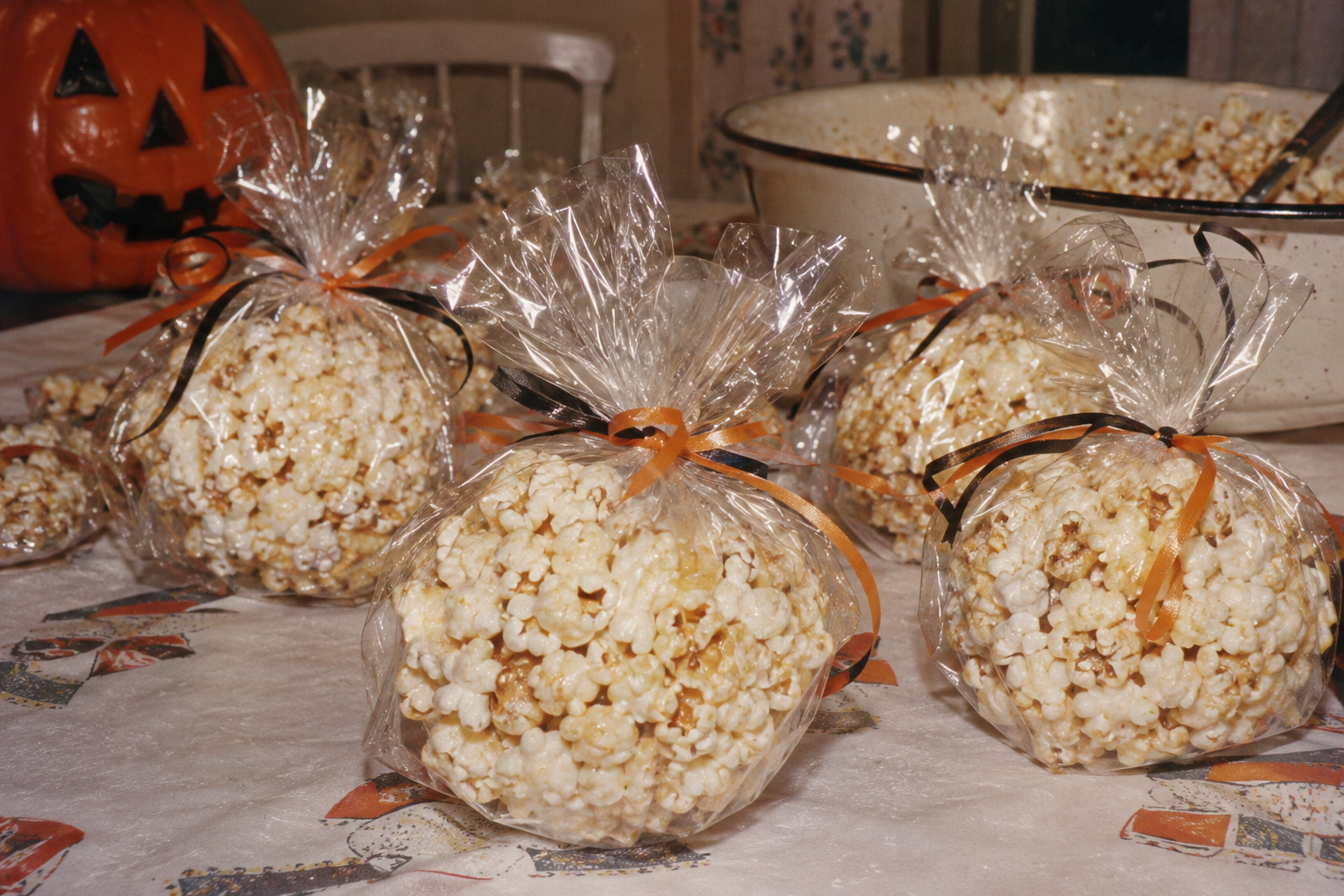
If there’s one homemade treat that practically defined Halloween for generations of American children, it was the popcorn ball. Neighbors would pop enormous batches of corn, stir them into a sticky mixture of sugar, corn syrup, or caramel, and shape everything into oversized balls before wrapping them in colorful cellophane or wax paper. Some were small enough to fit comfortably in a child’s hand, while others seemed almost as big as a softball.
For trick-or-treaters, receiving a popcorn ball was both exciting and slightly inconvenient. It took up considerably more space than a miniature candy bar, and biting into one could be a challenge if the syrup had hardened too much. Still, there was something special about knowing that someone had spent an afternoon making treats specifically for the neighborhood children. A 1986 Washington Post article even recalled families making pastel-colored caramel popcorn balls for Halloween.
Caramel Apples on Wooden Sticks
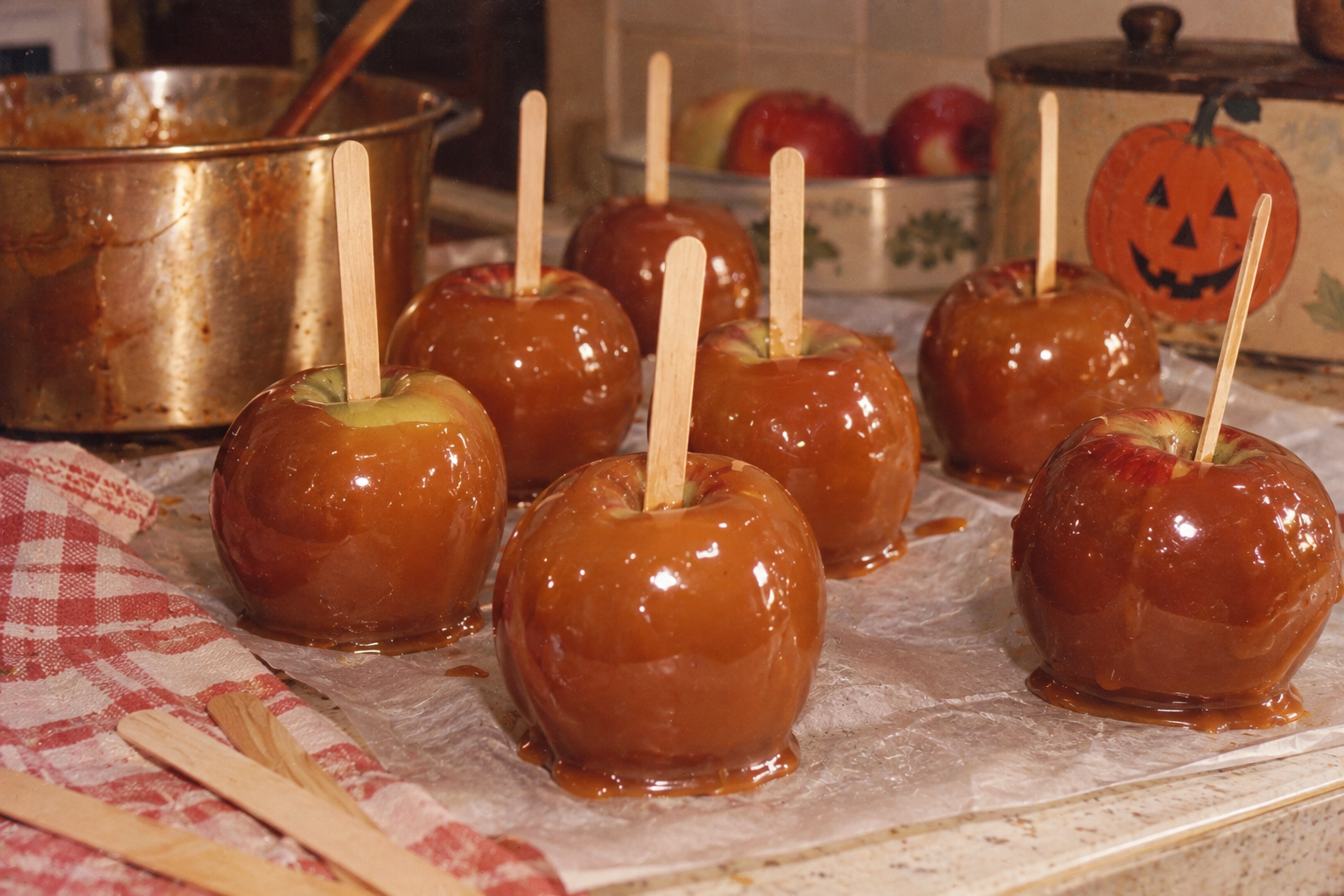
Before Halloween candy came in convenient little packages, some lucky children received an entire apple covered in caramel. These treats became particularly popular during the 1950s, when caramel apples began making their way into American kitchens. According to the Smithsonian’s National Museum of American History, a Kraft employee helped popularize the idea of coating apples with melted caramels during that decade.
Making them at home was relatively straightforward: Melt some caramels, dip fresh apples into the mixture, and let them cool until the coating hardened. Of course, carrying a caramel apple around while trick-or-treating wasn’t quite as practical as tossing a few chocolate bars into a pillowcase. The wooden stick could poke through a bag, the caramel could stick to everything, and eating one without getting your face covered in sugar was practically impossible. But for children who loved caramel, the inconvenience was worth it.
Freshly Baked Chocolate Chip Cookies
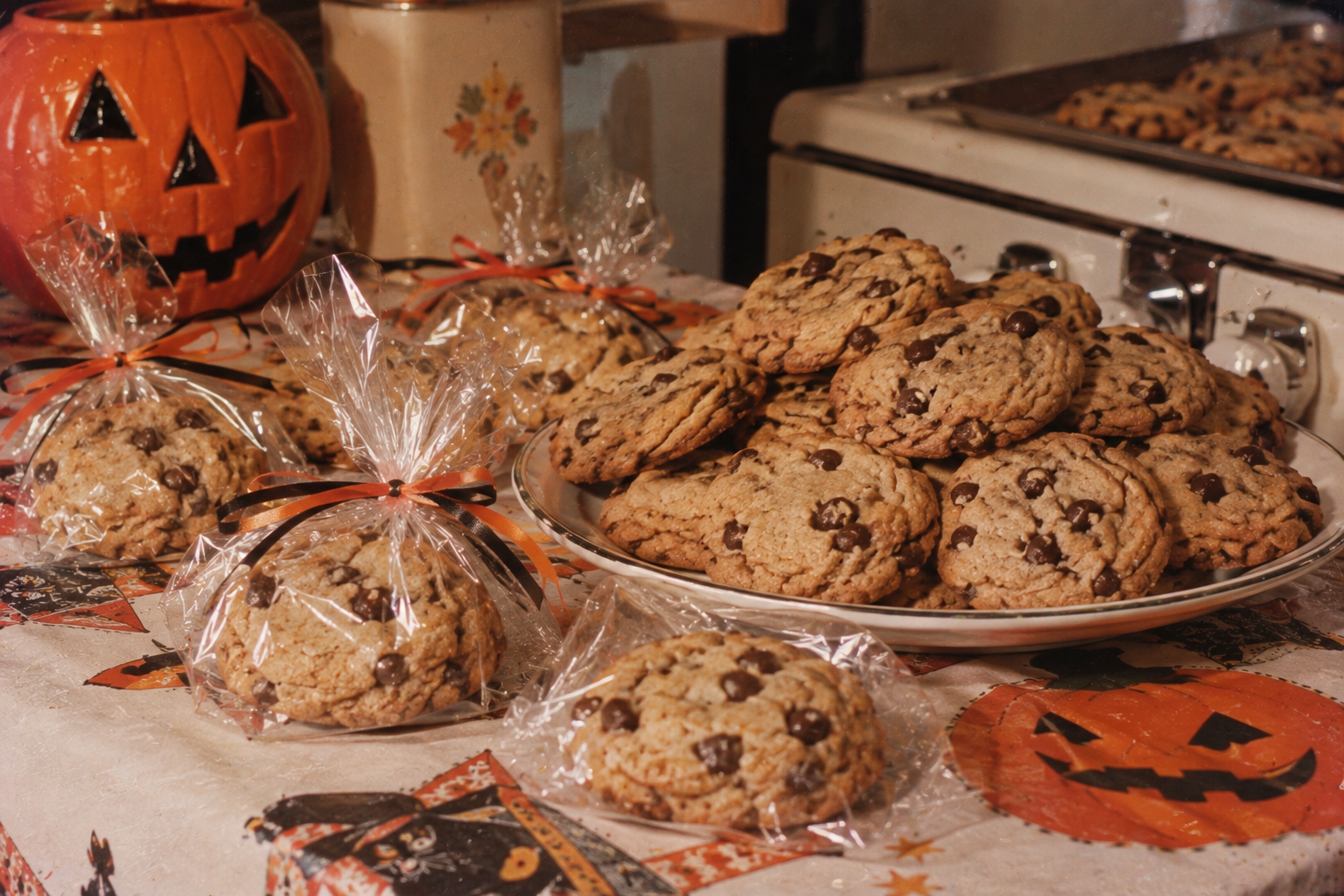
Imagine ringing a neighbor’s doorbell on Halloween and being greeted not by a bowl of candy, but by the smell of freshly baked chocolate chip cookies. For some children growing up in close-knit neighborhoods, this wasn’t an entirely unfamiliar experience. Before commercially packaged candy became the overwhelmingly preferred Halloween giveaway, homemade cookies were among the treats families sometimes offered to trick-or-treaters.
According to HISTORY’s look at Halloween candy traditions, cookies, cakes, fruit, and nuts all had a place in the holiday’s earlier celebrations. Some neighbors wrapped individual cookies in wax paper, while others reserved their homemade batches for children and families they knew personally. Either way, receiving a cookie made from someone’s favorite family recipe was a little different from getting another piece of candy that could have come from any grocery store.
Homemade Fudge Cut Into Little Squares
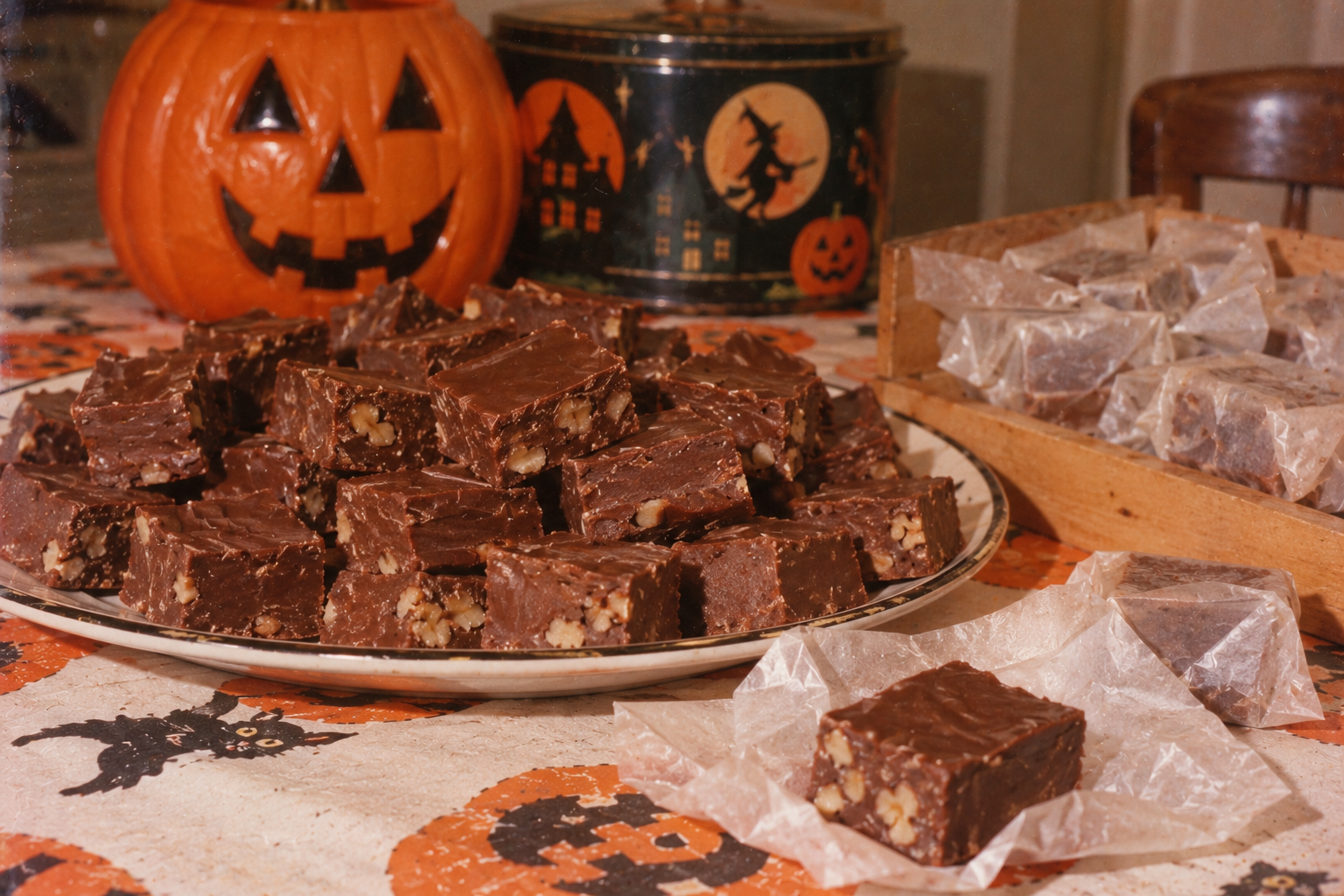
For households that enjoyed making their own candy, fudge was a natural addition to the Halloween treat table. A saucepan, some sugar, butter, milk, and chocolate were often all that stood between a home cook and a pan of rich, homemade fudge. Once cooled, the candy could be cut into little squares and wrapped individually in wax paper.
Fudge was a familiar homemade confection in midcentury America, although handing it out to trick-or-treaters appears to have been more of a household-specific tradition than a widespread Halloween custom. Still, it’s easy to understand the appeal. Unlike the airy texture of a chocolate bar, homemade fudge was dense, creamy, and intensely sweet. And depending on the recipe, children might find chopped walnuts or other surprises mixed into their little squares. The only downside? A piece of fudge left sitting in a warm Halloween bag could quickly become a sticky mess.
Rice Cereal Treats Wrapped in Wax Paper
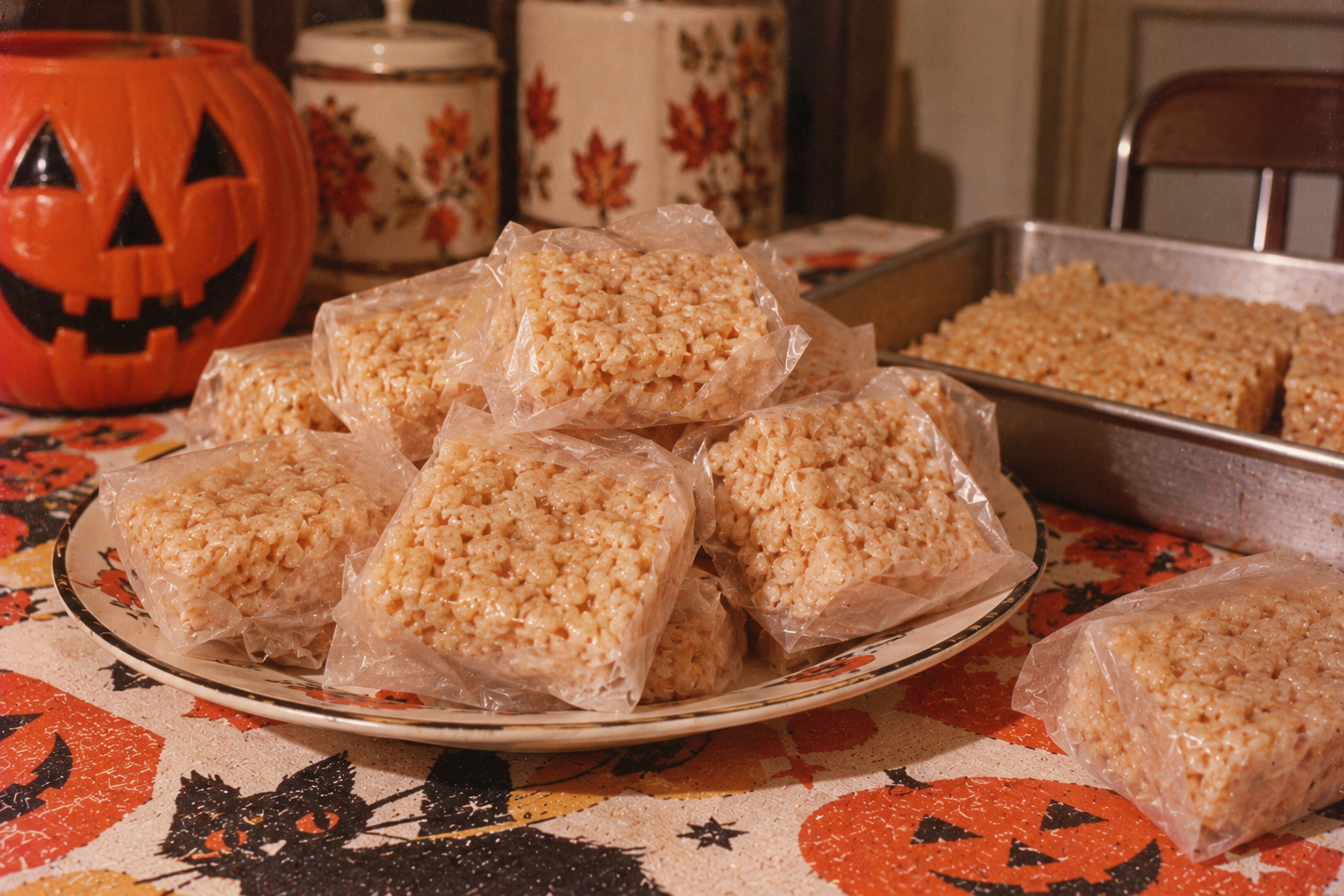
Rice cereal treats might seem like a relatively modern lunchbox snack, but the homemade version has been around since the late 1930s. By the time Baby Boomers were old enough to go trick-or-treating, the familiar combination of crispy rice cereal, melted marshmallows, and butter was already a well-established American treat.
For families preparing sweets for a Halloween gathering, these squares had several advantages. They were inexpensive, required only a handful of ingredients, and could be made in large batches without spending hours in the kitchen. Once the mixture had cooled, it was simply a matter of cutting it into squares and wrapping each portion in wax paper. Although rice cereal treats weren’t necessarily a universal trick-or-treating giveaway, they were certainly the kind of homemade sweet children might encounter at a neighborhood Halloween party. And unlike some homemade candies, they didn’t require a candy thermometer or any particularly complicated cooking skills.
Trending on Cheapism

Candy Apples With Bright Red Sugar Coating
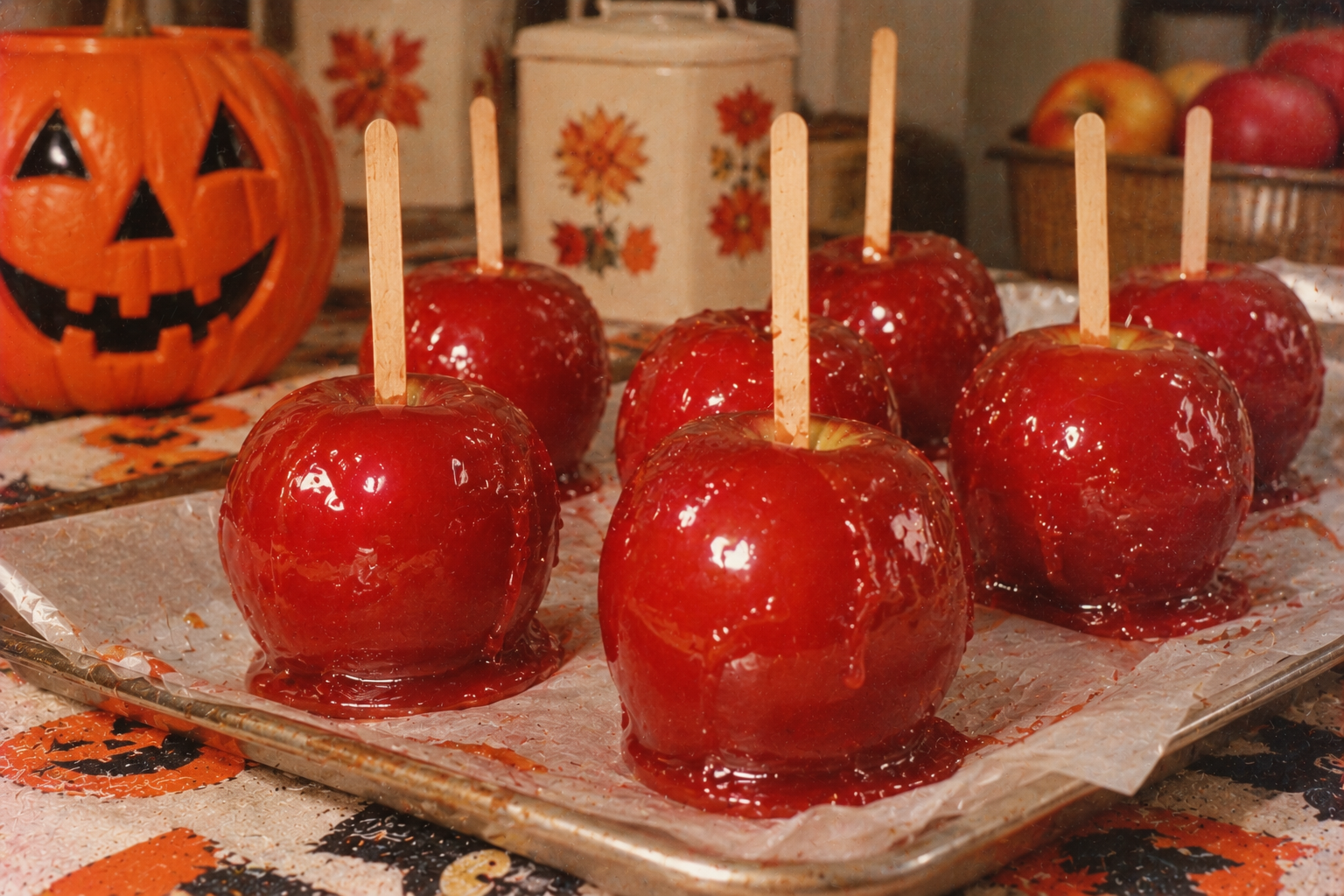
Caramel apples weren’t the only apple-based treats associated with old-fashioned Halloween celebrations. Traditional candy apples, with their brilliant red coating and glossy finish, were another seasonal favorite. Unlike the soft, chewy caramel variety, these apples were dipped in a hot sugar syrup that hardened into a shiny, glass-like shell.
The result was undeniably impressive, particularly to a child who had never seen an ordinary apple transformed into something that looked like it belonged at a carnival. But actually eating one could be another matter entirely. The hard coating often required a determined bite, and once it cracked, little pieces of red candy could end up everywhere. Candy apples were especially popular at fairs, parties, and seasonal gatherings, though some families also prepared them for familiar neighborhood children. They were beautiful, messy, and considerably more labor-intensive than opening a bag of miniature candy bars.
Homemade Peanut Brittle Broken Into Pieces
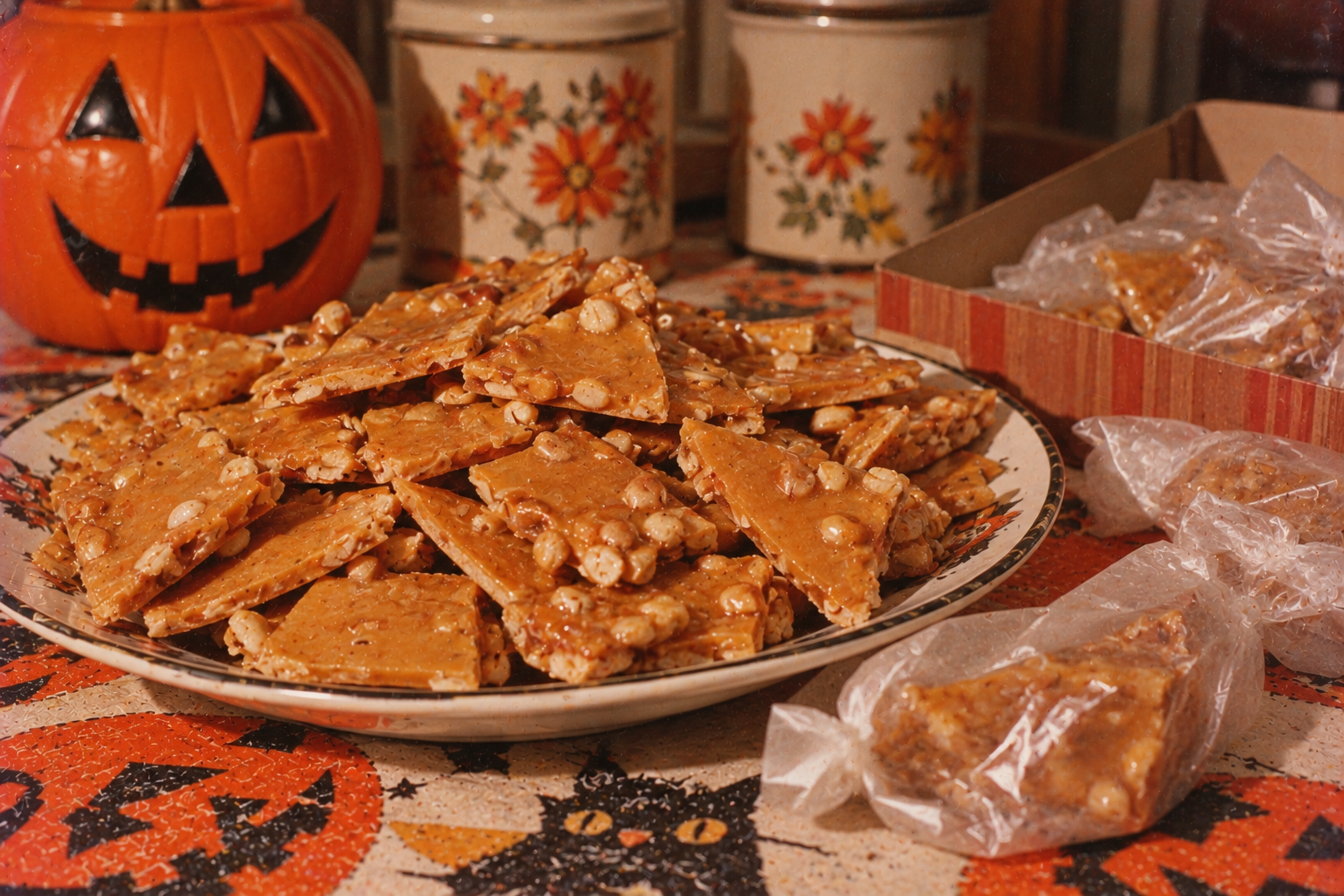
Long before every Halloween treat came with a colorful wrapper and a recognizable brand name, homemade candy-making was a familiar kitchen activity. Peanut brittle was one of those old-fashioned sweets that could be prepared with relatively simple ingredients, including peanuts, sugar, corn syrup, and butter. Once the mixture hardened, it was broken into irregular pieces that could be divided among friends and family.
Although peanut brittle wasn’t as strongly associated with trick-or-treating as popcorn balls, it was the kind of homemade confection that might appear at a neighborhood Halloween gathering or in a treat bag from someone known for making candy. Its crunchy texture and sweet, nutty flavor made it a favorite among many adults, though children with loose baby teeth might have been less enthusiastic. And because the pieces rarely broke into neat, identical shapes, receiving homemade brittle meant never knowing exactly how much candy you’d get.
Homemade Doughnuts With Cinnamon Sugar
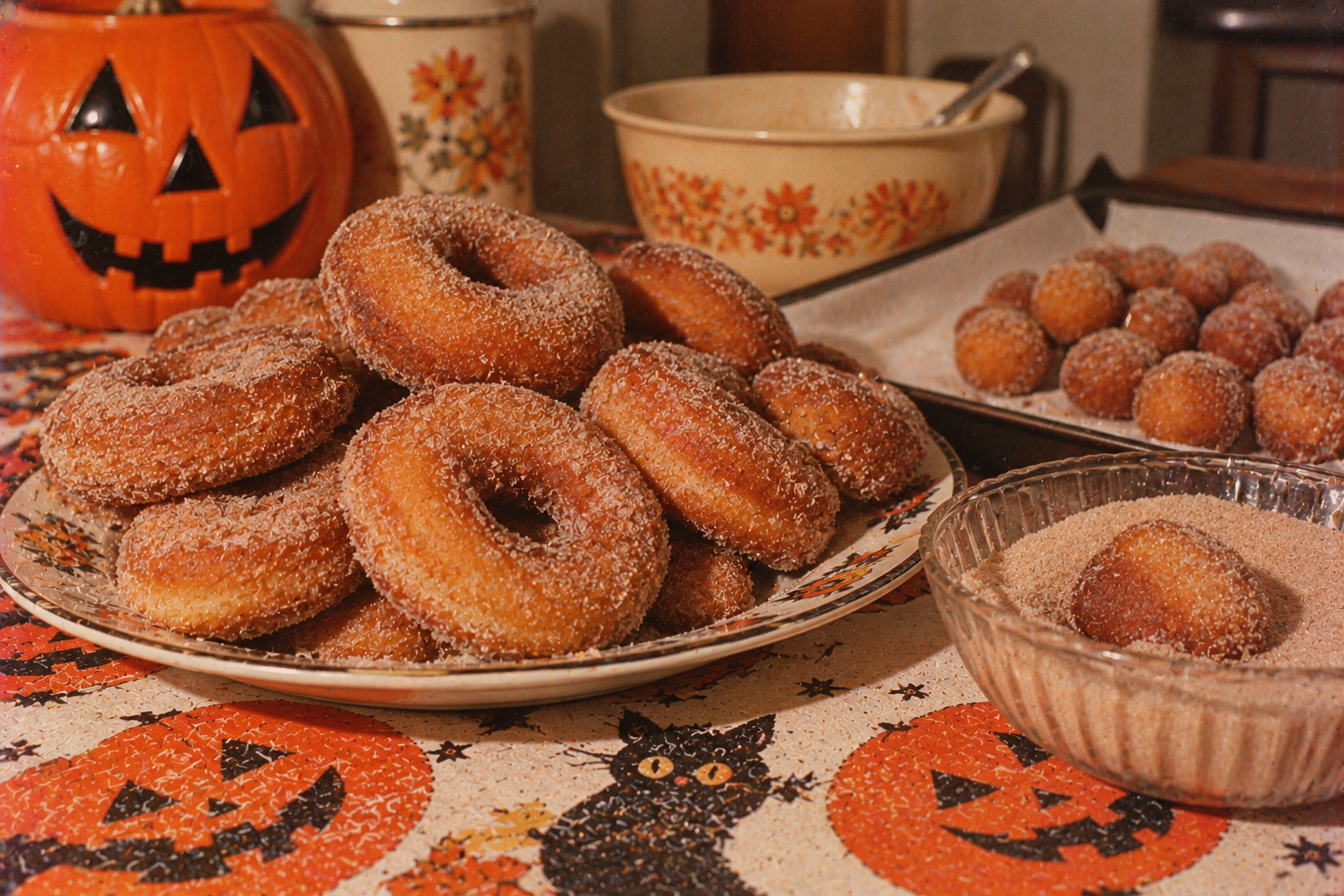
Today, Halloween is practically synonymous with packaged candy, but earlier celebrations often revolved around homemade baked goods. Doughnuts were among the traditional foods served at Halloween parties, according to the Smithsonian’s history of homemade Halloween treats. And for anyone who grew up in a household where frying doughnuts was a special occasion, the smell alone was enough to make the kitchen feel festive.
Some families prepared small doughnuts or doughnut holes, rolling them in cinnamon sugar while they were still warm. They weren’t particularly convenient for children carrying pillowcases around the neighborhood, so these treats were better suited to Halloween parties or stops at the homes of familiar neighbors. Still, there’s something wonderfully nostalgic about the idea of arriving at someone’s house on a chilly October evening and being offered a freshly made doughnut instead of another piece of packaged candy.
Sign up for our newsletter
Chocolate-Dipped Marshmallows
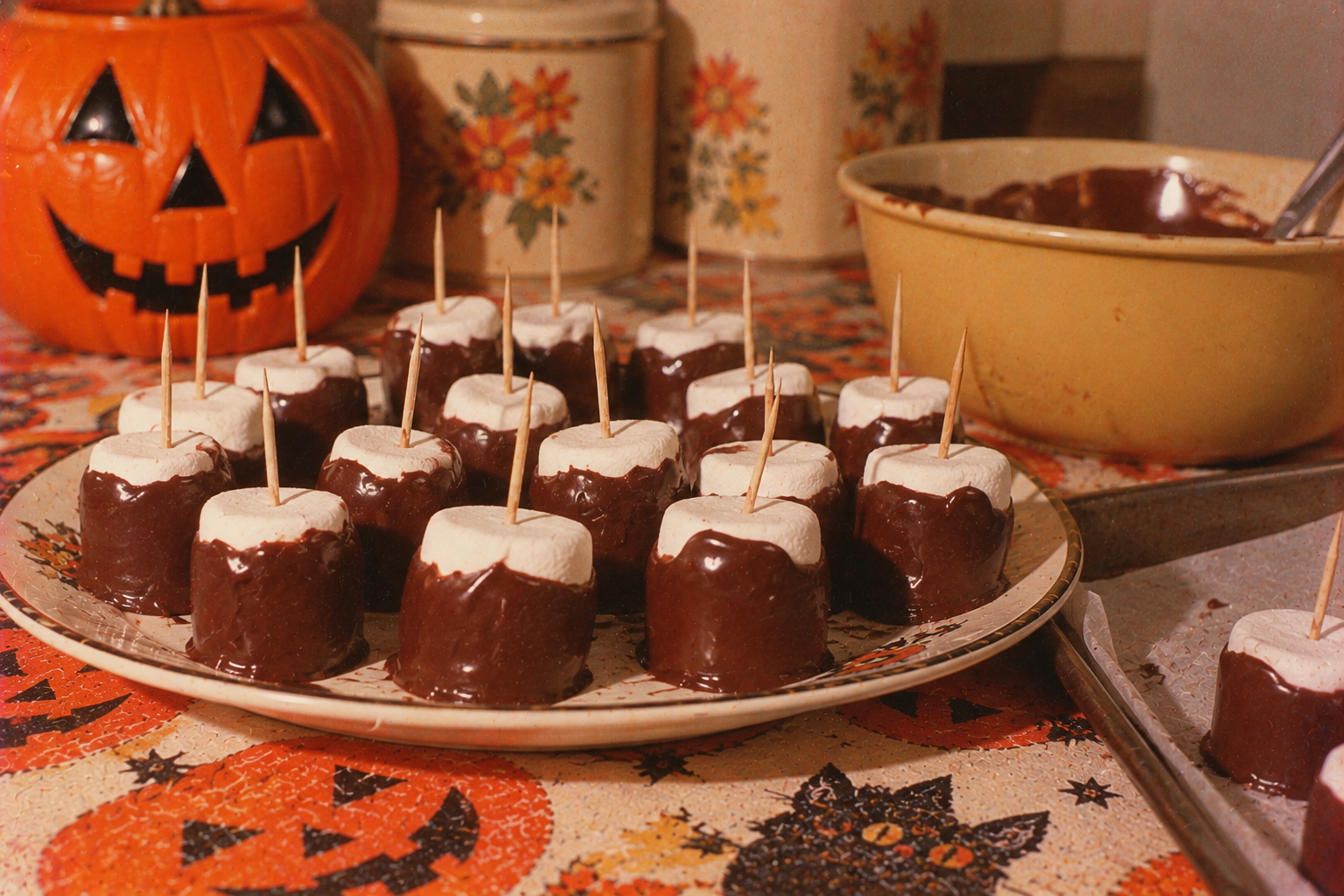
Not every homemade Halloween treat required hours of baking or complicated candy-making techniques. For families looking for something relatively simple, chocolate-dipped marshmallows were an easy way to turn a few ordinary pantry ingredients into a festive sweet. Large marshmallows could be dipped in melted chocolate and decorated with shredded coconut, chopped nuts, or colorful sprinkles before being left to set.
These weren’t among the most widely documented door-to-door Halloween giveaways, but they fit right in with the homemade sweets served at neighborhood parties and family celebrations. Some cooks used toothpicks or wooden sticks to make dipping easier, creating little treats that resembled miniature candy-shop confections. And for children who loved marshmallows, the combination of a soft, fluffy center and a crisp chocolate coating was difficult to resist. The biggest challenge was keeping the chocolate from melting before anyone had a chance to eat them.
Homemade Caramel Corn in Little Bags
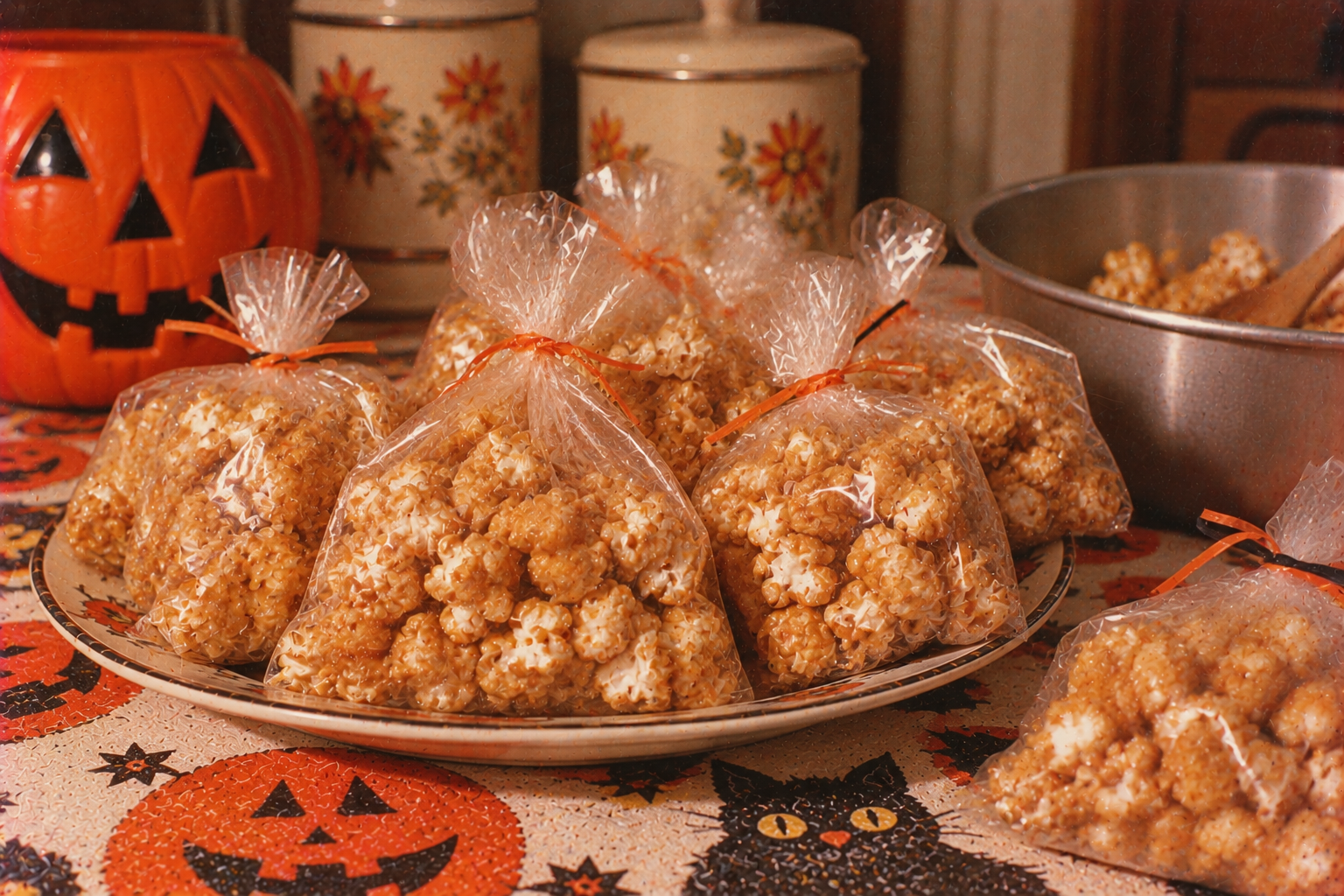
Popcorn balls might have been the more recognizable Halloween treat, but some neighbors preferred to skip the shaping process altogether and hand out little bags of caramel corn. The idea was similar: Freshly popped corn was coated in a sweet, buttery caramel mixture and allowed to cool before being divided into individual portions. Some recipes included peanuts, raisins, or other additions that made the snack feel especially generous.
Unlike a giant popcorn ball, caramel corn could be eaten a handful at a time, making it considerably easier to share with siblings or save for later. And it wasn’t just a hypothetical Halloween treat. In a 1986 Washington Post collection of Halloween memories, one reader remembered receiving a homemade caramel-popcorn mixture with nuts and raisins from a neighborhood house. It was exactly the sort of personal touch that made certain stops on the trick-or-treating route particularly memorable.
Homemade Cupcakes With Orange Frosting
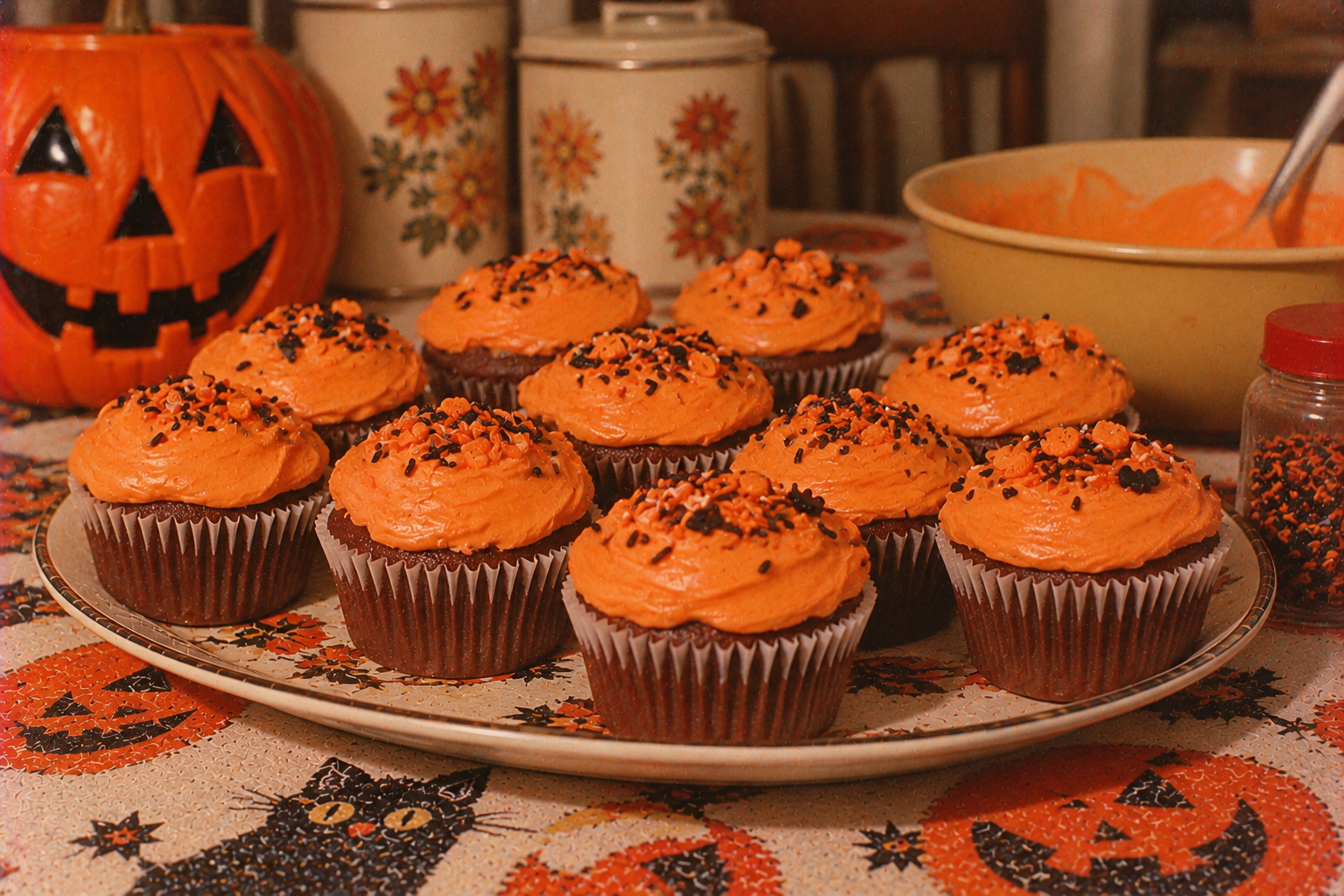
Before Halloween parties became elaborate affairs filled with themed decorations and professionally decorated desserts, a tray of homemade cupcakes could be enough to make the occasion feel special. Chocolate cupcakes topped with bright orange frosting were particularly festive, especially when decorated with chocolate sprinkles, candy pumpkins, or a little black icing.
The Smithsonian documents devil’s food cupcakes with orange-and-black frosting as an example of midcentury Halloween party food. While cupcakes weren’t especially practical for children carrying bags of candy from house to house, they were perfect for neighborhood gatherings or a visit to a family friend. There was something exciting about receiving an entire cupcake decorated just for Halloween, particularly at a time when homemade baked goods were a major part of holiday celebrations. Of course, keeping that frosting intact until you got home was another challenge entirely.
Small Slices of Homemade Cake
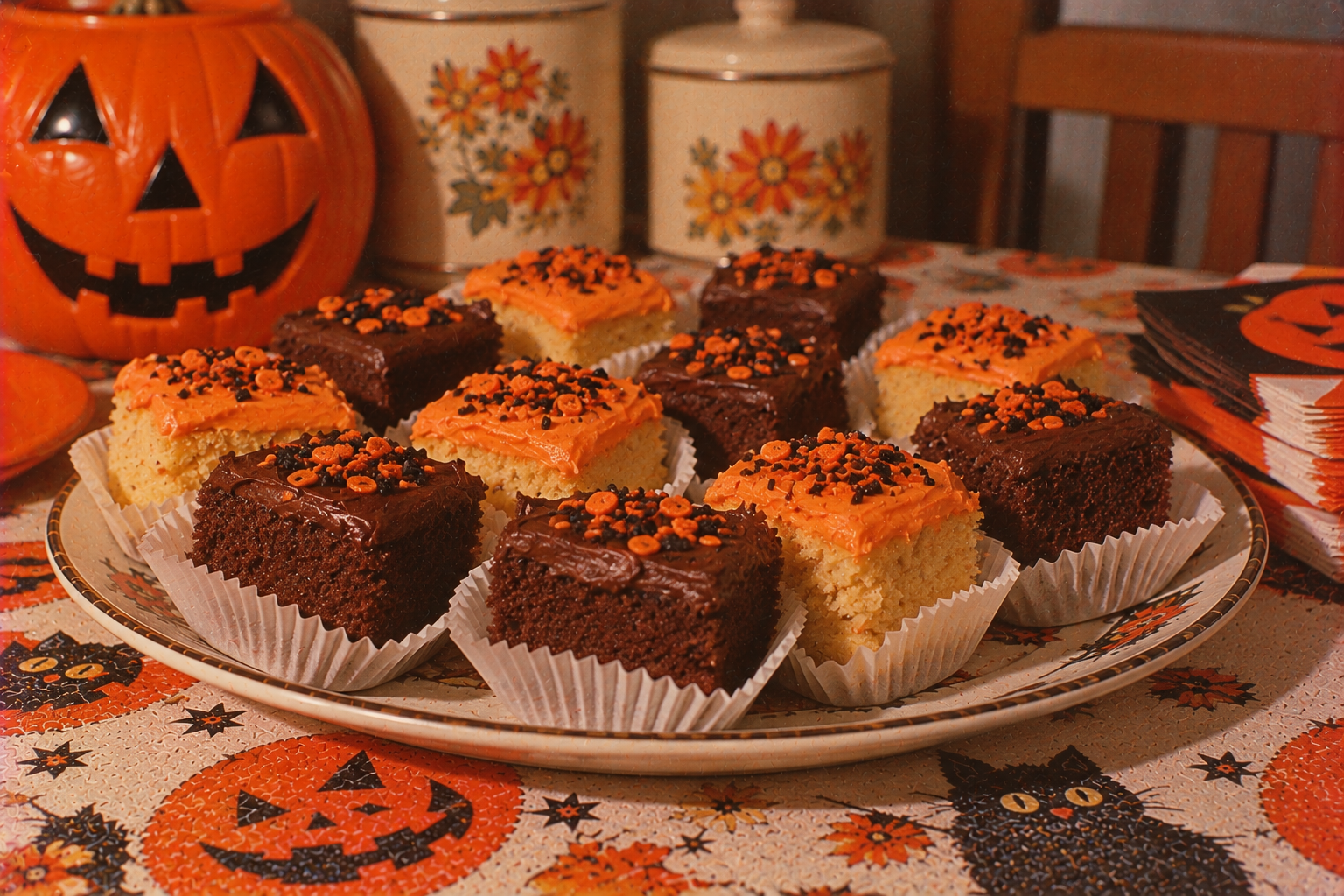
Perhaps one of the biggest differences between Halloween celebrations today and those of earlier generations was how much the holiday revolved around homemade food. Before individually wrapped candy became the standard, children sometimes received slices of cake, cookies, fruit, or other treats from neighbors. According to HISTORY, these foods were all part of trick-or-treating’s earlier traditions.
Cake was particularly well suited to neighborhood parties or visits with families who knew one another. A neighbor might offer a small piece of chocolate cake, spice cake, or another homemade dessert rather than something that could be easily carried around in a trick-or-treat bag. It wasn’t always the most convenient treat, especially if you still had several blocks to walk, but it reflected a time when Halloween could feel as much like visiting friends and sharing food as collecting candy. And for children lucky enough to encounter a particularly good baker, that house was probably worth remembering the following year.
When Halloween Treats Came Straight From the Kitchen
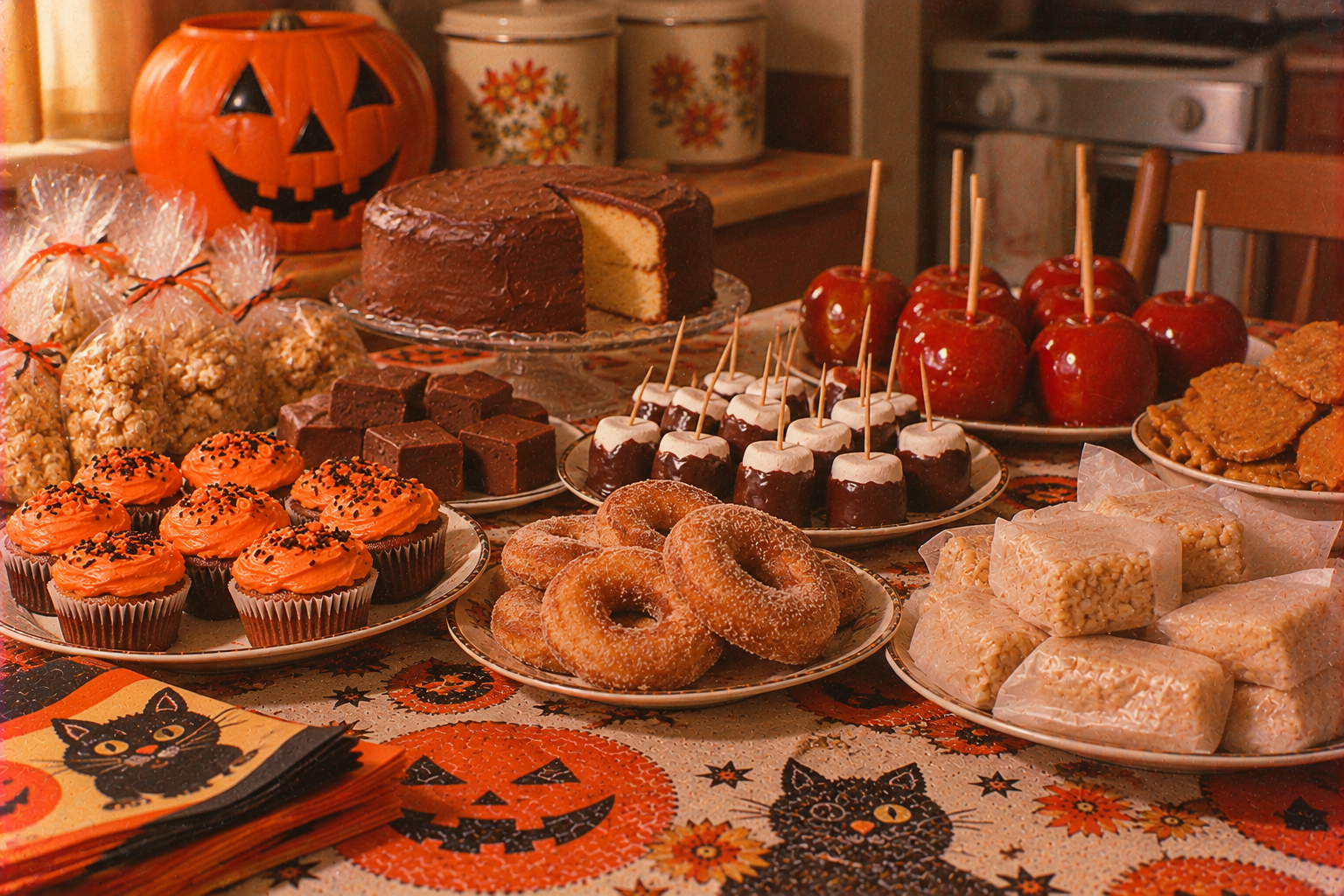
Looking back, it’s easy to romanticize the days when neighbors spent hours preparing homemade Halloween treats. But the tradition also depended on a level of familiarity between households that wasn’t universal, even in the 1950s and ’60s. As commercially packaged candy became more convenient and concerns about food safety grew during the 1970s, homemade goodies gradually became less common in trick-or-treat bags.
Today, most parents understandably prefer individually wrapped treats from people they don’t know, especially when food allergies and ingredient transparency are concerns. But homemade popcorn balls, caramel apples, cookies, and other old-fashioned sweets still have a place at Halloween parties and family gatherings. And for anyone who remembers receiving something made in a neighbor’s kitchen, those treats are a reminder of just how much Halloween traditions have changed over the decades.