For kids growing up in the 1980s, one of the first signs that Halloween was approaching wasn’t necessarily the changing leaves or cooler weather. It was walking into Kmart, Woolworth’s, or the neighborhood variety store and discovering that an ordinary aisle had suddenly transformed into a miniature Halloween wonderland. One week, the shelves were filled with everyday household supplies. The next, there were rubber monster masks, plastic pumpkins, cardboard witches, and enough candy to make any kid forget what their parents had actually come to buy.
And the best part? You didn’t even need to purchase anything to enjoy it. Simply wandering through the Halloween section, trying on a ridiculous mask, or convincing your parents to let you look at the costumes for a few more minutes was an October tradition in itself. There were no enormous seasonal superstores in every town, but department stores, discount chains, and five-and-dimes offered plenty of spooky excitement.
From boxed costumes with those unforgettable plastic masks to giant bags of miniature candy bars, here are 12 1980s Halloween store displays that kids looked forward to seeing every October.
Boxed Halloween Costumes With Plastic Masks
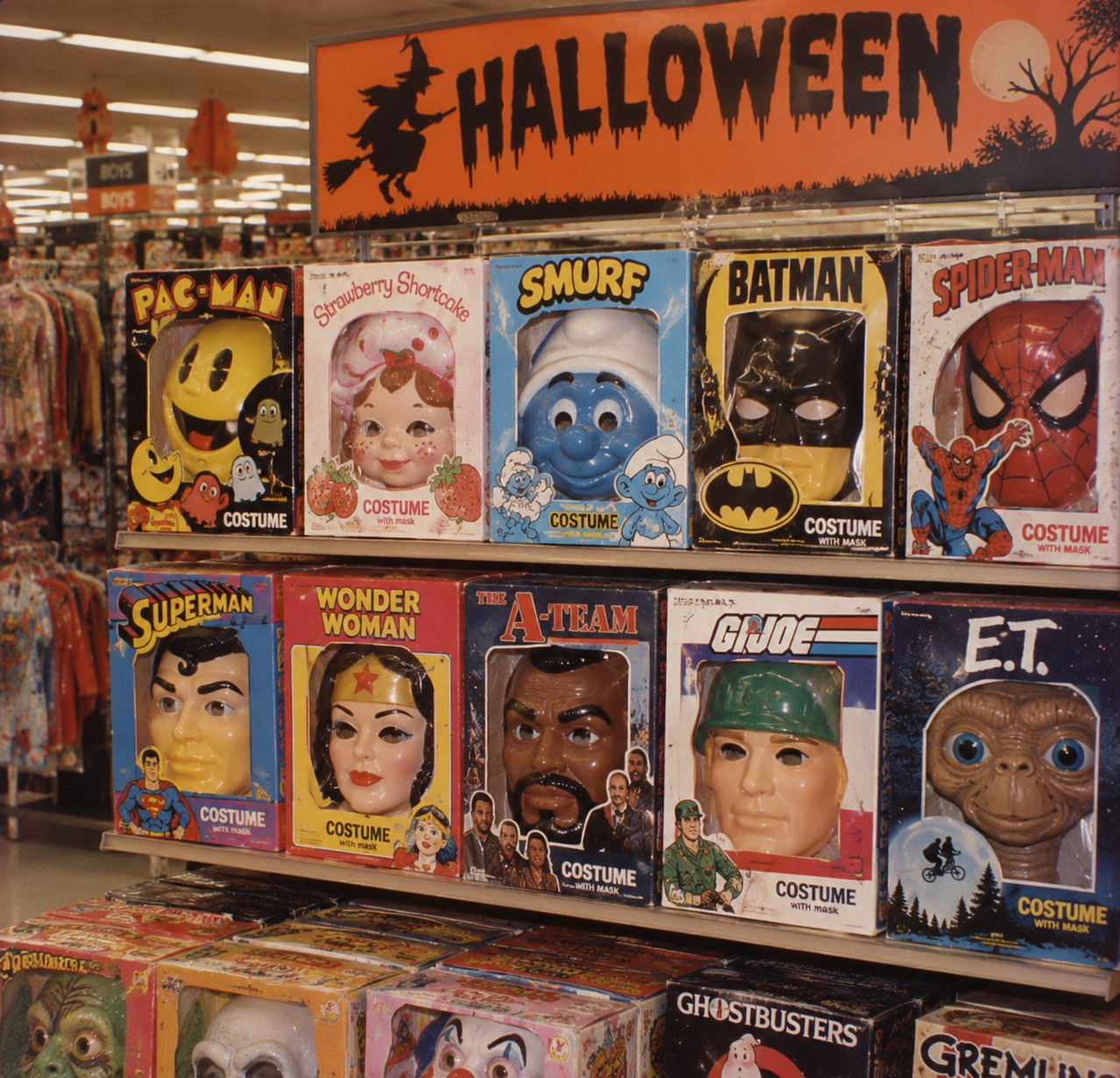
Nothing announced the arrival of Halloween quite like those towering displays of boxed costumes from Ben Cooper and Collegeville. Each cardboard box had a clear plastic window revealing a colorful character mask, usually accompanied by a thin vinyl smock printed with the character’s name or picture. By the 1980s, kids could choose from popular characters like Strawberry Shortcake, Pac-Man, the Smurfs, and plenty of familiar superheroes. The masks were held in place with flimsy elastic strings that seemed destined to snap, and the tiny eyeholes made seeing where you were going surprisingly difficult. Still, there was something magical about scanning those shelves and imagining which character you’d become on Halloween night. If your parents let you pick one out, the hardest part was waiting until October 31 to wear it.
Rubber Monster Masks That Looked Terrifying on the Shelf
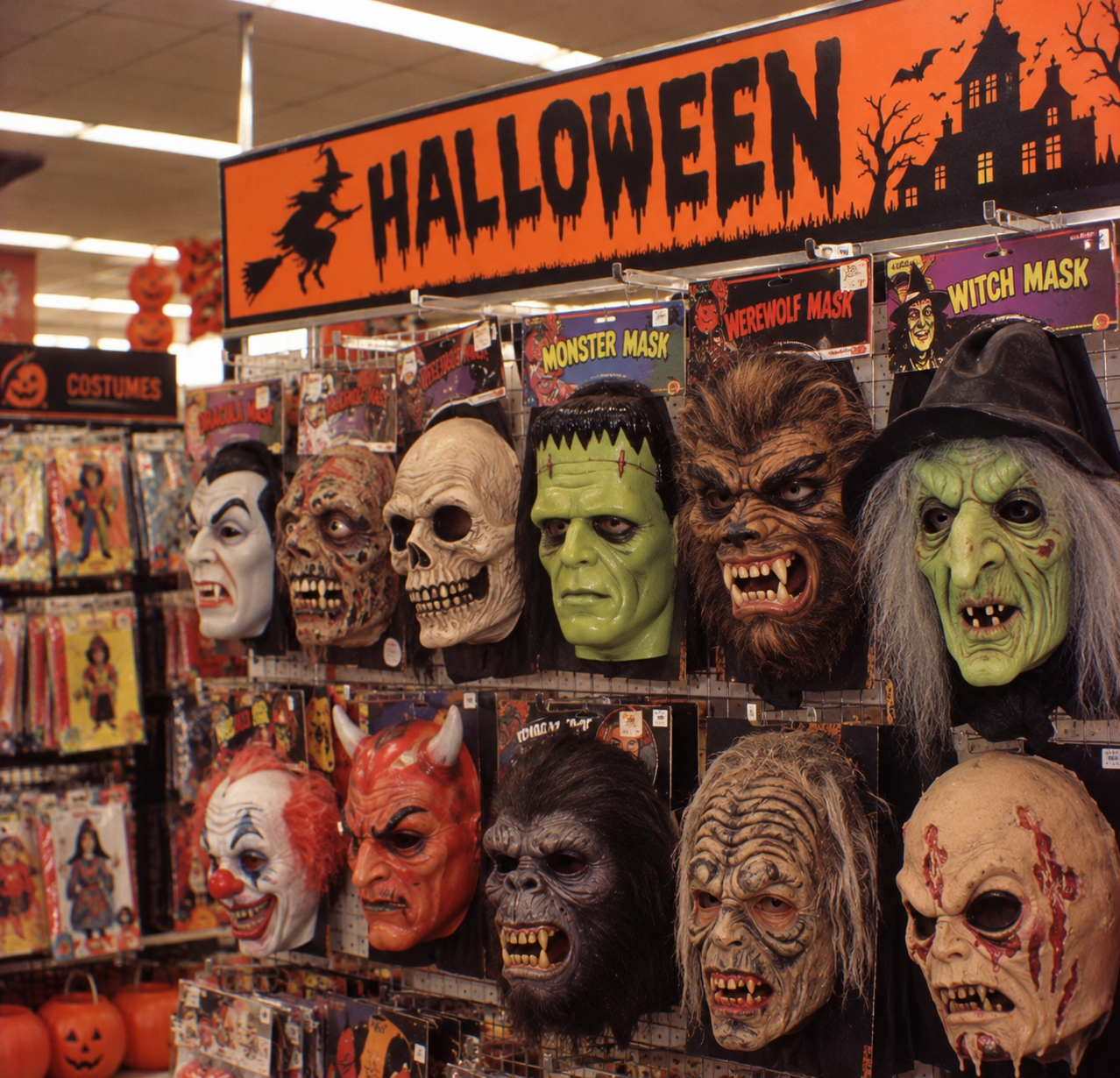
While the boxed plastic masks were usually colorful and cartoonish, the full-head rubber monster masks were an entirely different story. These were the frightening ones, hanging from hooks or displayed on mannequin heads, with bulging eyes, crooked teeth, and grotesque expressions that could make younger shoppers think twice about getting too close. There were witches with enormous noses, snarling werewolves, zombies, and all kinds of creatures that looked like they’d escaped from a horror movie. Unlike the inexpensive masks that came with boxed costumes, these covered most or all of your head, making them considerably more intimidating. Of course, that only made kids want to try them on even more. If your parents allowed it, you could spend several glorious minutes pretending to scare everyone in the Halloween aisle.
Tubes of Fake Blood and Monster Makeup
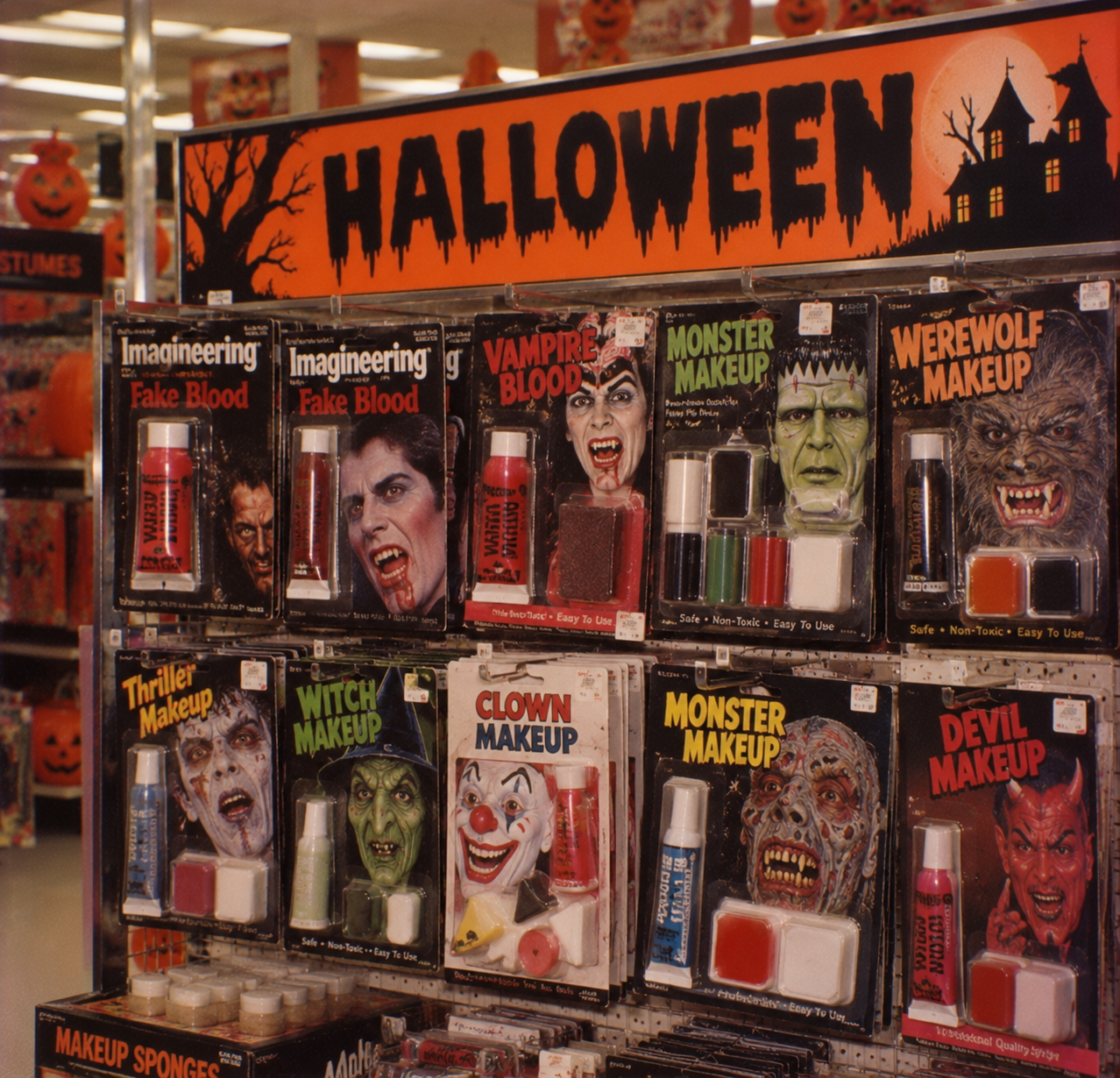
For kids who wanted to create their own frightening costumes, the Halloween makeup section was practically a treasure chest. Small tubes of fake blood, colorful greasepaint, black makeup pencils, and inexpensive monster kits promised to transform an ordinary face into something terrifying. Brands like Imagineering sold special-effects makeup and fake blood that made it possible to recreate some of the gruesome looks kids had seen in horror movies. Naturally, the results weren’t always convincing. A homemade vampire might end up with bright red streaks running down their chin, while an attempted zombie transformation could look more like someone had lost a fight with a box of crayons. But standing in the store and examining all those mysterious little tubes was half the excitement, especially if your parents agreed to buy a few.
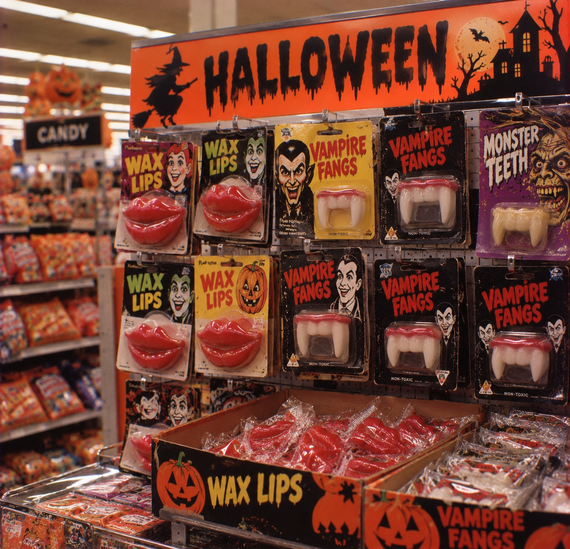
Wax Vampire Fangs and Giant Red Wax Lips
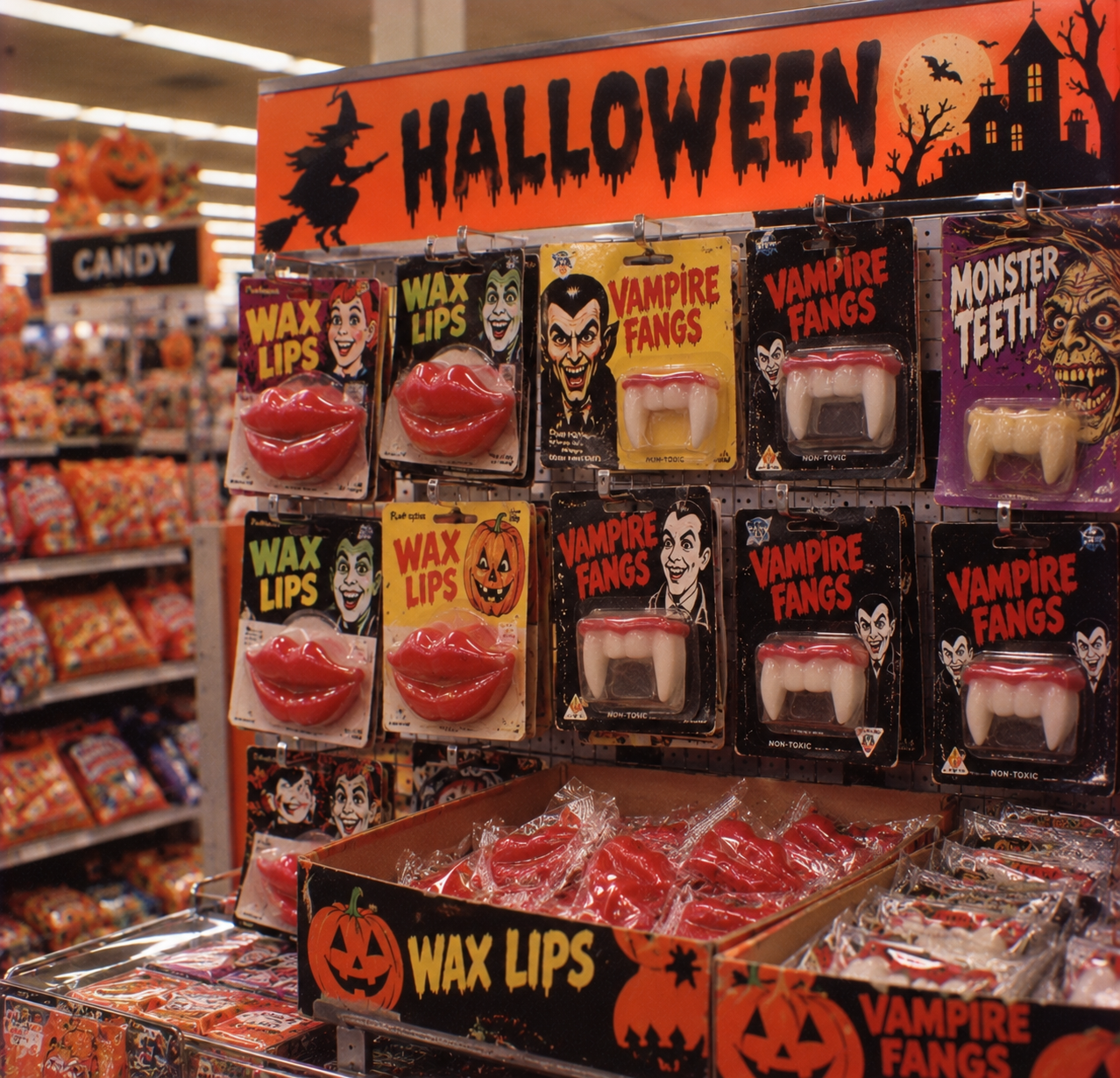
Some of the most entertaining Halloween accessories weren’t really costumes at all. They were those inexpensive wax novelties hanging near the candy displays, particularly the oversized red lips and vampire fangs that kids could wear in their mouths. The appeal was simple: You could transform your face into something ridiculous or slightly frightening without spending much money. And once you’d finished showing off your new vampire teeth or enormous cartoon lips, you could chew the wax, although it wasn’t exactly the most delicious candy in the store. These novelty treats had been around for generations before the 1980s, but they still fit perfectly into the Halloween shopping experience. There was something irresistible about the idea of buying candy that doubled as a costume accessory, even if the novelty wore off after about five minutes.
Giant Bags of Fun-Size Candy Bars
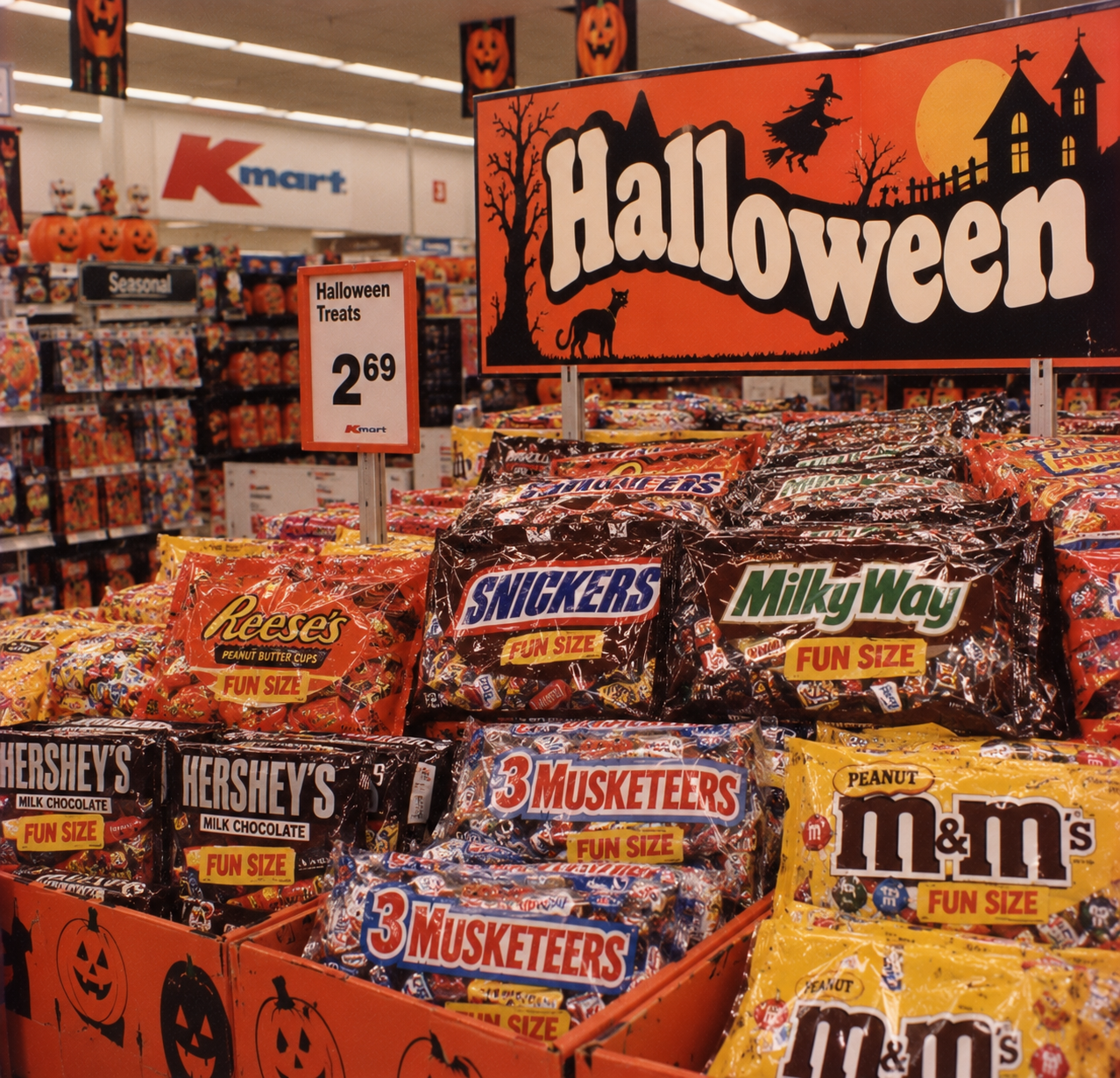
Few sights were more exciting than an enormous display of Halloween candy, particularly those giant bags filled with individually wrapped miniature chocolate bars. Snickers, Milky Way, 3 Musketeers, and Hershey’s chocolates were among the familiar favorites, and the colorful packaging made the bags almost impossible to ignore. Parents inspected the prices and tried to calculate how many trick-or-treaters might show up, while kids concentrated on a much more important question: Would there be any leftovers? By the 1980s, individually wrapped candy had become the standard Halloween giveaway in many American neighborhoods, making those enormous assortments an October shopping staple. And if you were lucky enough to accompany your parents to the store, there was always the possibility that they’d open the bag early and let you have just one piece.
Trending on Cheapism

Bags of Candy Corn and Candy Pumpkins
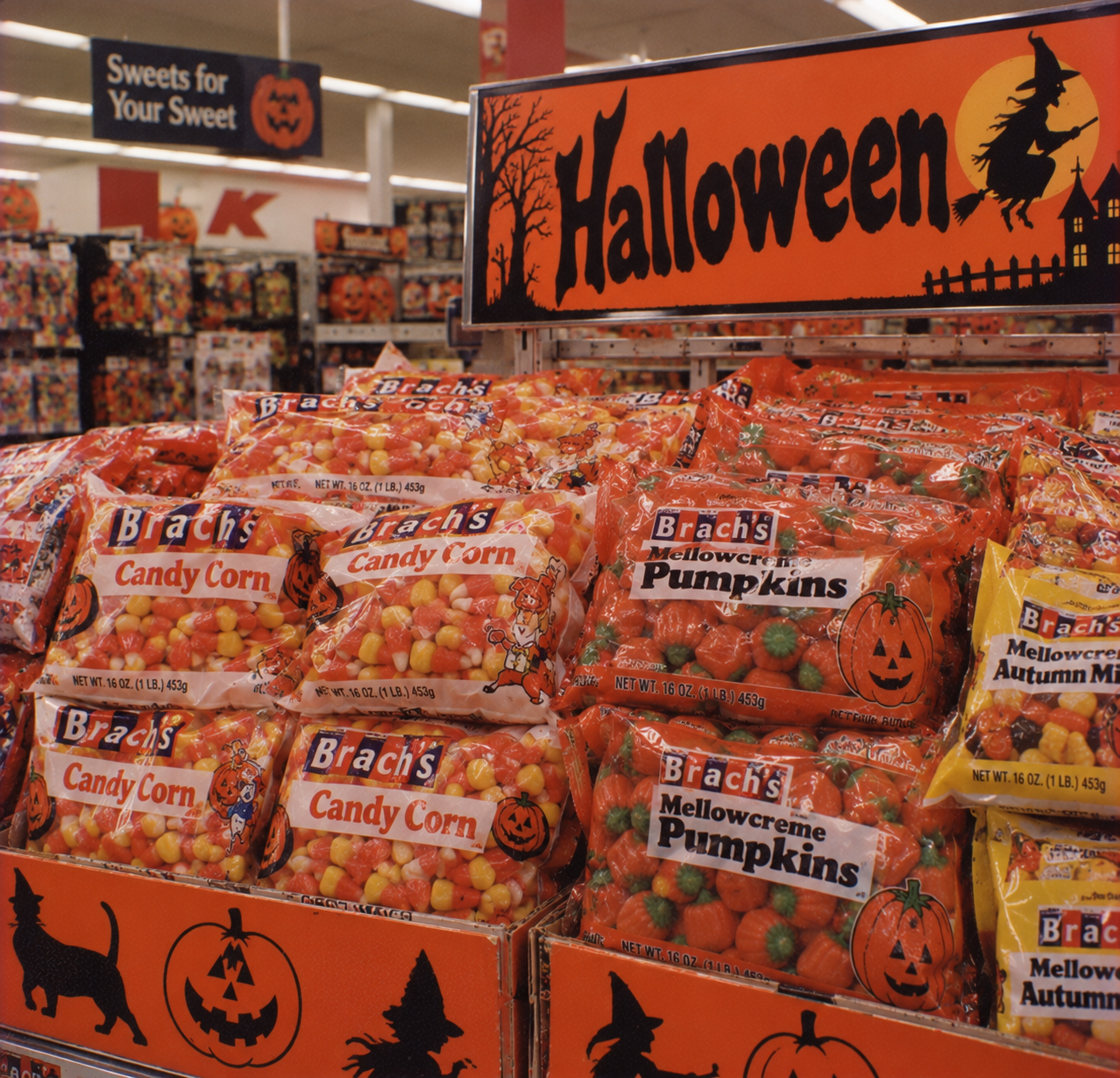
Whether you loved it or couldn’t stand the stuff, candy corn was practically unavoidable once October arrived. Bags of those unmistakable orange, yellow, and white candies appeared alongside mellowcreme pumpkins and other autumn-themed sweets, often in displays dominated by familiar brands like Brach’s. Candy corn had been around long before the 1980s, but its seasonal colors made it feel especially appropriate for Halloween. Kids might beg their parents for a bag, only to discover that a few handfuls were more than enough. Others couldn’t get enough of the sugary little triangles and would happily eat them throughout the month. Either way, seeing those bags stacked near the checkout counter was a sure sign that Halloween was getting closer.
Count Chocula, Franken Berry, and Boo Berry Cereal Boxes
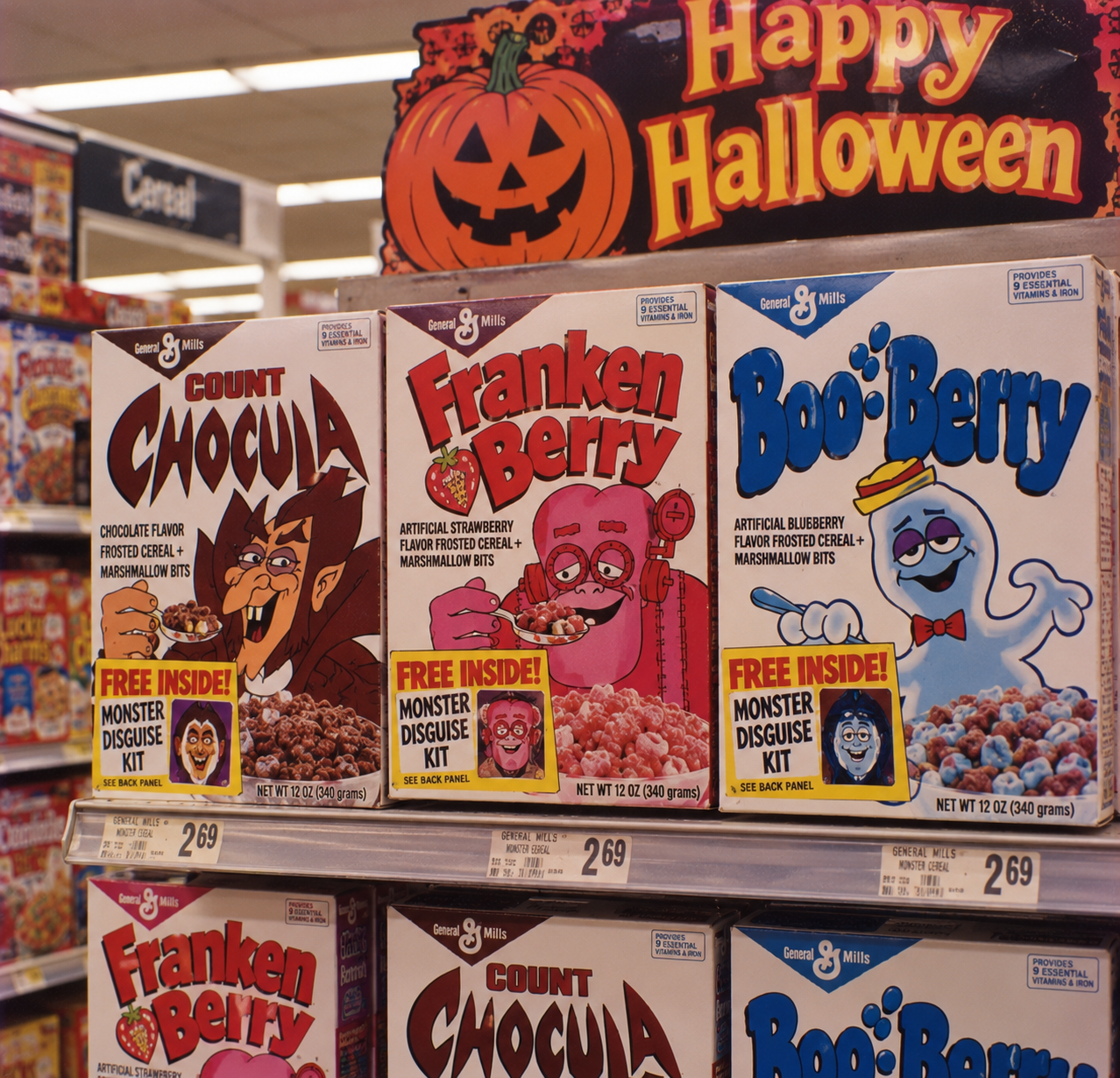
Even the breakfast aisle seemed to get into the Halloween spirit thanks to General Mills’ famous monster cereals. Count Chocula, Franken Berry, and Boo Berry featured colorful cartoon monsters on their boxes, making them particularly appealing to kids who loved anything remotely spooky. Count Chocula promised chocolate-flavored cereal, Franken Berry offered a strawberry-flavored alternative, and Boo Berry brought blueberry-flavored sweetness to the breakfast table. Interestingly, these cereals weren’t actually limited to Halloween during the 1980s. They were available year-round until 2009, but their monster mascots made them feel especially appropriate in October. For kids who weren’t allowed to eat sugary cereal very often, spotting one of those boxes during a grocery trip could inspire some serious negotiations with Mom or Dad.
Colorful Cardboard Witches, Bats, and Black Cats
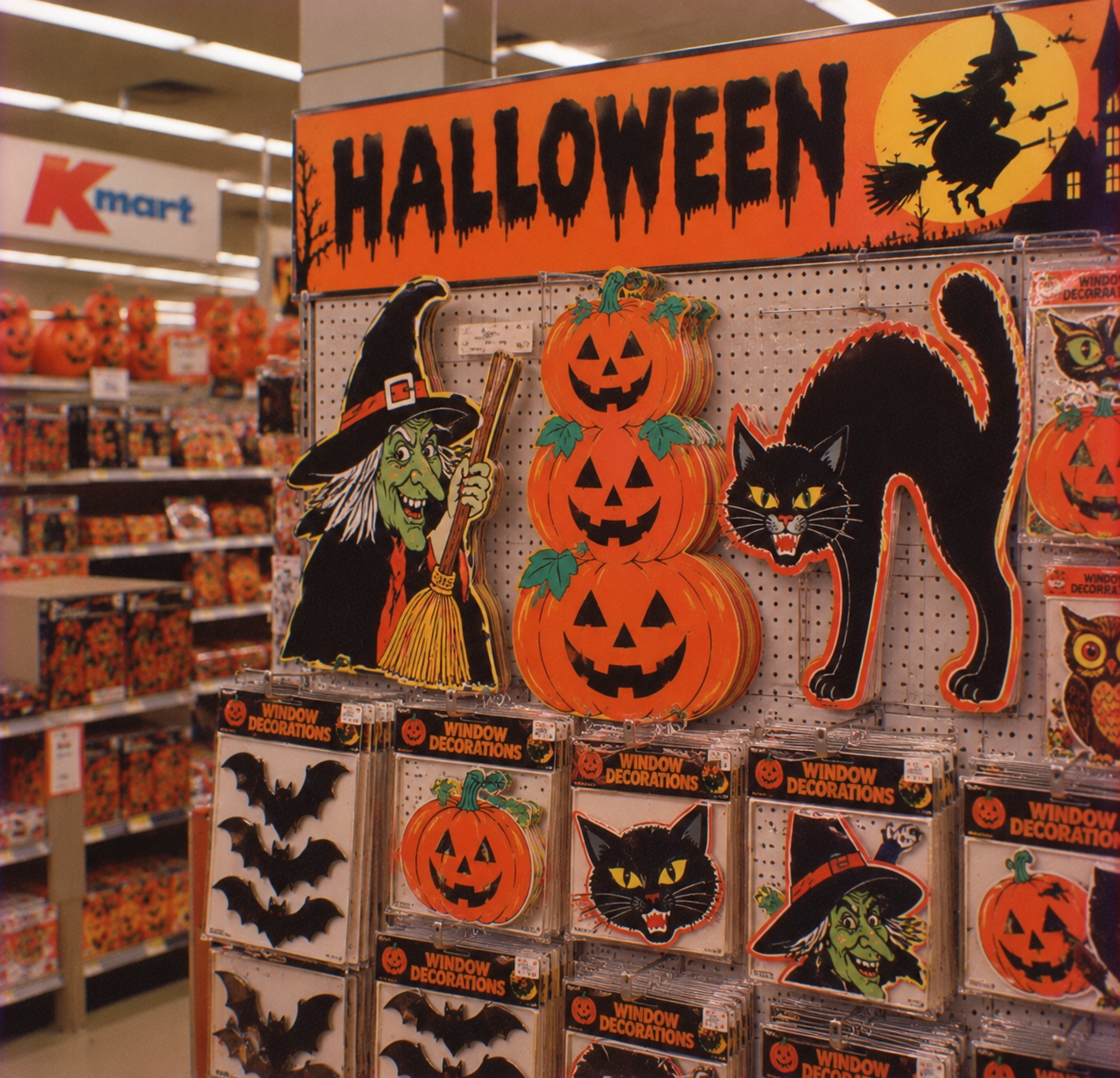
Before elaborate animatronic decorations and enormous inflatable monsters became commonplace, Halloween decorating often involved little more than a handful of colorful cardboard cutouts. Stores displayed grinning jack-o’-lanterns, green-faced witches, arched black cats, and flying bats that families could tape to windows, walls, and front doors. Companies like Beistle had been producing die-cut Halloween decorations for decades, and their distinctive vintage designs remained familiar throughout the 1980s. These decorations were inexpensive, easy to put up, and simple enough to store away until the following October. Of course, after a few years of being taped and untaped, the corners might start curling and the colors could fade. But that rarely stopped families from bringing out the same beloved cardboard witch or black cat every Halloween.
Sign up for our newsletter
Life-Size Cardboard Skeletons With Movable Arms
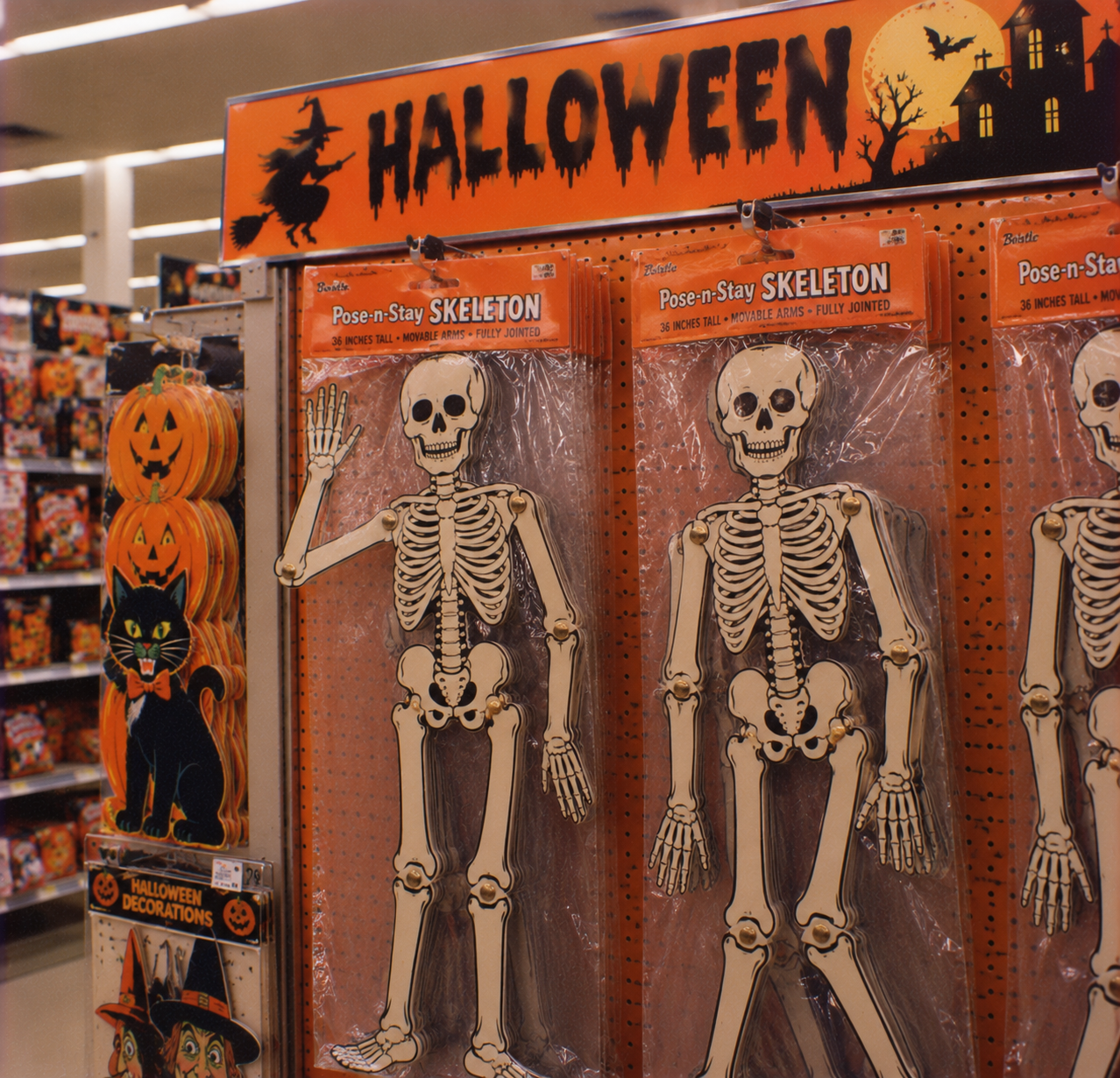
Among the most impressive decorations in the Halloween aisle were those enormous cardboard skeletons with movable arms and legs. Unlike ordinary paper cutouts, these jointed decorations could be positioned into all kinds of ridiculous poses, making them especially appealing to kids who wanted to turn their bedrooms into miniature haunted houses. Some were nearly as tall as the children examining them, with white cardboard bones connected by little metal fasteners. You could hang one on a door, tape it to a wall, or arrange its limbs so it appeared to be dancing. A firsthand account of Halloween shopping at Kmart in 1987 even recalls seeing full-size poseable skeletons among the seasonal decorations. They were relatively simple compared with today’s elaborate Halloween displays, but to an imaginative kid, they offered endless possibilities for scaring siblings and unsuspecting visitors.
Plastic Popcorn Decorations That Looked Like Melted Crayons
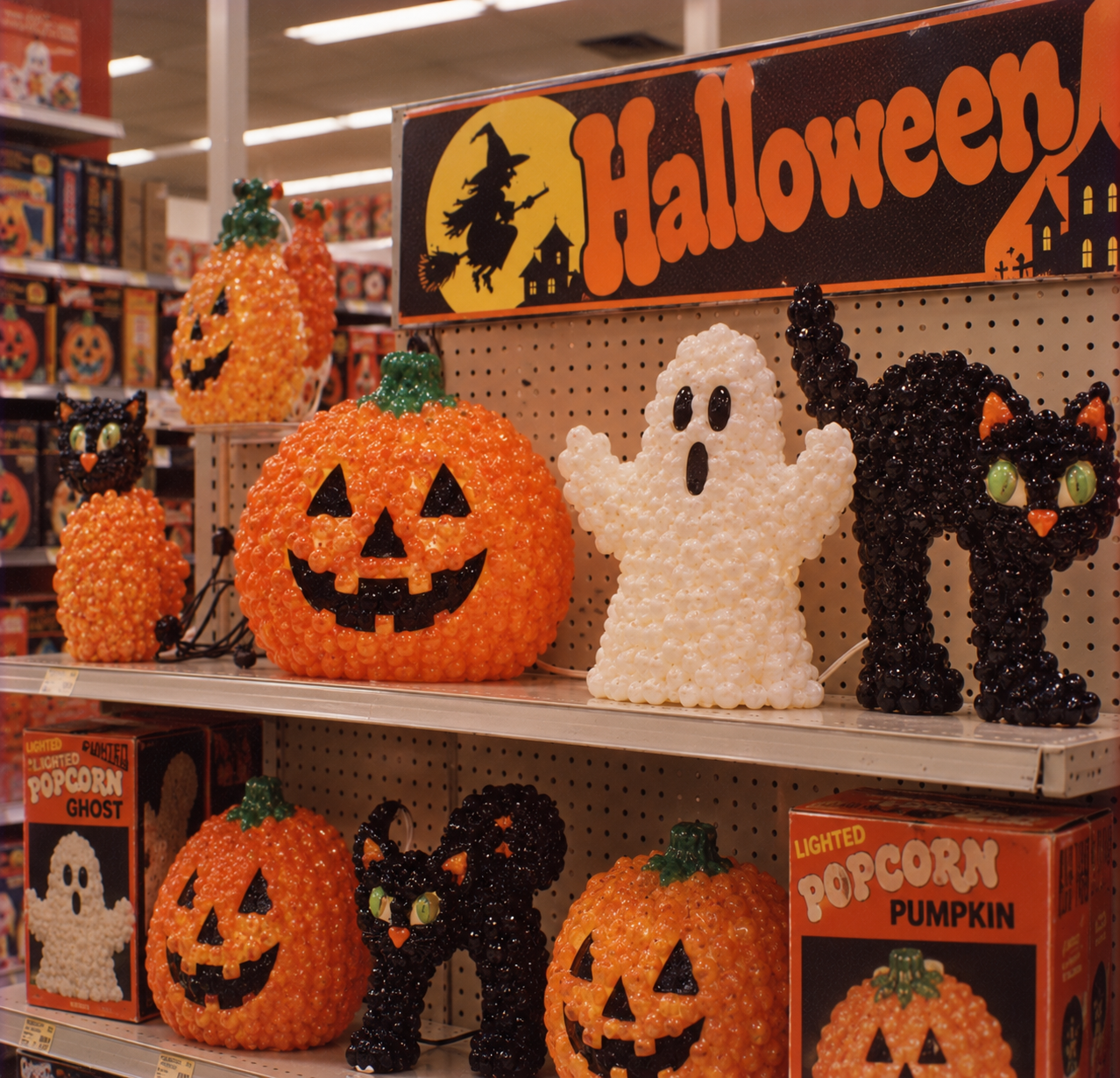
If you remember those strange, bumpy plastic Halloween decorations that looked like they’d been made from thousands of tiny melted beads, you’re definitely not alone. Often called popcorn decorations, these colorful wall hangings came in the shapes of pumpkins, ghosts, witches, skulls, and other familiar Halloween characters. Their chunky, textured surfaces made them stand out from ordinary cardboard decorations, and their bright orange, black, and white colors practically demanded attention. They were especially memorable in discount-store Halloween displays during the 1980s, when inexpensive decorations like these were a popular way to add a little seasonal excitement to the house. Kids might not have known what they were called, but they certainly recognized that unusual texture. And because they were made from plastic, families could bring them out year after year without worrying about torn paper or bent cardboard.
Light-Up Plastic Jack-o’-Lanterns
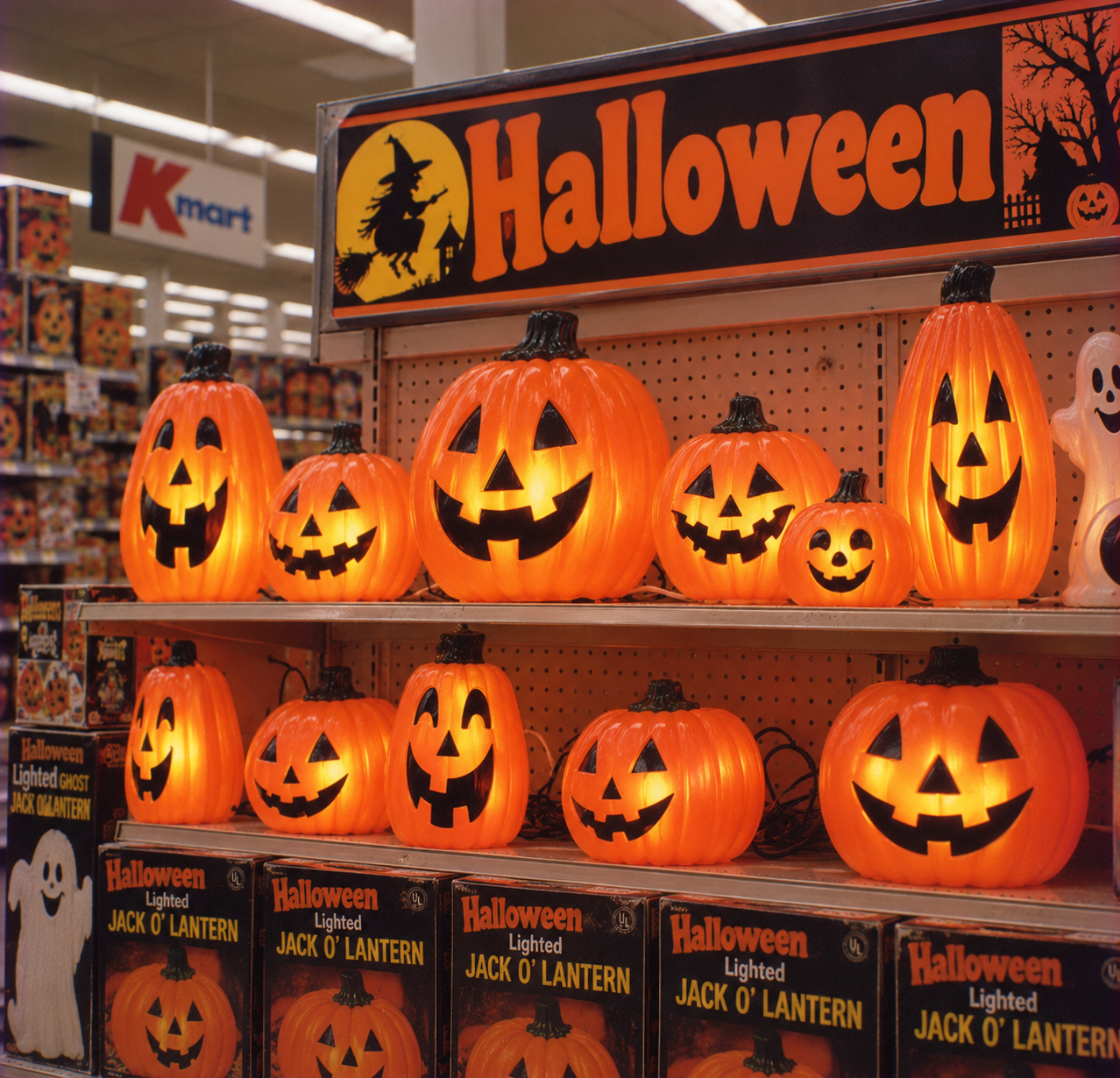
Long before front yards were filled with enormous inflatable ghosts and synchronized Halloween light shows, a glowing plastic jack-o’-lantern was enough to make a house look festive. Stores sold molded-plastic pumpkins with cheerful or slightly sinister faces that lit up from inside, usually with a small electric bulb. Manufacturers such as Empire Plastics and General Foam produced these reusable blow-mold decorations, which became familiar sights in windows, on porches, and beside front doors. Unlike real pumpkins, they didn’t need carving, wouldn’t rot before Halloween, and could be stored away for the following year. For kids wandering through the store, seeing an entire shelf of illuminated orange faces was almost as exciting as spotting the Christmas lights a couple of months later. And if your family bought one, there was a good chance it would become part of your Halloween decorations for years to come.
Bright Orange Plastic Trick-or-Treat Buckets
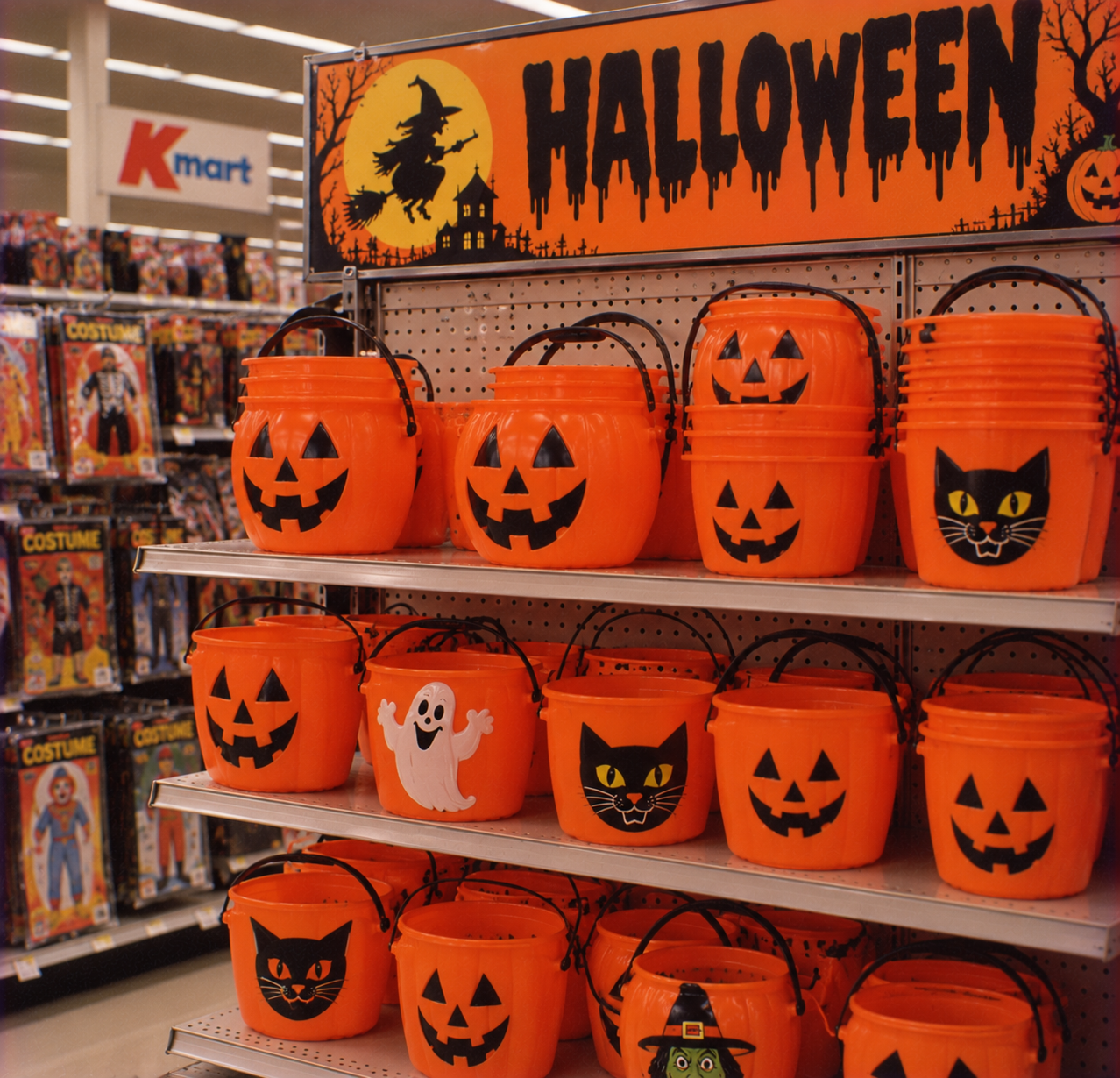
Nothing made Halloween feel closer than seeing stacks of bright orange plastic jack-o’-lantern buckets waiting to be filled with candy. With their black grinning faces and simple plastic handles, these inexpensive containers were practically everywhere during October. They were lightweight, easy for little kids to carry, and just large enough to make you believe you might collect an unbelievable amount of candy. Of course, once the bucket started getting heavy, the handle could become surprisingly uncomfortable. The 1980s also brought another memorable variation when McDonald’s introduced its Halloween Happy Meal pails nationally in 1986, featuring designs such as McBoo, McPunk’n, and McGoblin. Those particular buckets came from restaurants rather than store shelves, but they quickly became another beloved part of the decade’s Halloween memories. Whether you carried a regular pumpkin bucket or a collectible McDonald’s pail, the important thing was getting it filled before the night was over.
When Browsing the Halloween Aisle Was Half the Fun
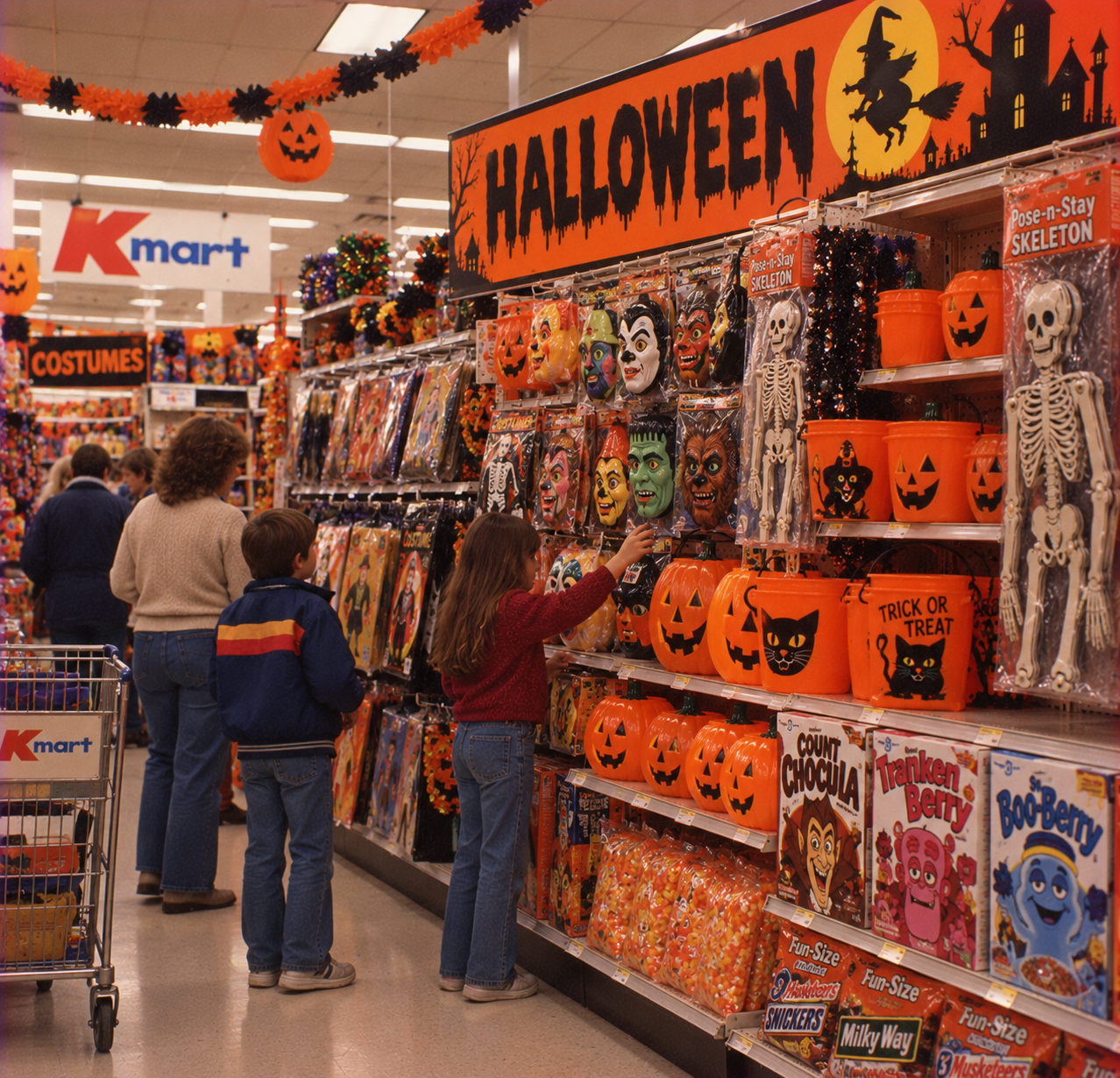
Looking back, Halloween shopping in the 1980s wasn’t necessarily about buying the biggest decorations or the most elaborate costumes. Sometimes, the excitement came from simply wandering through the seasonal aisle, examining the monster masks, admiring the glowing plastic pumpkins, and wondering whether your parents might let you bring home one more bag of candy. Those inexpensive cardboard decorations, colorful costume boxes, and familiar orange buckets became part of the holiday’s charm. And for plenty of kids, the annual transformation of an ordinary Kmart or Woolworth’s aisle was one of the first signs that the best night of October was almost here.