Walk into an American home in the 1970s and plenty of things would look unfamiliar today — and not just because everything seemed to come in avocado green, harvest gold, or some shade of brown. Many of these 1970s home features, from furniture and gadgets to household fixtures, were completely ordinary at the time but have since nearly disappeared.
Some became obsolete as technology changed. Others were victims of shifting tastes, remodeling trends, or new ideas about how we use our homes. Telephone tables no longer had much purpose once phones left the wall, while rabbit-ear antennas couldn’t compete with cable and streaming.
From giant console stereos to carpeted bathrooms, these 14 once-common features could instantly transport you back to a 1970s home.
Telephone Tables
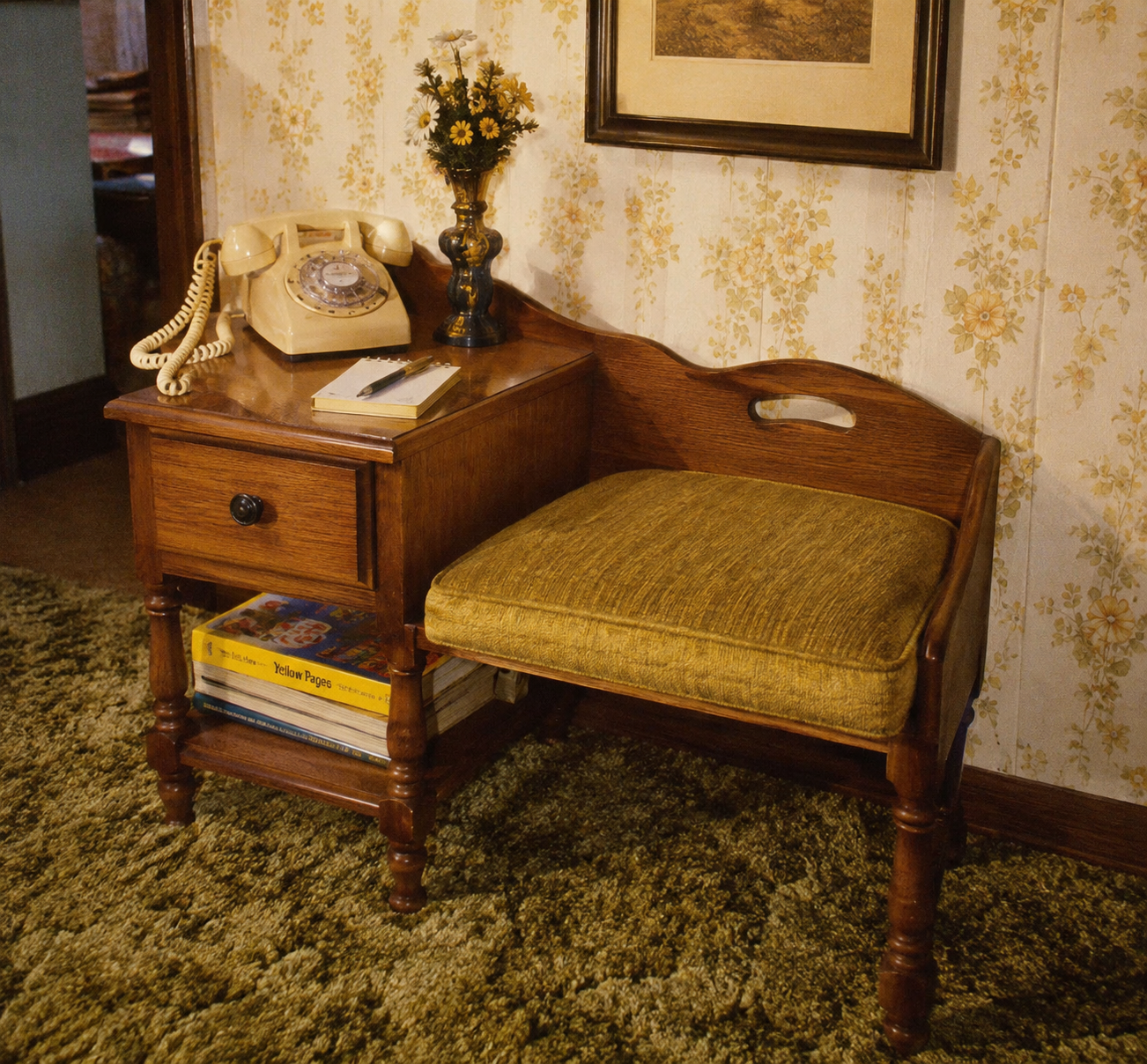
Before everyone carried a phone in their pocket, the household telephone had a designated spot — and sometimes its own piece of furniture. Telephone tables typically combined a small surface for the phone with an attached seat, giving you somewhere to settle in for a long conversation. A rotary phone, thick phone book, notepad, and pen completed the setup. Cordless phones eventually made the dedicated station less necessary, and cellphones pretty much finished the job.
Giant Console Stereos
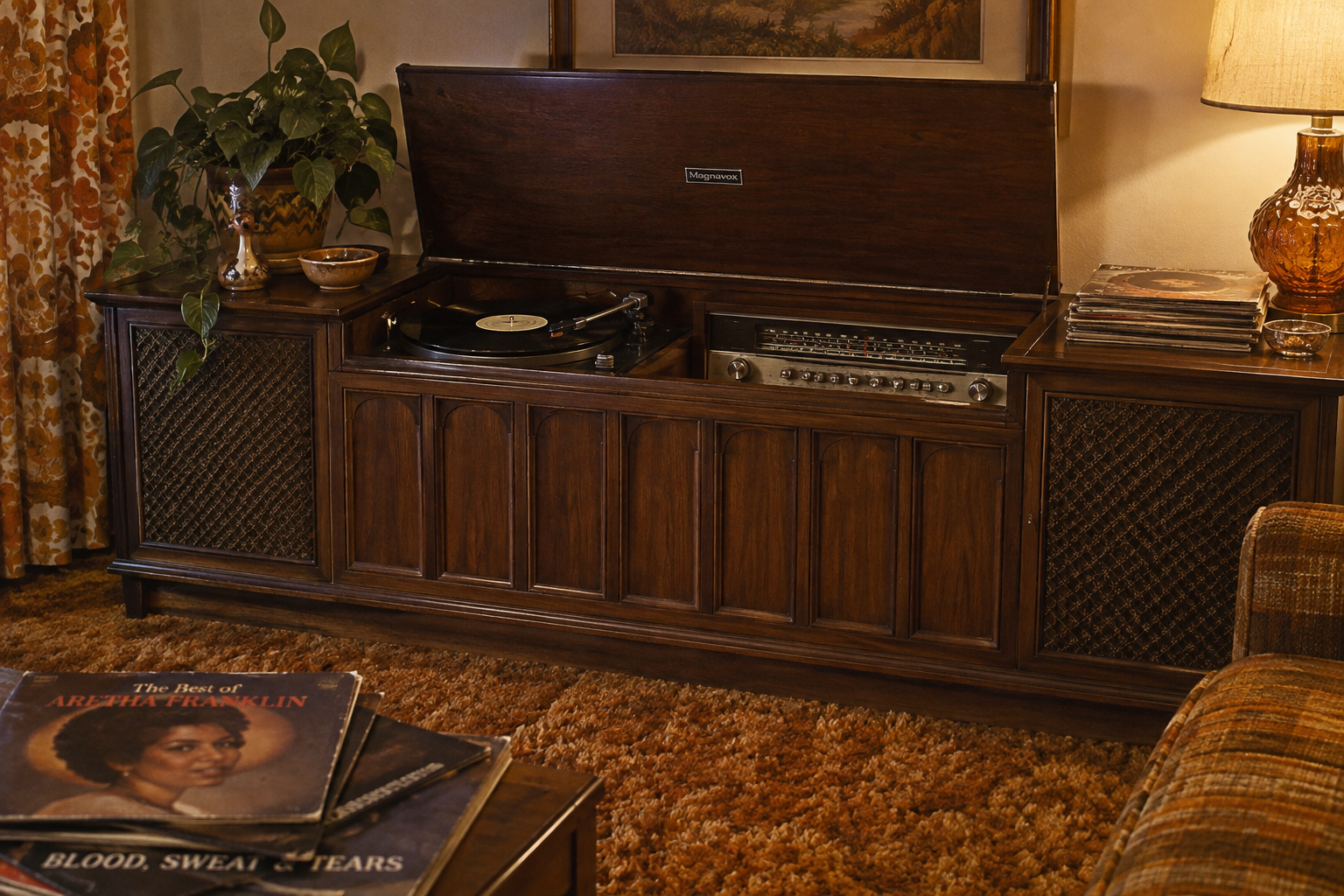
Music didn’t always come from a speaker small enough to sit on a bookshelf. Many 1970s living rooms had enormous wooden stereo consoles that doubled as substantial pieces of furniture. Lift the top and you might find a record player, AM/FM radio, speakers, and sometimes an 8-track player hidden inside. As separate stereo components, compact systems, and eventually digital music became popular, there wasn’t much reason to devote several feet of the living room to one massive cabinet.
Avocado-Green Appliances
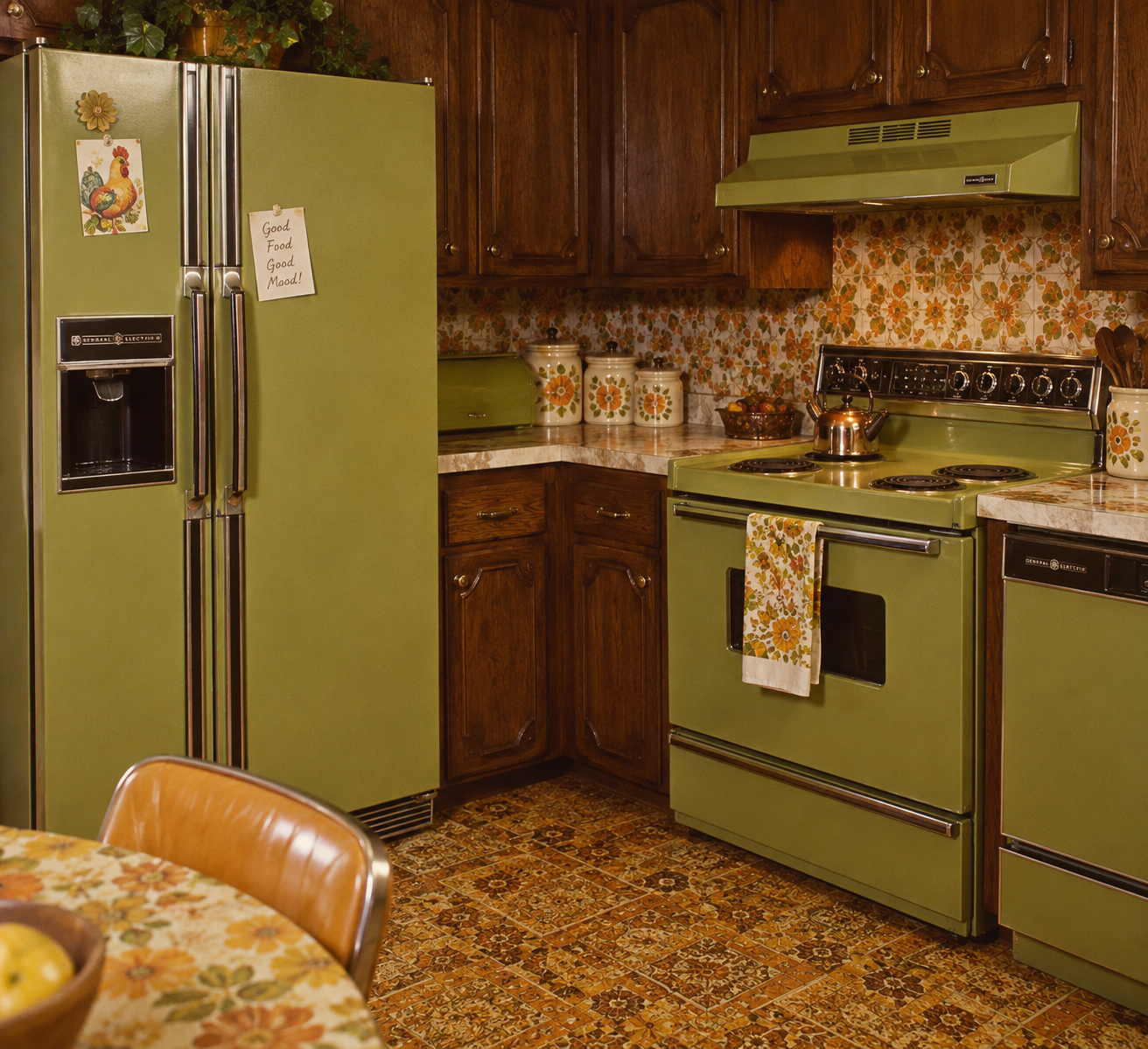
Few colors scream “1970s kitchen” quite like avocado green. Refrigerators, ovens, dishwashers, and even smaller countertop appliances came in the unmistakable shade, with harvest gold and coppertone providing equally bold alternatives. Homeowners could coordinate practically an entire kitchen around one color. Eventually, neutral white, black, and stainless steel appliances took over, leaving avocado green as one of the quickest visual shortcuts for spotting a kitchen from the era.
Macramé Plant Hangers
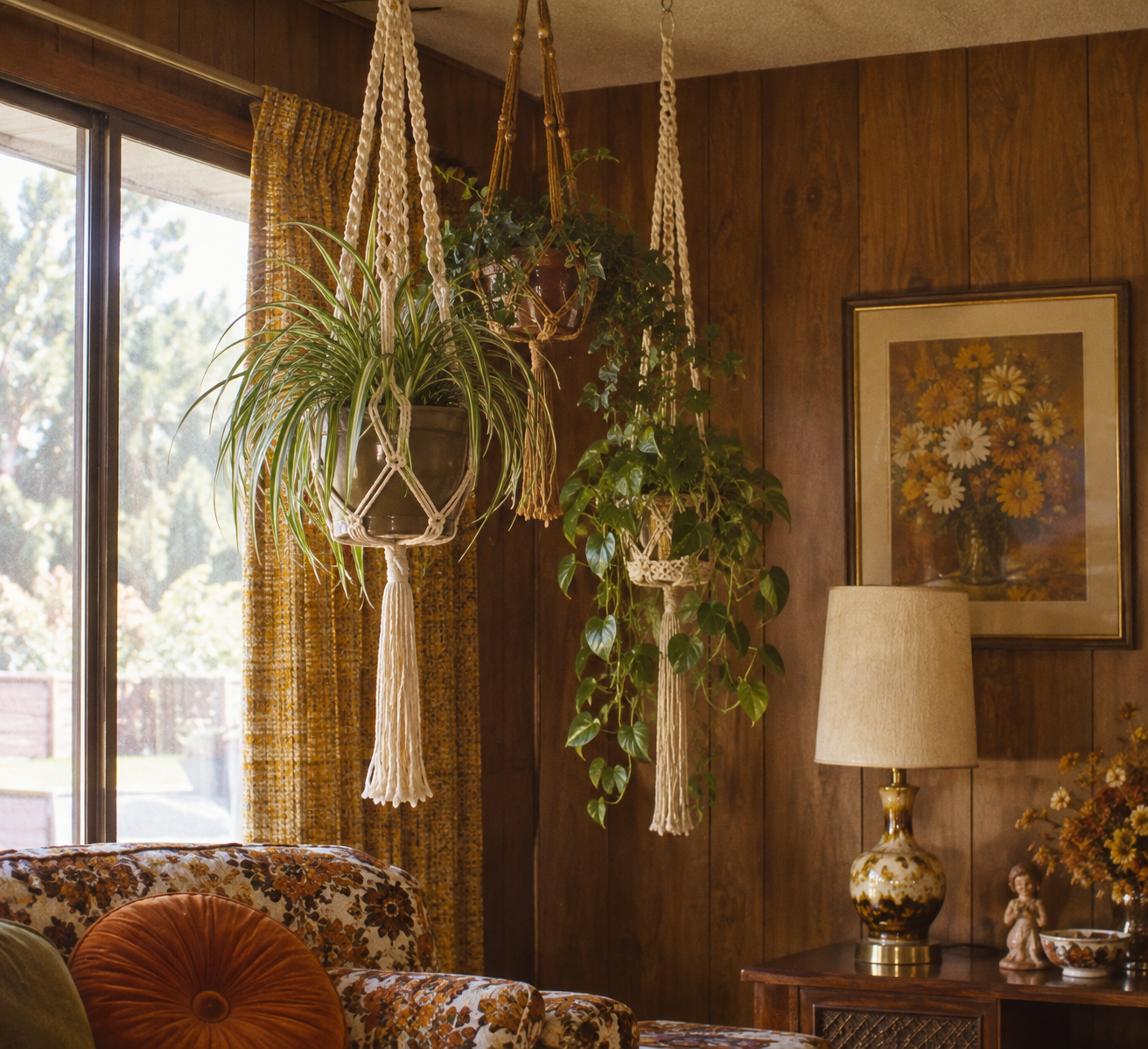
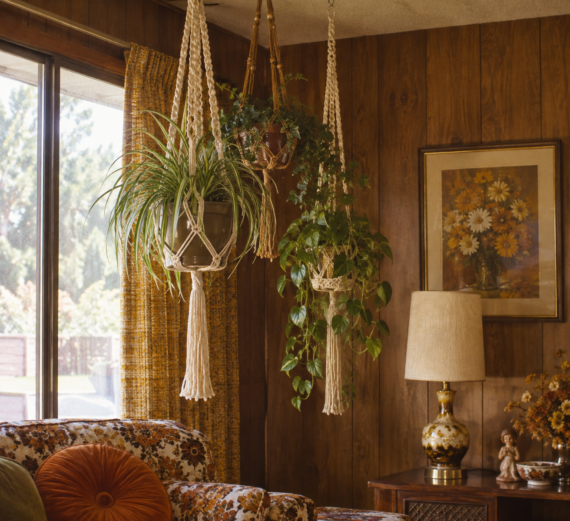
Houseplants didn’t always sit neatly on shelves or windowsills. In the 1970s, they frequently dangled from the ceiling in elaborate macramé holders made from hand-knotted rope. Trailing plants such as spider plants were especially well suited to the look, which fit perfectly with the decade’s enthusiasm for handmade, earthy decor. Macramé never vanished completely — and has even made periodic comebacks — but you’re unlikely to see quite as many plants suspended from the ceiling as you would have in a stylish ’70s home.
TV Antennas on Top of the Set
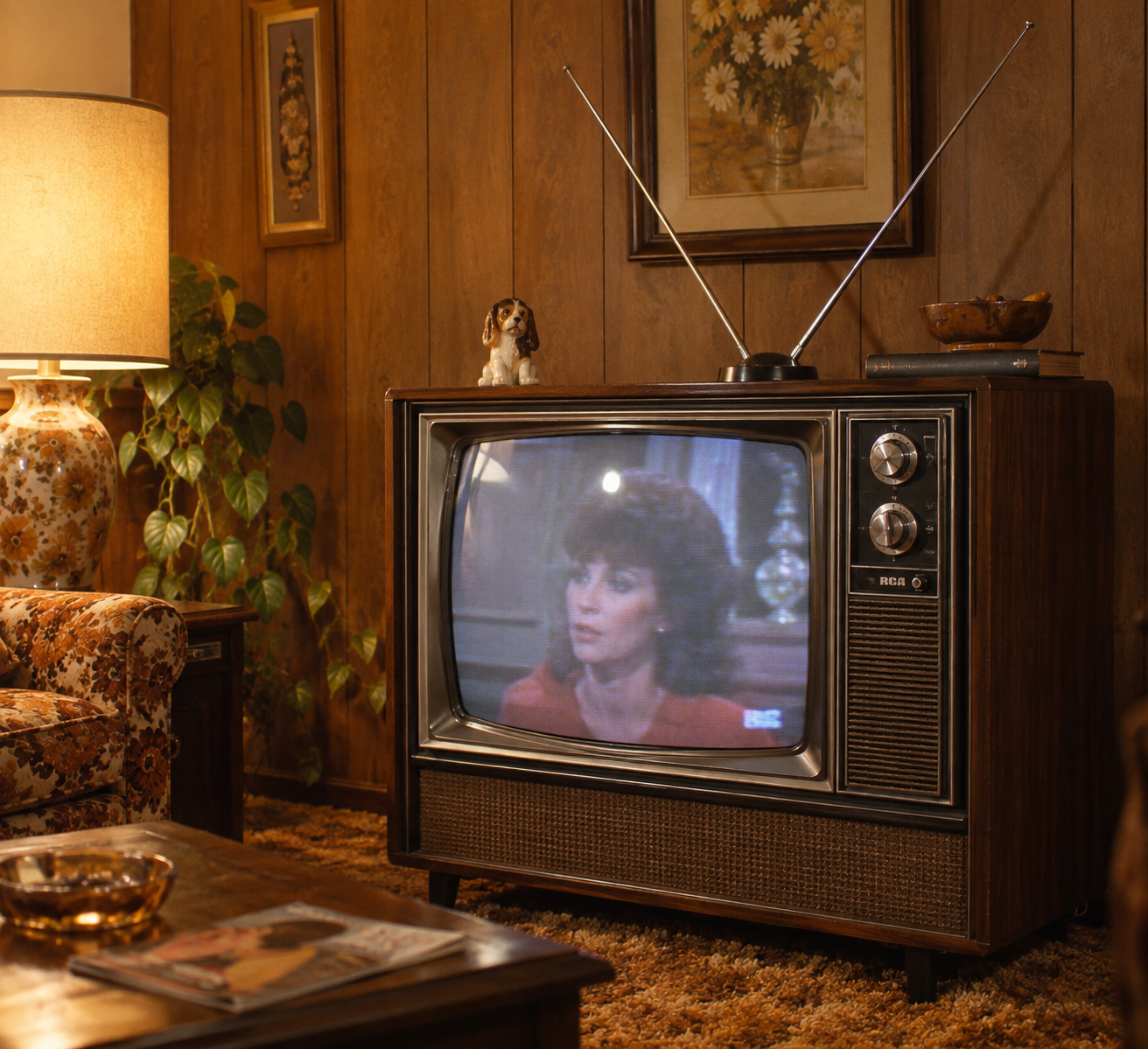
Getting a clear picture once required a surprising amount of physical effort. Televisions commonly had telescoping “rabbit ear” antennas that needed to be extended, shortened, rotated, and repositioned until the picture finally cooperated. And when none of that worked, somebody might add a strategically placed piece of aluminum foil. Cable and satellite TV gradually made the ritual less common, while digital broadcasting and streaming have made a pair of antennas perched on a wood-grain TV look downright ancient.
Trending on Cheapism


Built-In Intercom Systems
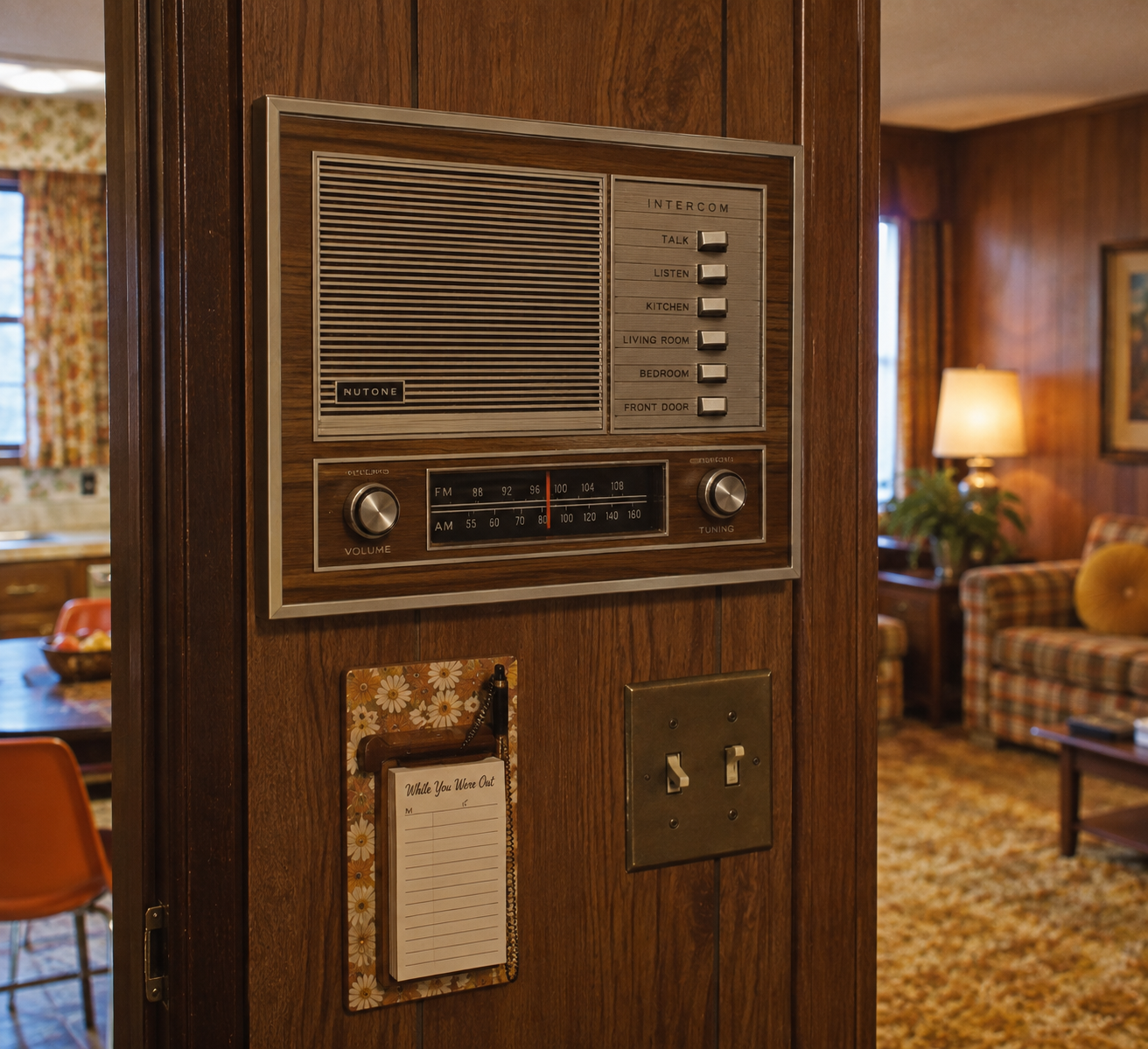
Why yell upstairs when you could press a button on the wall? Some 1970s homes had built-in intercom systems with speaker panels installed throughout the house, allowing family members to communicate from room to room. More elaborate versions could play the radio throughout the house or connect to a speaker near the front door. Cordless phones and later cellphones and wireless smart speakers made the systems largely unnecessary. You can still spot old intercom panels in plenty of older houses, though they’re not always functional.
Metal TV Dinner Trays
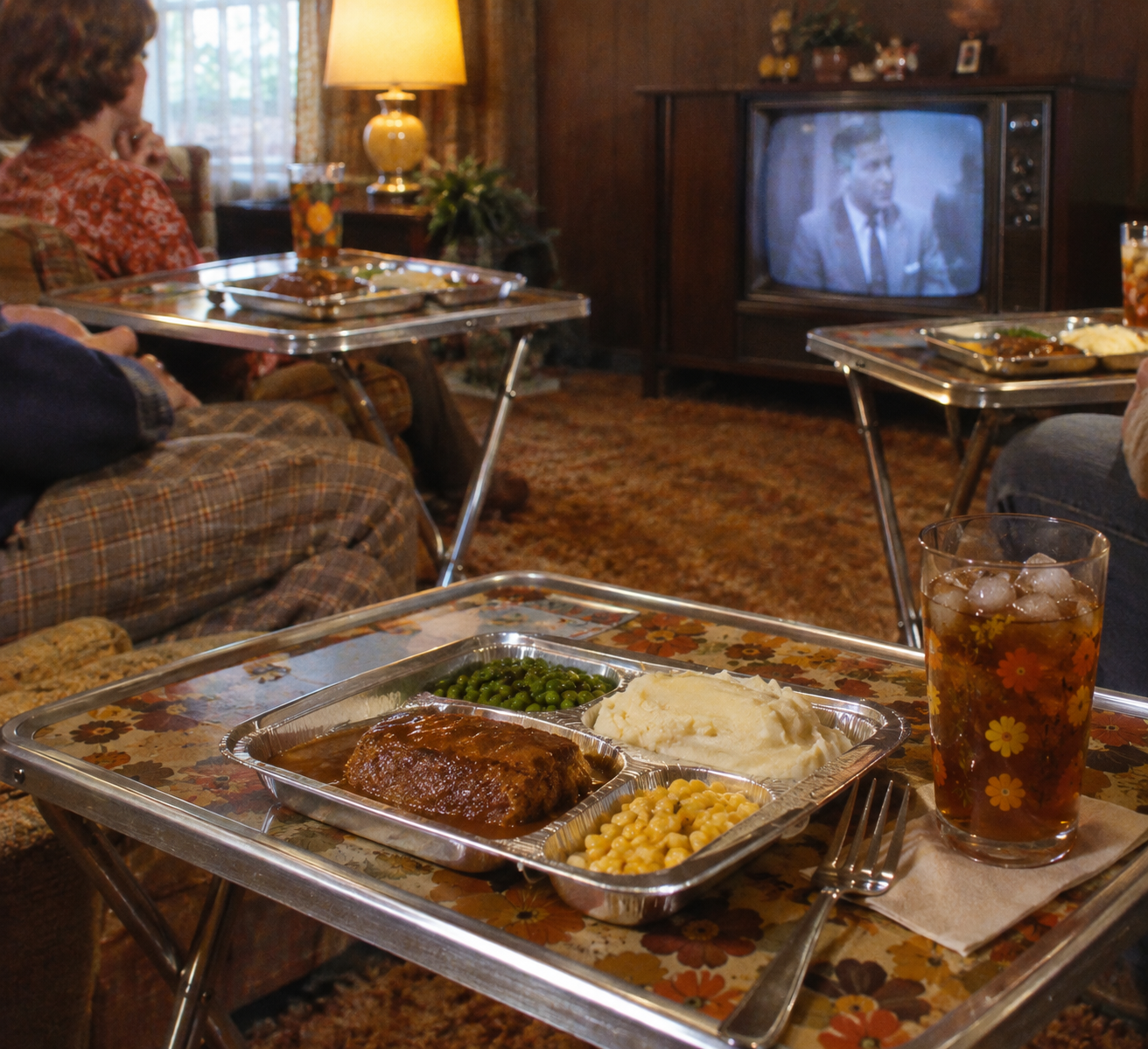
Eating dinner in front of the television wasn’t invented by streaming. Folding TV trays gave everyone their own little table, often decorated with faux wood grain, flowers, or colorful printed patterns. When dinner was over, the metal trays could be folded up and tucked away until the next TV meal. Coffee tables, lap desks, and changing approaches to casual dining gradually pushed them aside, but a matching set of folding trays would have looked perfectly normal beside the family television in the ’70s.
A Dedicated Sewing Machine Cabinet
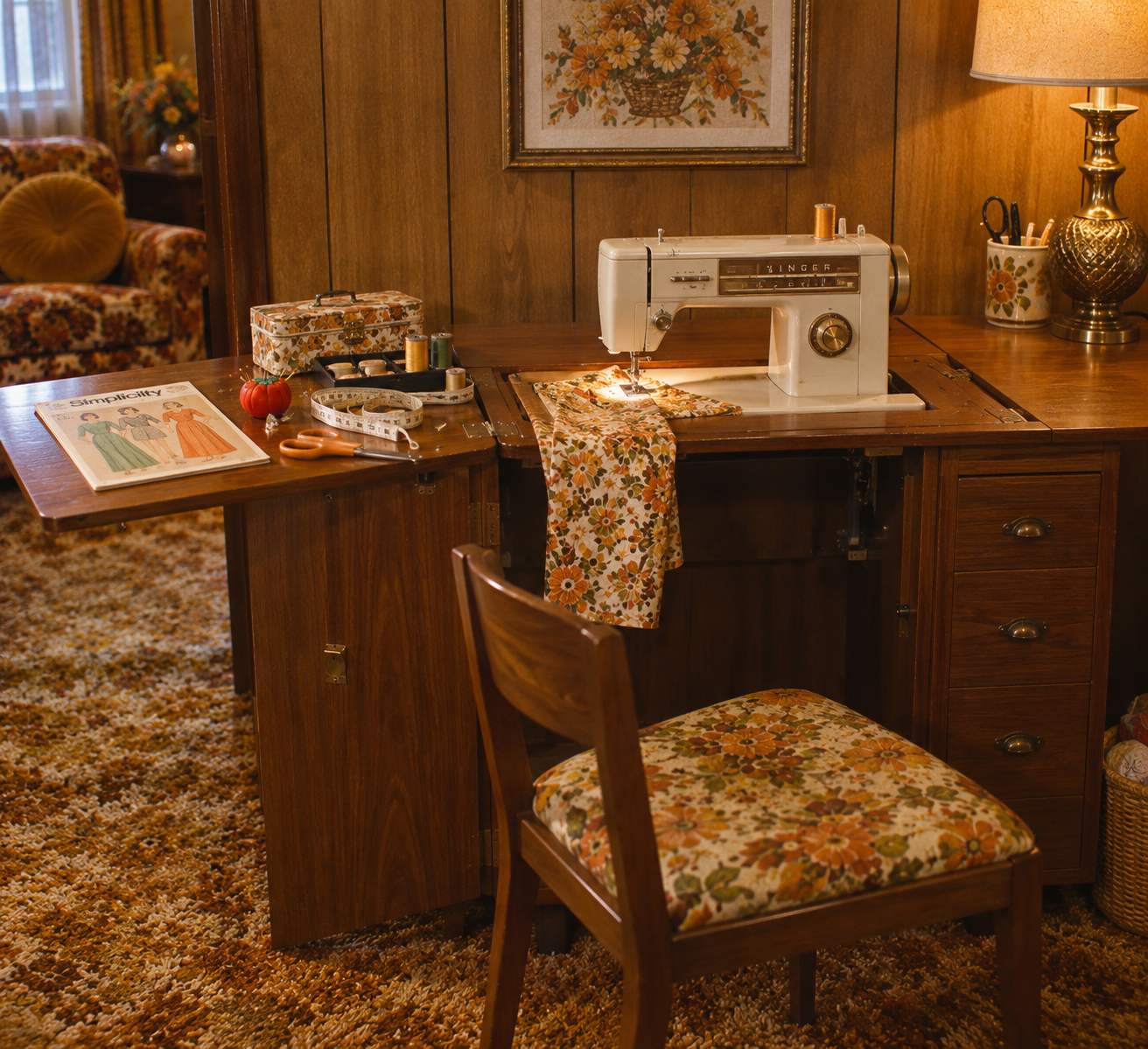
A sewing machine could once command as much floor space as a small desk. Rather than being pulled out of a closet whenever someone needed it, many sewing machines were built into wooden cabinets, with the machine folding neatly inside when it wasn’t being used. Drawers and nearby baskets held thread, fabric, patterns, and other supplies. As ready-made clothing became cheaper and home sewing declined, fewer households needed to permanently dedicate a corner of a room to mending and making clothes.
Sign up for our newsletter
Ashtrays in Every Room
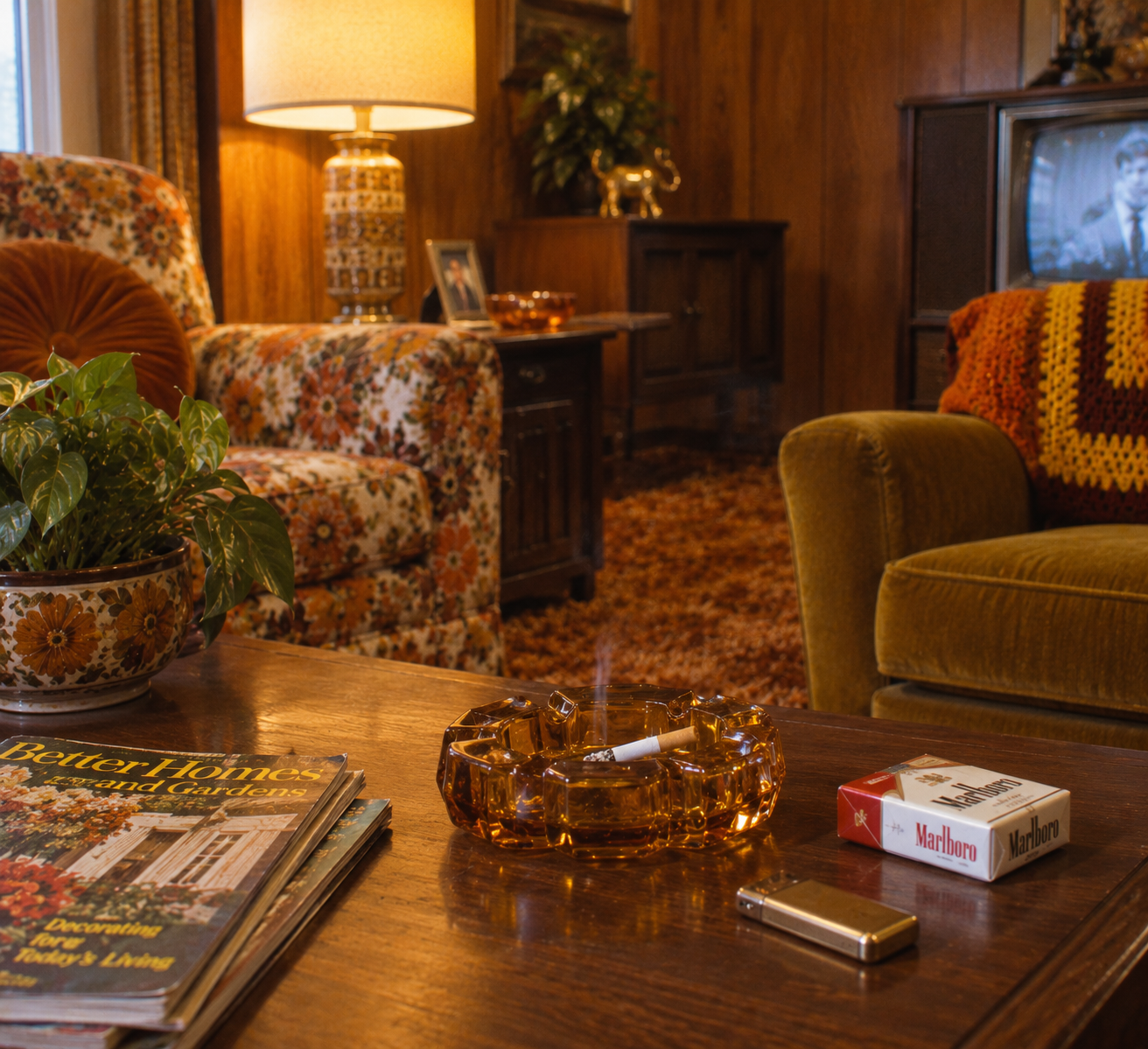
Ashtrays weren’t necessarily hidden away for the occasional smoker. They could be prominent pieces of decor sitting on coffee tables, desks, end tables, and kitchen counters. Heavy glass versions in amber and other earthy colors fit especially well with ’70s interiors, and even households without regular smokers might keep one around for guests. As smoking rates fell and awareness of the dangers of secondhand smoke grew, indoor smoking became far less socially acceptable — and the ubiquitous household ashtray largely disappeared with it.
Decorative Bathroom Carpet
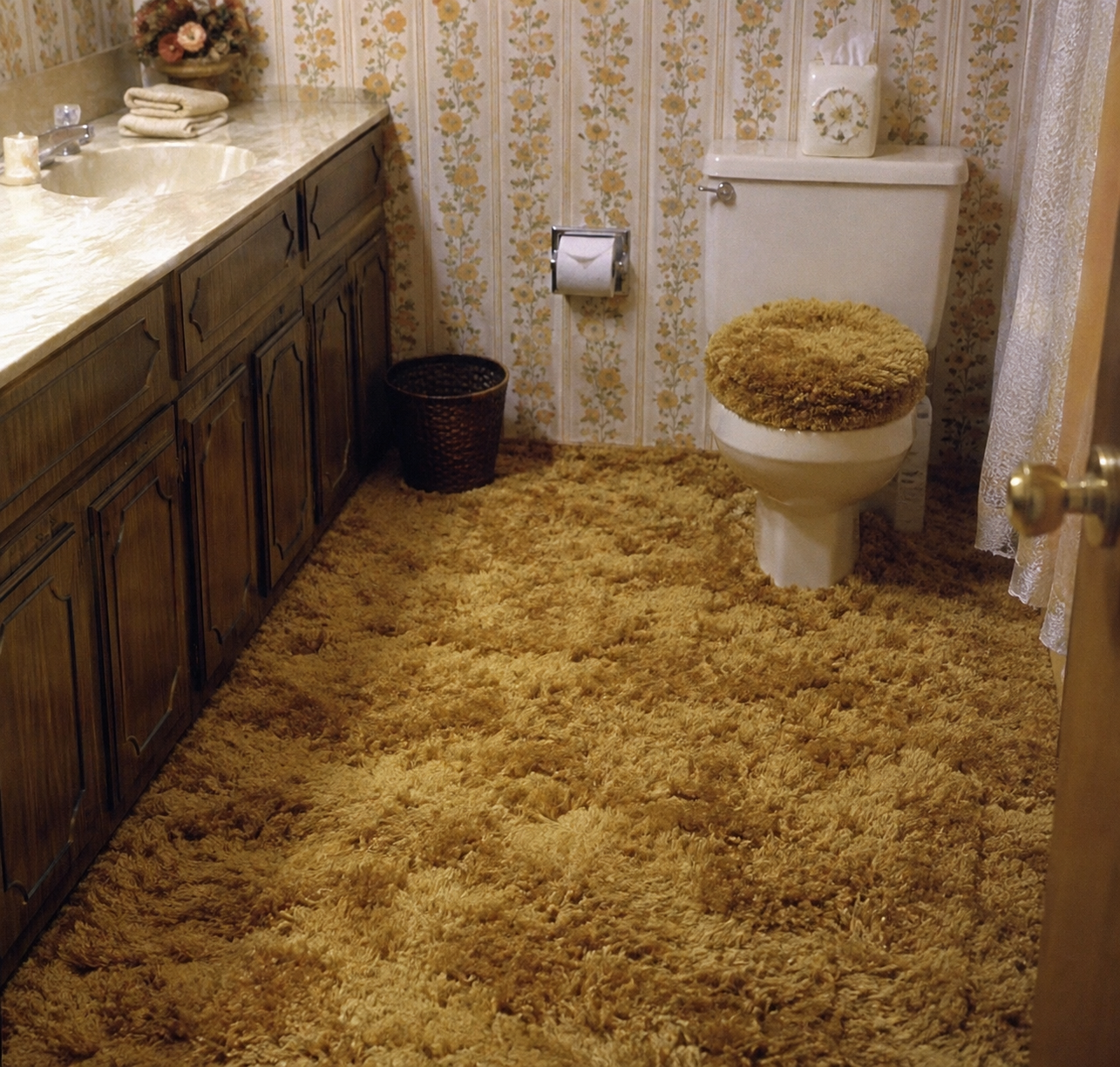
Carpeting wasn’t always confined to bedrooms and living rooms. Some 1970s bathrooms had thick carpet covering practically the entire floor, sometimes carefully cut to fit around the toilet. Matching fuzzy toilet-seat covers could complete the look, often coordinated with colorful sinks, tubs, and toilets. It may have felt warm underfoot, but putting absorbent carpet in one of the dampest rooms in the house had obvious drawbacks. Hard, water-resistant flooring eventually became the much more practical standard.
Waterbeds
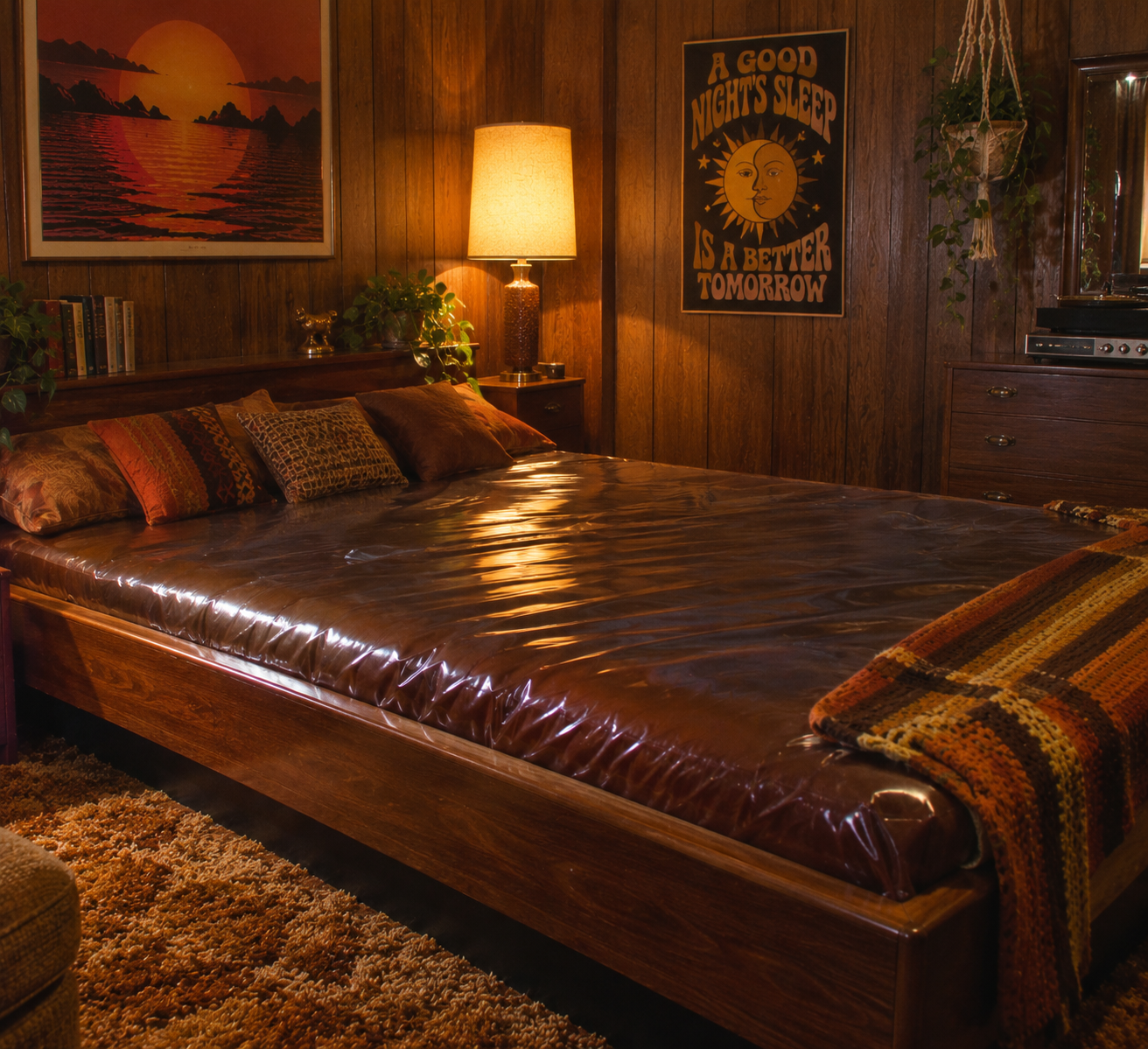
Few pieces of bedroom furniture were as unmistakably ’70s as the waterbed. The water-filled mattresses were often surrounded by hefty wooden frames and became enough of a cultural phenomenon to feel like a lifestyle statement rather than simply somewhere to sleep. Unfortunately, they were also extremely heavy, could leak, required setup and maintenance, and sometimes needed heaters to keep the water comfortable. Improvements in conventional mattresses eventually made sleeping on a giant bag of water a lot less appealing.
Encyclopedias Taking Up an Entire Shelf
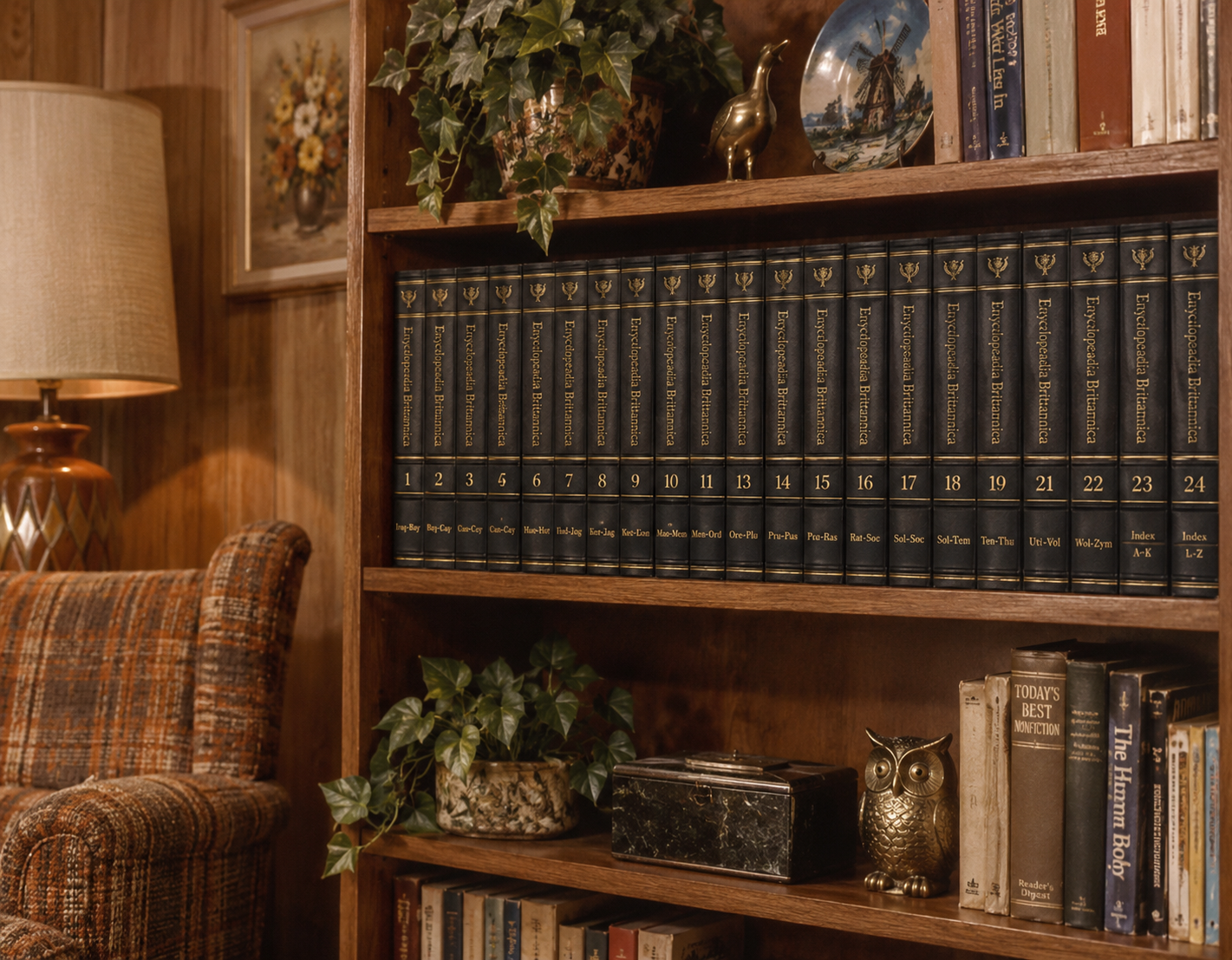
Before a school report started with an internet search, it might begin with a trip to the family encyclopedia set. Multi-volume encyclopedias could occupy an entire bookshelf, and owning a complete matching collection was a point of pride in many households. Kids used them for homework while adults could reach for a volume whenever they wanted to look something up. Computers and the internet eventually made those shelves of reference books unnecessary — though no search engine can quite recreate the panic of discovering the exact volume you needed was missing.
Indoor Hanging Swag Lamps
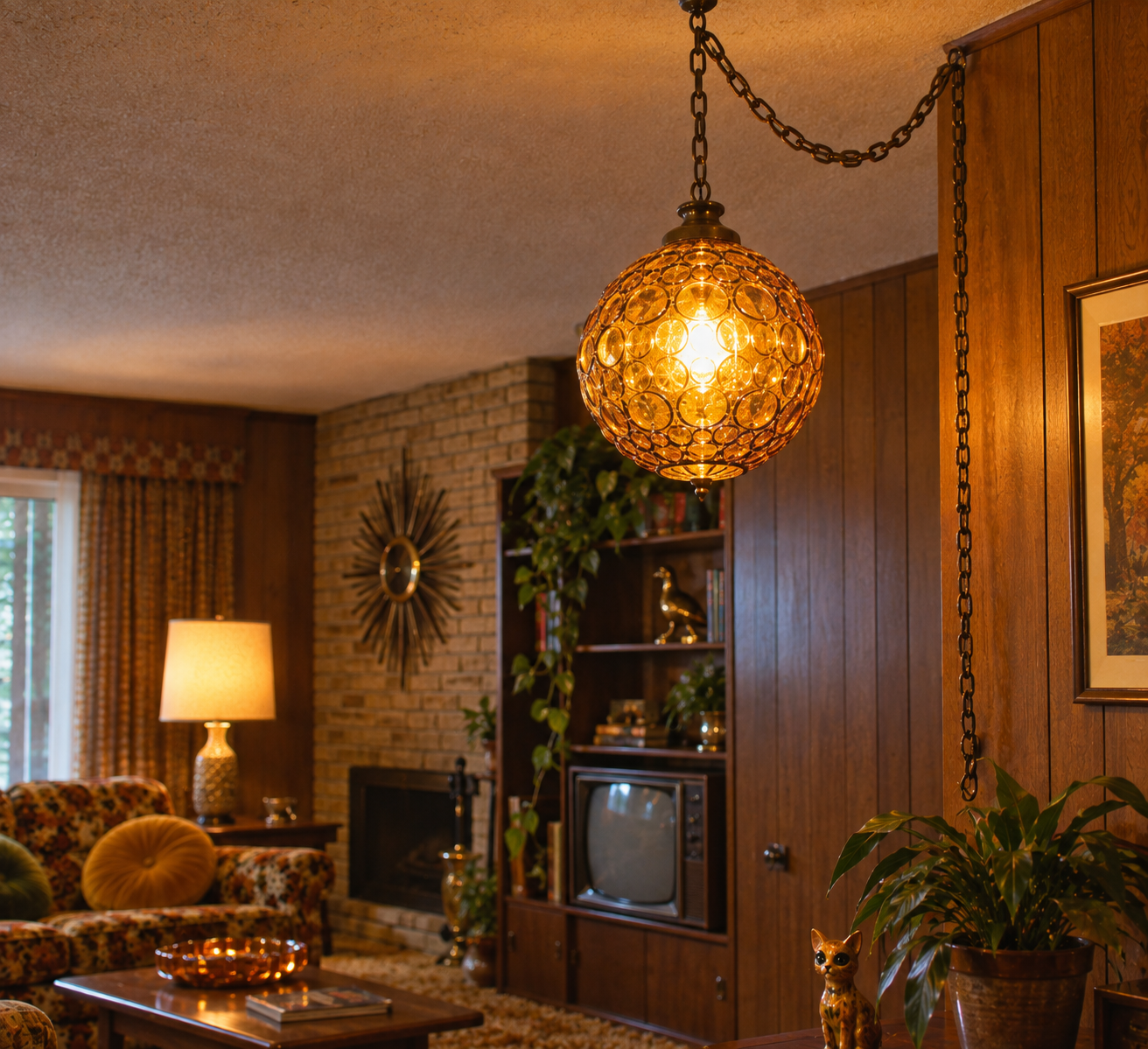
The 1970s didn’t shy away from dramatic lighting. Swag lamps hung from ceiling hooks on long decorative chains, with their electrical cords often draped across the ceiling and down the wall to an outlet. Shades could be made from colored glass, wicker, metal, or textured materials, casting a warm glow over chairs, tables, and wood-paneled rooms. As recessed lighting and cleaner ceiling fixtures became fashionable, the dangling chains and oversized shades increasingly disappeared from everyday interiors.
Breadboxes on the Kitchen Counter
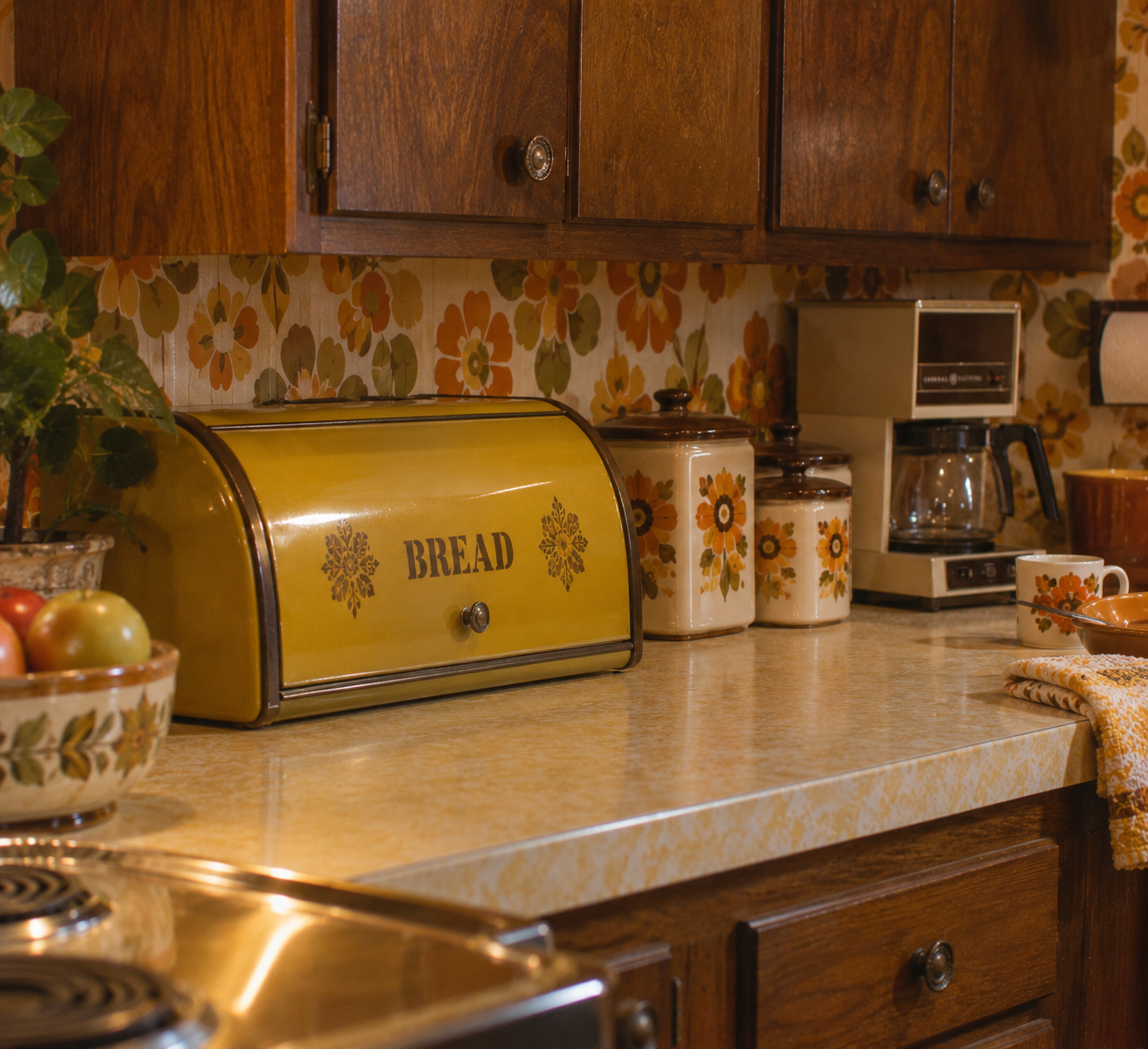
A toaster wasn’t the only appliance taking up valuable counter space in a 1970s kitchen. Breadboxes — typically made from metal or wood — provided a designated place for loaves, rolls, and other baked goods. A harvest-gold breadbox sitting beside a coffee percolator and matching canisters would have blended right into the era’s kitchen decor. Packaged bread, changing storage habits, larger refrigerators, and increasingly crowded countertops eventually made the dedicated breadbox less essential in many homes.
The House Changed Because Everyday Life Did
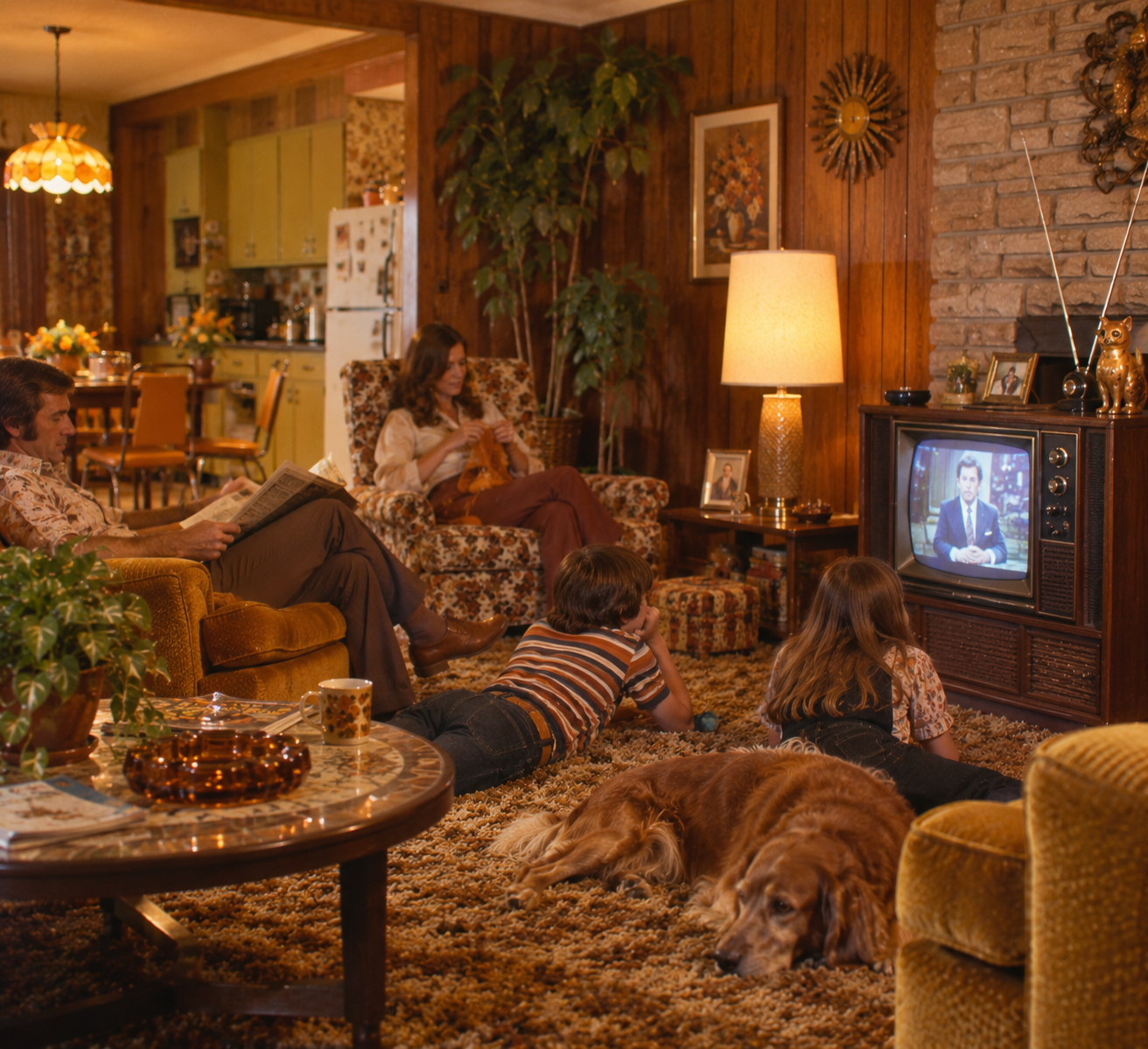
What makes a 1970s home look so different today isn’t just the shag carpeting or all that avocado green. Many of its most recognizable objects were there because everyday routines worked differently.
Telephone tables existed because the phone stayed in one place. Encyclopedias answered questions that now take seconds to Google. Rabbit ears brought television into the house, while sewing cabinets reflected a time when more families regularly mended or made clothing at home. Other fixtures, from swag lamps to macramé plant hangers, simply lost their place as decorating tastes moved on.
None of these things would have seemed especially strange at the time. That’s exactly what makes them so nostalgic now: They were ordinary parts of American homes until life changed around them.