The 1970s basement was rarely just a basement. It might have been a rec room, laundry area, storage space, teenage hangout, and makeshift bar all at once. Even when the rest of the house got redecorated, the basement had a way of holding onto furniture and decor long after its prime.
Some basements were fully finished, with shag carpeting, wood-paneled walls, and enough seating for the whole neighborhood. Others still had exposed pipes and concrete floors, with an old couch and second refrigerator thrown in to make the space a little more comfortable.
Not every American basement looked exactly alike, of course. But from enormous stereo speakers to folding card tables, these 15 fixtures would have looked right at home downstairs in the 1970s.
Faux Wood Paneling
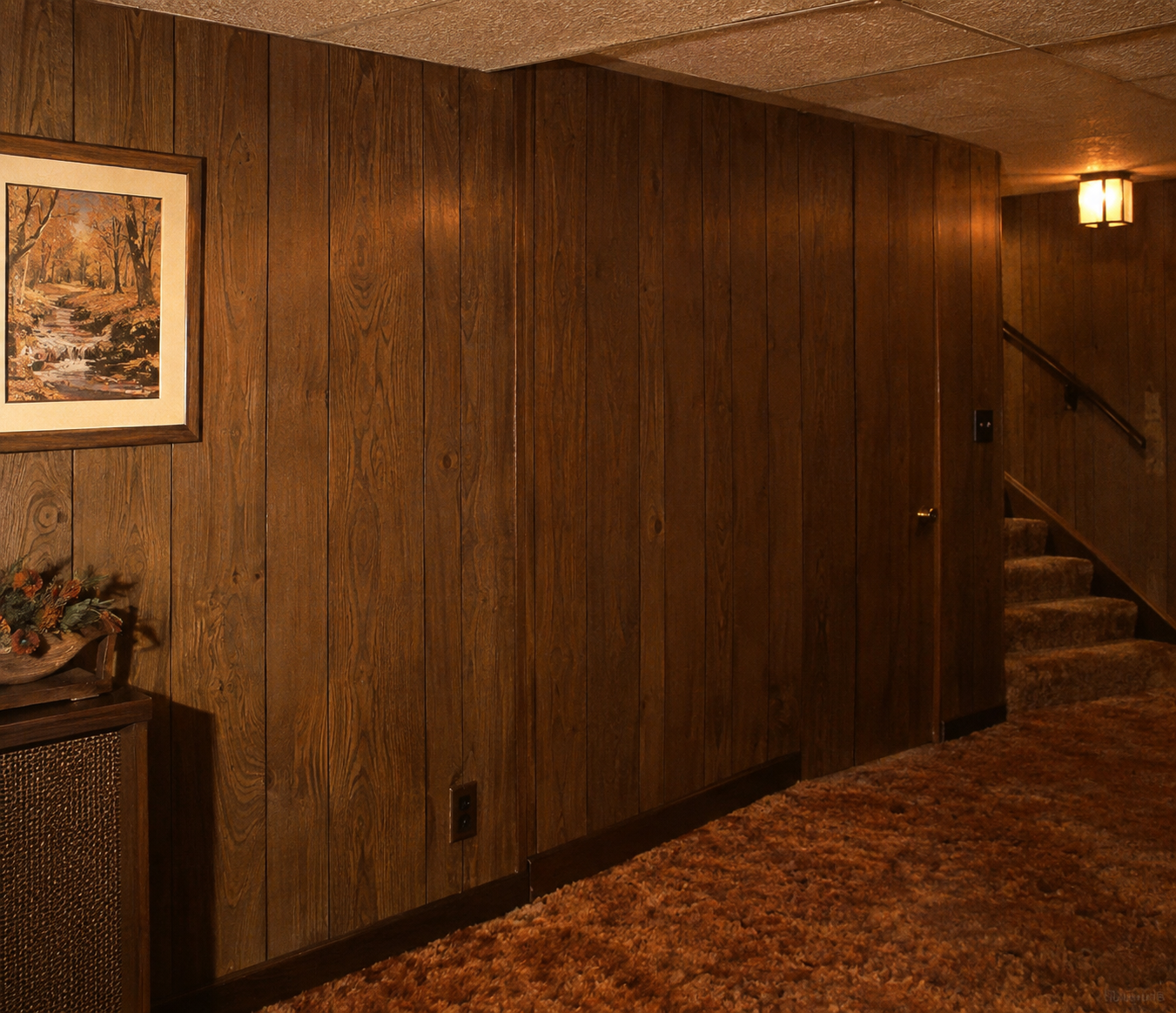
Nothing transformed a plain basement quite like covering the walls in dark faux wood paneling. It was relatively easy to install and could make a concrete-walled space feel more like an actual family room — even if the finished result was a little dark. Add brass-colored switch plates, a low ceiling, and a couple of table lamps, and you’ve got a room that practically announces that it’s 1974.
Shag Carpet
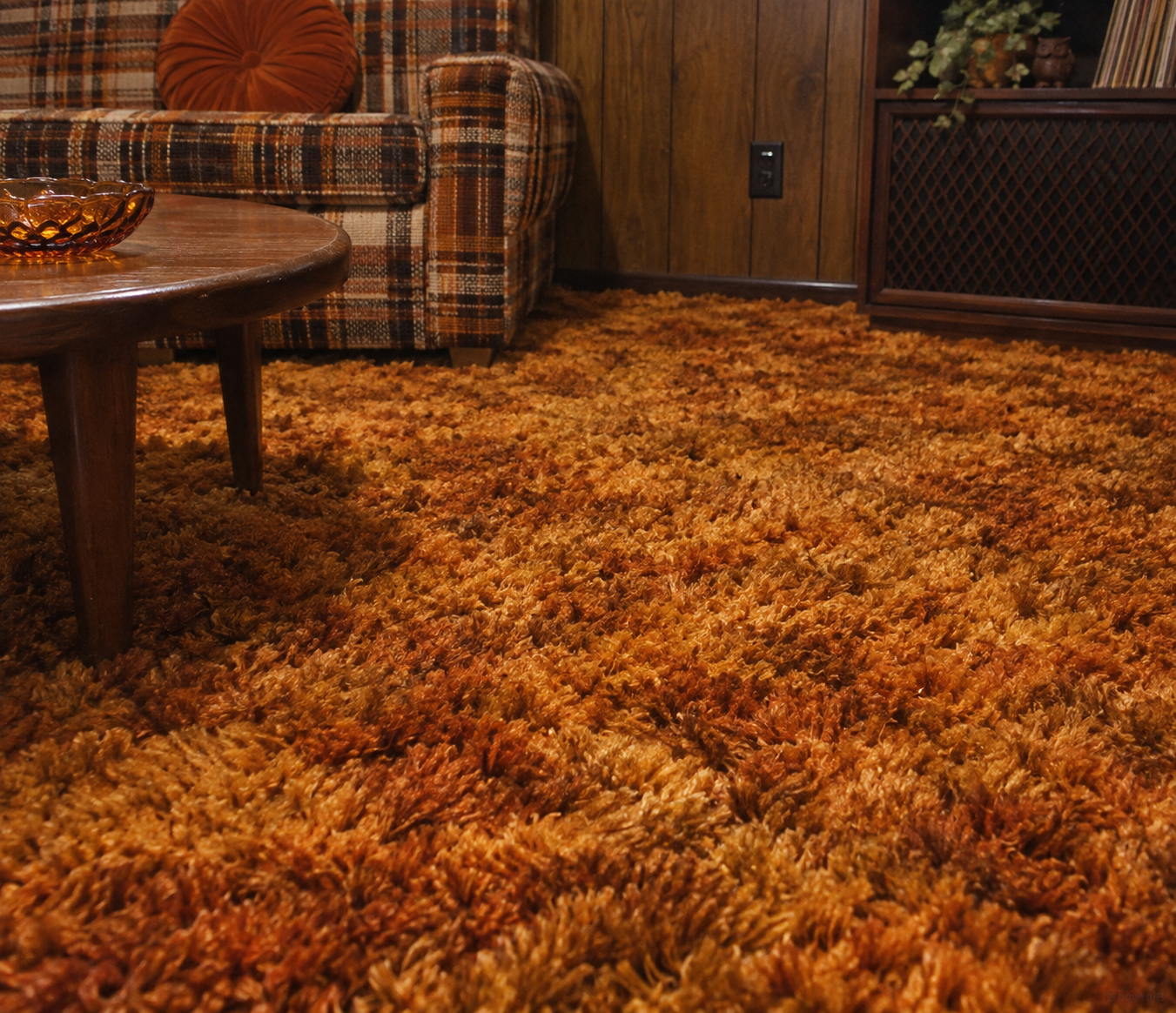
If the paneling covered the walls, shag carpet took care of the floor. Thick, deep-pile carpeting helped make chilly basement floors feel warmer and came in gloriously ’70s shades like harvest gold, avocado green, rust, orange, and brown. It was cozy underfoot, but keeping all that shag clean was practically a household project of its own.
An Old Couch That Had Been Demoted From Upstairs
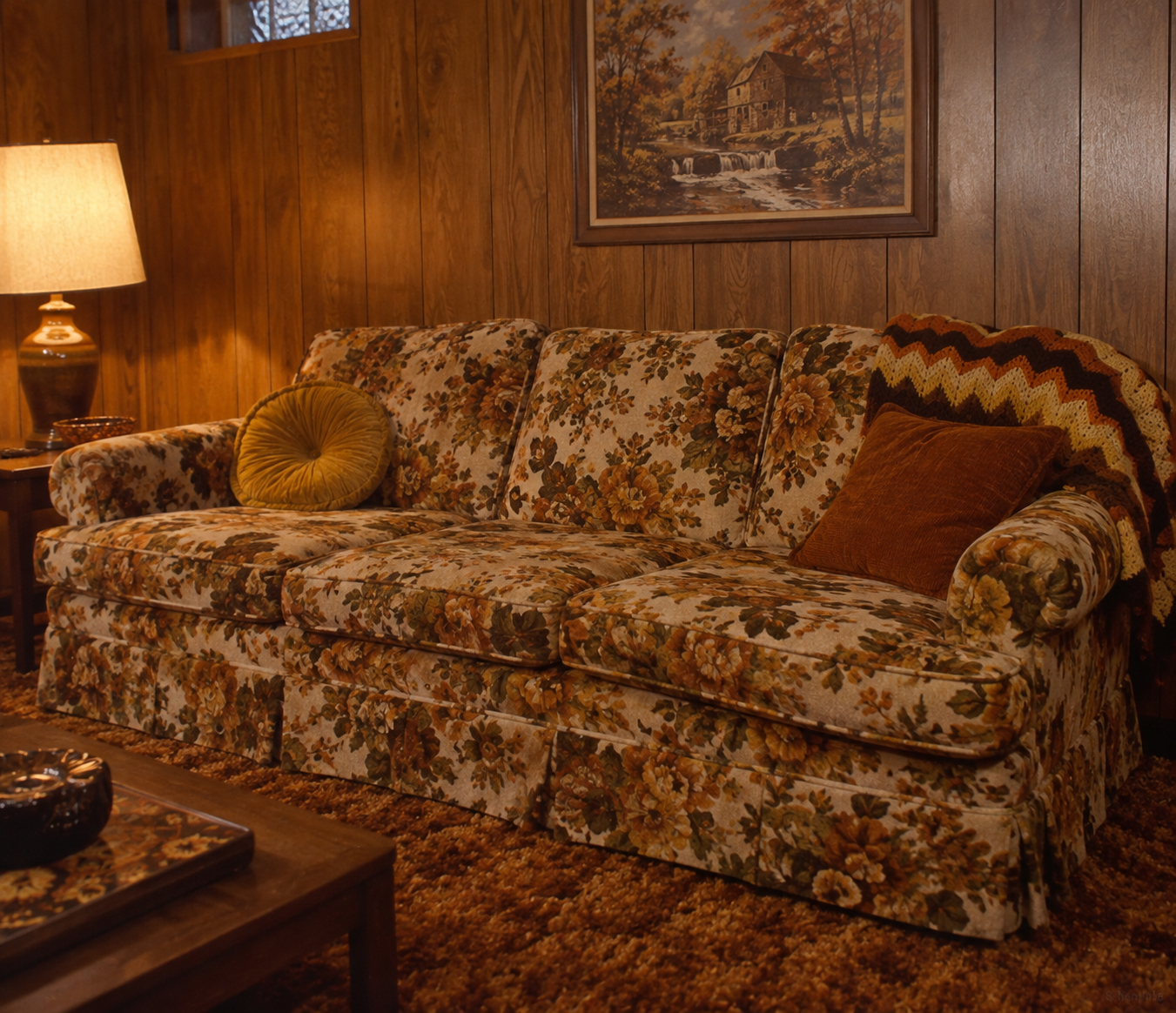
The basement rarely got the newest sofa in the house. Instead, it inherited whatever couch the family had decided was no longer nice enough for the living room. That could mean a bulky floral sofa, cracked vinyl couch, or aging sectional dressed up with mismatched cushions and a throw blanket. It might not have been fashionable anymore, but it still had years of basement duty ahead.
A Huge Console Television
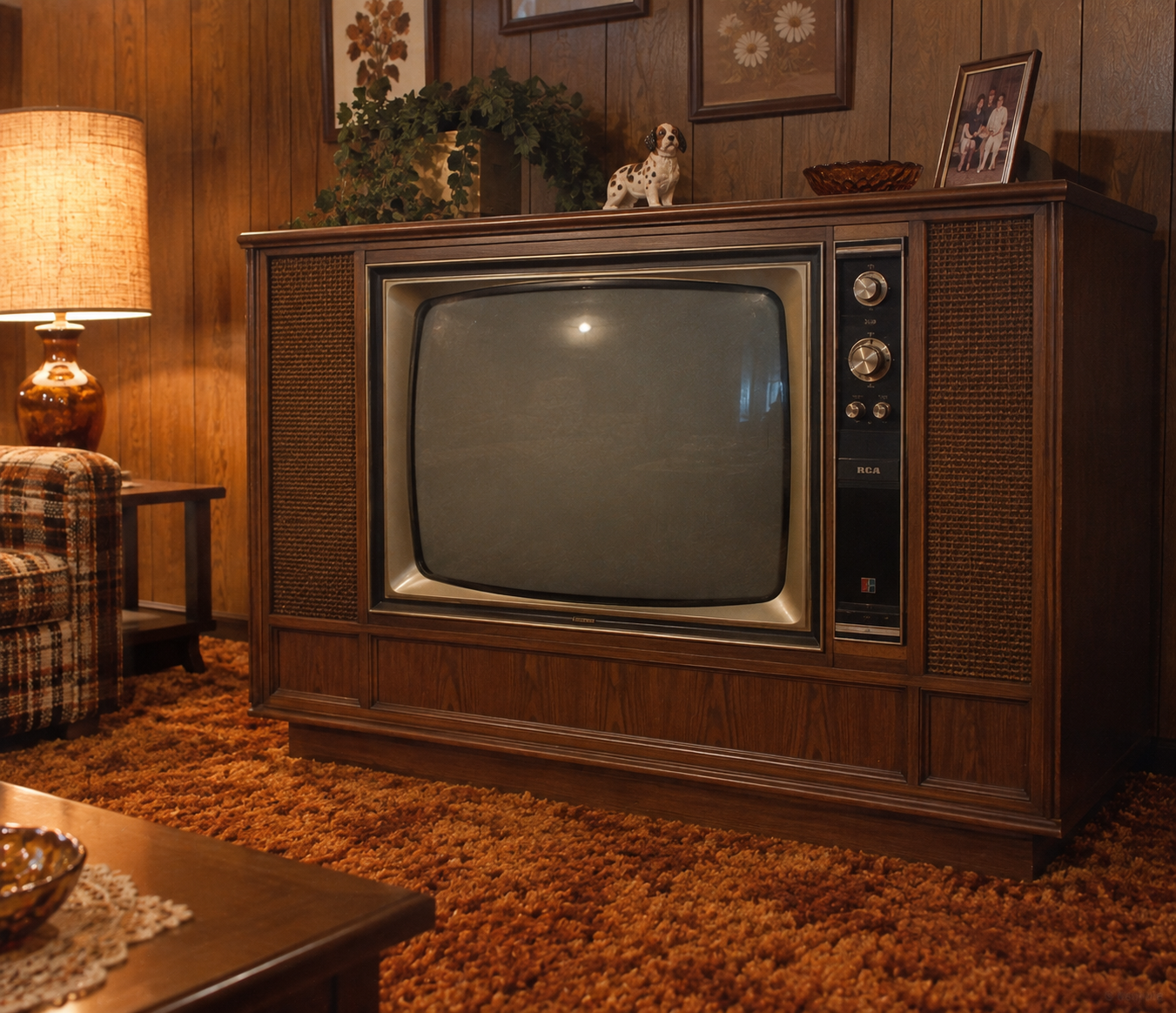
Having a second television downstairs could turn a finished basement into the place where kids watched cartoons, teenagers hung out, or adults caught a game without taking over the living room. Many sets came housed in enormous wood cabinets that made the television look like another piece of furniture. The actual screen could seem surprisingly small compared with the cabinet surrounding it — and moving the whole thing was definitely not a one-person job.
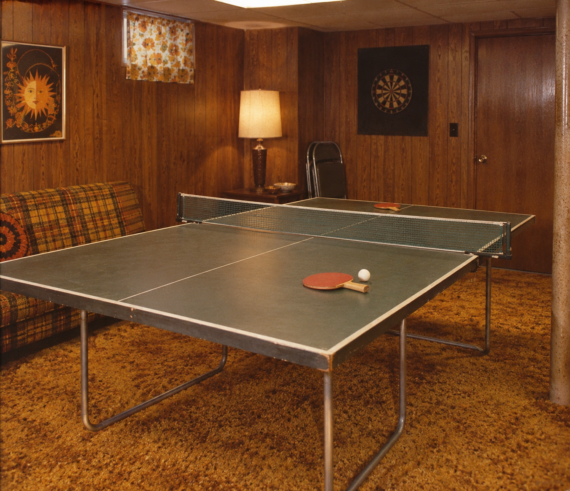
A Ping-Pong Table
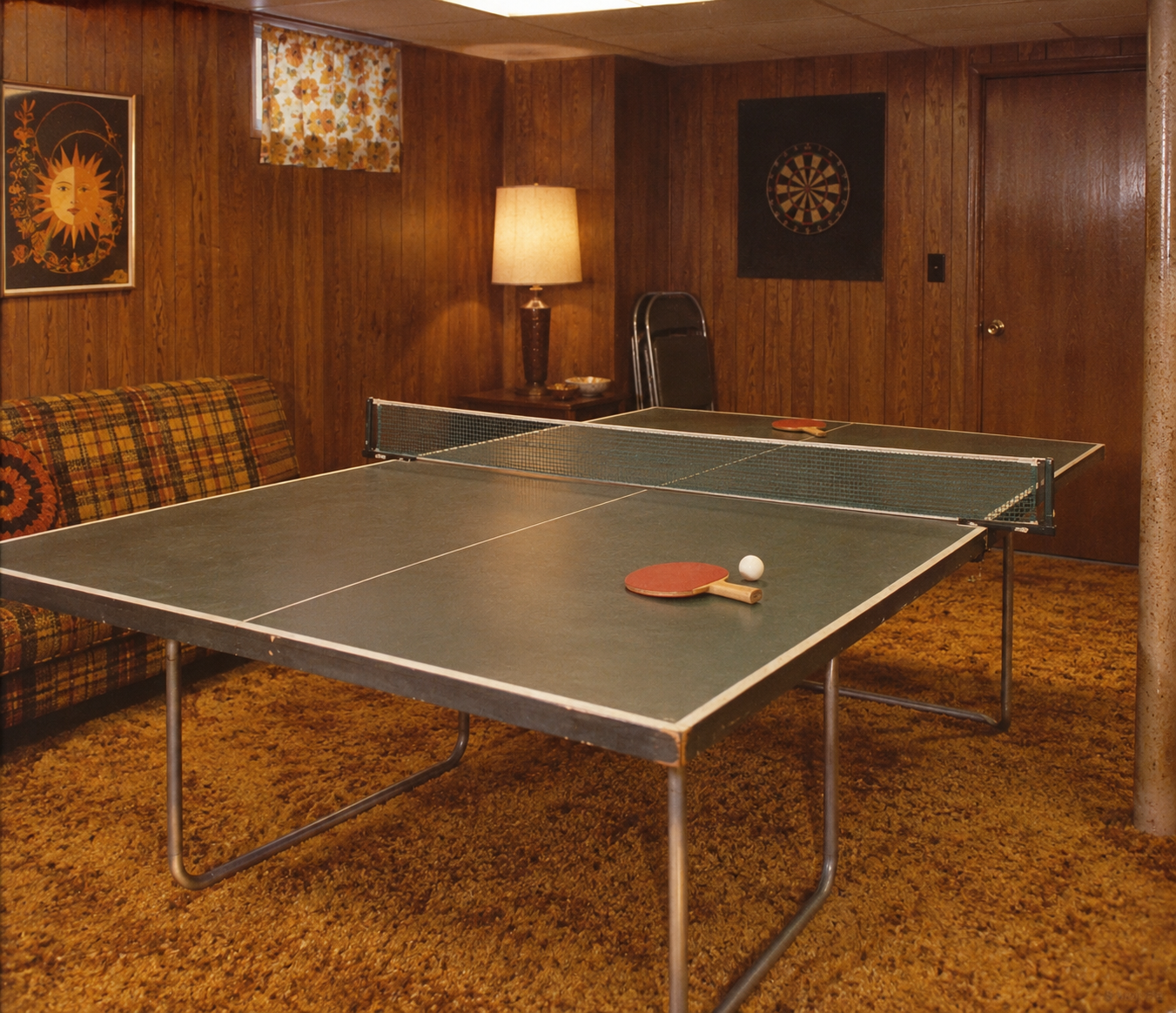
A little extra basement floor space was all the justification some families needed for a ping-pong table. It could anchor family game nights, entertain neighborhood kids, and inevitably become a place to pile random stuff when nobody was playing. Fold-up models were particularly practical, assuming anyone actually bothered folding them when the game was over.
Trending on Cheapism
A Folding Card Table
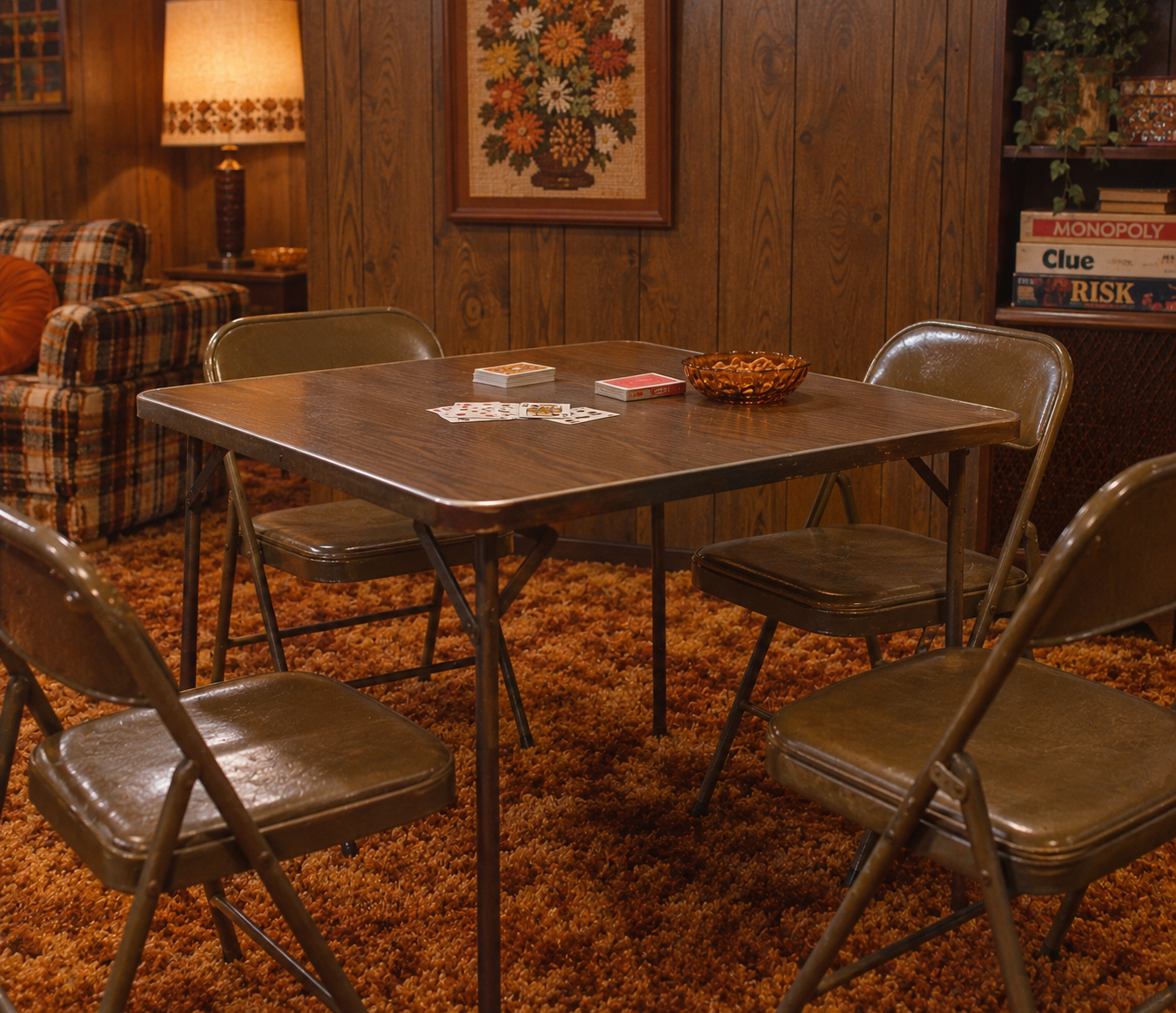
Few pieces of furniture worked harder than the basement card table. With its vinyl top and folding metal legs, it could host poker one night, a jigsaw puzzle the next, and Thanksgiving overflow seating a few days later. Throw in a handful of mismatched folding chairs, and the basement was ready for practically anything.
A Stereo System With Giant Speakers
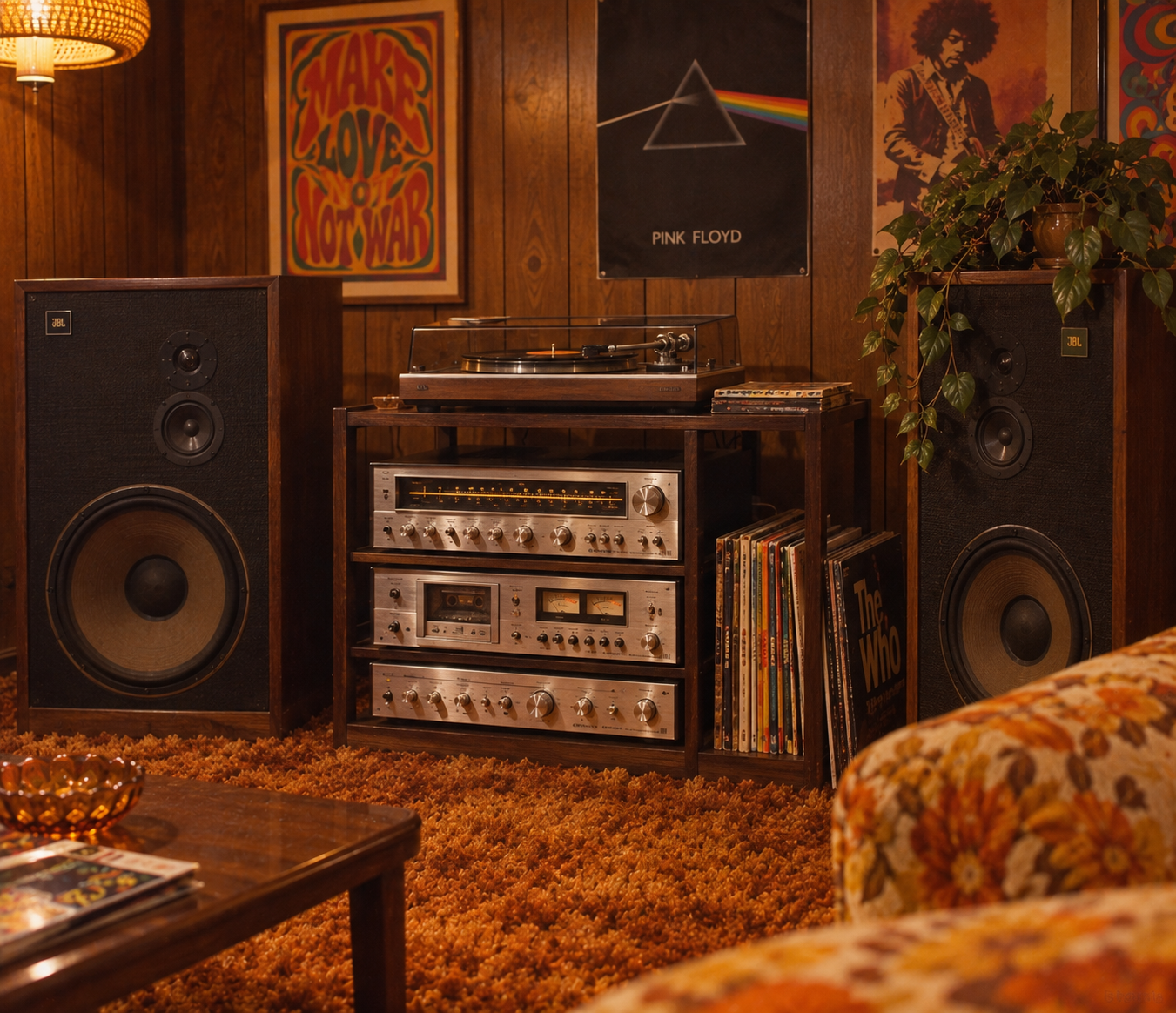
The basement was one of the few places where you might get away with turning the music up without immediately being told to turn it back down. Component stereo systems could include a receiver, turntable, cassette deck, and enormous wood-grain speakers, with glowing dials making the setup look even more impressive. For a music-loving teenager, the stereo could easily be the most important thing in the entire room.
Milk Crates Full of Records
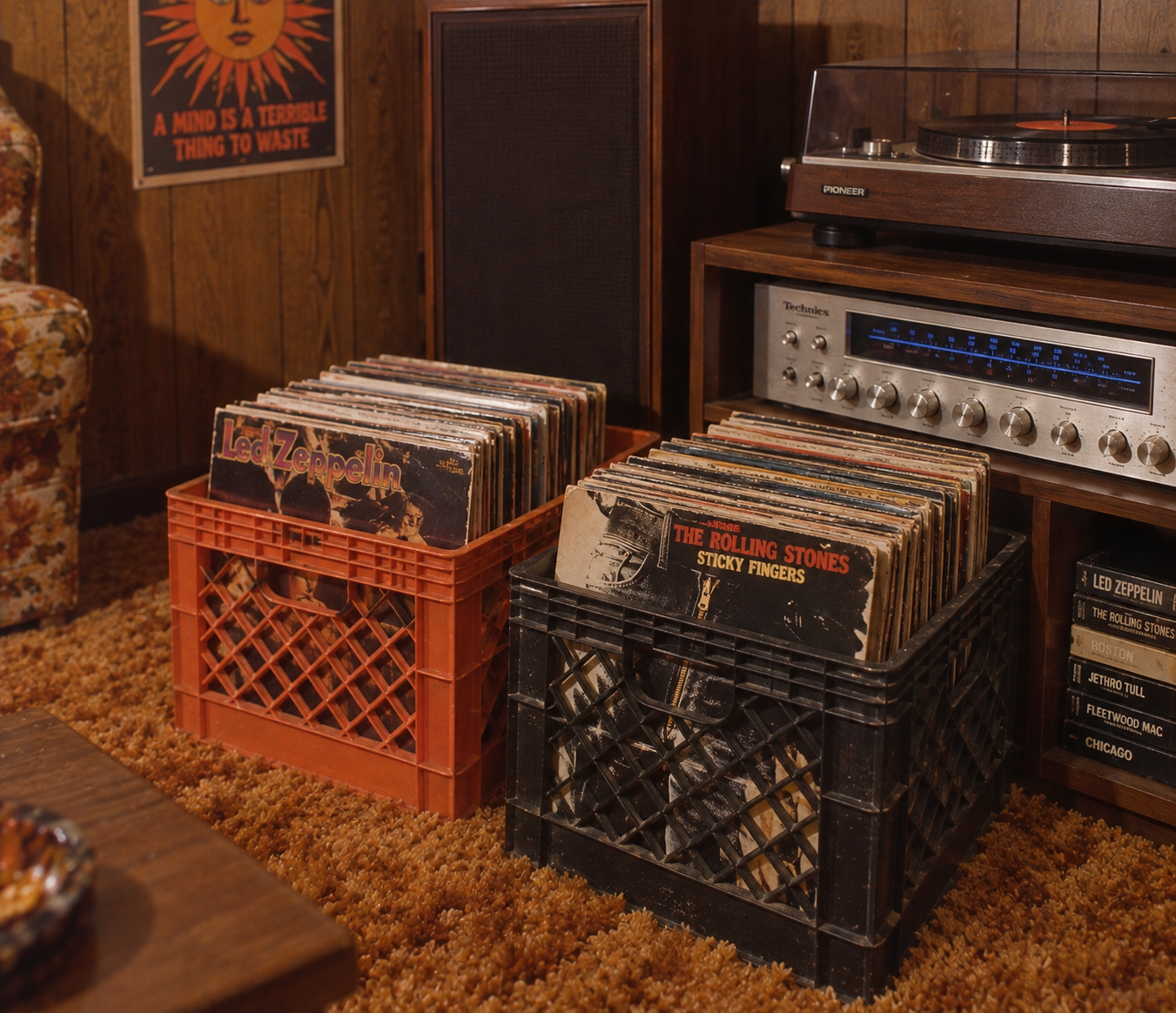
All those records needed somewhere to live, and actual shelving wasn’t always part of the plan. Milk crates offered a cheap, sturdy solution, leaving LPs leaning beside the stereo with their colorful sleeves sticking out. The crates could also double as makeshift tables or seating in a pinch, making them particularly suited to a basement where almost everything seemed to have more than one job.
Sign up for our newsletter
A Bar in the Corner
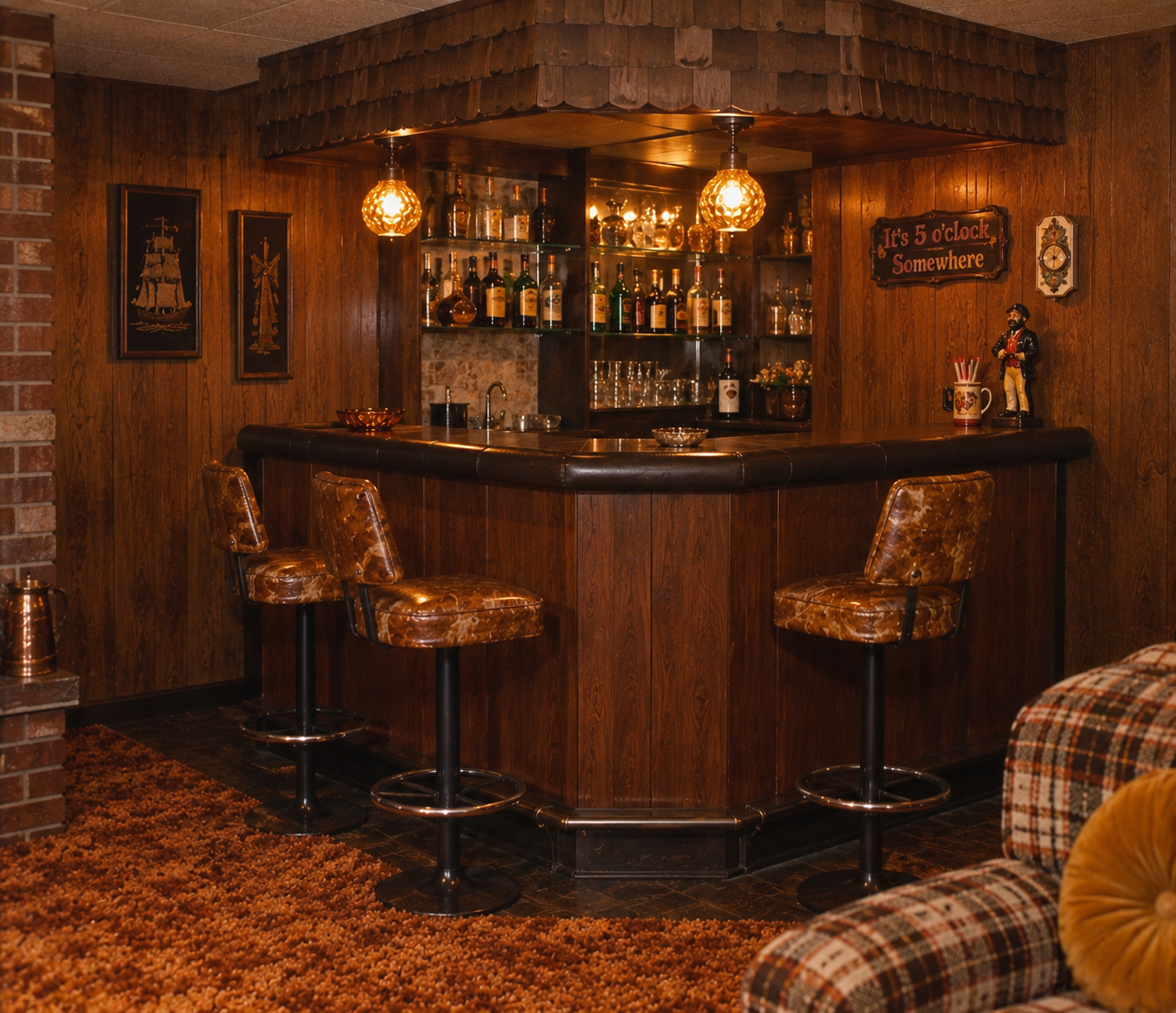
Plenty of finished basements weren’t designed exclusively for the kids. Home bars became a popular way to turn downstairs space into an adult entertaining area, whether that meant an elaborate built-in setup or simply a counter and a few stools. Dark wood, amber glass, mirrored walls, vinyl bar stools, and novelty signs could give an ordinary suburban basement the atmosphere of a neighborhood tavern without anybody leaving the house.
Fake Brick Walls
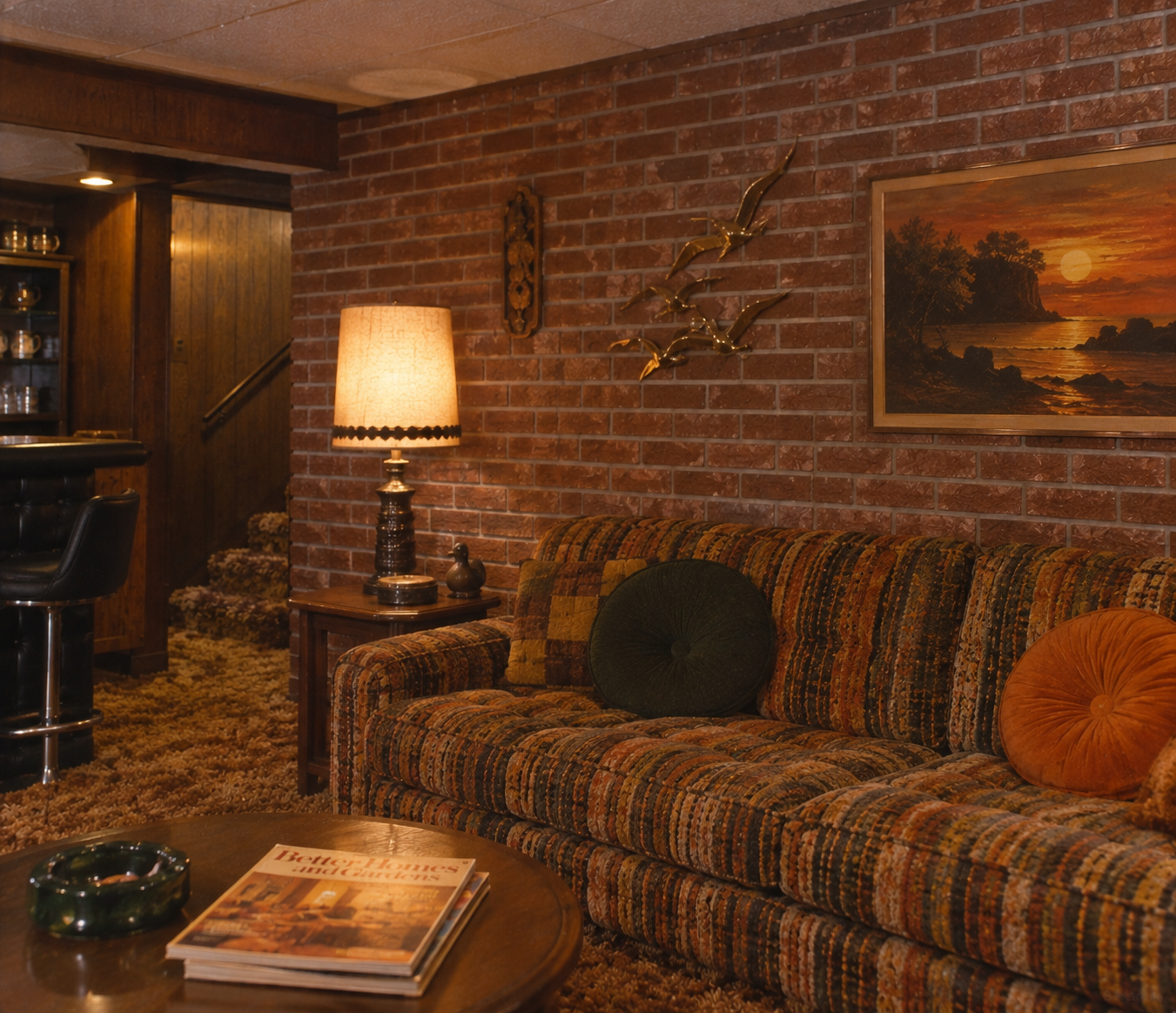
Apparently wood paneling wasn’t enough imitation building material for one room. Faux brick paneling could show up behind the basement bar, around a fireplace, or across an entire wall, giving the space a rustic tavern or den look without requiring actual masonry. Combined with dark wood and shag carpeting, it created the kind of aggressively ’70s decorating scheme that’s nearly impossible to mistake for another decade.
A Pool Table That Barely Fit
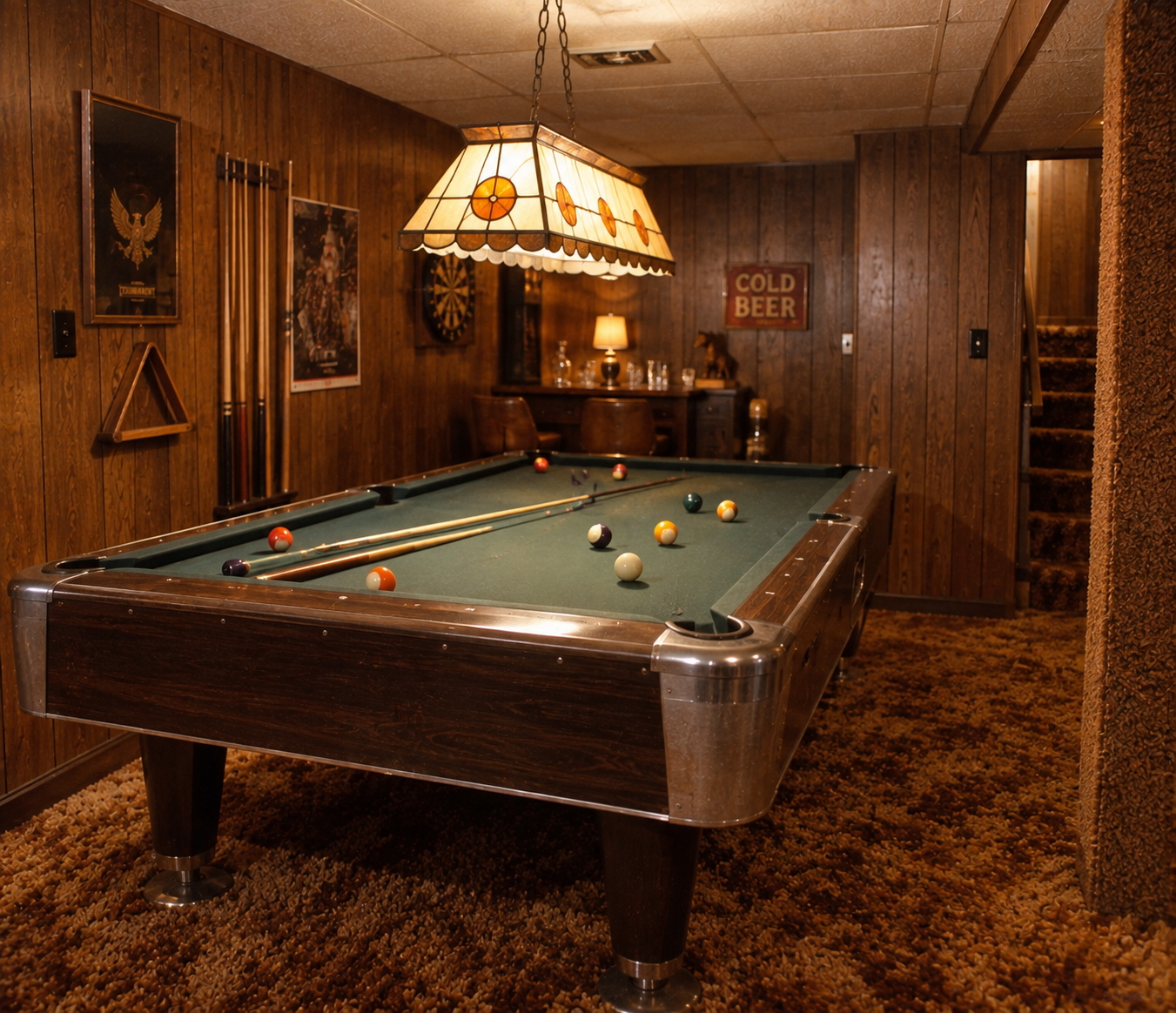
Whether there was actually enough room for one was sometimes beside the point. A pool table could transform a basement into the neighborhood hangout, complete with a hanging billiard light, cue rack, chalk cubes, and teenagers waiting for their turn. In tighter basements, taking a shot near a wall, support pole, or piece of furniture might require some creative maneuvering.
Exposed Pipes and Low Ceilings
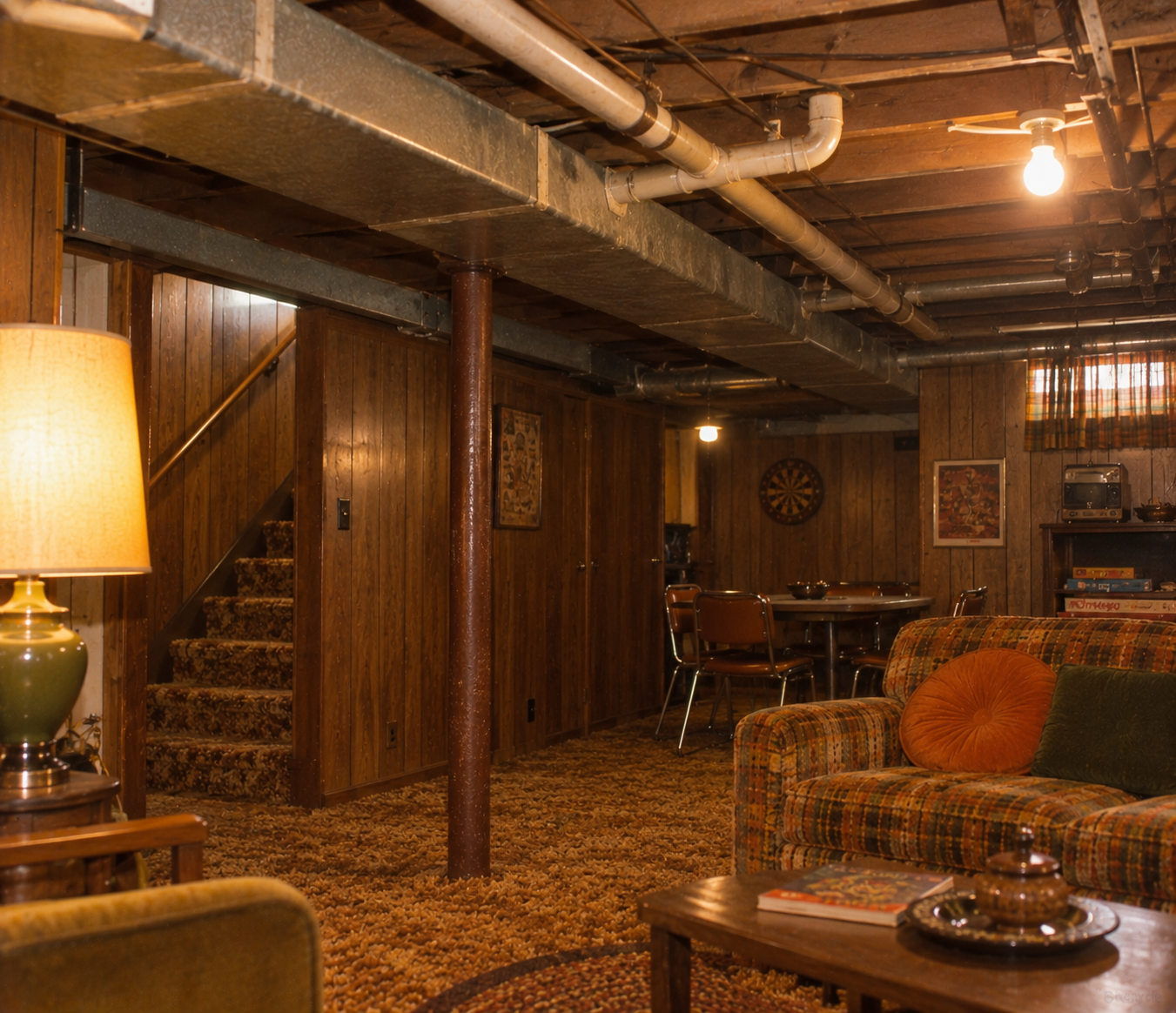
Not every basement received a complete HGTV-worthy makeover — and plenty remained only partially finished. A comfortable rec room could still have plumbing overhead, visible ductwork, acoustic ceiling tiles, or an inconvenient support pole planted right in the middle of everything. These imperfections were part of what made the basement feel like a basement rather than simply another living room.
A Second Refrigerator
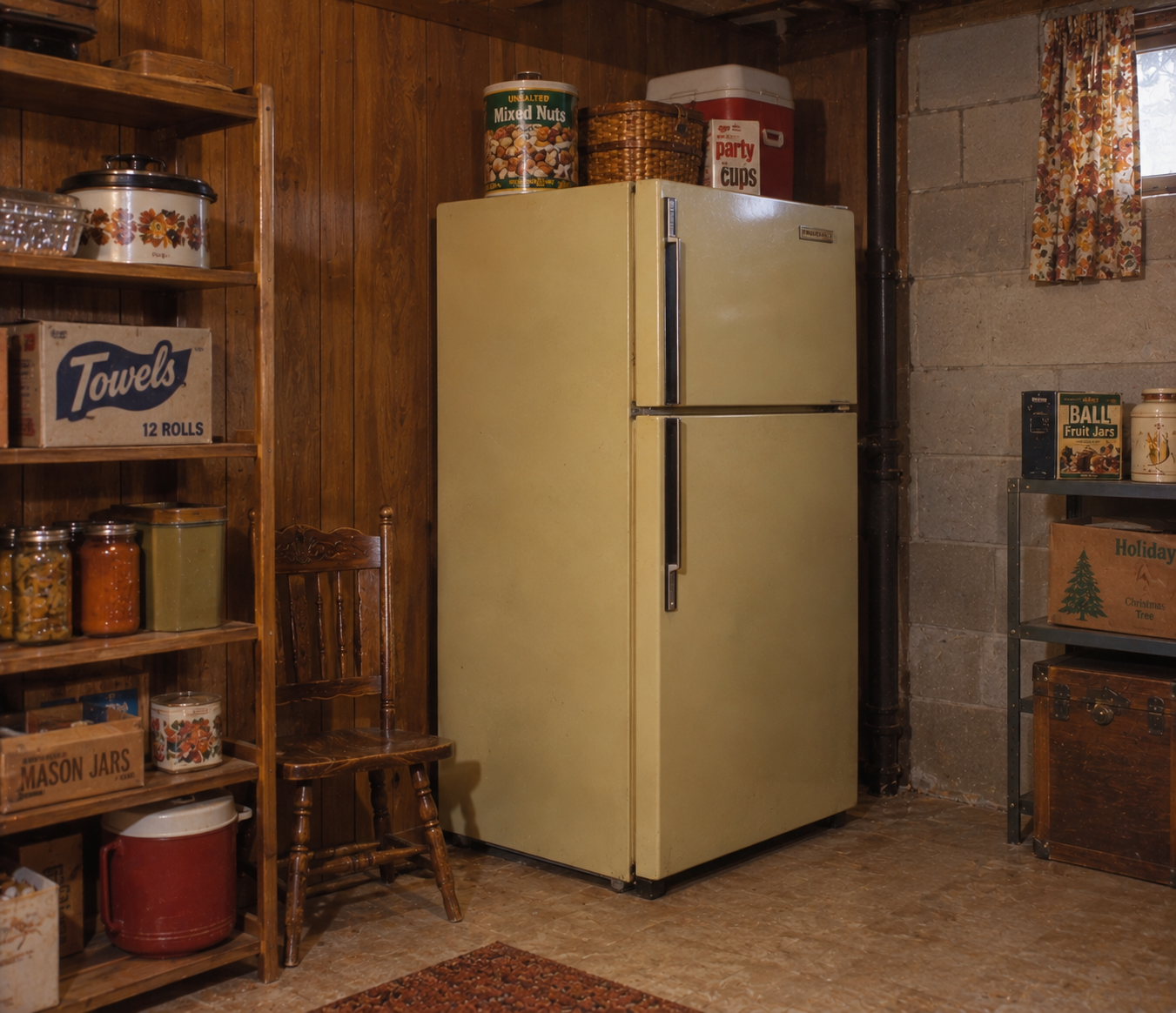
When the kitchen refrigerator got replaced, the old one didn’t necessarily disappear. If it still worked, it could be sent downstairs to begin its second career storing soda, beer, holiday leftovers, frozen food, and anything else that wouldn’t fit upstairs. An avocado green or harvest gold model looked especially at home there, often stocked with drinks kids had been specifically warned not to touch.
Board Games Stacked on a Shelf
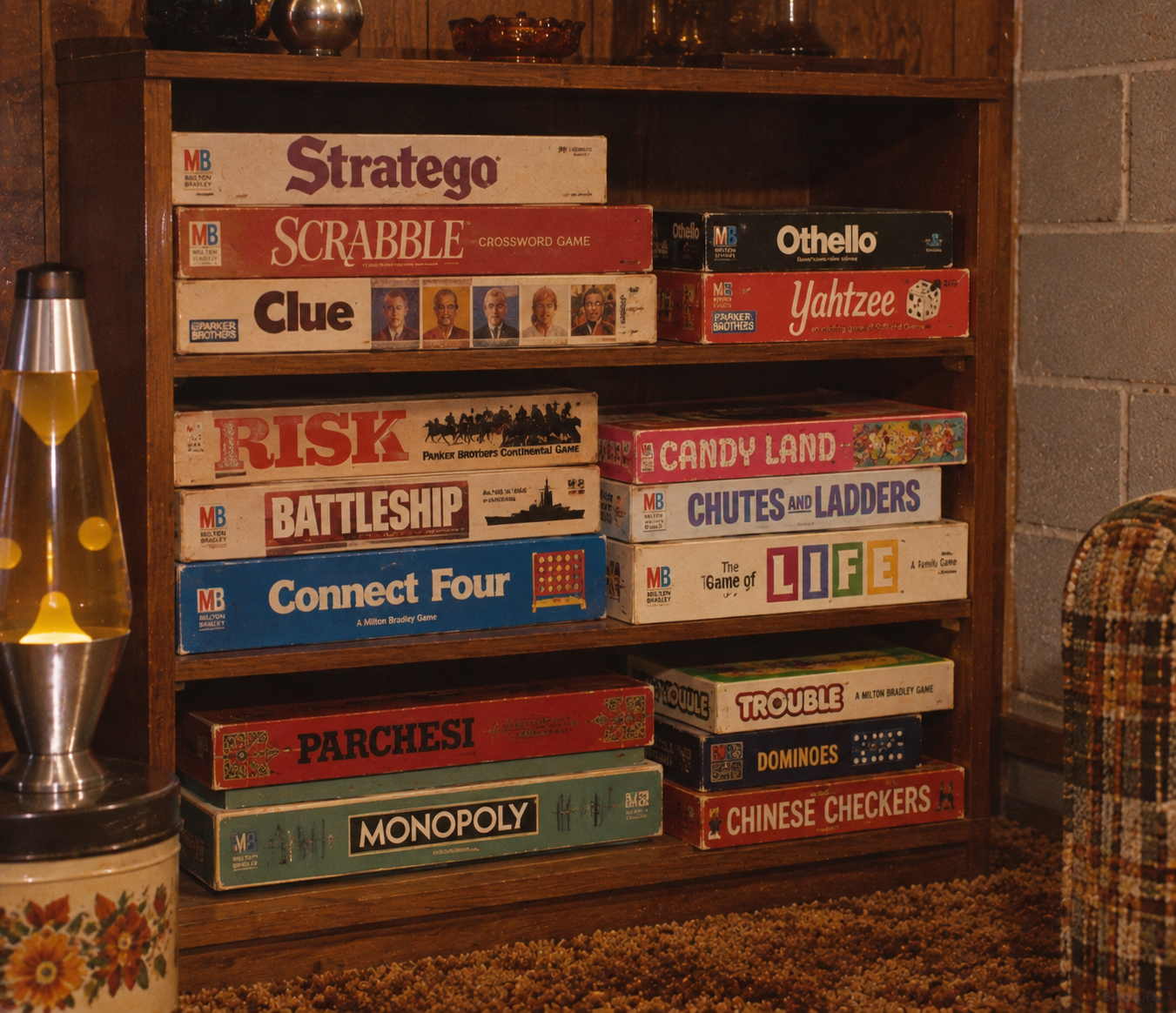
Before basements became home theaters and gaming rooms, entertainment might come from a shelf packed with board games, cards, and puzzles. Monopoly, Risk, Clue, and other well-used boxes could accumulate over the years, complete with taped corners, missing pieces, and rules nobody could quite agree on. The slightly battered collection made the basement look like what it actually was: a room people used.
A Laundry Area Hidden Behind a Curtain or Folding Door
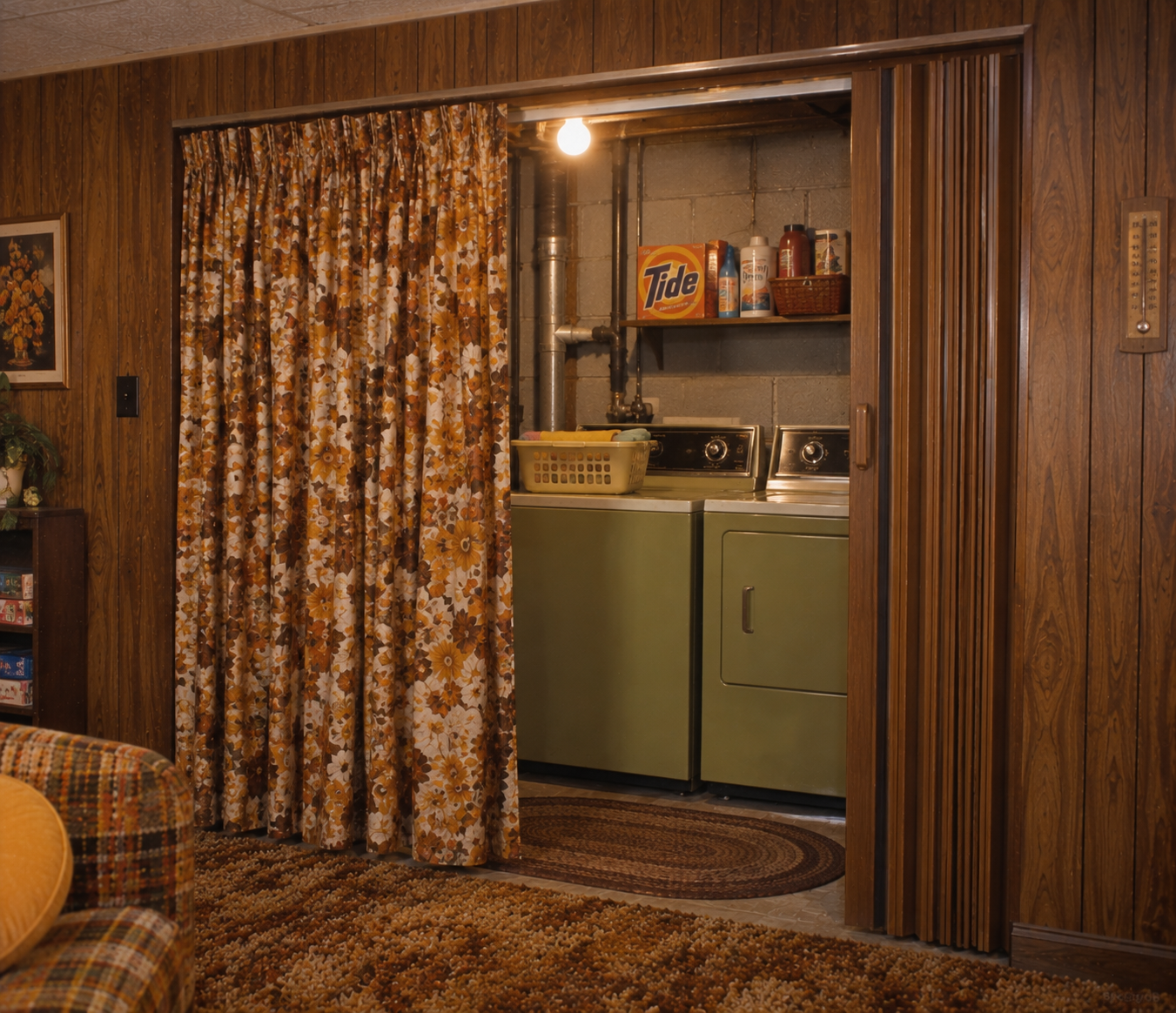
The funniest thing about the basement rec room was how quickly the fun could end once you wandered a few feet in the wrong direction. Behind a floral curtain or folding door might be a washer, dryer, utility sink, ironing board, detergent boxes, and overflowing laundry baskets. One side of the basement belonged to ping-pong and records; the other was there to remind everyone that this was still where the laundry got done.
The Basement Didn’t Have to Match
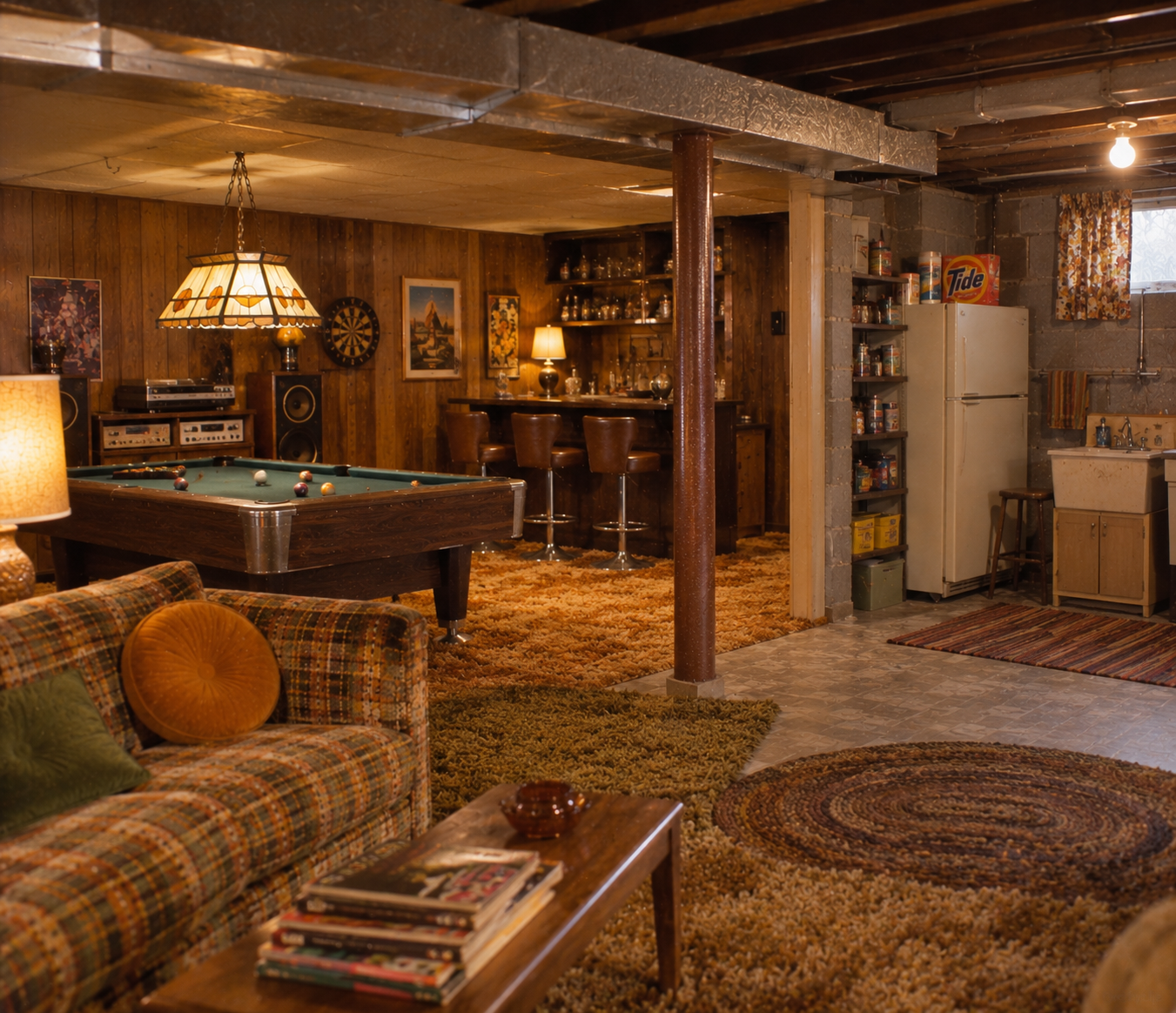
The classic 1970s basement wasn’t exactly known for careful coordination. That was part of its charm. Hand-me-down couches shared space with shag carpet, faux brick competed with wood paneling, and expensive stereo equipment might sit a few feet away from exposed pipes and laundry baskets.
More than anything, these rooms were meant to be used. Kids played games there, teenagers listened to records, adults entertained friends, laundry got folded, and furniture that had outlived its usefulness upstairs got another decade of service downstairs. It might have been dim, cluttered, and a little mismatched, but that was precisely what made the ’70s basement feel like home.