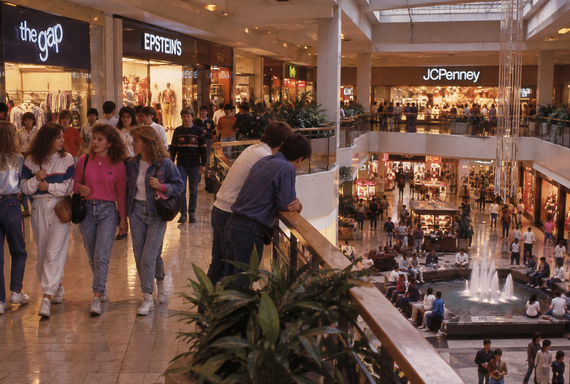
Going to the mall in the 1980s wasn’t necessarily about buying anything. You could show up with a few dollars in your pocket and somehow spend an entire afternoon wandering around, meeting friends, playing arcade games, flipping through records, grabbing something at the food court, or simply sitting by a fountain watching people go by.
Malls weren’t just collections of stores, either. They doubled as teenage hangouts, entertainment centers, restaurants, movie theaters, and sometimes even concert venues. Photographer Michael Galinsky’s photos of American malls in 1989 captured just how much everyday social life happened inside them.
Plenty of malls are still around, of course. But many of the experiences that once made an ’80s mall trip an event have either disappeared entirely or become much harder to find. Here are 14 ’80s mall activities that younger shoppers may have trouble imagining today.
Spend Your Allowance Feeding Quarters Into a Mall Arcade
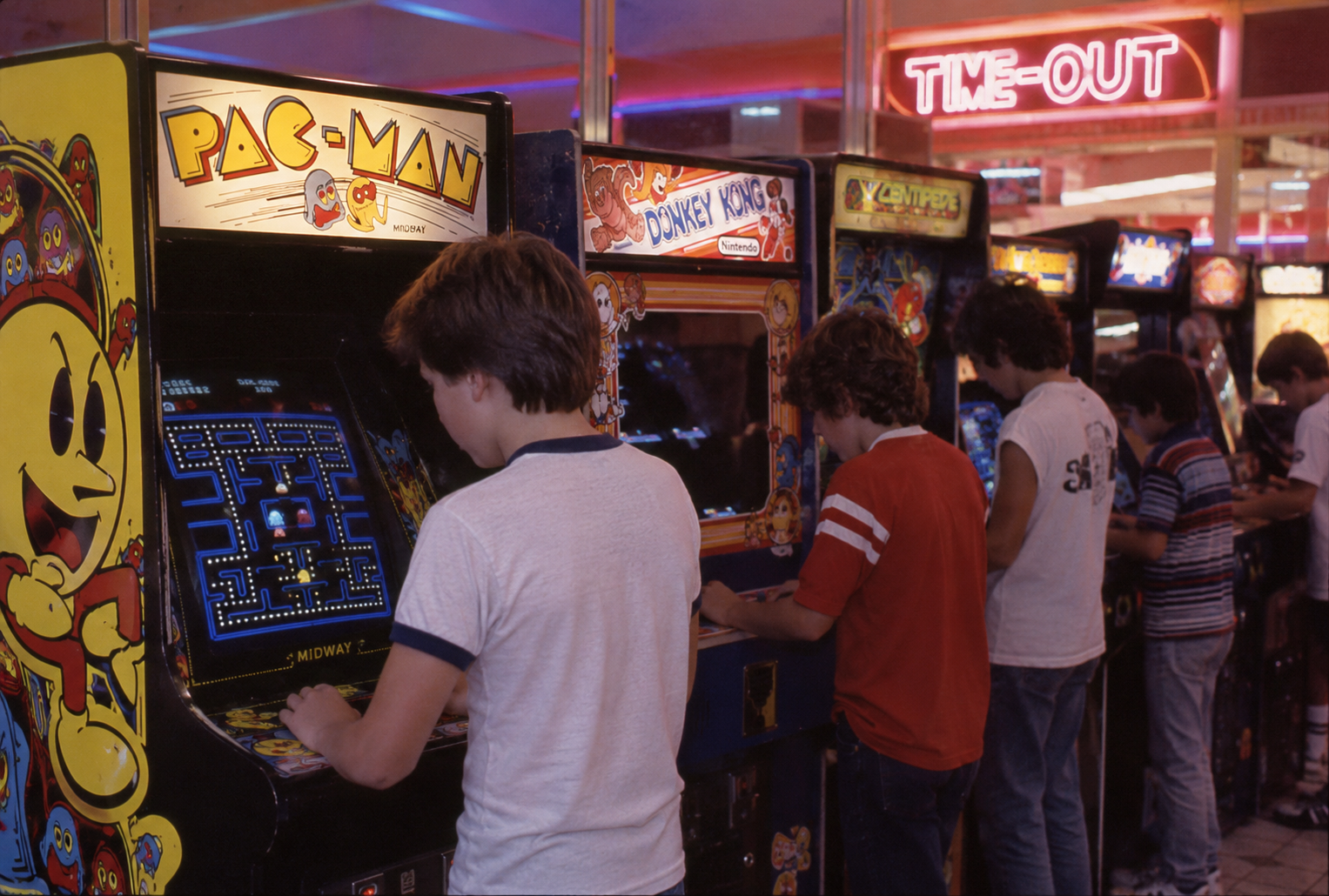
A dark arcade filled with flashing screens and the sounds of Pac-Man, Donkey Kong, and Centipede could be a destination all by itself. Chains such as Aladdin’s Castle and Time-Out operated arcades in malls around the country, giving kids and teenagers somewhere to spend hours — provided they had enough quarters. There were no prepaid game cards to load or apps keeping track of credits. You fed another quarter into the machine every time you wanted to play, while friends gathered around to watch and wait for their turn. Dedicated arcades haven’t completely disappeared, but they’re nowhere near as routine a part of the average mall trip as they were during the arcade boom.
Discover a New Album by Browsing the Mall Record Store

Before Spotify could recommend a new album in seconds, you might discover one while flipping through records and cassettes at Musicland, Sam Goody, Record Bar, or Camelot Music. Mall music stores were places to browse new releases, study album covers, hunt through cassette singles, and occasionally leave with a poster for your bedroom wall. Musicland alone had grown to 616 stores across its brands by 1988. Physical music shops still exist, but the classic mall record store — and the ritual of wandering into one just to see what was new — has largely disappeared.
Browse a Waldenbooks or B. Dalton Just to Kill Time
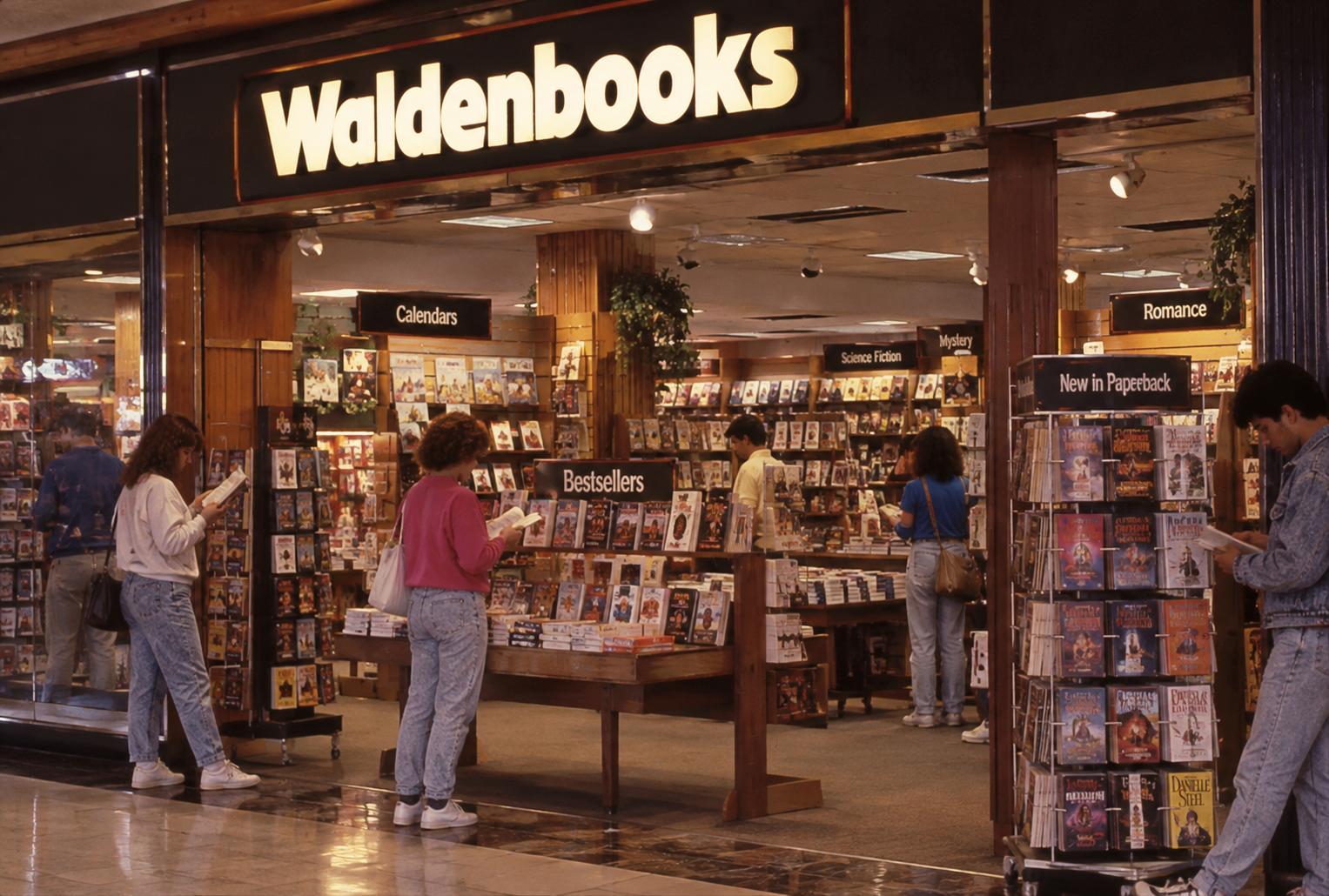
Long before Amazon made practically every book available without leaving home, a mall trip often included wandering into Waldenbooks or B. Dalton. You didn’t necessarily need a book in mind. You could scan the paperback bestsellers, flip through magazines, inspect the calendars, or look at whatever movie tie-in had landed on the front table. These stores were remarkably common: By the end of the decade, about 85% of Waldenbooks locations and more than 70% of B. Dalton stores were located in malls. Both chains eventually disappeared, taking one of the easiest ways to kill 20 minutes at the mall with them.
Wander Around for Hours Without Actually Shopping
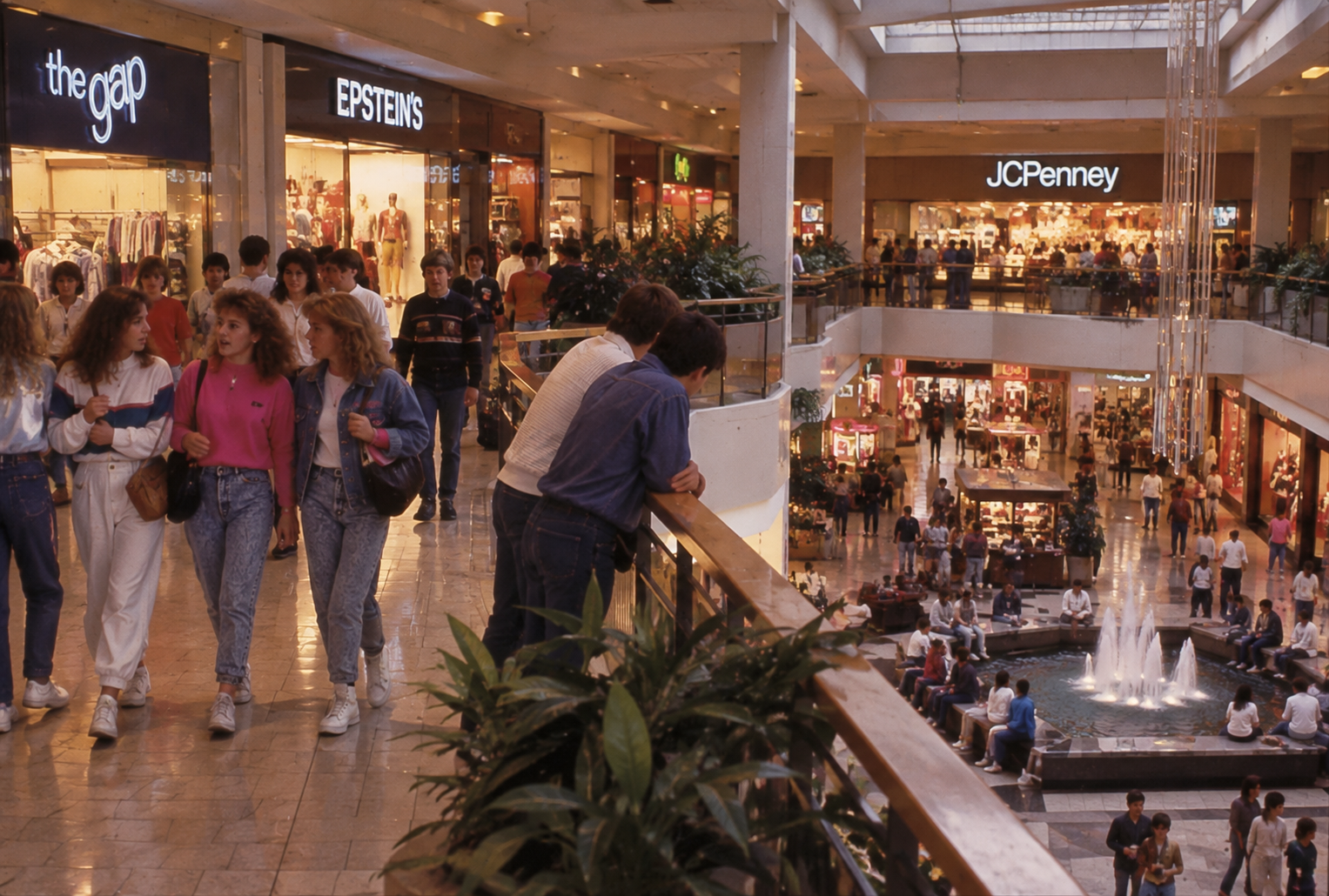
For plenty of teenagers, shopping was almost beside the point. The mall itself was the destination. Friends could walk laps, lean against railings, sit near a fountain, people-watch, and wander in and out of stores without actually buying much of anything. The stereotype of the teenage “mallrat” existed for a reason: Malls provided a relatively inexpensive indoor place to spend hours away from home. Online shopping, smartphones, and the decline of many traditional enclosed malls have changed that role considerably. Hanging around a mall with no particular plan doesn’t have quite the same place in teenage life that it once did.
Make the Food Court Your Group’s Meeting Place
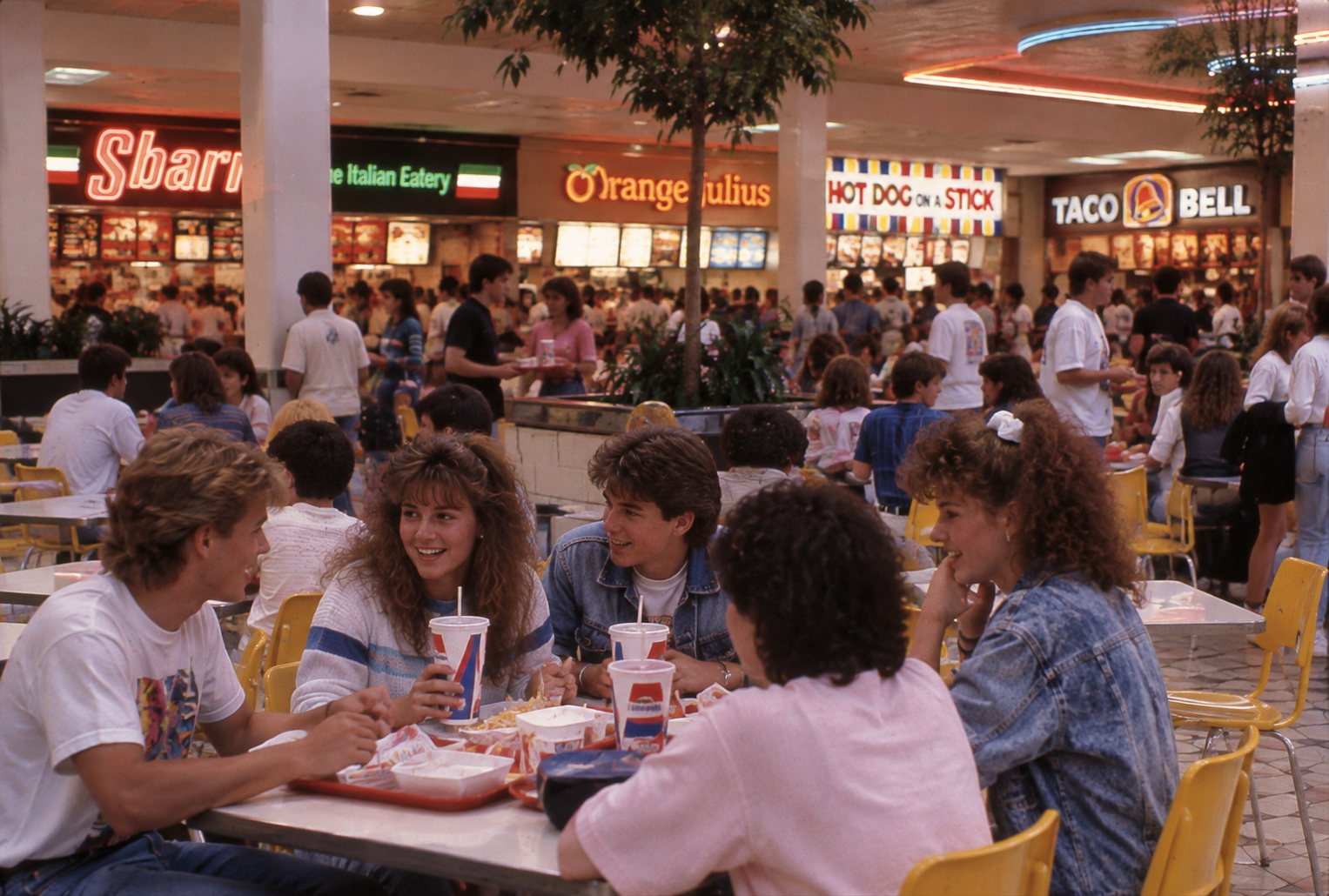
Before you could text “I’m here,” you needed somewhere obvious to meet your friends, and the food court was hard to beat. Its enormous shared seating areas gave teenagers a place to regroup, eat something cheap, and figure out what to do next. Food courts became such a recognizable part of ’80s mall culture that they even showed up prominently in movies such as 1982’s “Fast Times at Ridgemont High.” You could grab something from Sbarro, Orange Julius, Hot Dog on a Stick, or another counter and spend far longer sitting at the table than it took to finish your food. Food courts are still around, but their days as the unofficial headquarters of teenage social life have largely faded.
Trending on Cheapism

Get an Orange Julius Almost Exclusively Because You Were at the Mall
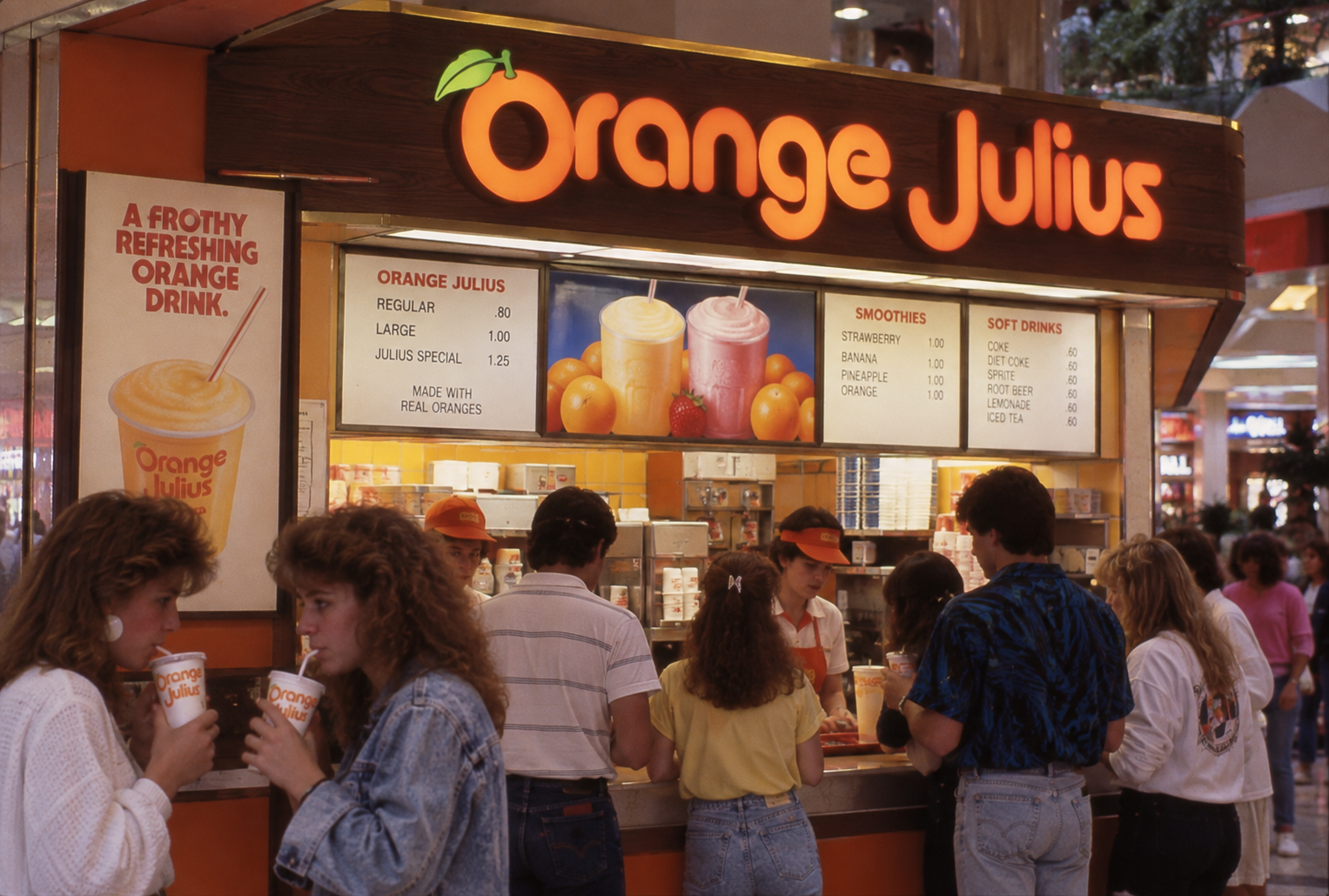
There are certain foods and drinks that become inseparable from a place, and for generations of mall shoppers, Orange Julius was one of them. The sweet, citrusy, unusually frothy orange drink was already a food-court favorite before the ’80s and remained closely associated with malls throughout the decade. Dairy Queen purchased Orange Julius in 1987, and the drink survives today at select Dairy Queen locations. But finding one of the dedicated Orange Julius counters that once seemed perfectly at home beside the other mall food stands is considerably harder.
Watch an Actual Pop Star Perform in Center Court
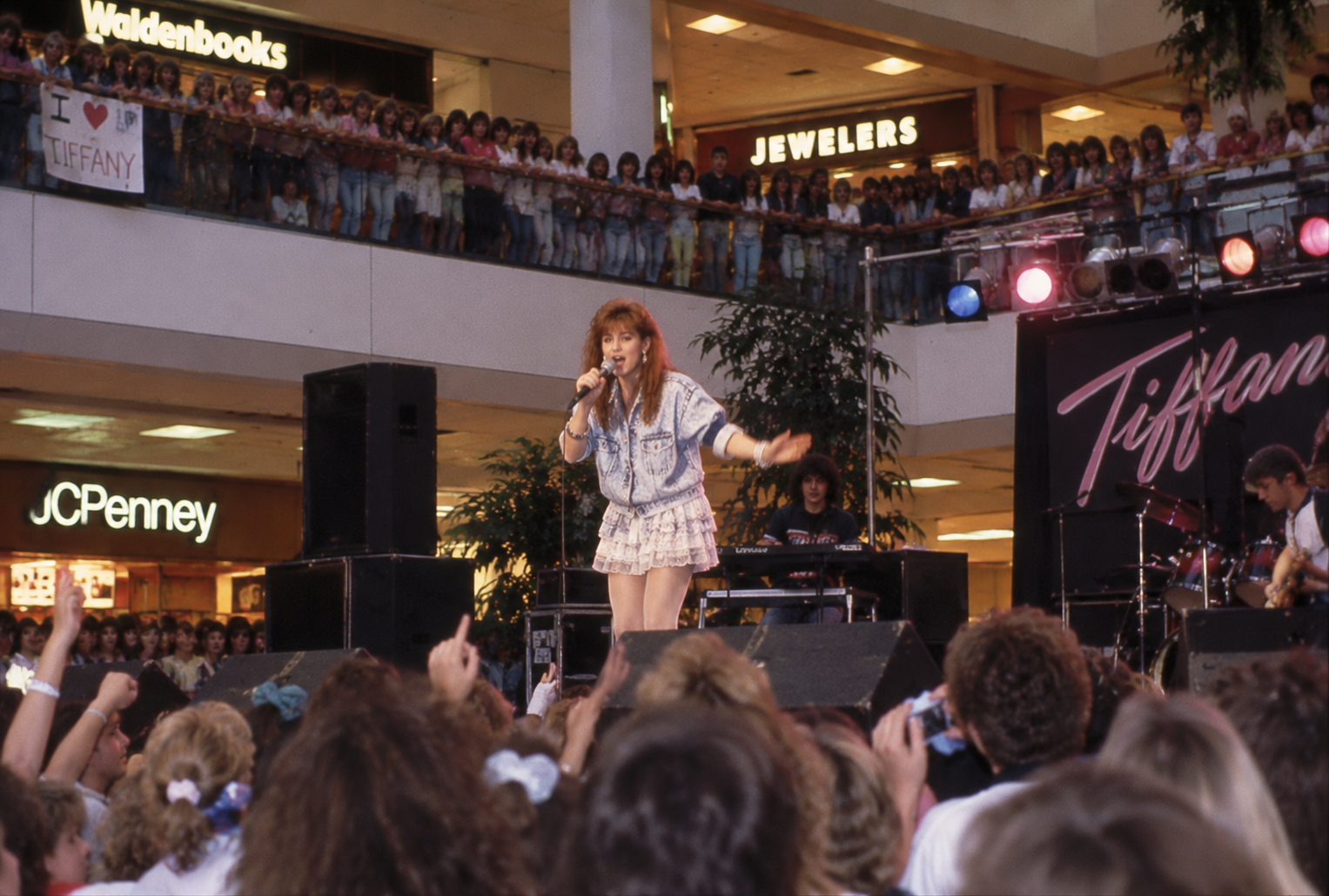
The open area in the middle of the mall wasn’t always reserved for seasonal decorations and kiosks. During the ’80s, it could suddenly become a concert venue. One of the most famous examples came in 1987, when teenage pop star Tiffany embarked on a tour of 14 shopping malls, performing for crowds of shoppers and helping turn her cover of “I Think We’re Alone Now” into a massive hit. Malls also hosted actors, athletes, television promotions, and other celebrities. Promotional appearances haven’t vanished completely, but seeing a nationally known pop star perform a few steps away from the department store feels distinctly tied to the mall’s cultural peak.
Try a Brand-New Video Game Before Your Family Owned It
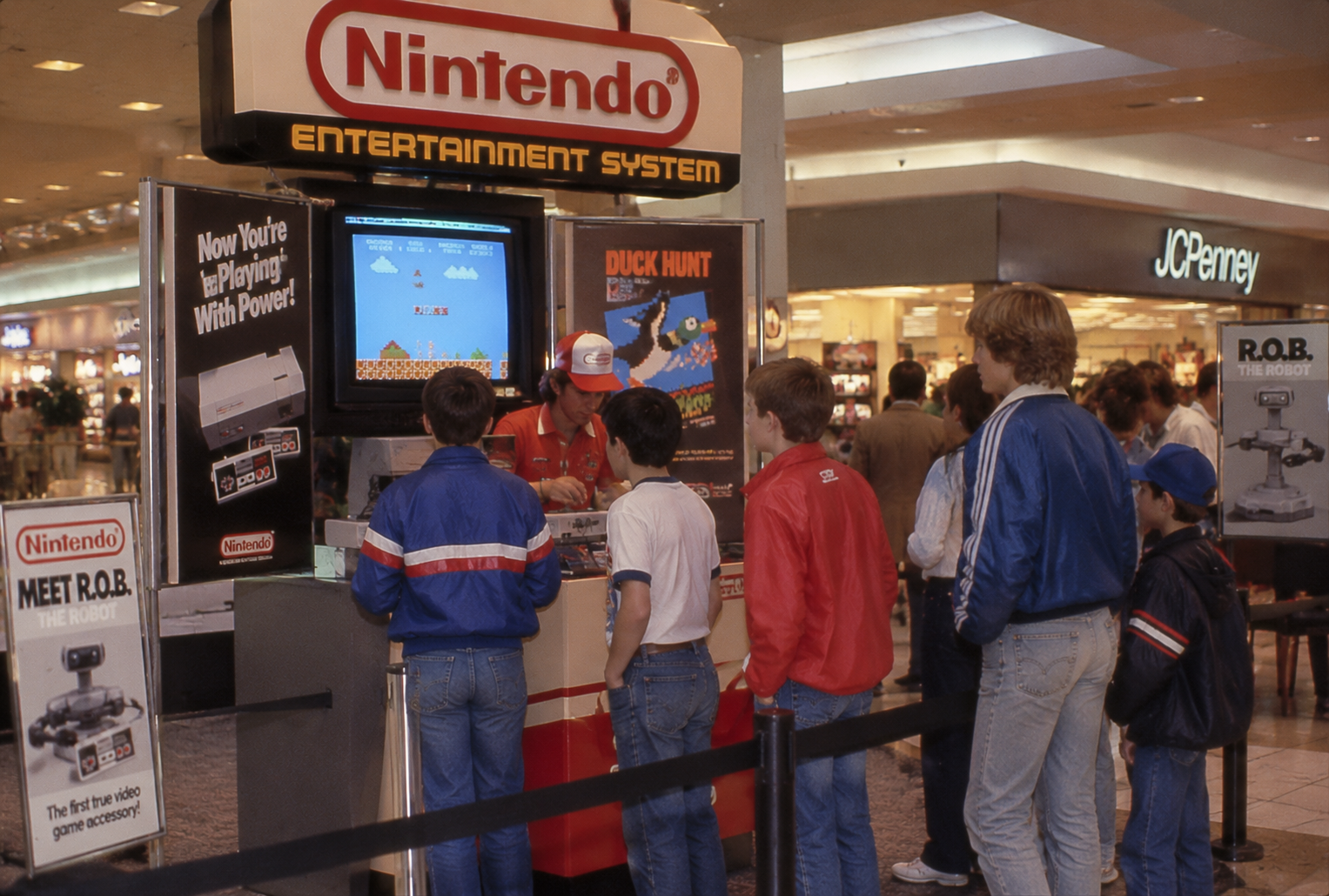
Trying the latest video game didn’t necessarily mean downloading a demo or watching someone play it on YouTube. Nintendo used shopping malls to introduce American consumers to the Nintendo Entertainment System after its U.S. launch in 1985. At demonstrations, shoppers could get their hands on games such as “Duck Hunt” and “Baseball,” with R.O.B. the Robot helping make the unfamiliar system look even more futuristic. It was particularly important at a time when retailers remained wary of home video games following the industry’s early-’80s crash. Today, companies can reach millions of gamers online. Back then, sometimes they had to bring the games directly to the mall.
Sign up for our newsletter
Hunt for Toys in a Tiny Store Packed Floor to Ceiling
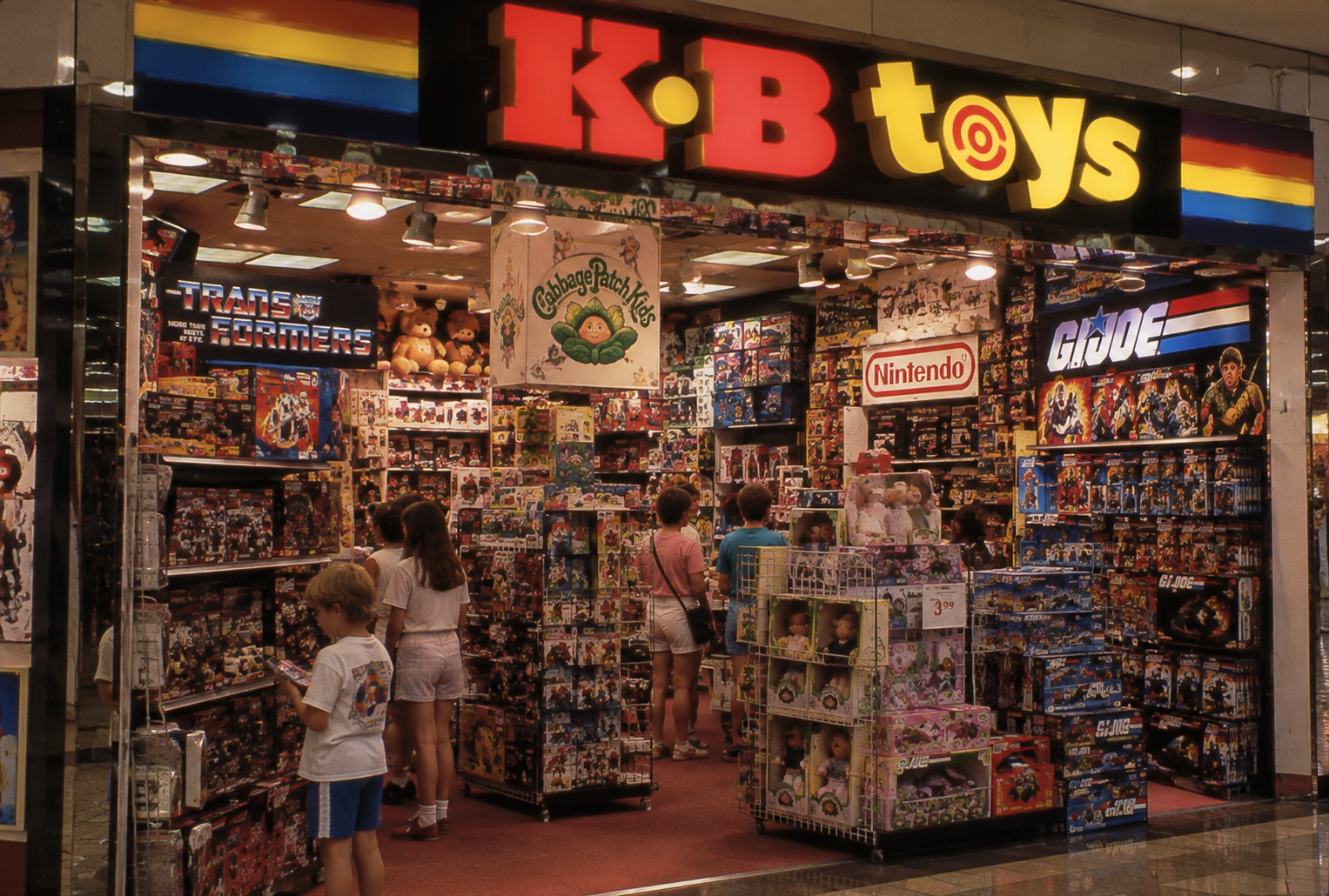
KB Toys wasn’t enormous, and that was part of the experience. The mall toy store was often crammed with action figures, dolls, games, electronic toys, and clearance merchandise, making a relatively small storefront feel like it contained practically everything a kid could want. The company had 210 stores when it was purchased by Melville Corporation in 1981 and expanded significantly during the decade. It eventually even marketed itself as “The Toy Store in the Mall.” The original chain liquidated its remaining stores in 2009, ending one of the most recognizable stops on the classic mall trip.
Smoke a Cigarette While Walking Through the Mall
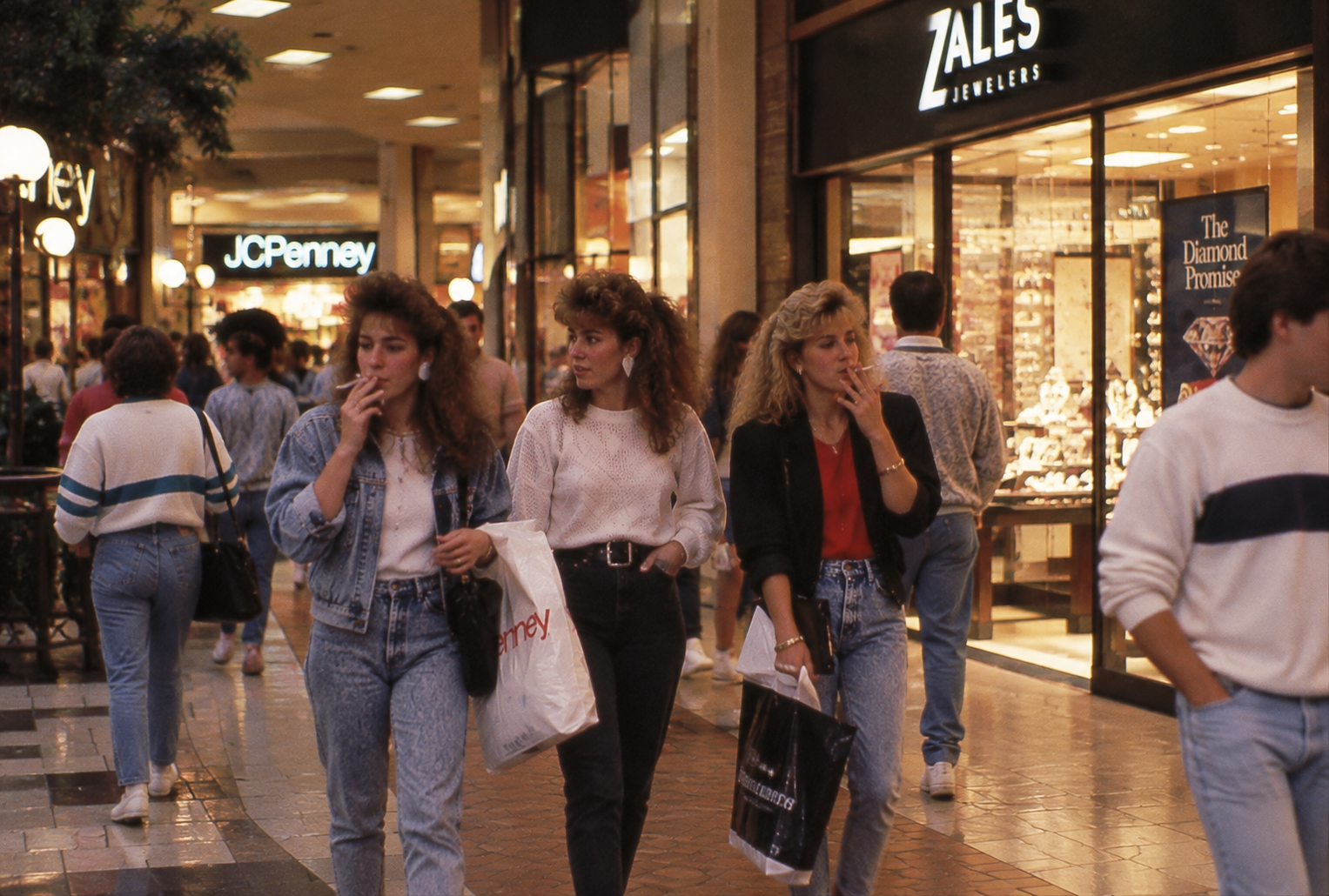
One sight in old mall photos can be particularly startling today: people smoking indoors. Rules varied depending on the mall and location, but smoking could still be permitted in common areas, with freestanding ashtrays positioned alongside benches and other seating. The practice lingered well beyond the ’80s. When California’s South Coast Plaza banned smoking in its common areas in 1993, the move was unusual enough to make the news. Indoor smoking restrictions have since made the idea of casually lighting a cigarette while wandering past stores almost unimaginable.
Sit Beside a Giant Indoor Fountain Just Because It Was There
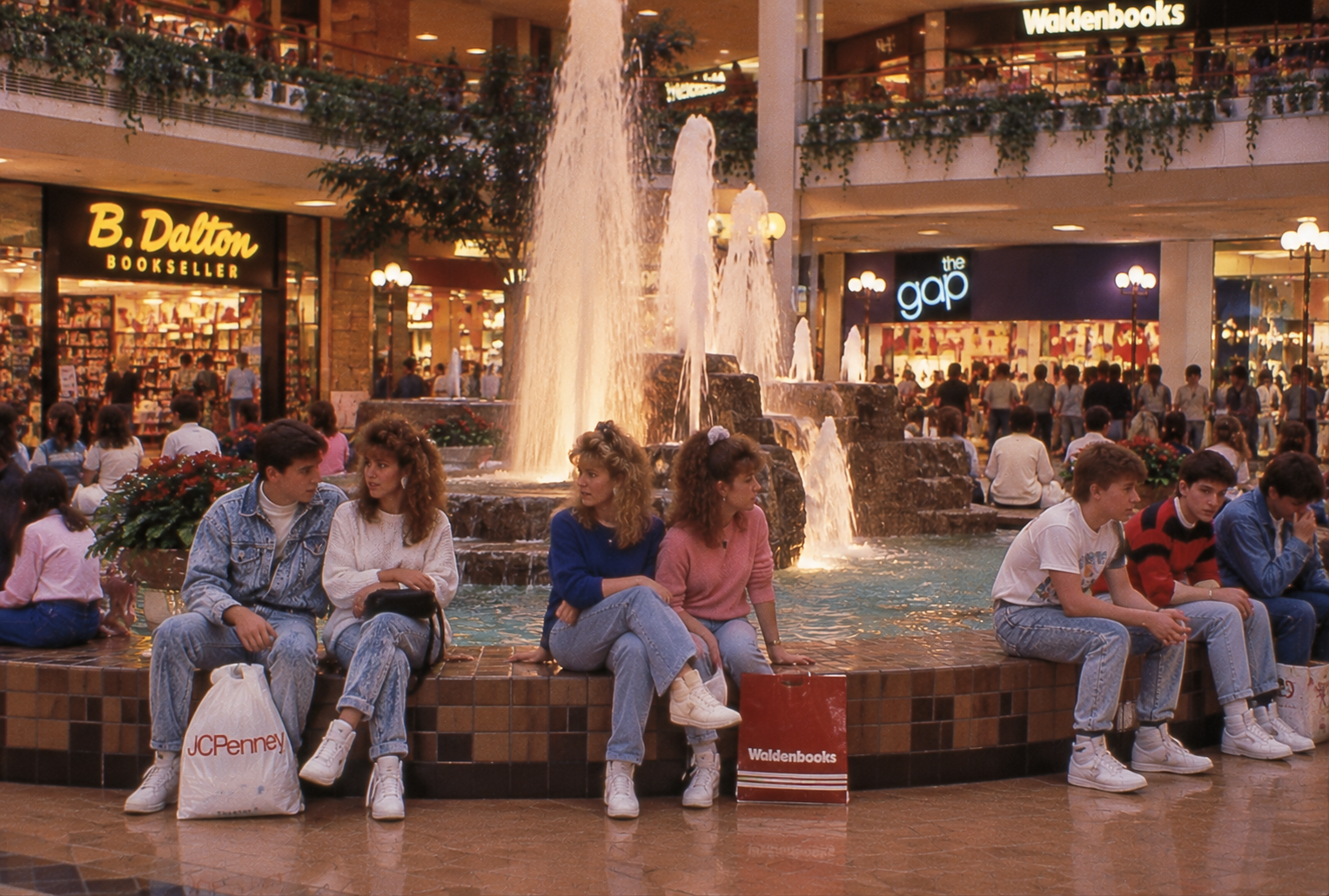
Why did malls need enormous fountains surrounded by plants, benches, and occasionally enough landscaping to resemble a tiny indoor park? Because the mall wasn’t designed solely to get shoppers in and out. Fountains, atriums, planters, umbrellas, and other elaborate communal features helped create spaces where people could linger. Kids tossed coins into the water, teenagers used fountains as meeting landmarks, and tired shoppers could sit nearby without being expected to buy anything. Many aging malls have since removed these features during renovations, leaving the extravagant indoor fountain as one of the most instantly recognizable details of vintage mall photography.
Spend Half an Hour at a Department Store Cosmetics Counter
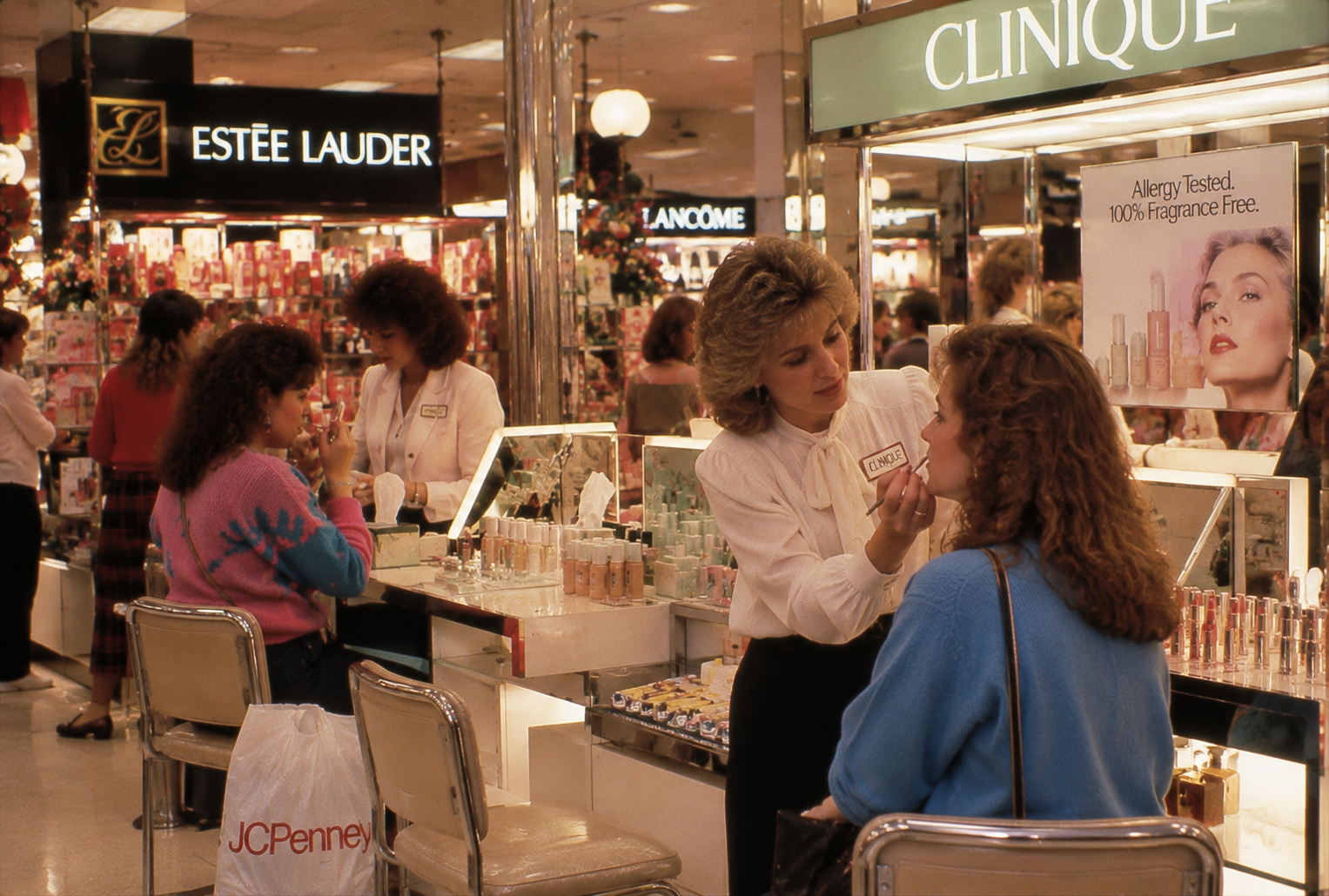
Department-store anchors were destinations within the mall, and their cosmetics departments could practically be destinations within the department store. Brands such as Estée Lauder, Lancôme, and Clinique competed for prominent counter space, while shoppers could stop to test fragrances, inspect new products, or talk with beauty consultants. The elaborate branded counters were valuable retail real estate during the ’80s. Beauty counters haven’t disappeared, but traditional department stores no longer dominate mall traffic as they once did, while specialty beauty retailers have taken over much of the business.
Catch a Movie Without Ever Leaving the Mall
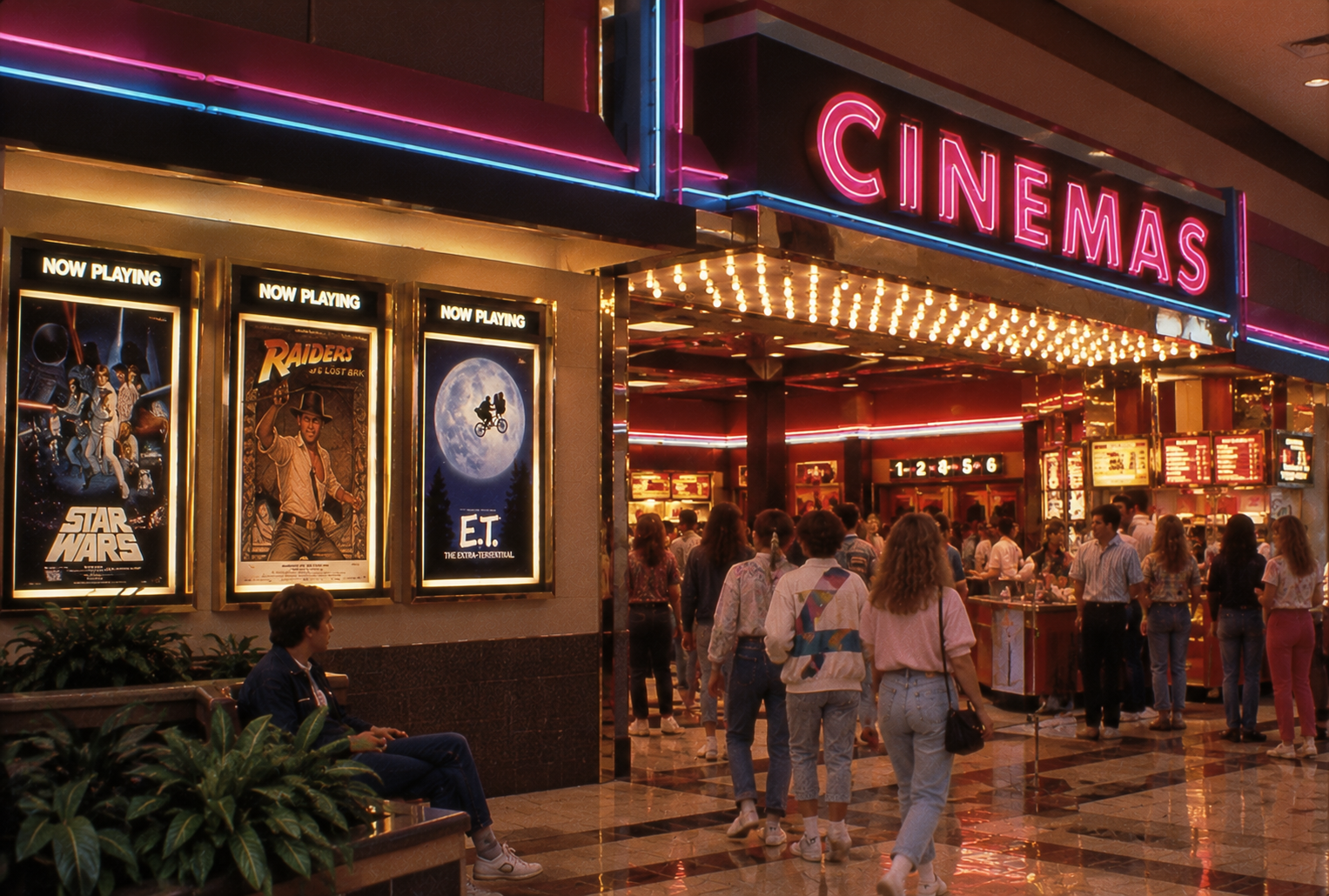
An ’80s mall trip could easily stretch from afternoon into evening because there was no need to leave once you finished shopping. Many malls incorporated movie theaters, allowing visitors to shop, grab dinner, and catch a film without moving the car. The rise of multiscreen cinemas made the combination even more appealing. Cineplex entered the U.S. market with a theater at Los Angeles’ Beverly Center in 1982 after developing its multiscreen concept in Canada. Some malls still have movie theaters today, but many of the small classic mall cinemas have closed or given way to much larger destination multiplexes.
Stumble Into a Completely Random Promotional Spectacle
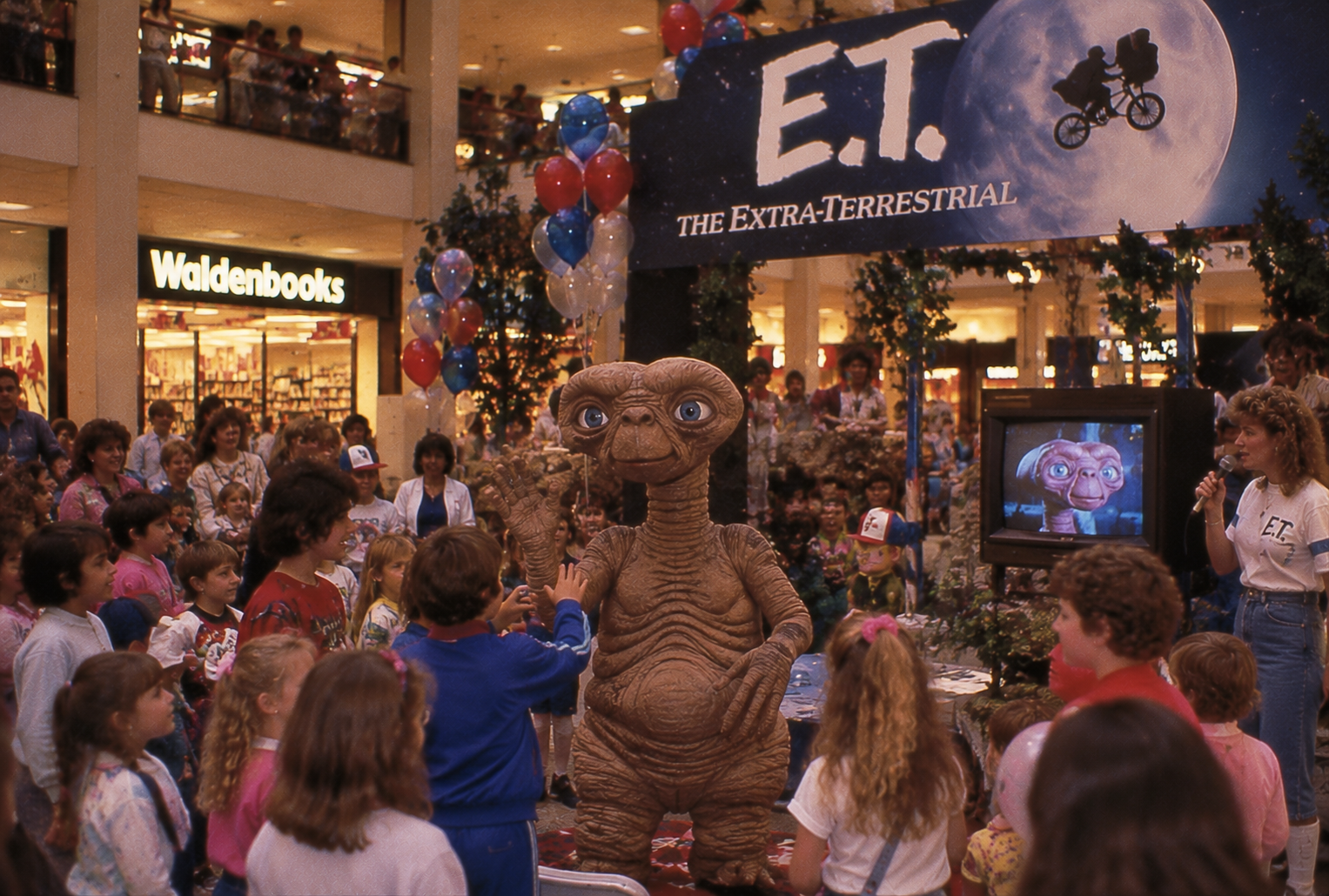
One of the stranger pleasures of an ’80s mall trip was that you didn’t always know what would be happening in center court. Shoppers could encounter Nintendo demonstrations, NBA skills competitions, “Star Wars” displays, television promotions, soap-opera stars, or costumed characters such as He-Man and Spider-Man. A 1983 “Return of the Jedi” mall tour, for example, brought production materials and themed displays directly to shoppers. Today, companies are more likely to promote something through social media, conventions, or dedicated pop-ups. In the ’80s, there was always a chance you’d go to the mall for a pair of jeans and accidentally encounter something completely unrelated.
The Mall Was More Than a Place to Shop
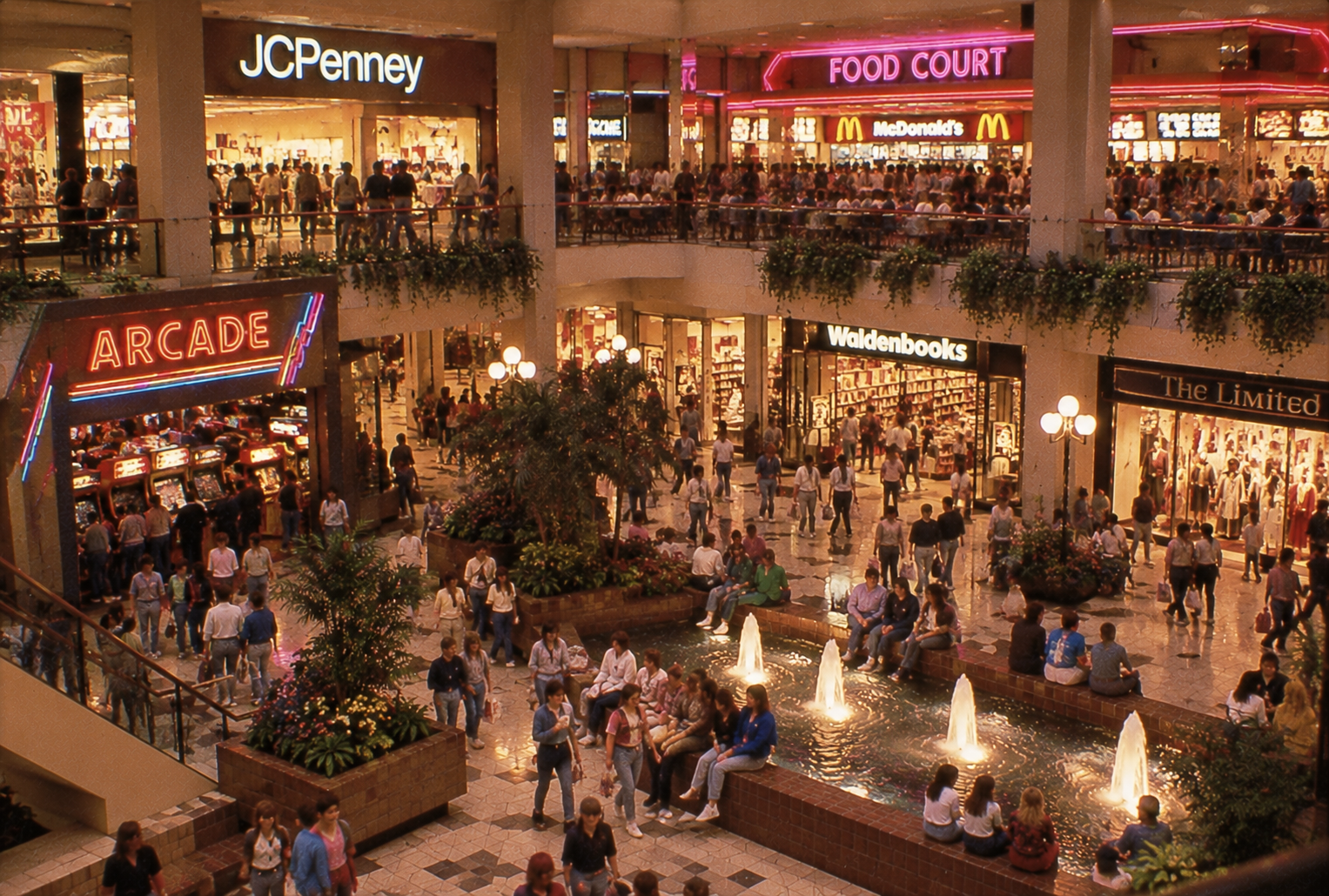
The biggest difference between an ’80s mall and many shopping centers today wasn’t necessarily the stores. It was everything else you could do once you got there. Malls brought shopping, food, entertainment, and social life together under one roof, giving teenagers and families somewhere to spend hours without needing much of a plan — or much money.
You might arrive with enough cash for an Orange Julius and a handful of arcade games and still make an afternoon of it. In that sense, the classic ’80s mall functioned less like a collection of retailers and more like a suburban town square — just one with fountains, food courts, record stores, and a lot more neon.