Bathrooms in the 1960s weren’t exactly the sprawling, spa-like retreats people renovate their homes to include today. They were often small, practical, and shared by the entire family. But boring? Definitely not.
Color was everywhere. Toilets, sinks, and tubs came in shades of pink, baby blue, yellow, and green, while colorful tile, patterned shower curtains, and fuzzy bath mats added even more personality. Storage might consist of one mirrored medicine cabinet, and everyday grooming meant bars of soap, jars of cold cream, hair rollers, and enough aerosol hairspray to keep a bouffant intact all day.
Not every American bathroom had every item on this list, of course. But these 17 fixtures, toiletries, and accessories helped give the typical 1960s bathroom its unmistakable look.
A Pink, Blue, or Green Toilet
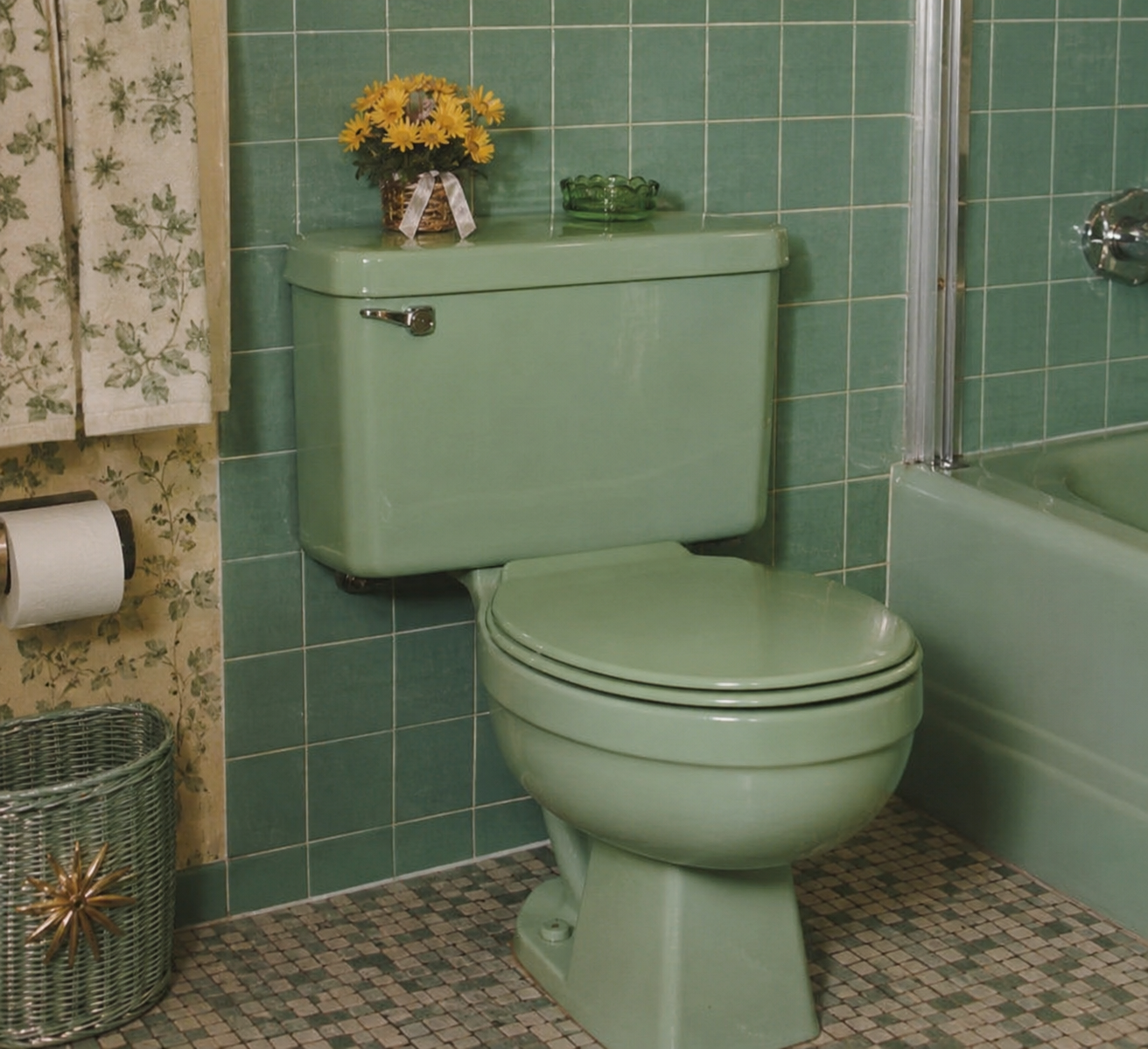
White toilets certainly existed, but the 1960s weren’t afraid of colorful plumbing. Pastel pink, powder blue, yellow, and green toilets could turn an otherwise ordinary bathroom into a coordinated decorating statement. Better yet, the toilet often wasn’t alone: It might perfectly match the sink, tub, and surrounding tile. Plenty disappeared during later renovations as homeowners embraced more neutral bathrooms, making an untouched colorful toilet an instant clue that you’ve stumbled upon a vintage space.
A Matching Colored Sink and Bathtub
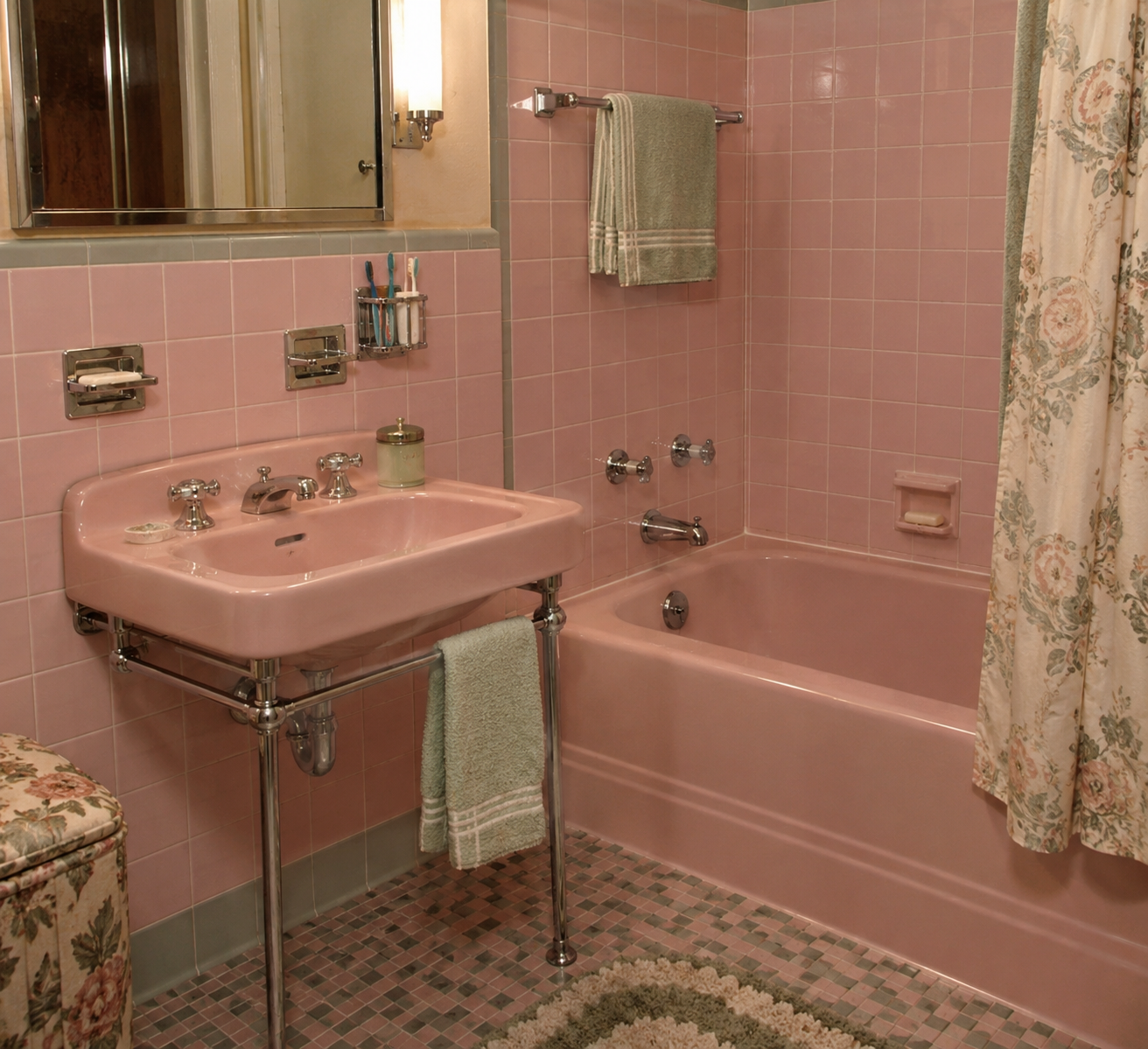
Why stop at a colorful toilet when the whole bathroom could match? Manufacturers sold coordinated bathroom fixtures that allowed homeowners to carry the same shade across the sink, bathtub, and toilet. A powder-blue tub beside a powder-blue sink with gleaming chrome faucets is the kind of combination that immediately transports a bathroom back several decades. Today, when white bathroom fixtures overwhelmingly dominate, the commitment to color feels especially bold.
Four-Inch Square Wall Tile
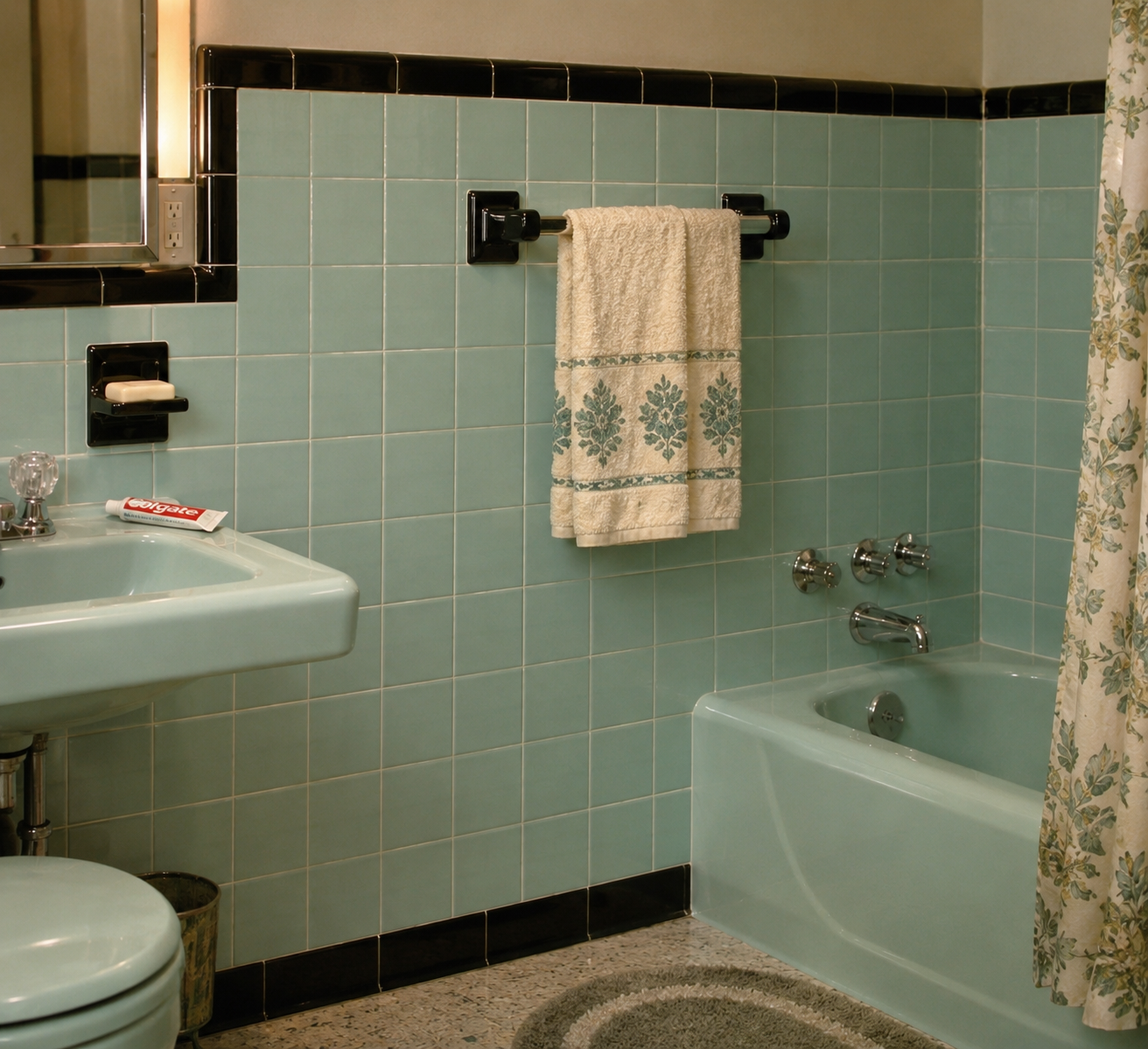
Small square ceramic tiles were a defining feature of midcentury bathrooms, frequently covering the lower portion of the walls as well as the entire bathtub surround. They weren’t necessarily subtle, either. Pink, aqua, yellow, blue, and other colorful tiles could be finished with contrasting trim or bullnose edging. One reason so many vintage bathrooms still have their original tile? The stuff was built to last, sometimes surviving decades of changing decorating trends.
Tiny Mosaic Floor Tiles
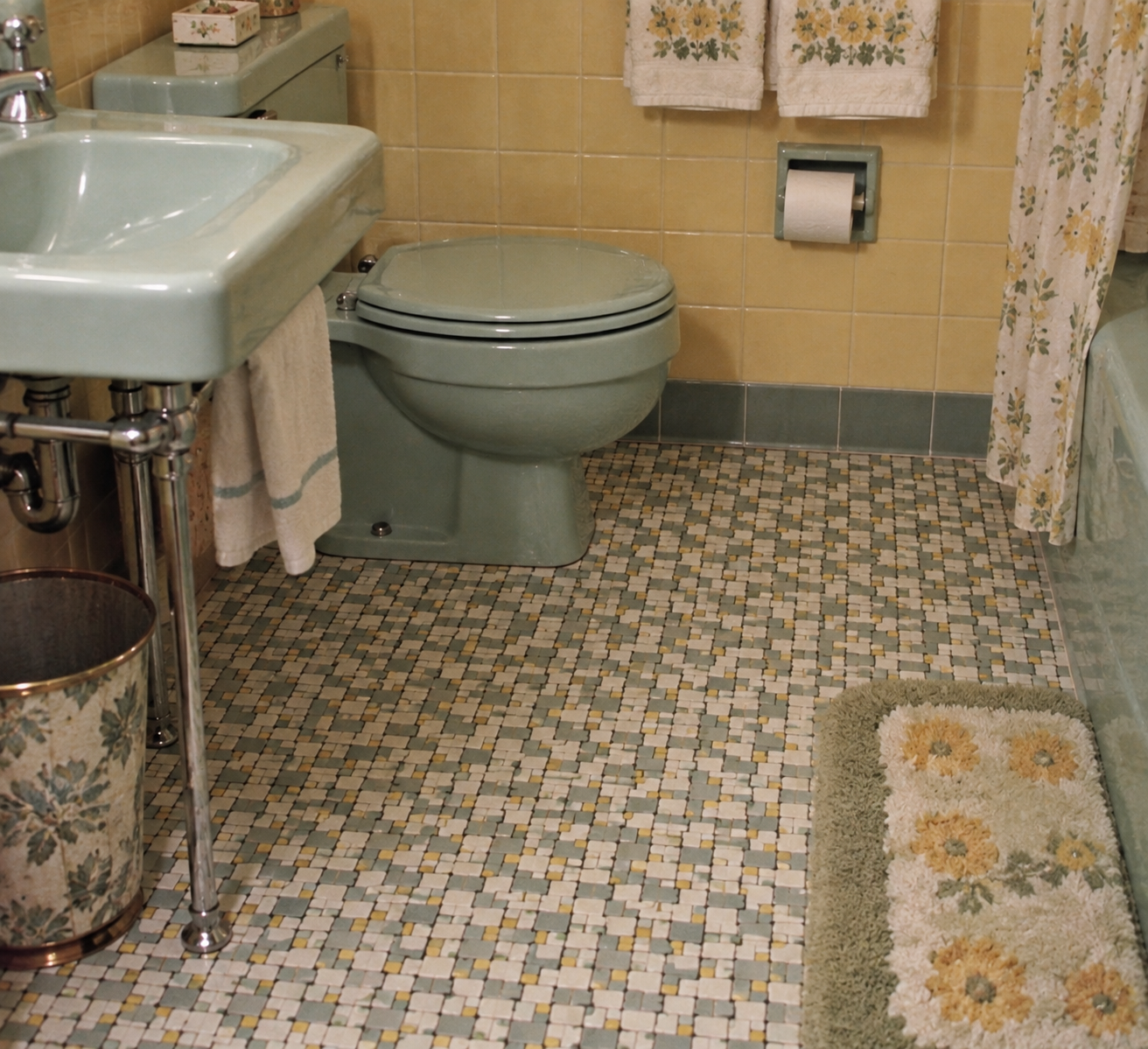
The walls weren’t the only place where tile made a statement. Many bathrooms paired their larger wall tiles with tiny mosaic floor tiles arranged in geometric patterns. Hexagons and other small shapes gave floors visual interest while all those grout lines helped provide traction underfoot. In a bathroom that survived without a major remodel, those little tiles might still extend underneath practically everything in the room.
A Mirrored Medicine Cabinet
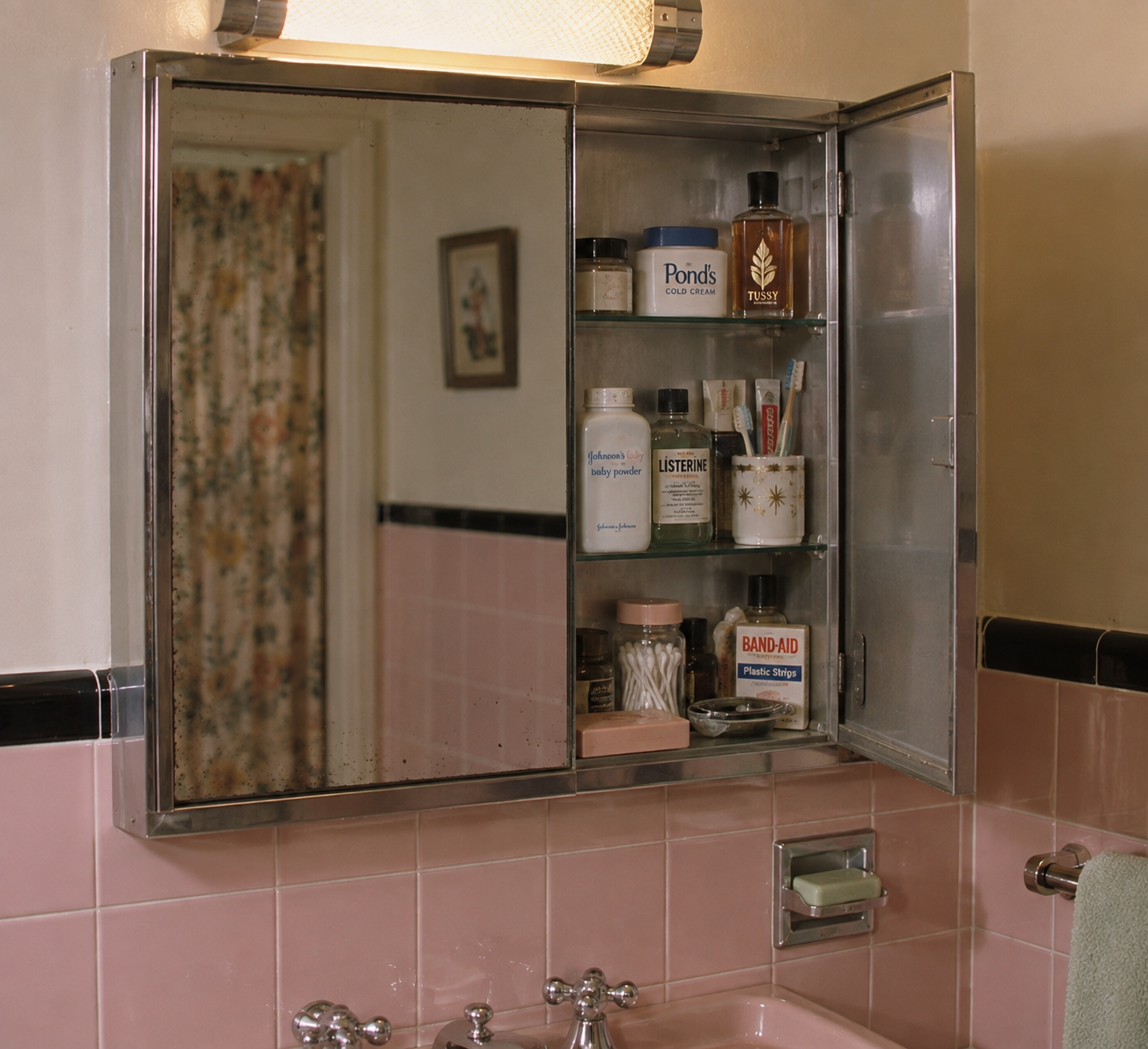
Forget double vanities lined with drawers and cabinets. A lot of the family’s everyday bathroom essentials had to squeeze onto a handful of narrow shelves hidden behind the mirror. Open a typical mirrored medicine cabinet and you might find toothpaste, aspirin, shaving supplies, thermometers, prescriptions, and other toiletries packed together. Some older recessed metal cabinets even included a slot where used razor blades could be dropped into the wall — a feature that can give modern renovators quite the surprise decades later.
Trending on Cheapism

A Built-In Toothbrush Holder
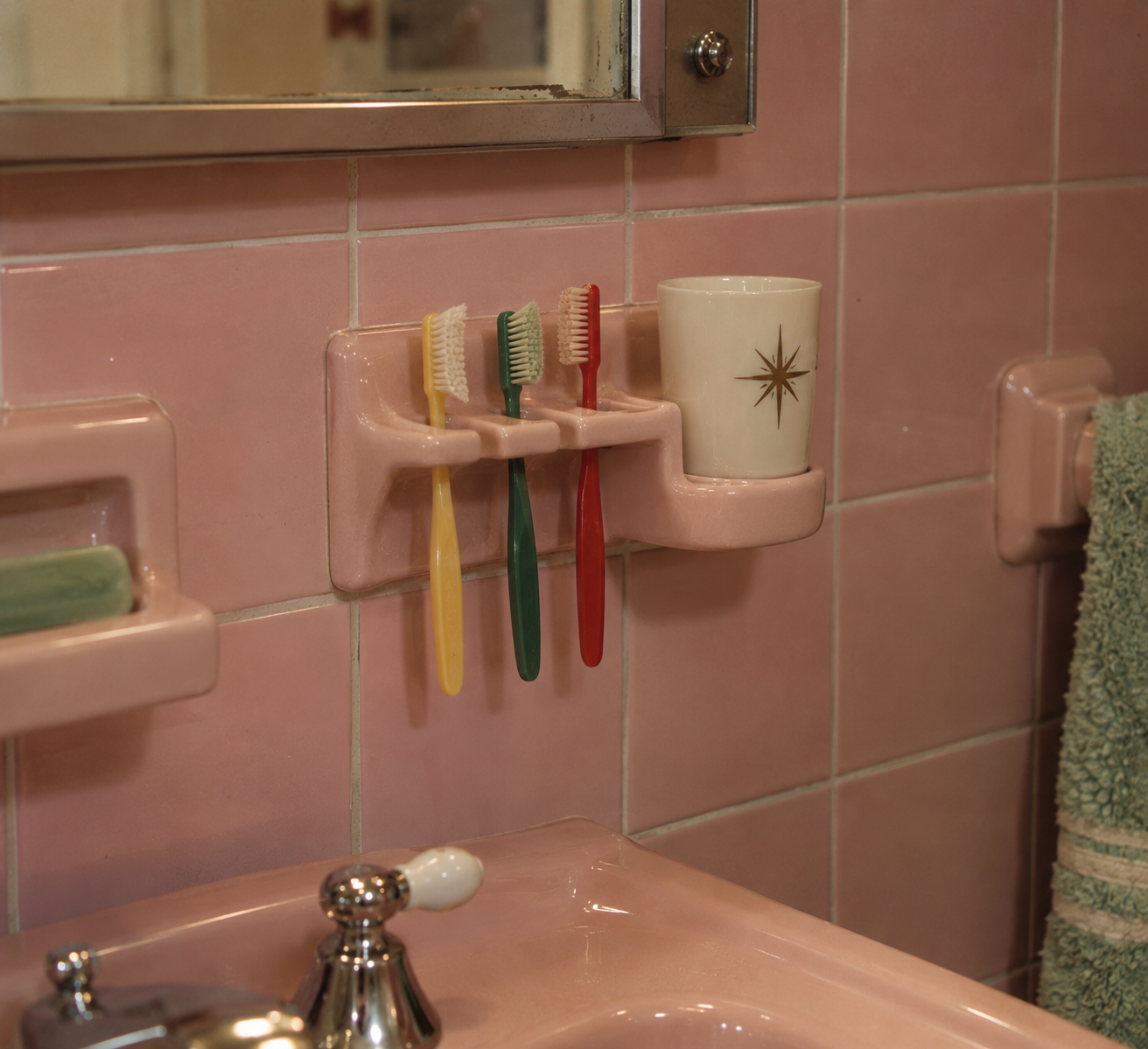
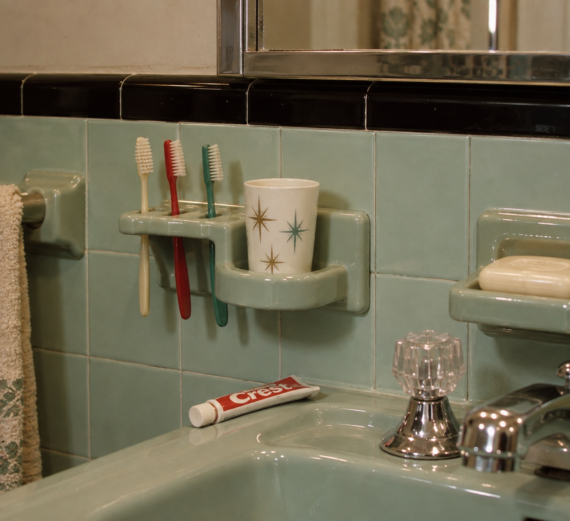
Toothbrushes didn’t necessarily disappear into a drawer or sit in a decorative cup on the vanity. Many bathrooms featured ceramic or chrome toothbrush holders mounted directly to the wall, sometimes as part of the tile itself. Several toothbrushes could hang side by side in individual slots, conveniently positioned near the sink. It was one of several built-in bathroom accessories that made everything seem to have its designated place.
A Little Bathroom Drinking Cup
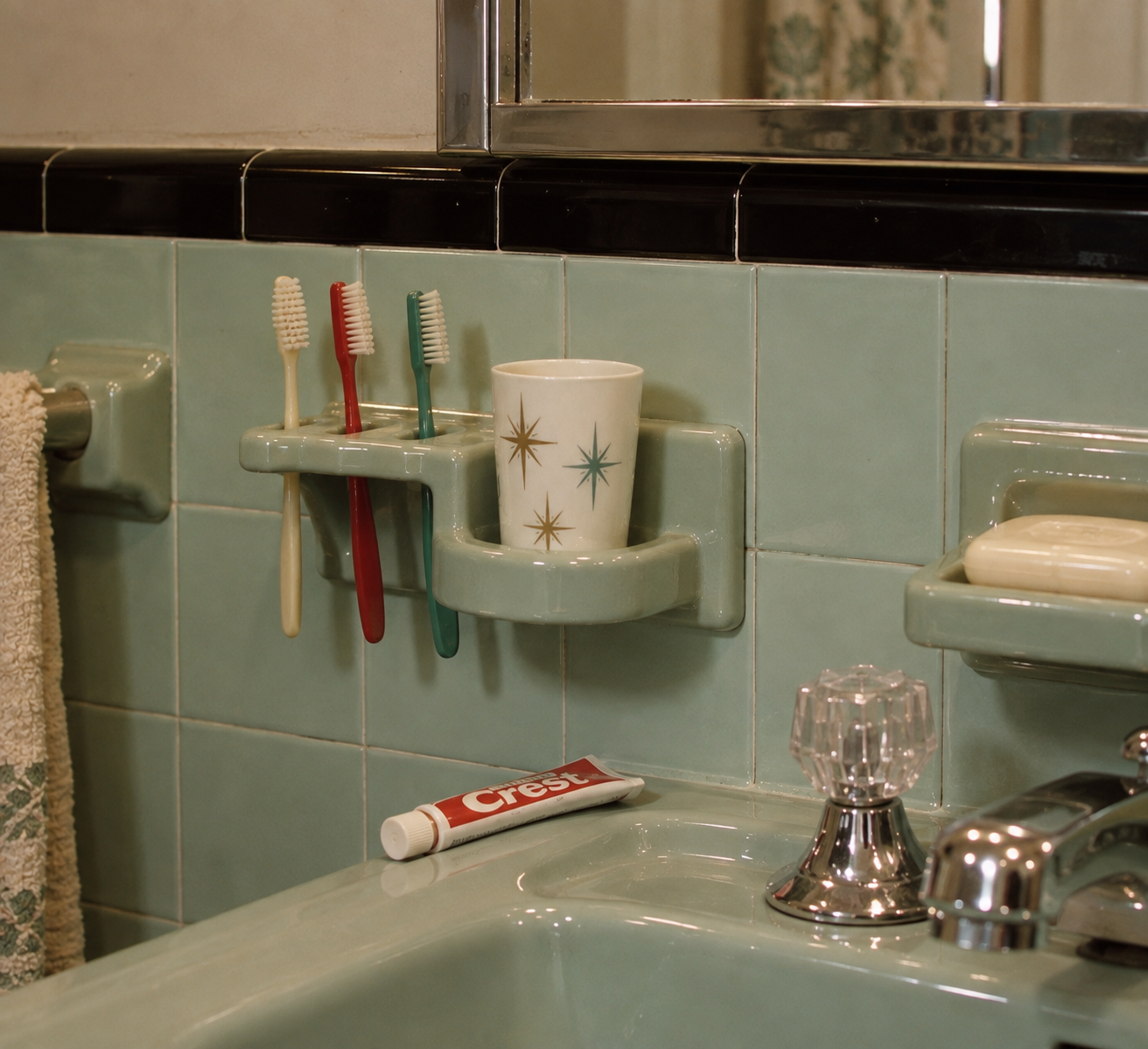
Right beside those toothbrushes, you might have found a little cup used for rinsing after brushing your teeth. Some households relied on a reusable plastic tumbler, while others had paper cups sitting in or near a wall-mounted dispenser. And yes, in plenty of homes, multiple family members used the same bathroom cup — something that might make today’s germ-conscious households reconsider just how nostalgic they really are for the good old days.
A Built-In Ceramic Soap Dish
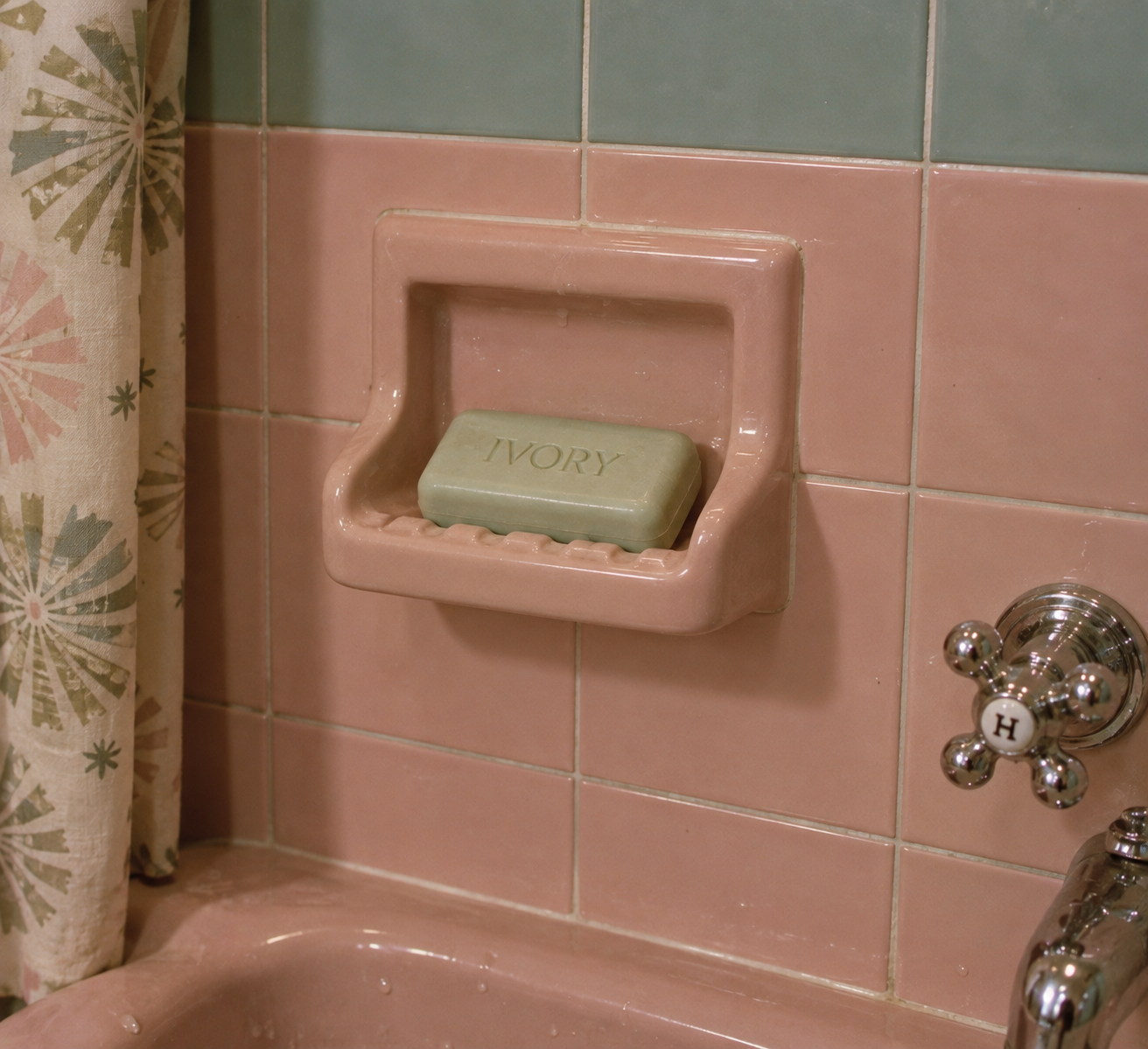
Even the soap had its own permanent parking spot. Ceramic soap dishes were commonly incorporated directly into bathroom tile, whether beside the sink or inside the bathtub. Matching ceramic towel bars, toilet-paper holders, and other accessories could complete the look. They were convenient and sturdy, although anyone who’s tried renovating an original midcentury bathroom knows removing them without damaging the surrounding vintage tile can be another story.
Sign up for our newsletter
A Bar of Soap Instead of a Pump Bottle
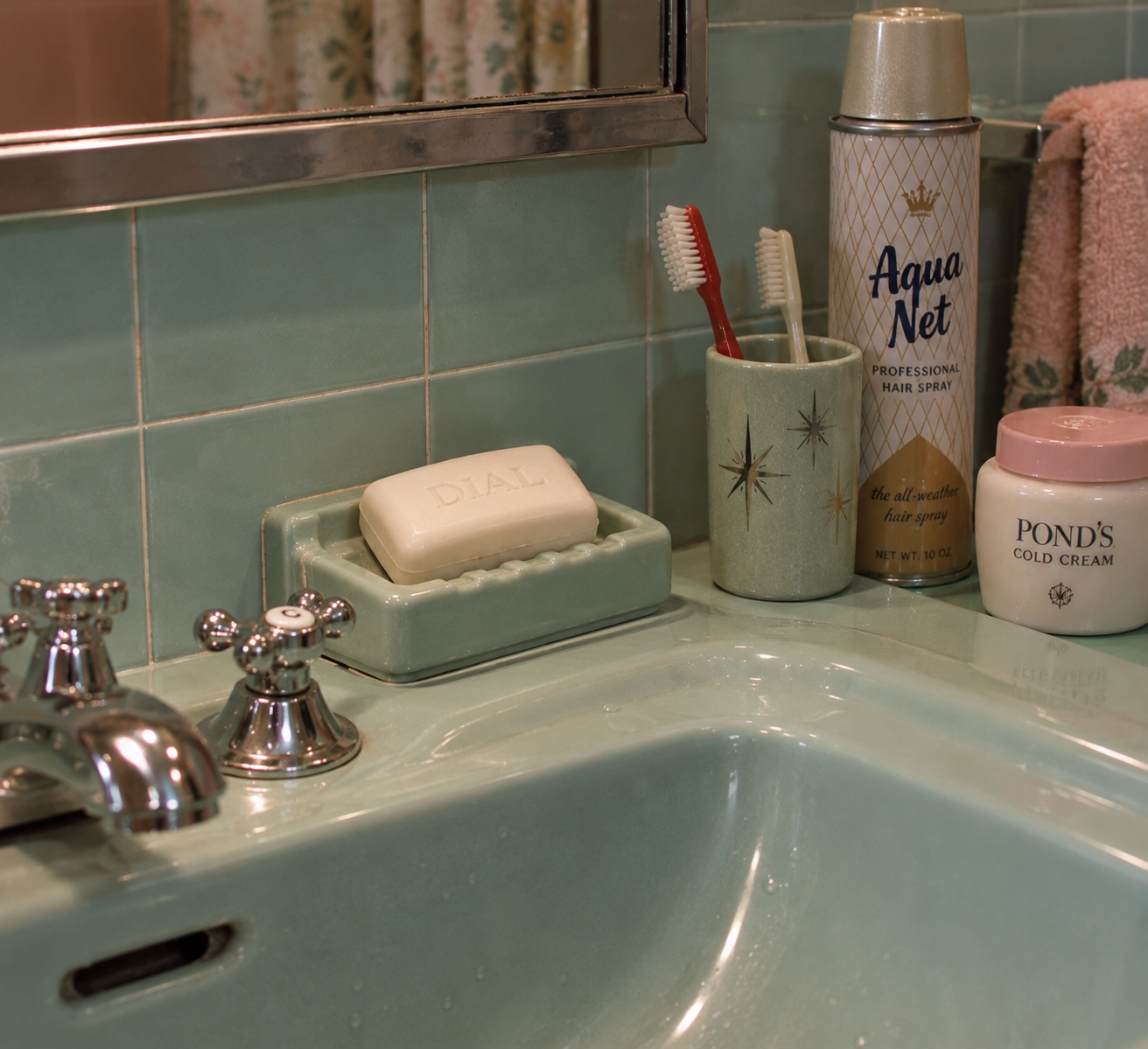
Today’s bathroom sinks can be crowded with pumps of hand soap, face wash, serums, and moisturizers. A 1960s sink was considerably more straightforward. A bar of soap — perhaps Ivory, Dial, Palmolive, or another familiar brand — might sit in that built-in dish waiting for everyone in the family to use it. Liquid soap existed, but the disposable pump bottle hadn’t yet become the bathroom-sink default it is today.
A Floral or Patterned Shower Curtain
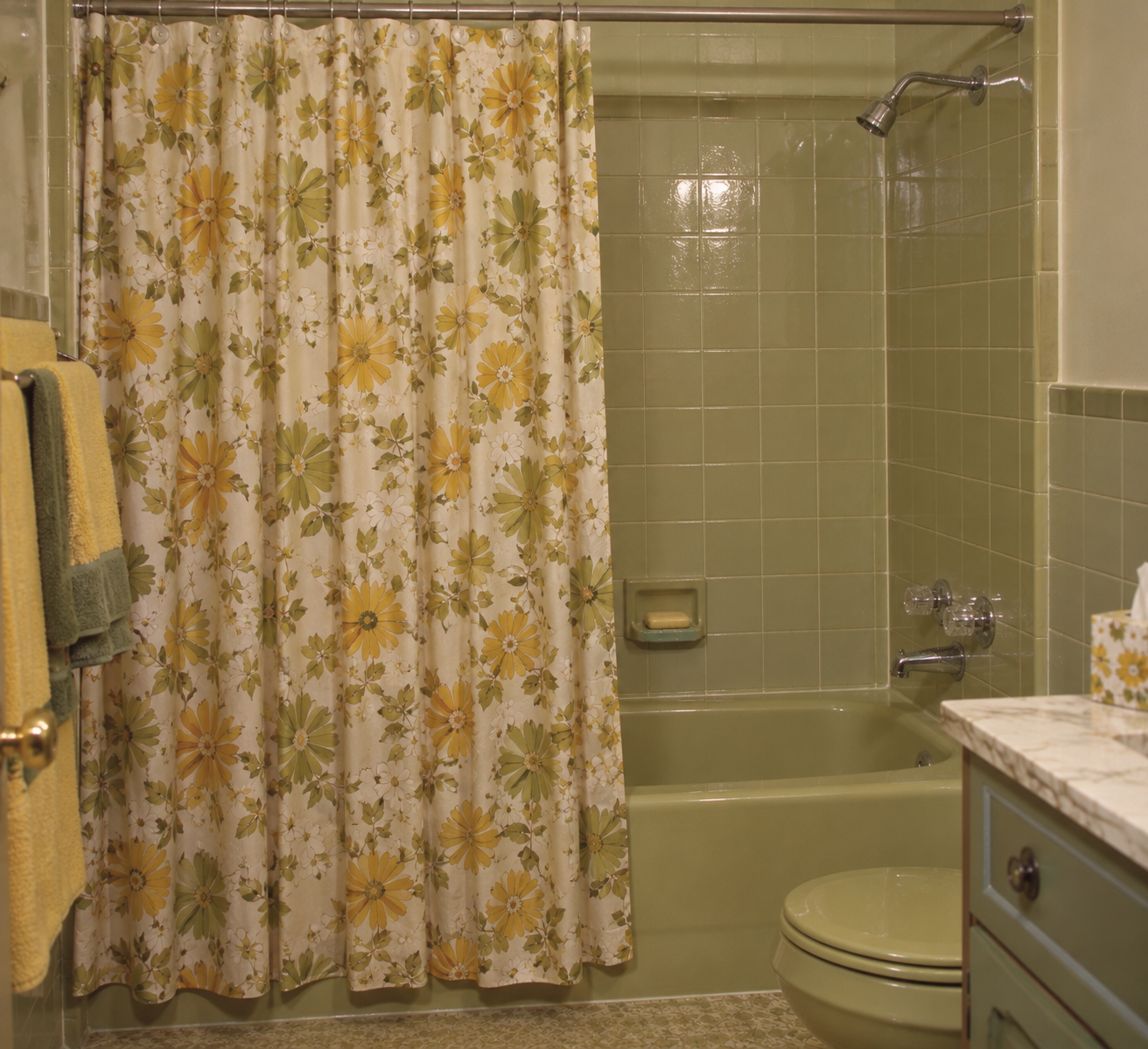
If the colorful plumbing and tile weren’t enough, the shower curtain offered one more opportunity to add some pattern. Florals, stripes, geometric designs, and colorful plastic or vinyl curtains could compete for attention with the rest of the room. The result could be a lot busier than today’s preference for glass shower doors and subdued neutral curtains — but subtlety wasn’t exactly the point.
A Rubber Bathtub Mat With Suction Cups
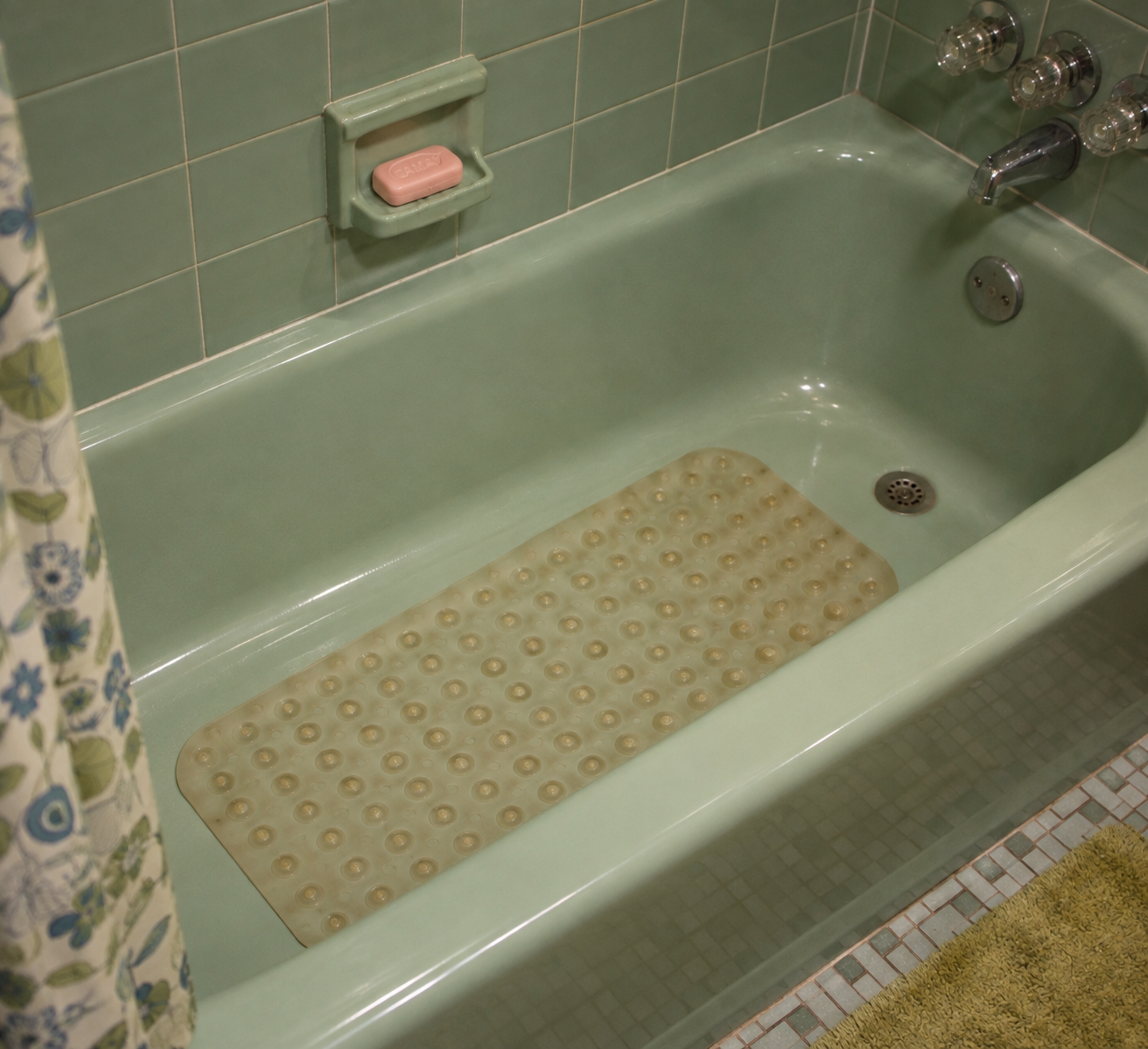
Anyone who remembers peeling one of these heavy, wet mats off the bottom of the bathtub probably remembers the distinctive underside, too. Rows of little suction cups helped keep rubber mats firmly attached to the tub while providing a slip-resistant surface for bathers. They came in plenty of colors and designs, because apparently even bathroom safety equipment deserved to coordinate with the decor.
A Fuzzy Bath Mat
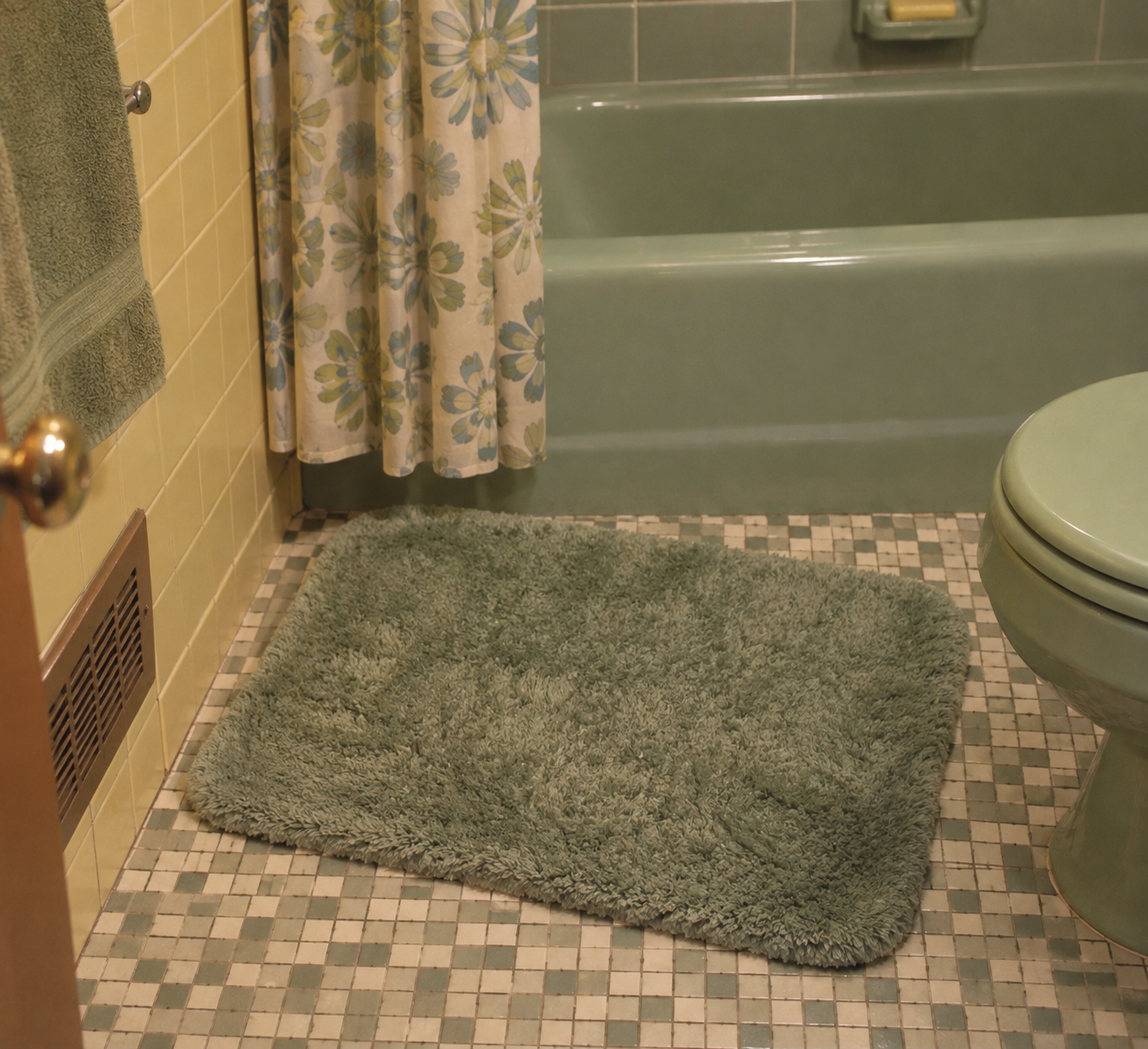
Step out of the bathtub and your feet might land on a thick, fluffy bath rug. Soft bathroom textiles added comfort and yet another splash of color, with rugs frequently positioned in front of the bathtub, sink, or toilet. This wasn’t necessarily the wall-to-wall shag carpeting sometimes associated with 1970s bathrooms. Think of it instead as a cozy precursor to the elaborate matching bathroom textile sets that would become even harder to ignore in the following decade.
An Analog Bathroom Scale
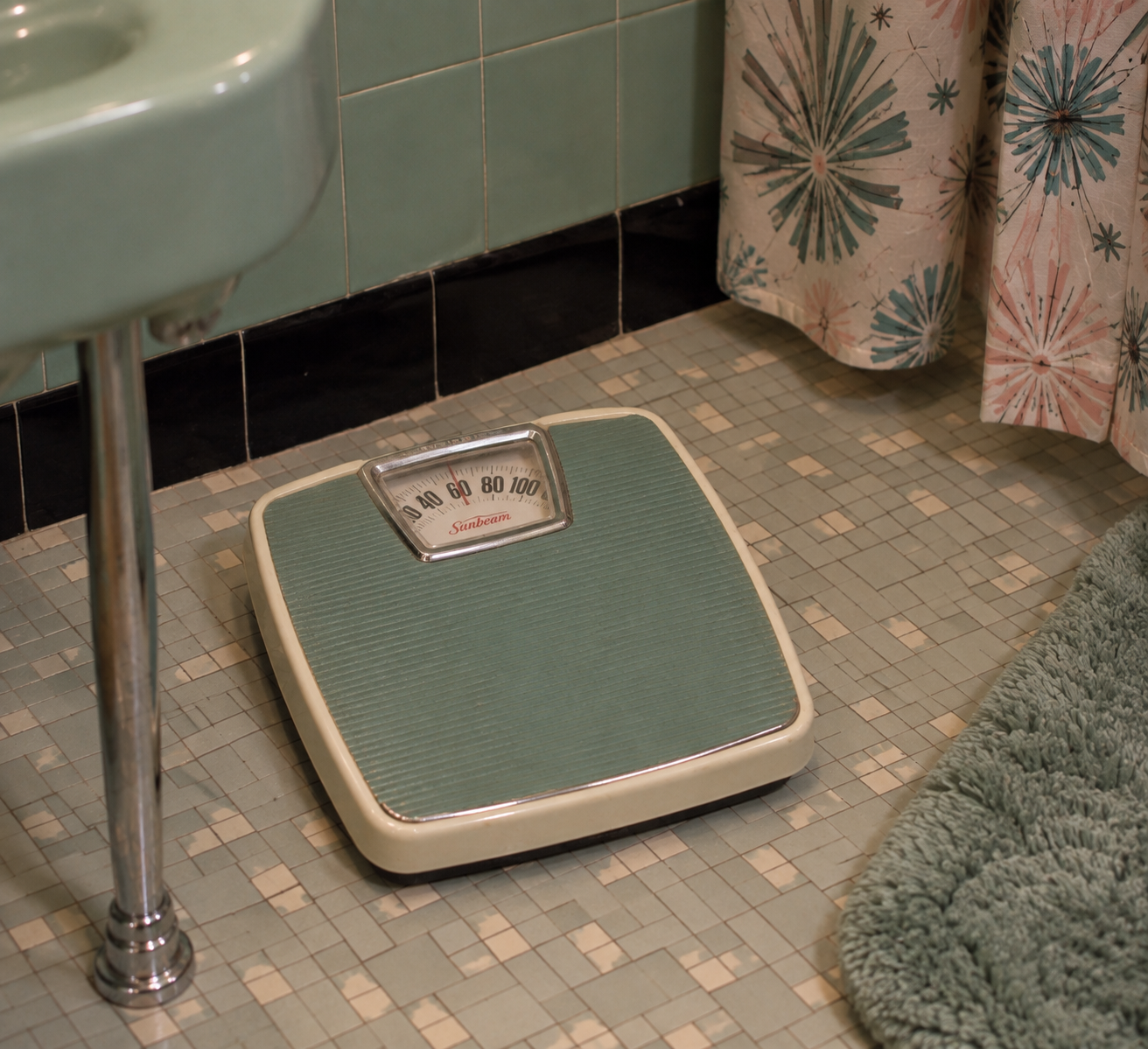
There were no apps, Bluetooth connections, digital screens, or body-fat estimates involved. A typical bathroom scale relied on a big mechanical dial and a needle that swung around as soon as you stepped aboard. You might have to nudge a little adjustment wheel to get the needle back to zero first, then stare down between your feet and wait for it to stop moving. Midcentury versions could even come in bright colors or patterns that matched the rest of the bathroom.
A Jar of Cold Cream
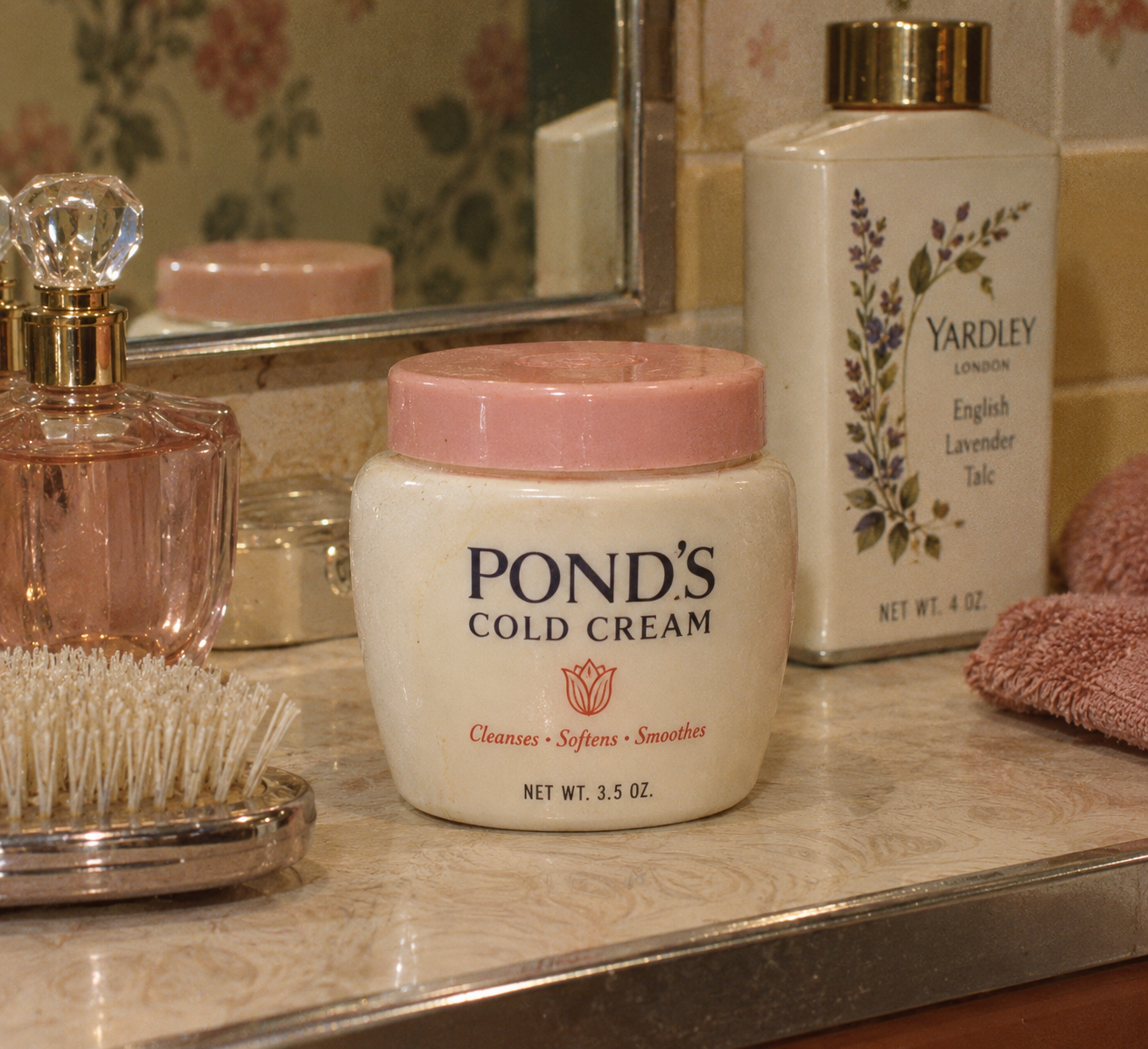
Before bathroom counters filled up with elaborate multi-step skincare routines, a jar of cold cream could do a lot of heavy lifting. Products such as Pond’s were used to remove makeup as well as cleanse and moisturize the skin. A substantial jar sitting beside combs, powder, perfume, and other beauty supplies was a familiar part of many women’s nighttime routines — and a staple of countless beauty advertisements from the era.
A Giant Aerosol Can of Hair Spray
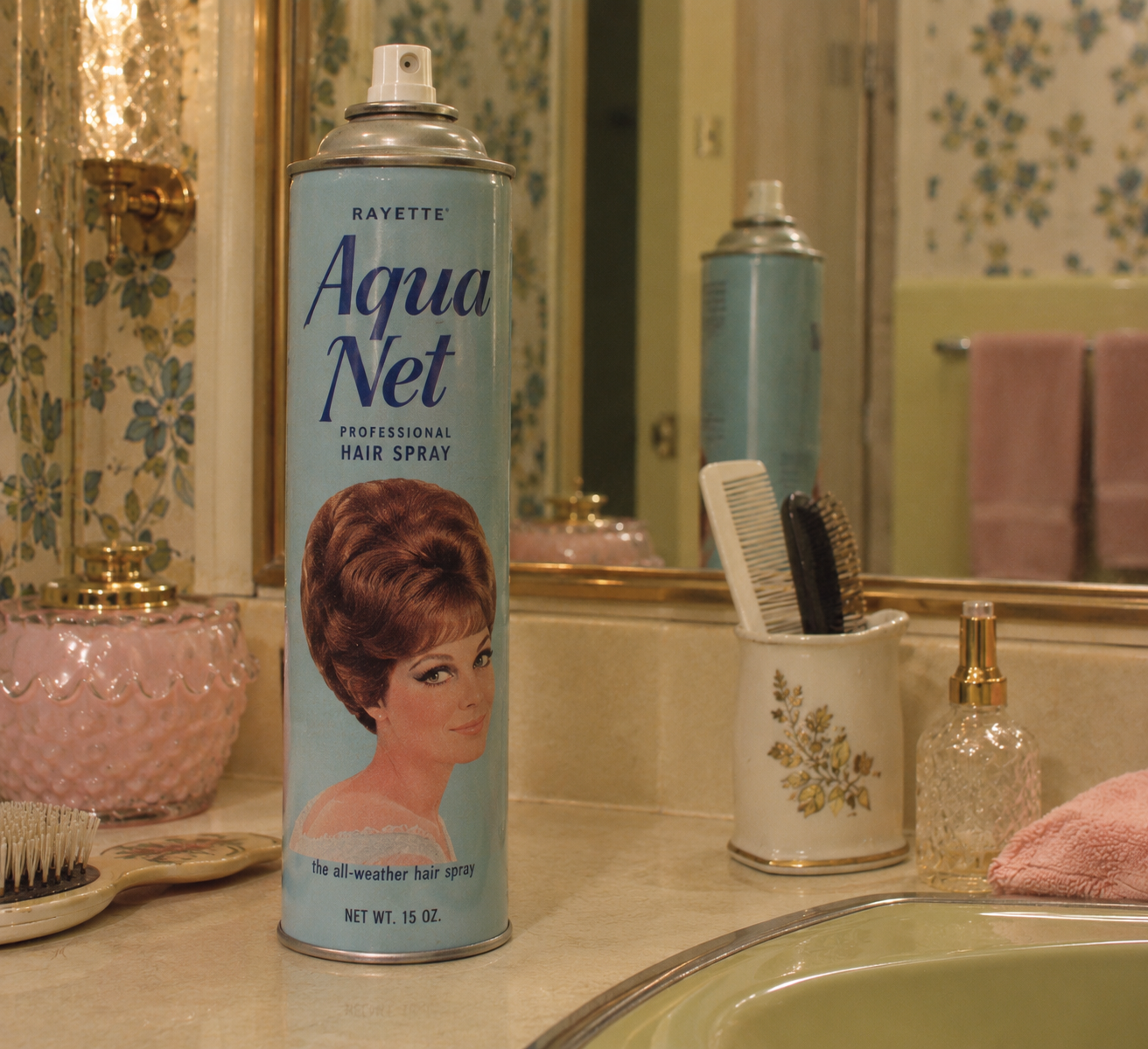
The towering bouffants and heavily teased hairstyles of the 1960s weren’t going to hold themselves up. Aerosol hairspray became a beauty essential, with products such as Aqua Net helping lock carefully styled hair into place. Anyone sharing the bathroom with somebody getting ready might know the aftermath just as well: a cloud of hairspray lingering in the room long after the hairstyle was finished.
Hair Rollers and a Bonnet-Style Hair Dryer
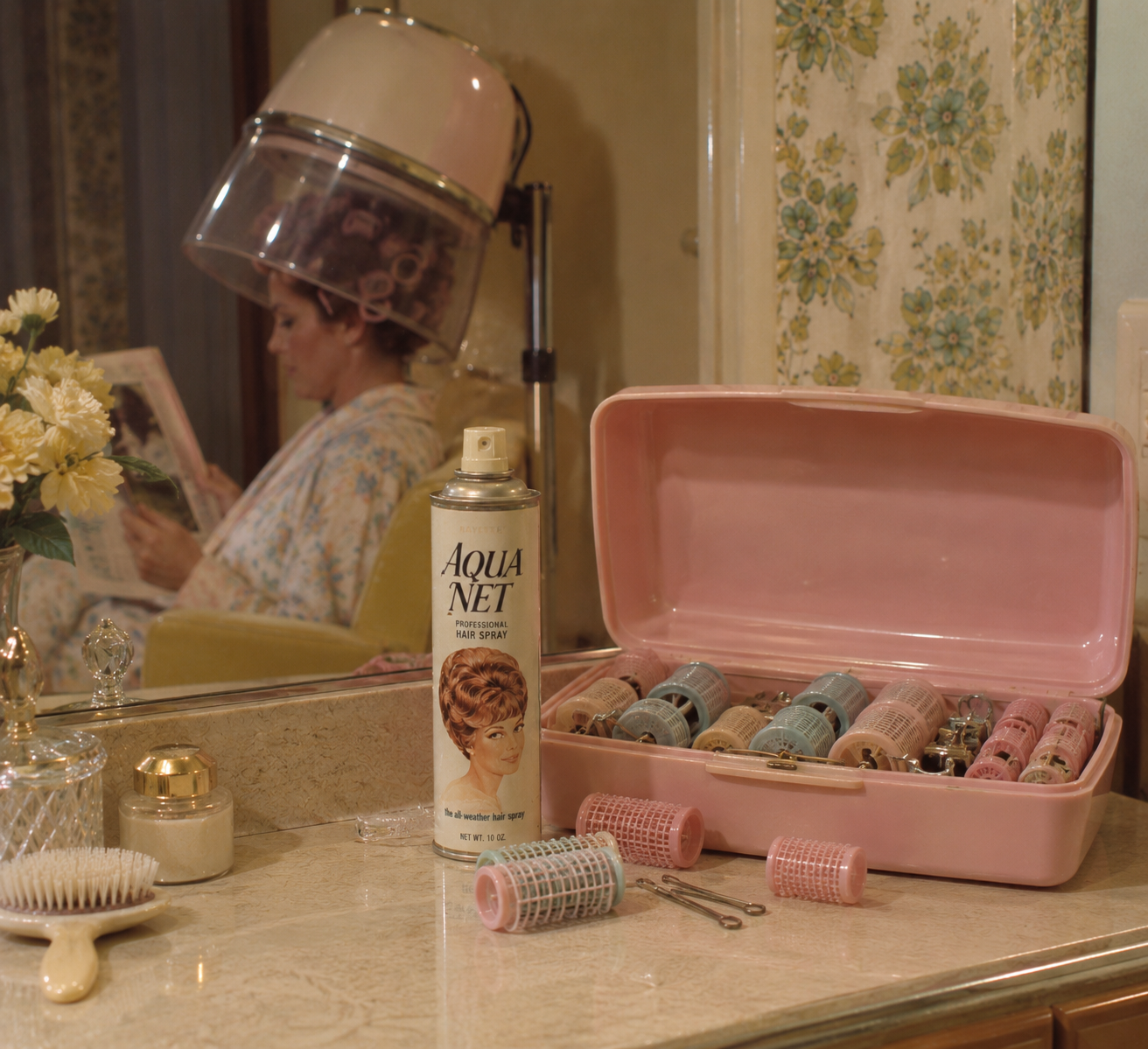
Getting your hair ready could be practically an event. Women might set their hair in rows of foam or plastic rollers, then sit beneath a bonnet dryer or use a portable version featuring a soft hood connected to the machine by a hose. Some portable dryers even packed into suitcase-like carrying cases. Compared with today’s quick blow-dry, the entire process required considerably more time — and patience.
A Freestanding Laundry Hamper
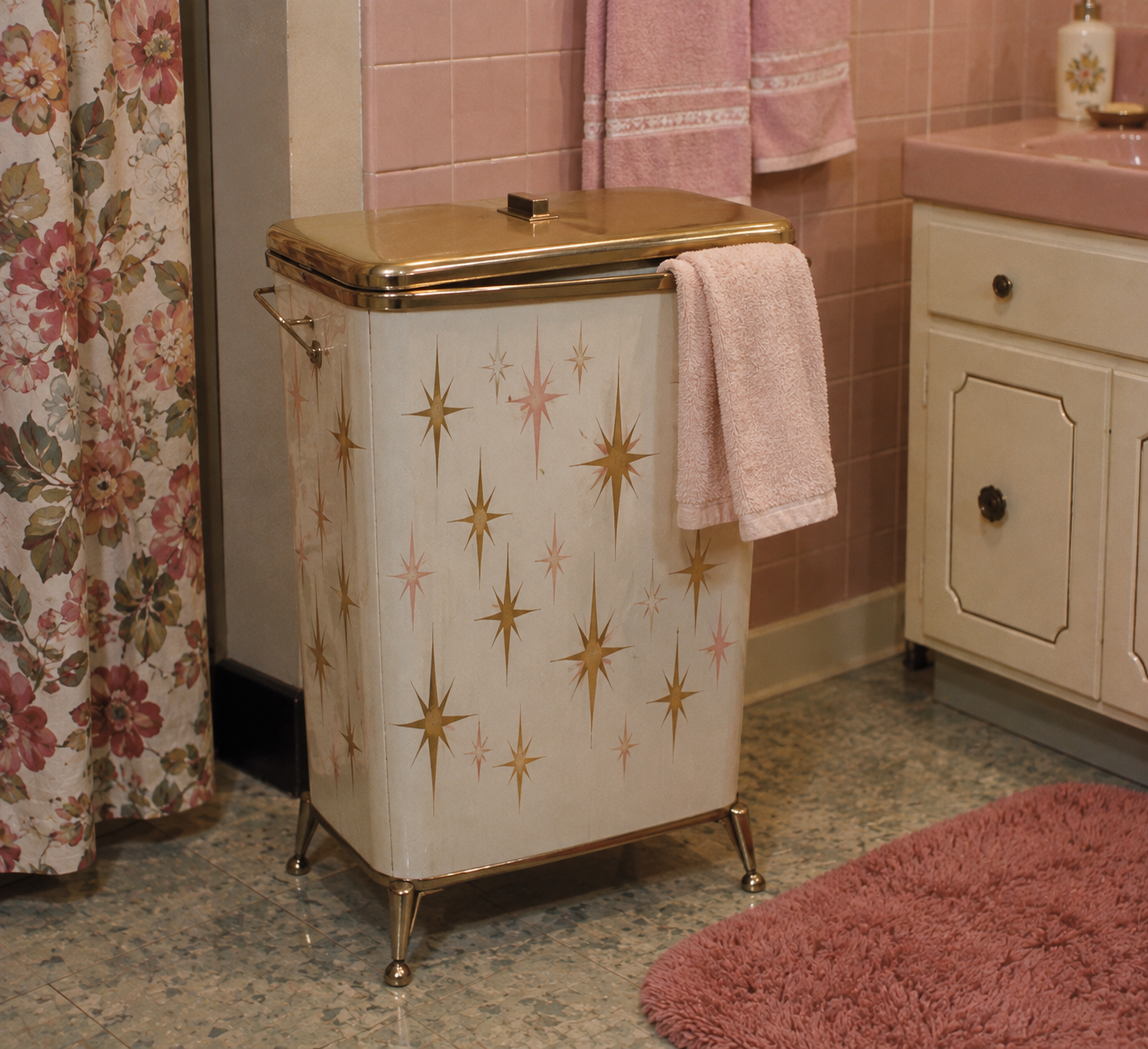
In bathrooms without much built-in storage, the laundry hamper had to go somewhere. Tall freestanding versions made from metal, wicker, plastic, or vinyl-covered materials collected towels, washcloths, pajamas, and dirty clothes. Naturally, manufacturers found ways to make even these decorative, with patterned vinyl versions fitting right into the colorful bathroom aesthetic. The only challenge was finding somewhere to squeeze one between the toilet, tub, and sink.