

Children’s entertainment has changed significantly since they could take a screen with them into every room, or even outside the house. The major shift didn’t come with television, but rather with portable screens like mobile phones and tablets, which discourage young people from engaging in physical activity and interacting with their families. Let us remind you how childhood activities before screens shaped how children behaved before screens transformed their lives!
Knocked on Friend’s Doors to See Who Could Play

To interact with other children, they had to knock on a neighbor’s door to see if there was another child to play with, or spend time at the neighborhood playground with kids their own age. Since they couldn’t send text messages to communicate, they would often walk or ride their bikes. Engaging in these kinds of activities demonstrated greater confidence and independence compared to today.
Rode Bikes Around the Neighborhood for Hours

Instead of spending their time with their heads down, staring at a screen, children could spend hours riding their bicycles. One of these childhood activities before screens provided the kids not only with exercise, entertainment, and a means of transport, but also the independence to make their own decisions. They would go to the park, the store, or vacant lots, creating their own routes using their imaginations.
Organized Pickup Games Without Adults

Children themselves used to organize games of soccer, baseball, hockey, basketball, and more, using whatever items were at hand. They would gather with other children, mark out a playing area, form teams, and enjoy activities that fostered cooperation, problem-solving, and social skills. Nowadays, children do not tend to use their imaginations to plan such games, or need the best soccer ball or a perfect basketball hoop just to consider starting a game.
Built Forts and Clubhouses

The structures children built when creating a fort or clubhouse didn’t need to be sturdy or attractive; the real value lay in the story surrounding them. Blankets, branches, sofa cushions, and scrap wood made up the structure, one of the childhood activities before screens that fostered design, construction, imaginative storytelling, and the negotiation required for children to make decisions together.
Turned Ordinary Objects Into Toys

Nowadays, in the vast majority of cases, when a child sees a cardboard box, they do not view it as a toy. Years ago, a cardboard box could spark a child’s imagination, transforming it into a spaceship while sticks became swords and become one of those childhood activities before screens. These objects were part of an entire story, complete with rules, characters, and objectives to achieve.
Trending on Cheapism


Played Tag, Hide-and-Seek, Hopscotch, and Jump Rope

There were generations of children who played tag, hide-and-seek, hopscotch, and jump rope, among other games. In fact, children passed this knowledge on to one another so that others could learn how to play. The rules of these games could vary depending on the neighborhood, school, or region of the country. These childhood activities before screens required no expensive equipment or adult participation.
Walked to School, the Park, or the Corner Store

Younger children could enjoy the independence of walking to school, the park, or the nearest shop. In doing so, they had to learn routes, pay attention to traffic and handle money. Social activities that are now losing ground or have all but vanished from their routines due to the vast amount of time spent in front of screens. These childhood activities before screens helped children gradually become independent.
Read Books, Comics, Magazines and Anything Else Available

Before children had constant access to streaming platforms and online videos, they used to read whatever book was closest at hand, it was one of the most valuable childhood activities before screens. This could range from novels, comics, newspapers, and manuals to the back of a cereal box. The National Center for Education Statistics data track major long-term changes in how frequently young people from 9 to 13 years old read for fun and how reading relates to other activities.
Sign up for our newsletter
Wandered Through Library Shelves

Libraries were safe havens where young people could find free books, magazines, music, and take part in events. They used to browse magazine covers while walking through the aisles, relying on conversations with staff members rather than system-generated recommendations. Libraries supported many childhood activities before screens through books and community events.
Made Crafts, Models, and Complicated Messes

Having paper, glue, paint, yarn, clay, beads, fabric scraps, and model kits on hand was a regular part of the children’s daily lives, as they used these materials for building, being one of the most creative childhood activities before screens. To carry out the activity, they had to plan, coordinate their hand movements, experiment, and envision the structure they were assembling. It is a form of art that encourages children to explore and gain an understanding of the world around them.
Put Together Jigsaw Puzzles

When the weather didn’t cooperate, bringing rain or biting cold, there was little else to do but set up a table for a jigsaw puzzle. The family would gather, devoting their full attention, patience, and memory to an assembly process that would span hours and keep everyone completely engrossed. There was no music playing through headphones, no message alerts, and no pending tasks being flagged by an electronic device.
Played Board Games and Card Games Around a Table

For those already familiar with jigsaw puzzles, the fun for the little ones centered on board games such as checkers, bingo, or card games. These activities that remained favorite childhood activities before screens for children sparked competition, strategy, and conversation, leading to hours of shared entertainment. At the same time, children learned to follow rules, wait their turn, and lose graciously.
Collected and Traded Physical Treasures

Among the face-to-face interactions enjoyed by young people was the trading of collectibles, such as baseball cards, stamps, stickers, rocks, action figures, and even bottle caps. This was one of the most memorable childhood activities before screens. Collecting them required patience to get what you wanted, as well as a child’s imagination to view a bottle cap as something valuable in your day.
Wrote Notes, Letters, and Homemade Magazines

Since they couldn’t send text messages via mobile phone as people do today, children were forced to communicate through notes passed during class, or via postcards and letters once they were apart from their friends. Writing requires commitment because what you put down by hand can be reviewed, and you cannot alter it, much less delete or edit it, seconds after sending it. It was one of the most meaningful childhood activities before screens.
Memorized Phone Numbers and Used the Family Landline

Children had to memorize the landline numbers of their closest friends, as there were no digital address books to look them up in. It was just another everyday childhood activities before screens. They had to commit to memory the numbers for friends, family, and school, as well as emergency contacts. Furthermore, when making a call, you had to be prepared to speak to a relative or your friend’s parents first, since anyone might answer on the other end of the line.
Recorded Songs From the Radio and Made Mixtapes
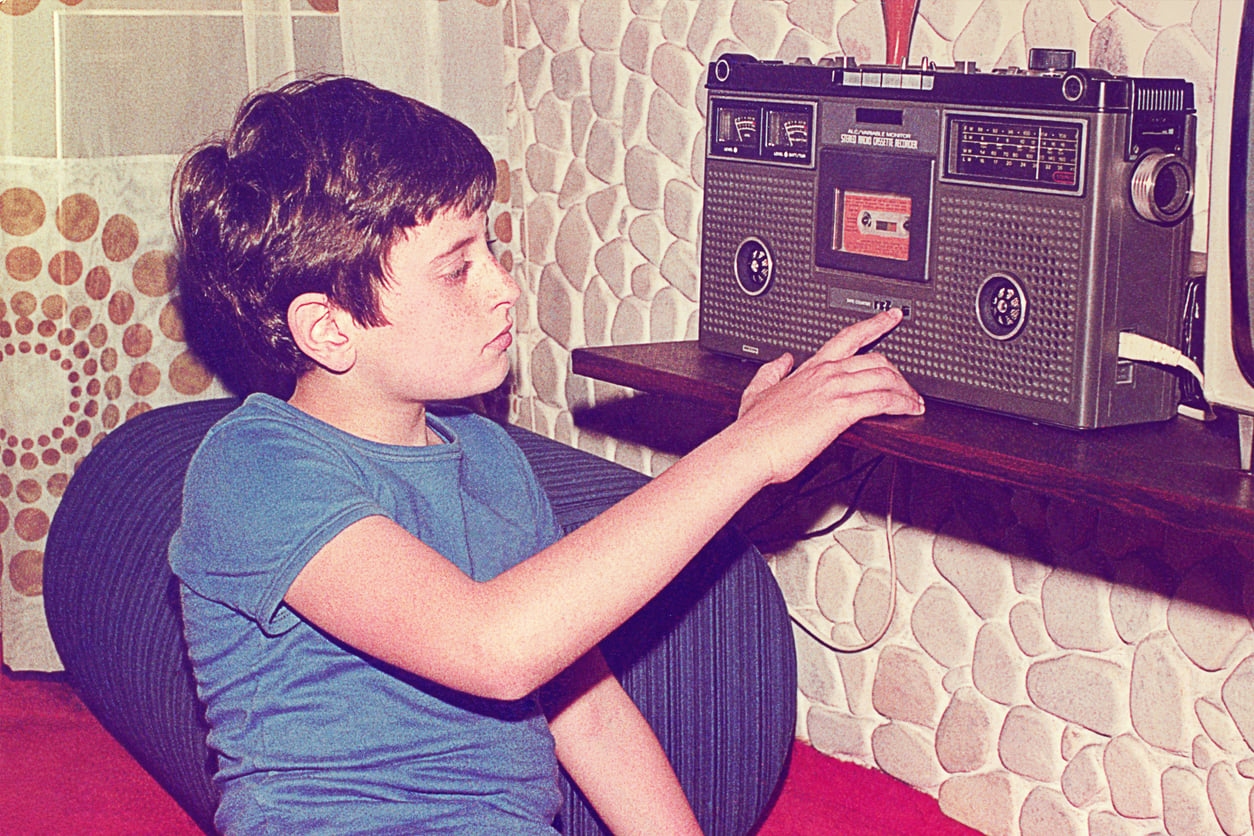
Young people a few years back could spend hours waiting by the radio for their favorite song to play, it was one of the most exciting childhood activities before screens. Many would grab a cassette and record a mixtape of their most beloved tracks, waiting for the perfect moment and sequence to capture them before labeling the tape. Music wasn’t as readily available as it is today, and hearing a song you loved so much felt like a special event, a delightful surprise.
Did Chores Before Going Out to Play

Parents often assigned their children tasks such as making the bed, washing the dishes, mowing the lawn and taking out the trash, and so on, in exchange for free time afterward. These chores helped the household run smoothly, and the specific tasks varied according to the child’s age. However, the distribution of chores was not always fair, as women or other family members were often assigned more tasks than others.
Helped Cook, Bake, and Prepare Family Meals

Children used to be more involved in meal preparation when they didn’t have a screen close at hand. Parents taught them how to measure ingredients, peel vegetables, stir batter, set the table, and even prepare their own school lunches. In doing so, they learned about kitchen safety, time management, the importance of cleanliness, and even the costs associated with cooking. Cooking with parents was one of the practical childhood activities before screens.
Watched Bugs, Clouds, Storms, and Stars

When the children spent time outside exploring their surroundings, they would often observe ants, watching where they were headed, or catch butterflies for observing them closer as they interacted with nature, that was among the healthiest childhood activities before screens. They also looked at the sky, imagining shapes in the clouds or noticing when a storm was approaching. It was a way to find entertainment, engage in physical activity, and learn, all without spending money.
Went to Bed Without a Device Beside Them

Although televisions arrived in homes long before portable screen devices, not every child had one in their own bedroom at bedtime. The day truly came to an end because you were no longer interacting with friends, shops were closed, and there was very little entertainment available. At most, some of them would crawl under the sheets and listen to the radio, that was one of the quieter childhood activities before screens.
Conclusion

Childhoods back then were completely different from those of today, a fact that becomes very clear under current circumstances. One could debate whether they were safer, happier, healthier, or more creative, but many childhood activities before screens encouraged independence, creativity and physical activity. And while it is true that digital screens offer benefits such as access to essential information and the ability to communicate more frequently, there are also trade-offs, including getting less physical exercise and mental stimulation.