Kids’ bedrooms in the 1950s didn’t have gaming consoles, tablets, flat-screen TVs, or tangled piles of charging cables next to the bed. Compared with children’s rooms today, they were much simpler spaces — but that certainly didn’t mean they were empty.
Bedrooms were filled with toys, comic books, school supplies, records, and whatever treasures kids could cram into a toy chest or underneath the bed. Furniture tended to be sturdy and practical, while the postwar boom in children’s toys and entertainment brought plenty of personality into the room.
From chenille bedspreads and cowboy decorations to tabletop radios and stacks of comic books, here are 12 things you might have spotted in an American kid’s bedroom during the 1950s.
A Metal or Wooden Bed Frame
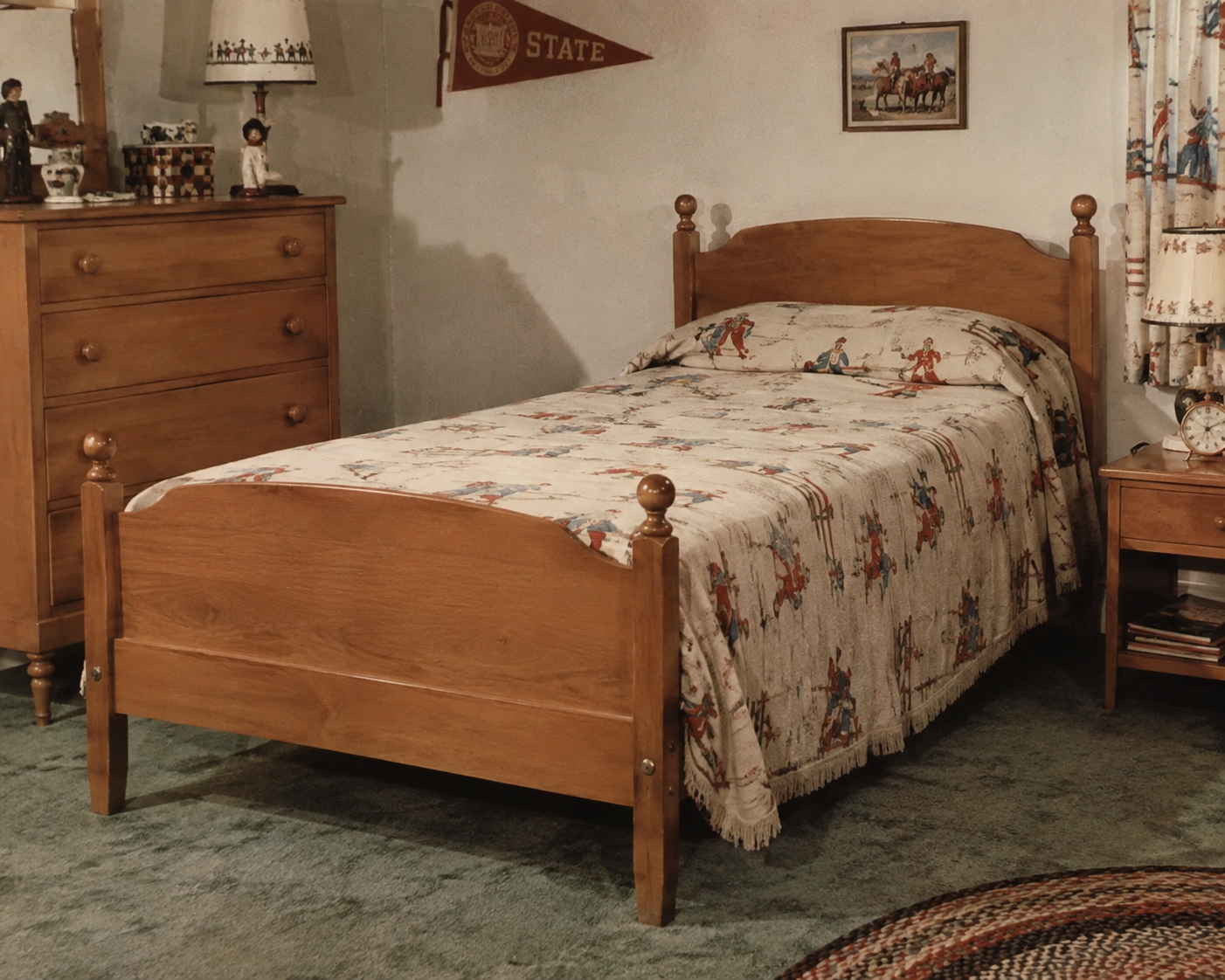
Forget elaborate race-car beds and upholstered headboards. A 1950s kid was more likely to sleep in a straightforward twin bed with a painted metal or solid wood frame. Curved metal rails and sturdy maple or oak headboards were common, while matching bedroom sets became increasingly popular in postwar suburban homes. A bed, dresser, and nightstand designed to last for years could follow a child well into adolescence.
A Chenille Bedspread
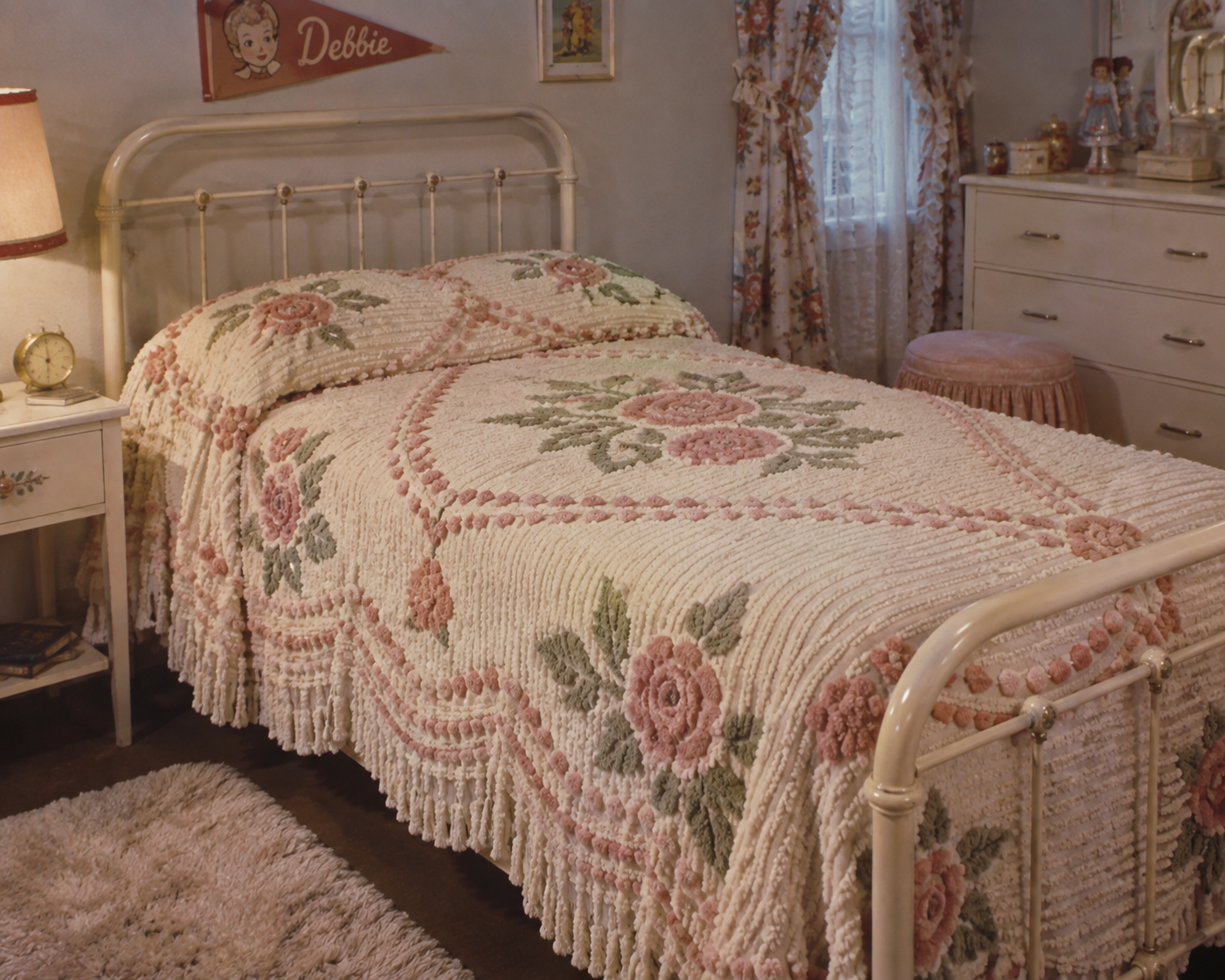
Few things can make an old bedroom photograph look instantly mid-century quite like a chenille bedspread. These textured covers often came in cheerful pastel shades with raised floral, geometric, or other tufted designs. Some had scalloped edges for an extra decorative touch. They added color and personality to otherwise fairly simple bedrooms — without requiring parents to completely redecorate the room every few years.
A Toy Chest
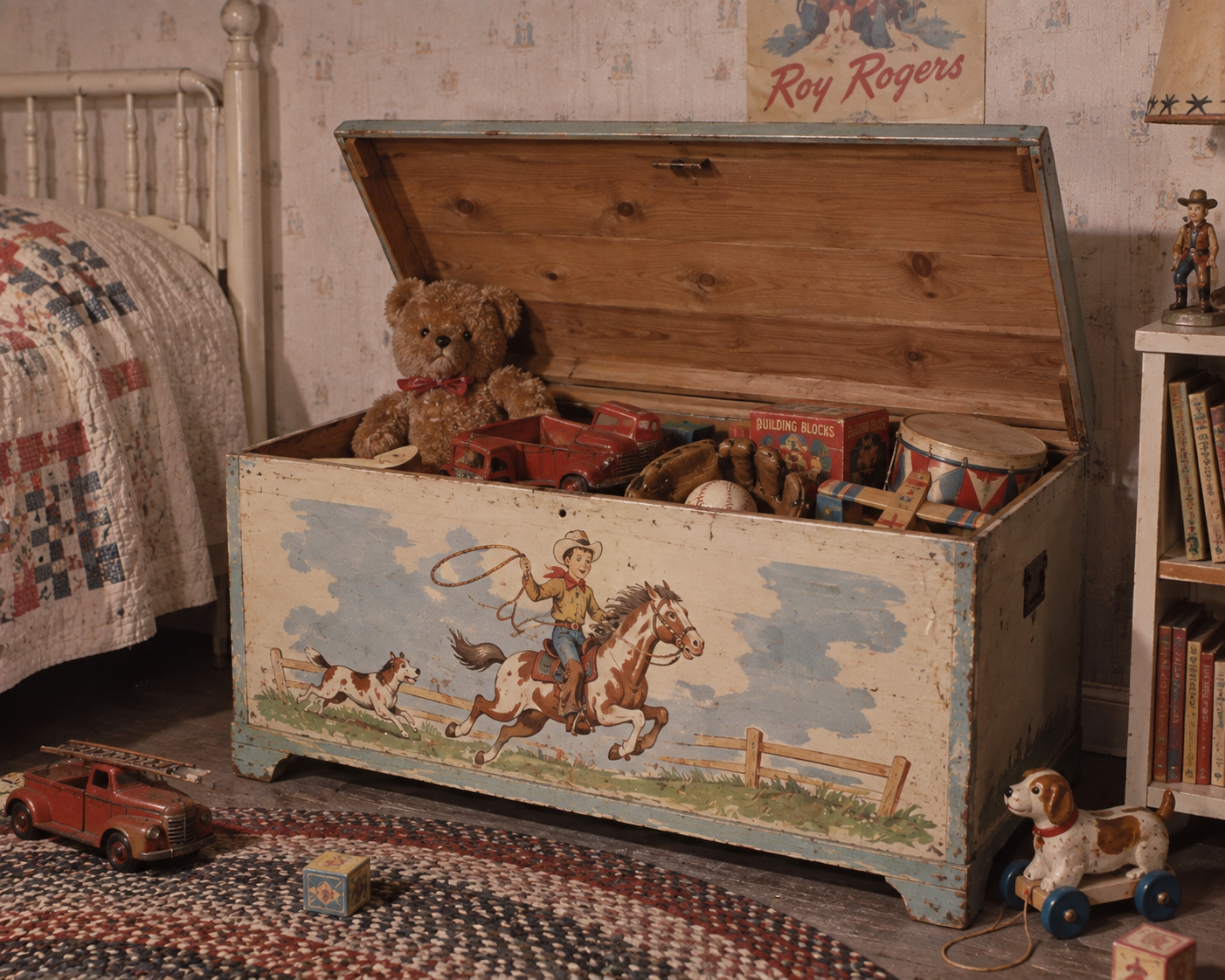
There weren’t rows of coordinated plastic storage bins waiting to organize every toy by category. A lot of kids simply had one big toy chest and tossed everything inside. Wooden and metal versions could hold blocks, dolls, toy cars, games, and whatever else needed to disappear when it was time to clean the bedroom. Some were decorated with colorful cartoon or cowboy designs, and safety features on those heavy hinged lids weren’t nearly as sophisticated as they are today.
Dolls and Doll Furniture
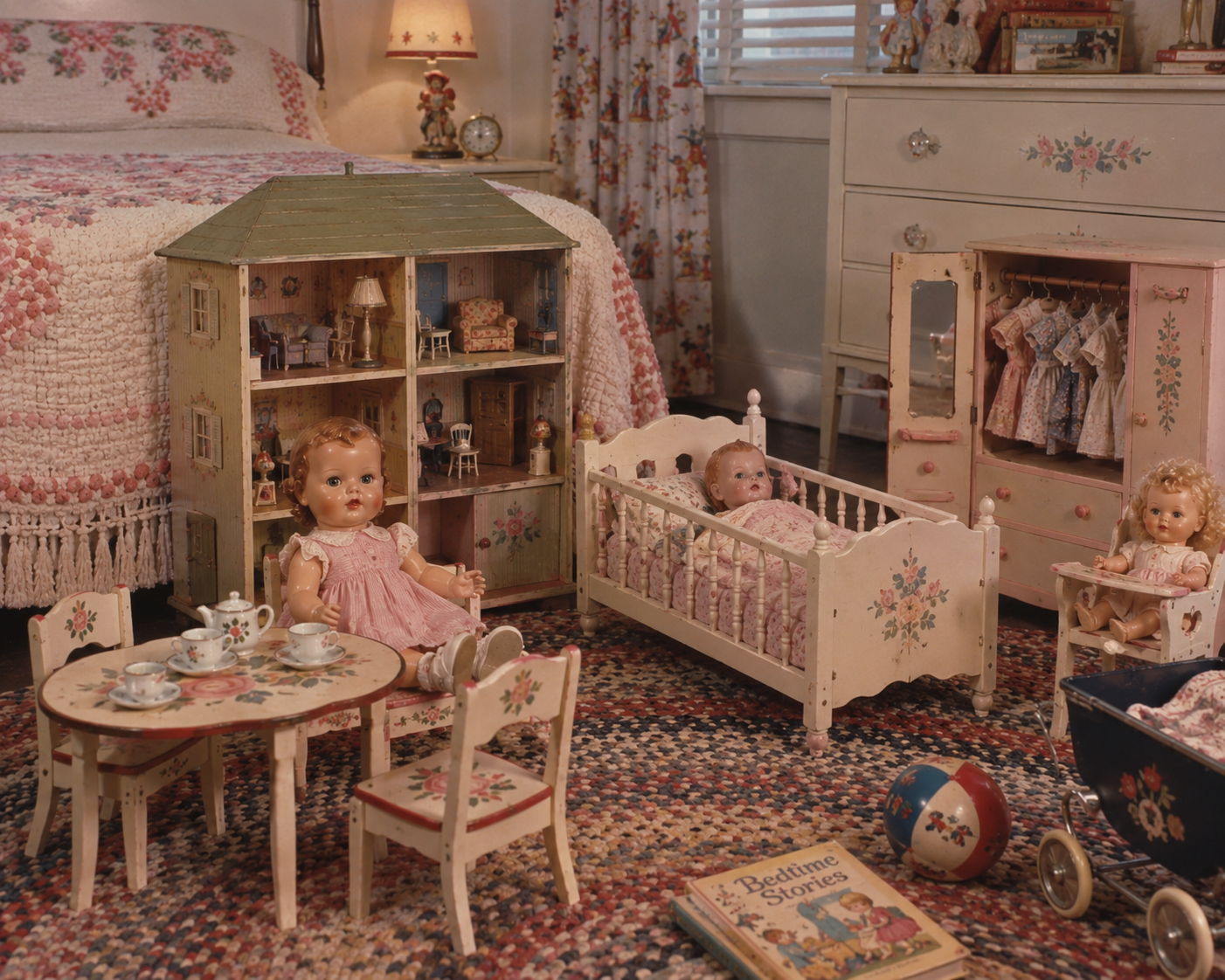
Dolls were already bedroom staples long before Barbie arrived on the scene. Baby dolls and hard plastic dolls might be accompanied by an entire miniature household of their own, including tiny cribs, wardrobes, tea sets, and dollhouses. Fashion dolls also became increasingly prominent as the decade progressed. Barbie made her debut in 1959, though, so she’d only belong in a bedroom depicting the very end of the decade.
Tin Toy Cars and Trucks
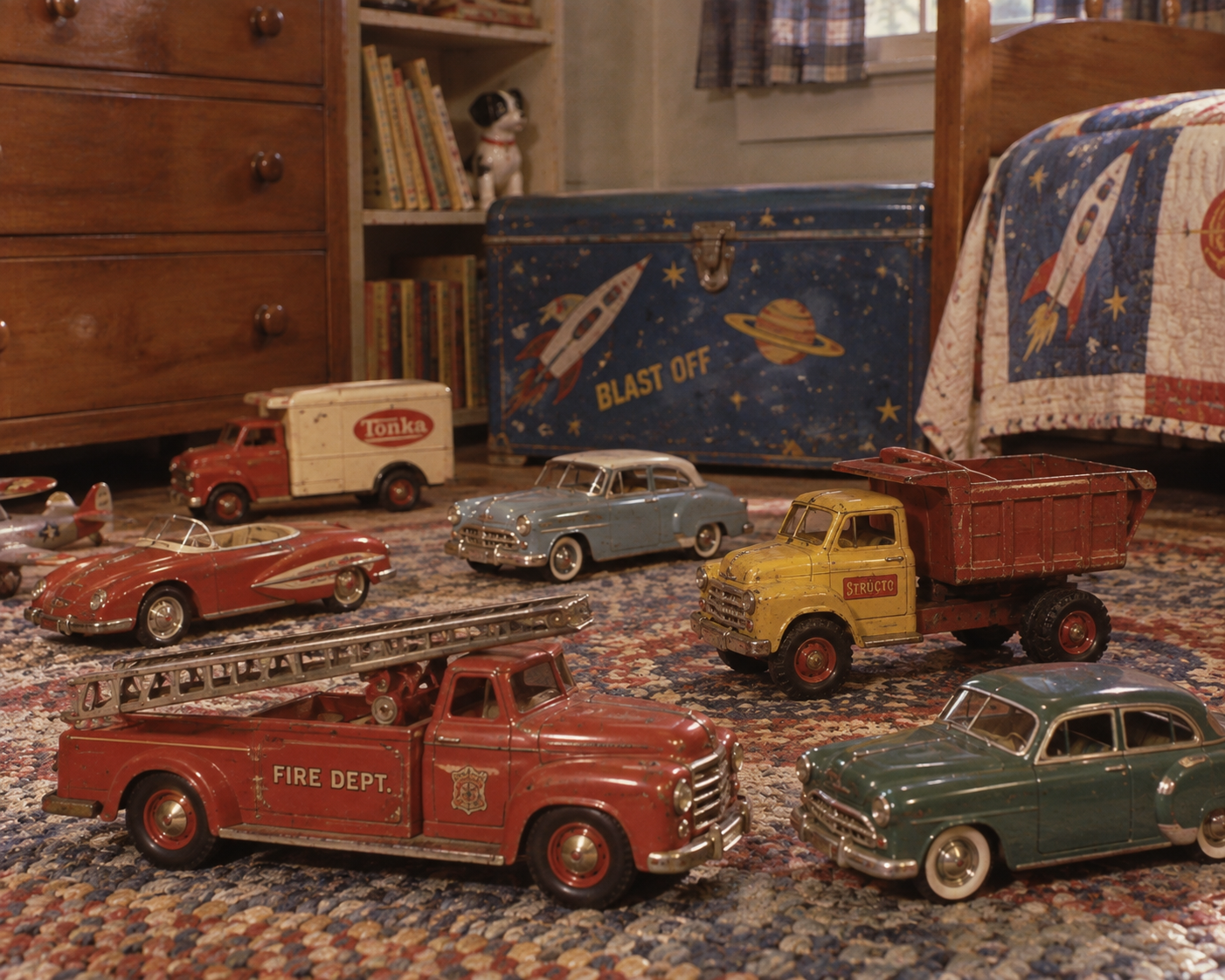
Before plastic dominated the toy aisle, plenty of cars and trucks were still made from metal. Kids might have pressed-tin trucks, friction-powered cars, or small die-cast vehicles scattered across the floor, lined up on a shelf, or inevitably lost underneath the bed. Many came in bright colors with lithographed designs and shiny chrome-like details. Surviving examples that once endured countless crashes across bedroom floors can now be sought-after collectibles.
Trending on Cheapism

Cowboy and Western Décor
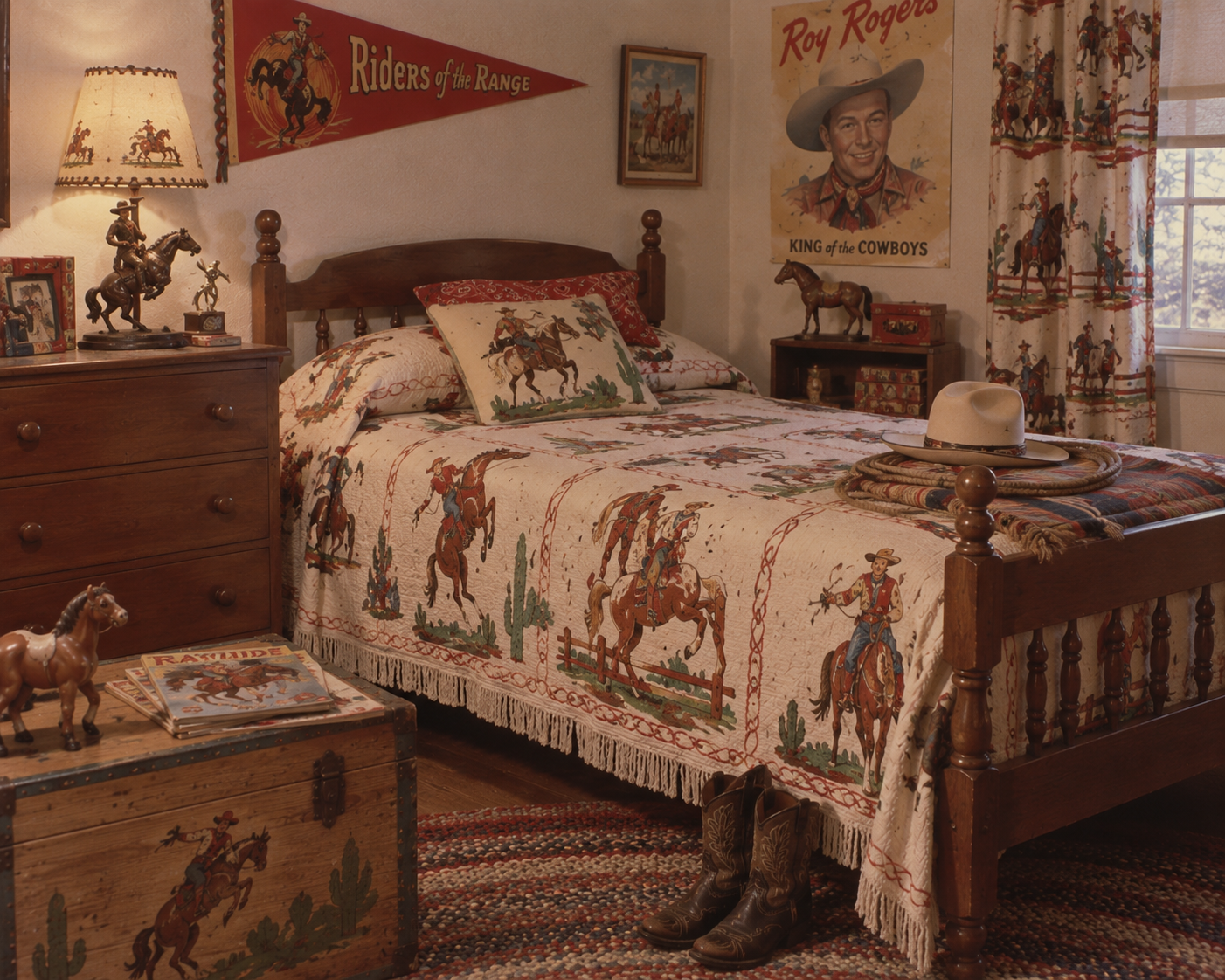
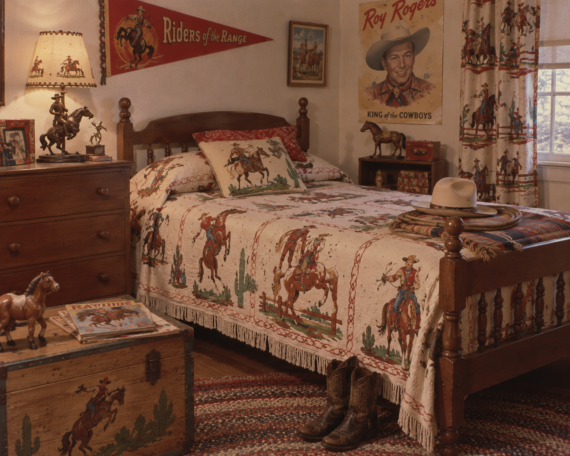
If a kid was obsessed with cowboys during the 1950s, they certainly weren’t alone. Westerns were everywhere, from movie theaters and television sets to comic books and toy aisles, and the craze made its way straight into children’s bedrooms. Cowboy bedspreads, curtains, lamps, hats, toy pistols, and wall decorations could feature horses, ranches, sheriff’s stars, lassos, and frontier scenes. It was essentially the themed bedroom of its day.
A Small Radio
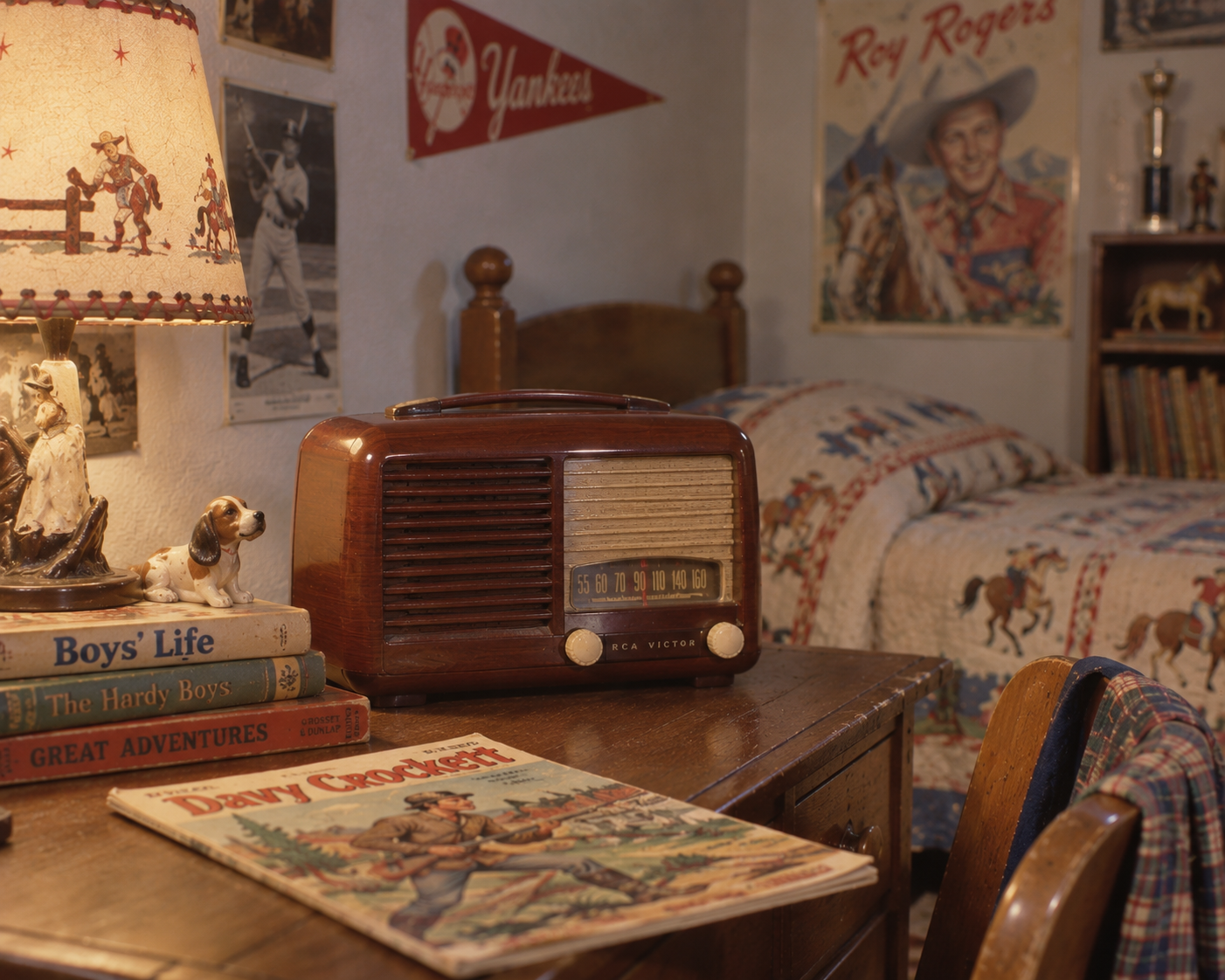
For an older child or teenager, having a radio in the bedroom could provide a small but important taste of independence. Kids could listen to music, baseball games, radio programs, and local stations without necessarily sitting around the family’s main radio. Earlier in the decade, that might mean a tabletop tube radio. By the late ’50s, portable transistor radios were beginning to give young listeners even more freedom over where and how they listened.
A Record Player and Stacks of 45s
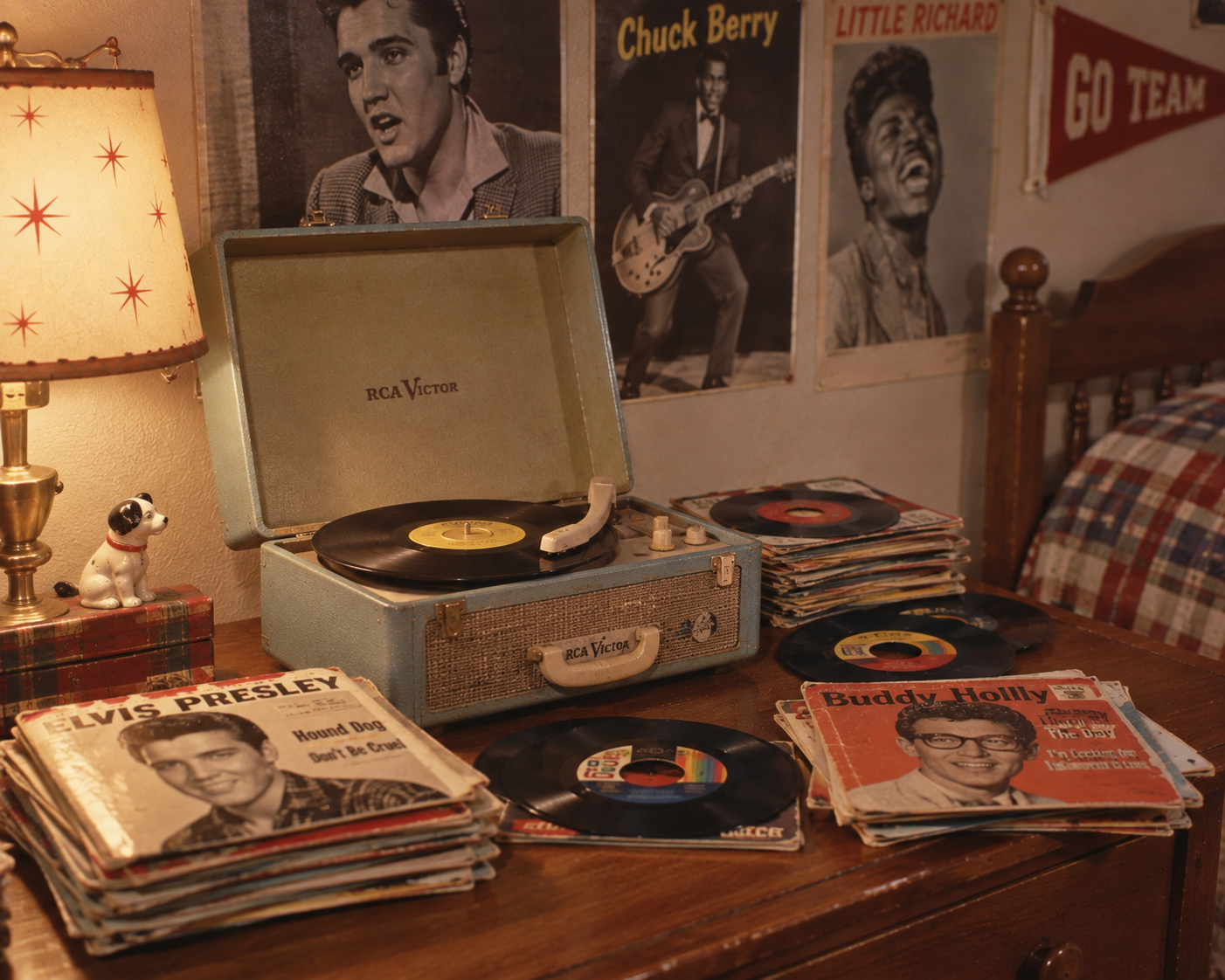
By the second half of the 1950s, rock ‘n’ roll was transforming the teenage bedroom. Portable record players — including suitcase-style models — gave teenagers somewhere to play their growing collections of 45 RPM singles. Records by Elvis Presley, Chuck Berry, Buddy Holly, and other stars could be stacked beside the player in their colorful paper sleeves. For teenagers accustomed to parents controlling much of the household, choosing what played in their own room was a pretty big deal.
Sign up for our newsletter
Comic Books
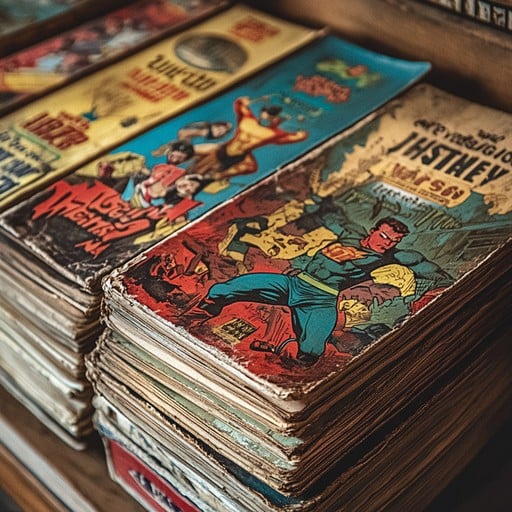
A stack of comics could provide hours of entertainment without requiring Wi-Fi, batteries, or even an electrical outlet. Cheap and easy to trade with friends, comic books routinely ended up piled beside beds, stuffed into drawers, or stored in boxes. The selection wasn’t limited to superheroes, either. Kids could choose from Westerns, humor, adventure, romance, crime, and other genres. The introduction of the Comics Code Authority in 1954 would significantly influence what publishers could put on those colorful pages.
Model Airplanes and Cars
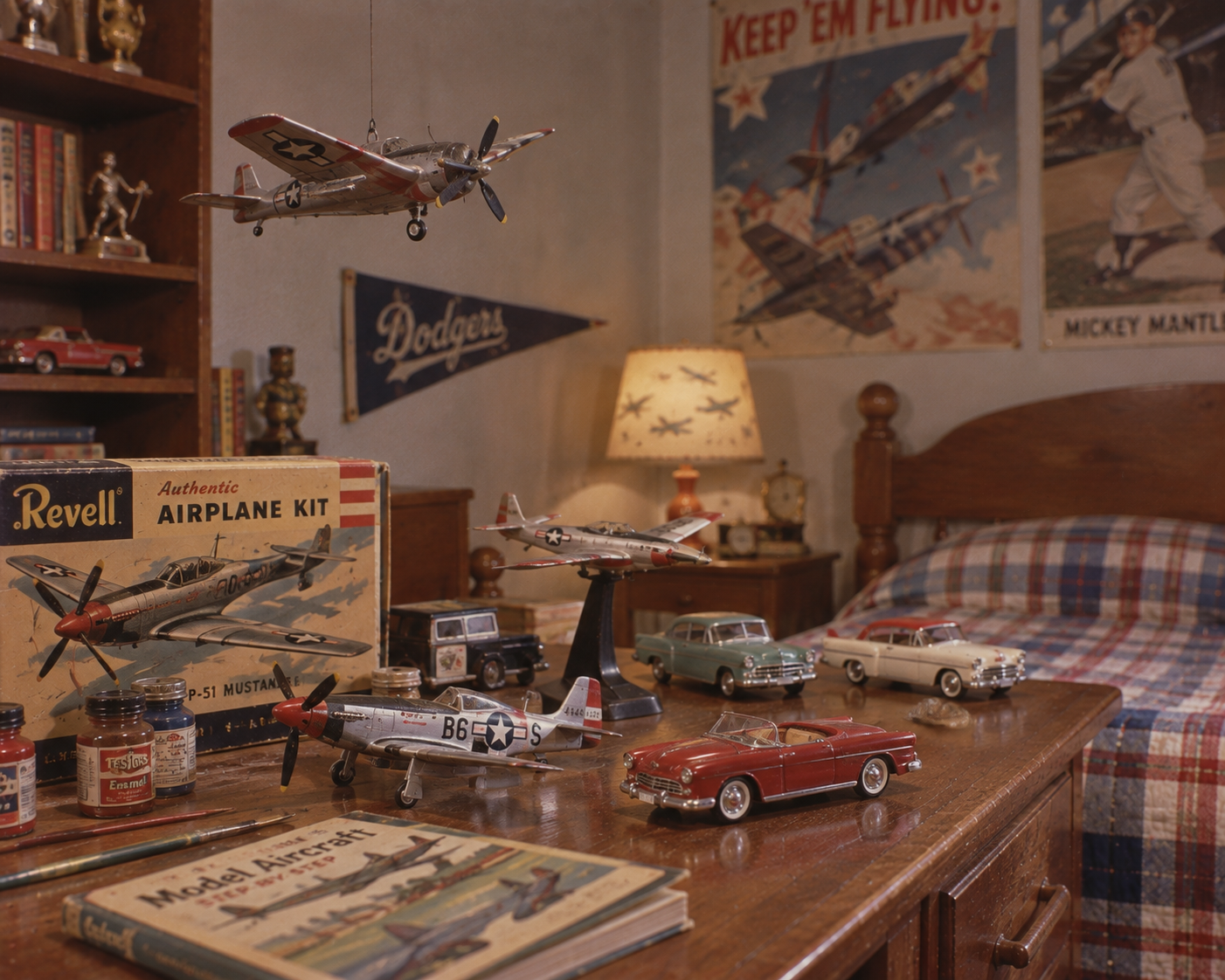
Some kids spent their free time hunched over a desk assembling a tiny airplane instead of staring at a screen. Plastic model kits became a popular hobby, particularly among older children, with military aircraft, automobiles, ships, and eventually space-related subjects providing plenty of choices. A kid’s bedroom desk might be covered with tiny paint bottles, glue, loose parts, and a half-finished model, while completed masterpieces earned a coveted spot on a shelf.
A School Desk or Writing Table
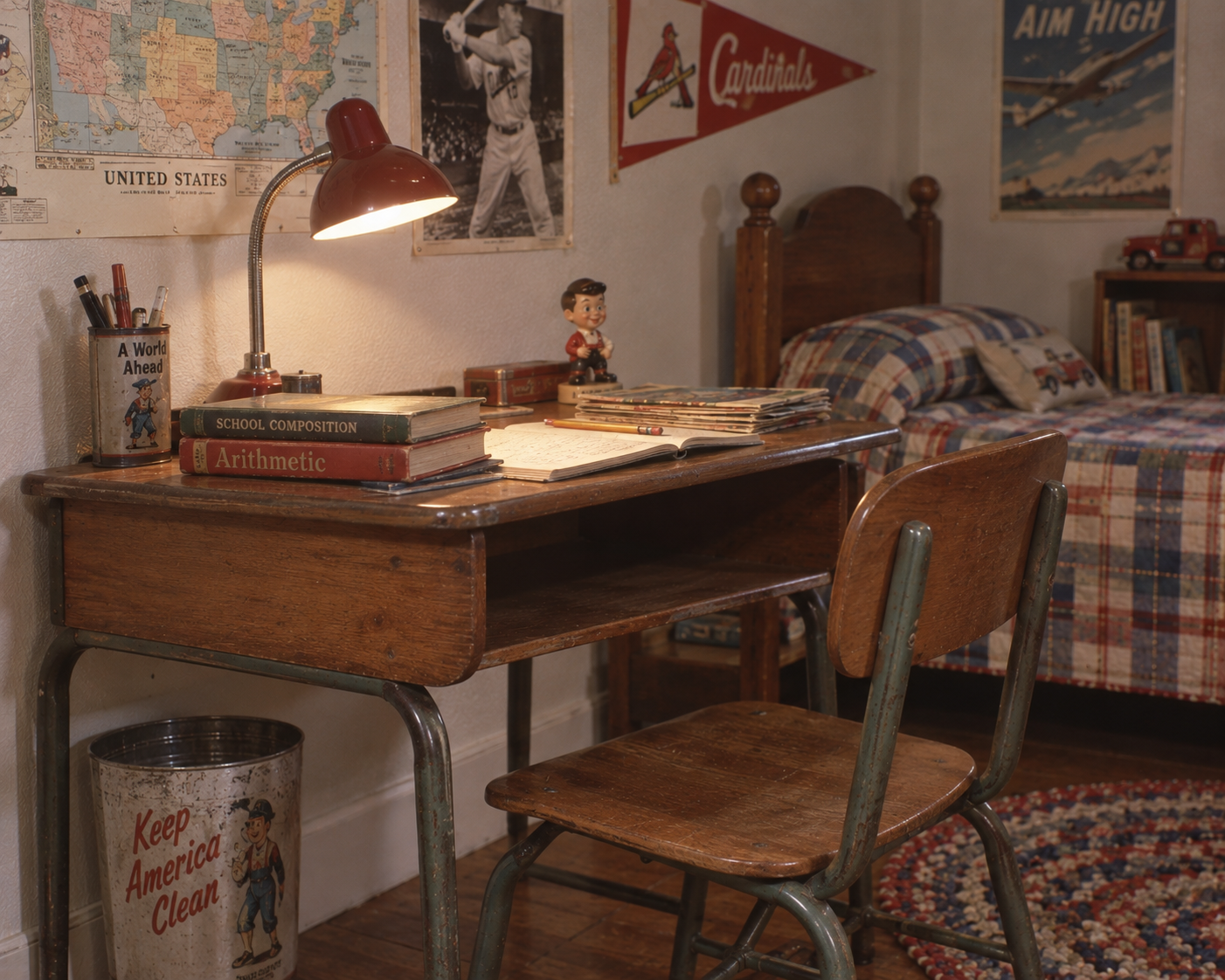
Homework needed somewhere to happen, and a simple wooden desk or writing table could become a multipurpose corner of a child’s bedroom. When it wasn’t covered in schoolwork, kids might use it for drawing, writing letters, reading, or building those model kits. Pencil cups, notebooks, rulers, sharpeners, and a small desk lamp completed the setup. Unlike the built-in workstations found in some newer homes, these were usually straightforward pieces of standalone furniture.
Pennants, Posters, and Pin-Up Pictures
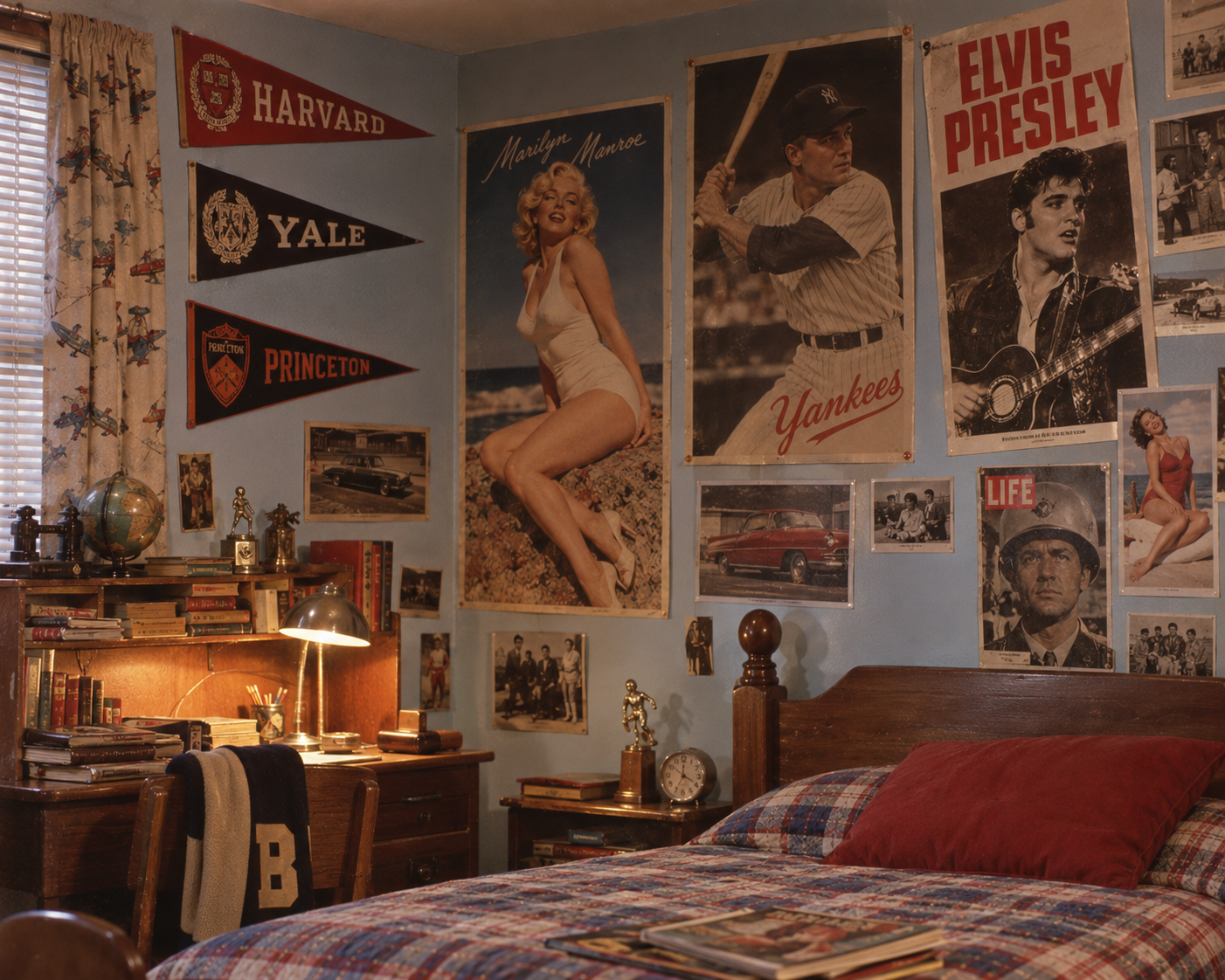
Older kids didn’t need social media profiles to advertise exactly what they were into. Their bedroom walls did the job. Felt sports pennants, magazine clippings, school memorabilia, movie-star photos, baseball heroes, and eventually rock ‘n’ roll idols gave teenagers a relatively inexpensive way to claim the room as their own. The decorations could also reveal the age of whoever slept there: A younger child’s cowboy imagery might gradually give way to musicians and Hollywood stars as the teenage years arrived.
Bedrooms Were Simpler, But Hardly Boring
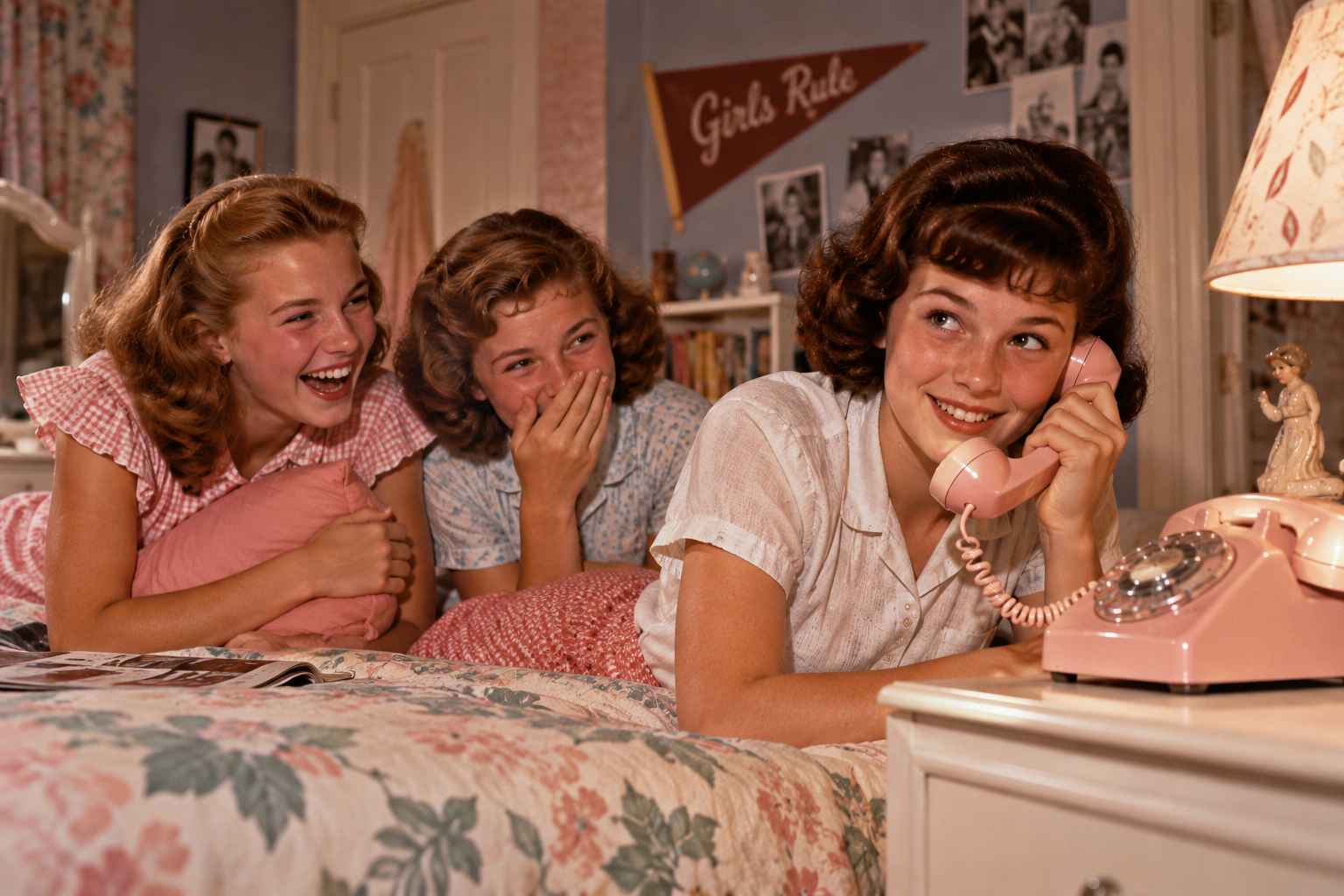
A 1950s child’s bedroom might look remarkably low-tech today, but there were still plenty of ways to make it feel personal. Entertainment came from records, radios, comics, toys, and hobbies, while a toy chest or the space beneath the bed held everything that didn’t have a permanent home.
The decade also marked the beginning of an important shift. As children’s consumer culture expanded and teenagers became an increasingly important market, bedrooms weren’t just places to sleep. They were becoming spaces where kids could display their interests, listen to their own music, and surround themselves with a little corner of popular culture that belonged to them.