Halloween in the 1970s looked a little different from the elaborate holiday displays we see today. There weren’t giant inflatable ghosts taking over front lawns, animatronic skeletons greeting visitors, or expensive decorations that required an entire afternoon to set up. Instead, families made do with cardboard witches taped to the windows, plastic pumpkins, and whatever spooky decorations they could find at Woolworth’s or Kmart.
But that didn’t make Halloween any less exciting. In fact, part of the fun was transforming an ordinary house into something a little spooky with just a few dollars and some imagination. Kitchen tables became pumpkin-carving stations, children proudly displayed their homemade paper decorations, and boxes of Halloween costumes waited in bedrooms until the big night finally arrived.
From those unmistakable plastic masks to the little wax candles nobody ever seemed to light, here are 12 things you probably would have found in an American home getting ready for Halloween in the 1970s.
Cardboard Witches, Black Cats, and Pumpkins Taped to the Windows
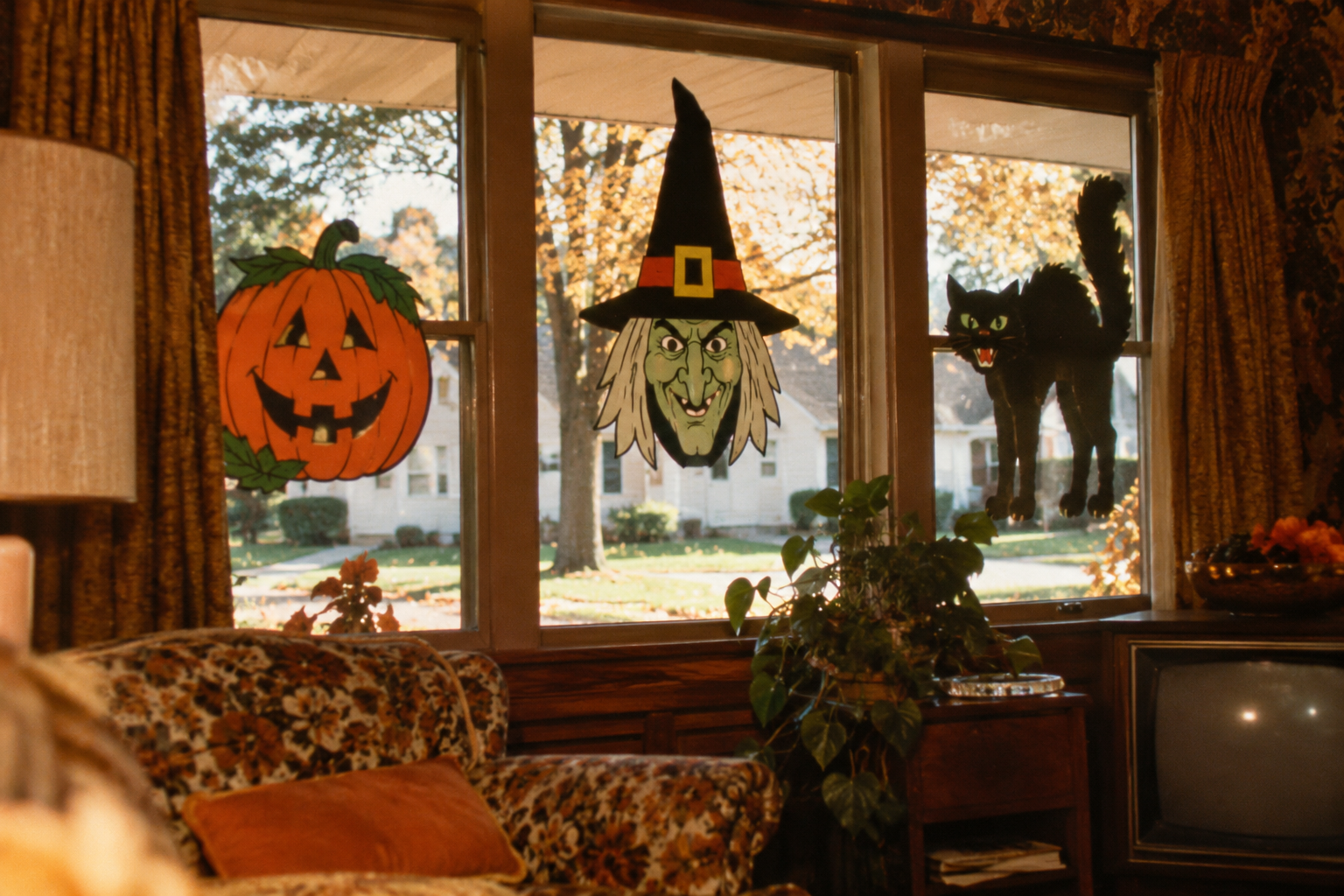
Before elaborate outdoor Halloween displays became popular, a few colorful cardboard decorations were often enough to make a house look festive. Families taped grinning jack-o’-lanterns, black cats with arched backs, pointy-hatted witches, and dancing skeletons to their windows and walls. Companies like Beistle produced many of these cheerful, slightly spooky decorations, which could be picked up at department stores and five-and-dimes for relatively little money. The best part was that they weren’t necessarily thrown away after Halloween. Parents would carefully peel them off the windows, tuck them into a drawer or cardboard box, and bring them out again the following October, sometimes with pieces of last year’s tape still clinging to the corners.
A Boxed Halloween Costume With a Plastic Mask
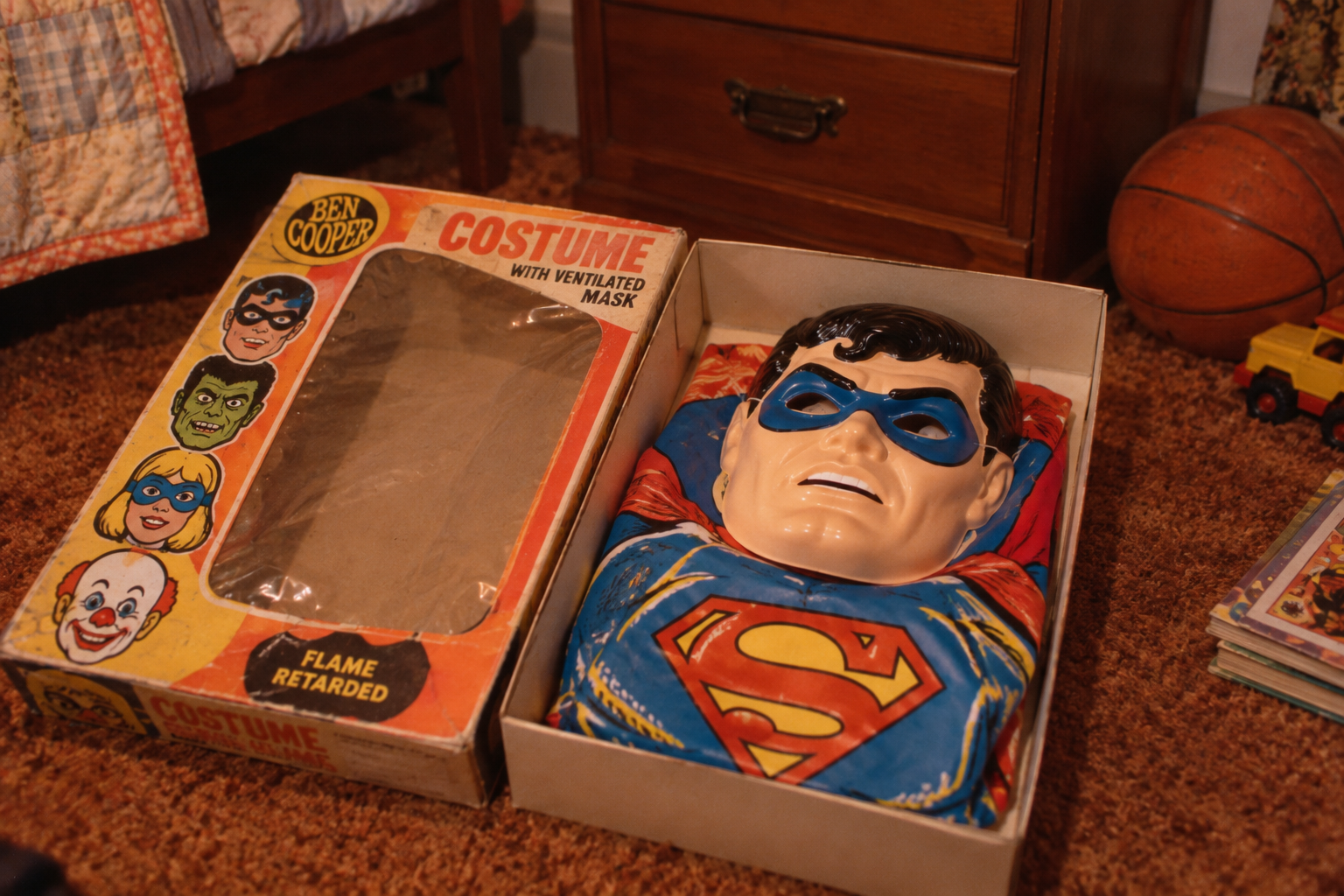
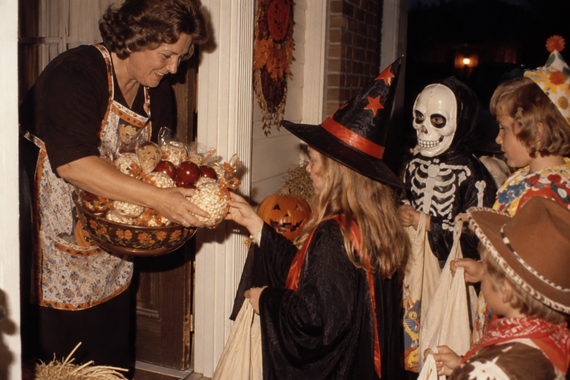
If you were a kid in the 1970s, there’s a good chance your Halloween costume came in a cardboard box with a clear plastic window displaying the mask inside. Ben Cooper was one of the biggest names in children’s costumes, selling everything from superheroes and television characters to witches, monsters, and astronauts. The costumes typically consisted of a thin, brightly printed vinyl smock and a molded plastic mask held in place by a flimsy elastic string. The masks were notoriously uncomfortable, with tiny eyeholes that made seeing difficult and little openings that barely allowed you to breathe. Still, spotting that colorful costume box waiting in your bedroom was enough to make Halloween feel like the most exciting night of the year.
Orange and Black Crepe Paper Streamers
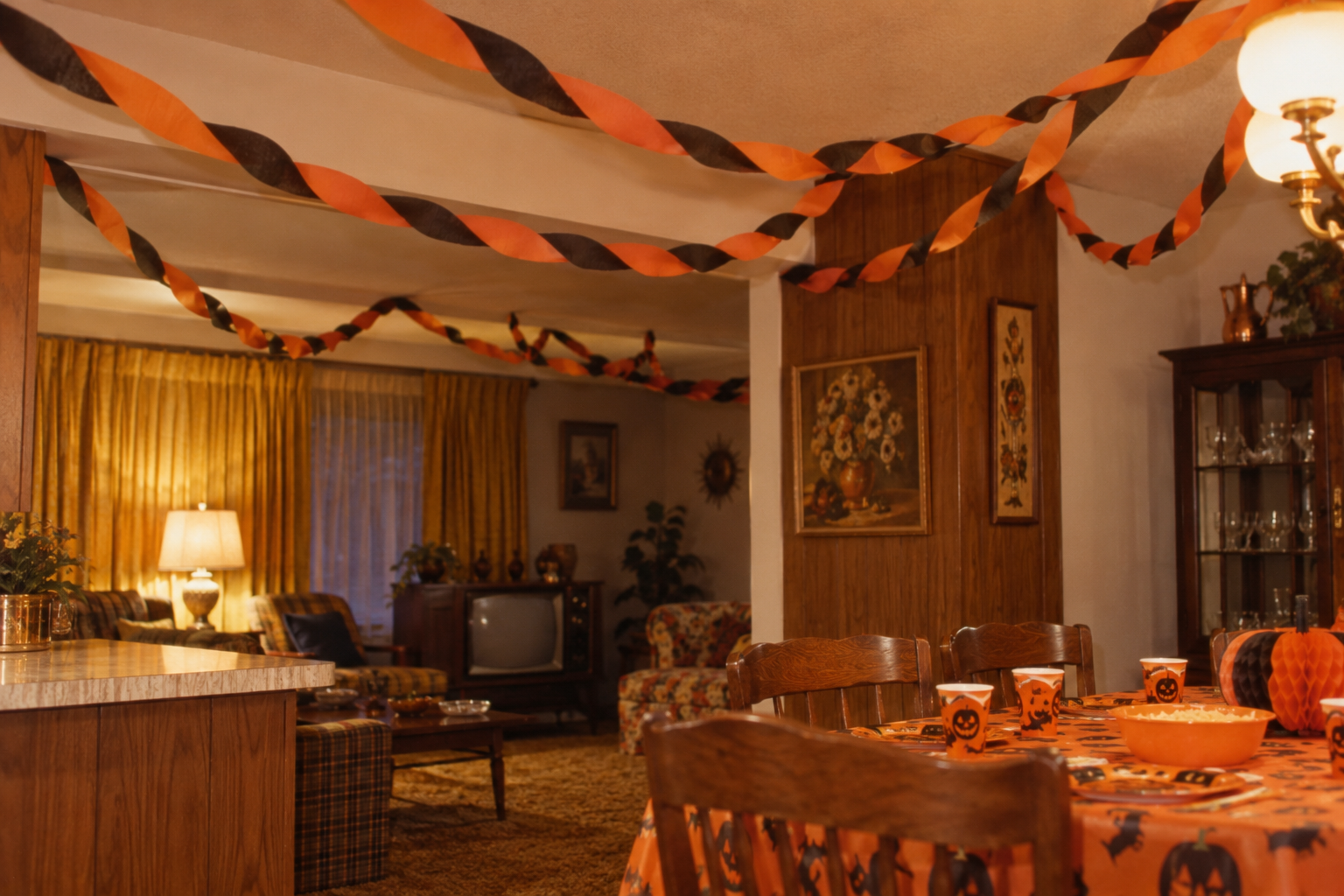
Nothing said Halloween party quite like orange and black crepe paper twisted across the ceiling. These inexpensive paper streamers were a decorating staple, especially for families who didn’t want to spend much money transforming their living rooms or kitchens. Parents and children would spend an afternoon twisting the two colors together, hanging them over doorways, or draping them from one corner of the room to another. Sometimes the streamers were accompanied by homemade paper chains or cardboard bats dangling from strings. The decorations might have looked a little crooked, and the crepe paper could tear if someone pulled too hard, but that was part of their charm. By the time everything was hanging, an ordinary family room could look ready for a Halloween party.
A Plastic Jack-o’-Lantern Candy Bucket
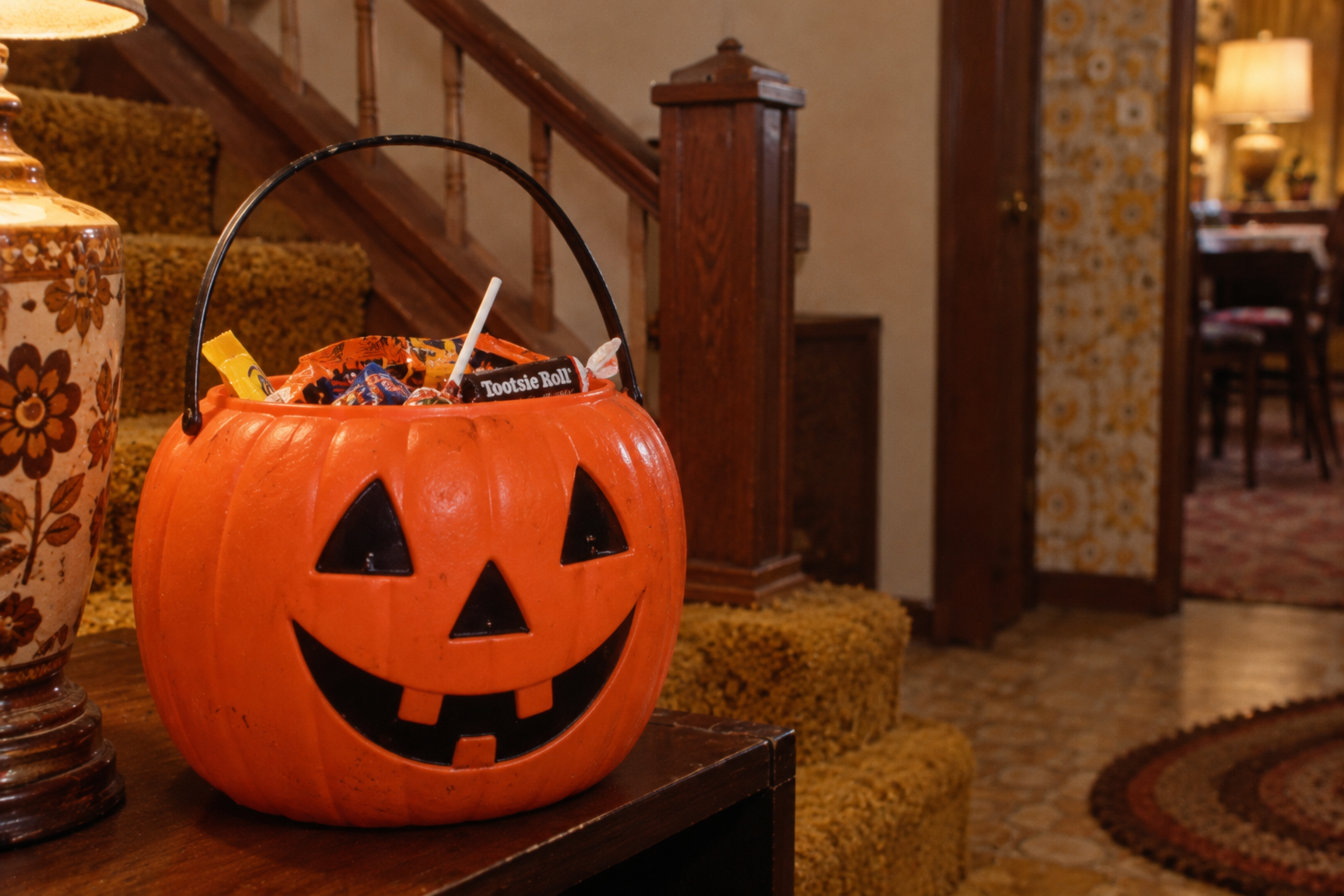
Long before elaborate trick-or-treat bags became a Halloween accessory, plenty of children carried a simple orange plastic pumpkin with a black painted face. These lightweight candy buckets were inexpensive, easy to recognize, and just the right size for little hands. They usually featured a cheerful jack-o’-lantern grin and a thin plastic handle that became increasingly uncomfortable as the night went on. Of course, older kids who had serious candy-collecting ambitions sometimes abandoned the little pumpkins in favor of pillowcases, which could hold considerably more loot. But for younger trick-or-treaters, that bright orange bucket was practically part of the costume. And once Halloween was over, it might spend the rest of the year tucked away in a closet until it was time to collect candy again.
Little Wax Candles Shaped Like Witches and Pumpkins
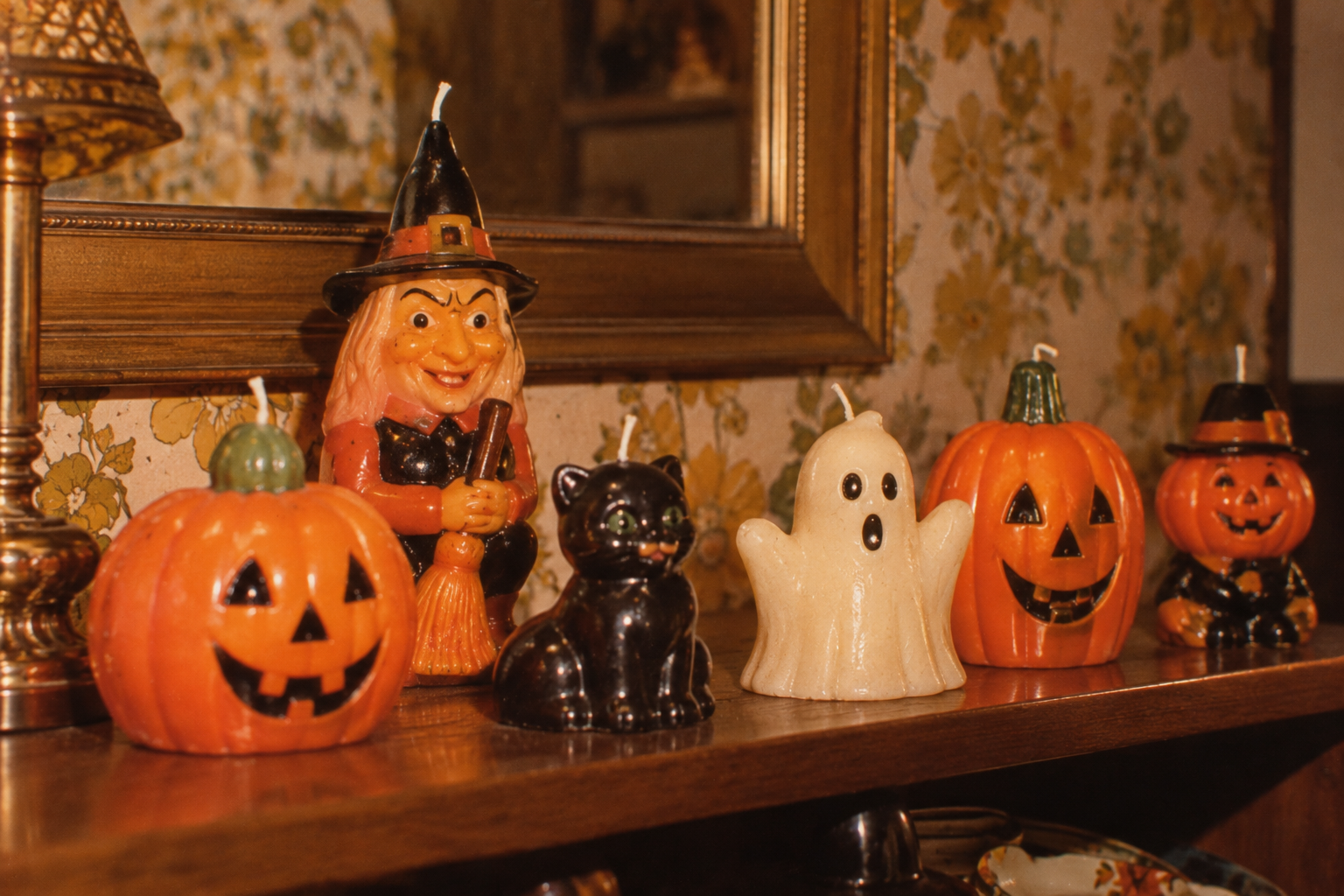
Some Halloween decorations were so adorable that nobody could bring themselves to actually use them. Small novelty candles shaped like witches, pumpkins, ghosts, and black cats were popular seasonal decorations throughout the mid-20th century, including the 1970s. Companies such as Gurley produced colorful molded candles that families displayed on windowsills, kitchen shelves, and dining room tables. Many were only a few inches tall, with carefully painted faces and tiny wicks sticking out of their heads. Although they were technically candles, plenty of households treated them more like little figurines, bringing them out every October without ever lighting them. That’s also why so many vintage examples have survived in remarkably good condition.
Trending on Cheapism


A Real Pumpkin and Newspaper Spread Across the Kitchen Table
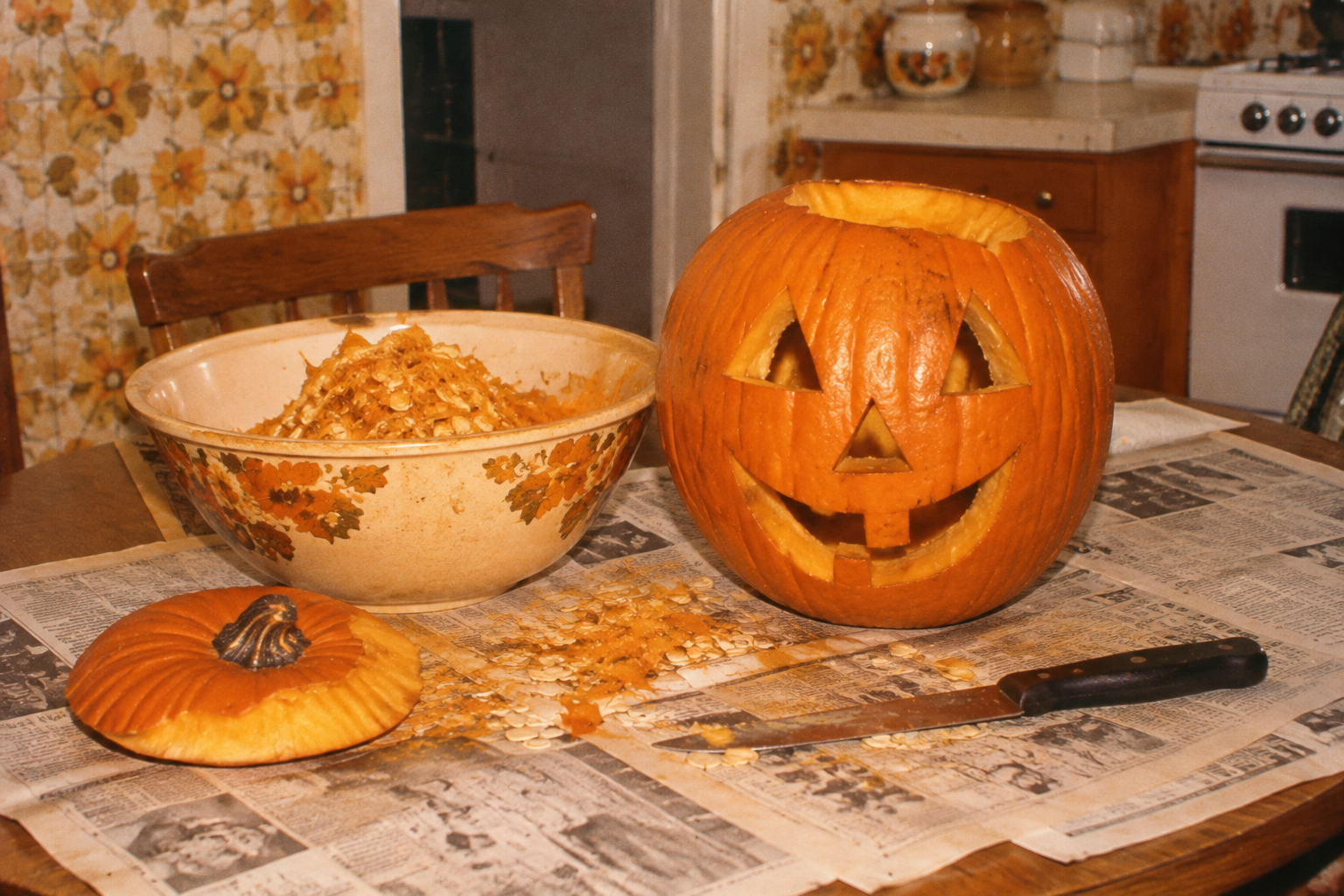
Forget specialized carving kits and elaborate pumpkin designs. In many 1970s households, making a jack-o’-lantern meant spreading yesterday’s newspaper across the kitchen table, grabbing a large kitchen knife, and preparing for an enormous mess. Someone would cut off the top of the pumpkin while the kids eagerly scooped out handfuls of slippery seeds and stringy orange pulp. The finished jack-o’-lantern usually had simple triangle eyes, a triangle nose, and a crooked toothy grin. Some families saved the seeds to roast in the oven afterward, while others simply tried to clean up before pumpkin guts ended up all over the floor. And when the finished pumpkin was placed on the front porch with a candle glowing inside, it felt like Halloween had officially arrived.
A Candy Bowl Filled With Candy Corn and Wrapped Sweets
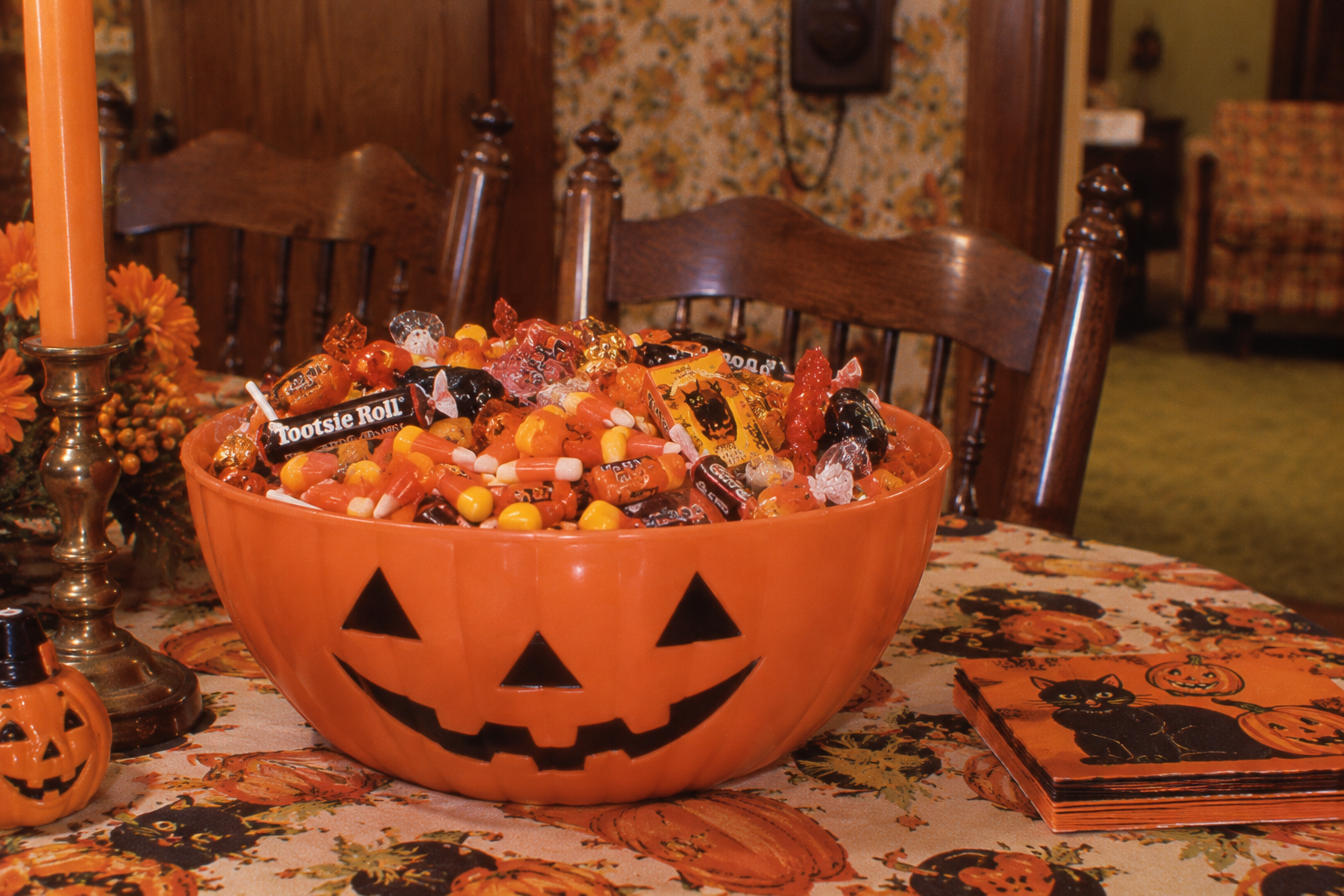
In the days leading up to Halloween, there was often a bowl of candy sitting somewhere in the house, supposedly reserved for trick-or-treaters. It might have contained candy corn, individually wrapped hard candies, miniature chocolate bars, or whatever sweets happened to be on sale at the grocery store. Candy corn was already a familiar Halloween favorite, even though it had originally been marketed as a treat people could enjoy throughout the year. During the 1970s, commercially packaged candy became increasingly common as concerns about homemade Halloween treats began changing what families felt comfortable handing out. Of course, the biggest challenge wasn’t deciding what to give the neighborhood kids. It was making sure nobody in the family ate half the candy before Halloween night.
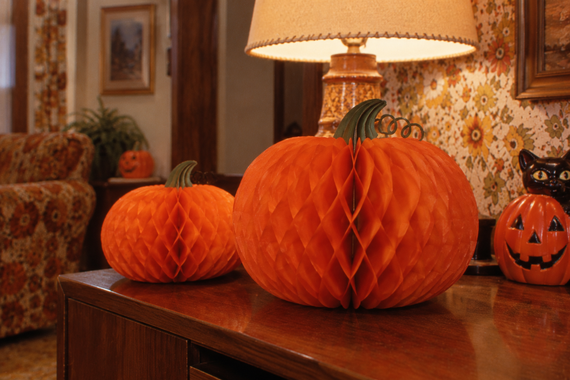
Fold-Out Honeycomb Paper Pumpkins
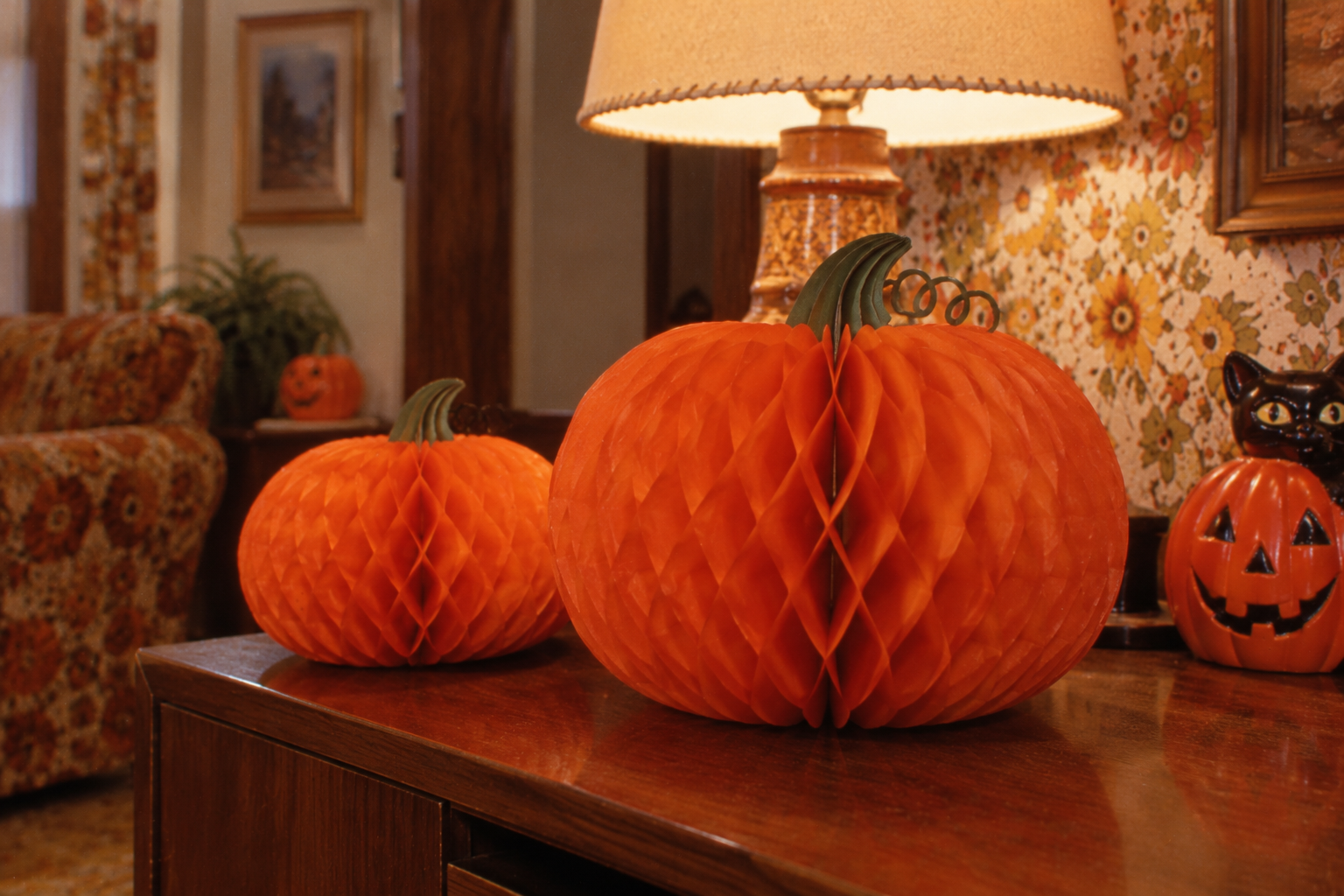
There was something almost magical about taking a flat piece of tissue paper and unfolding it into a three-dimensional Halloween decoration. Honeycomb paper pumpkins were a familiar sight in mid-century American homes, and they remained popular throughout the 1970s. These lightweight decorations opened into round, textured shapes that could be placed on tables, hung from ceilings, or arranged alongside other Halloween decorations. Beistle and other companies had been making similar paper decorations for decades, so some families even reused older ones that had survived several Halloweens. When the holiday was over, the pumpkins could be folded flat again and slipped into a storage box. Assuming nobody accidentally crushed one, the same decoration could make an appearance year after year.
Sign up for our newsletter
Homemade Popcorn Balls and Caramel Apple
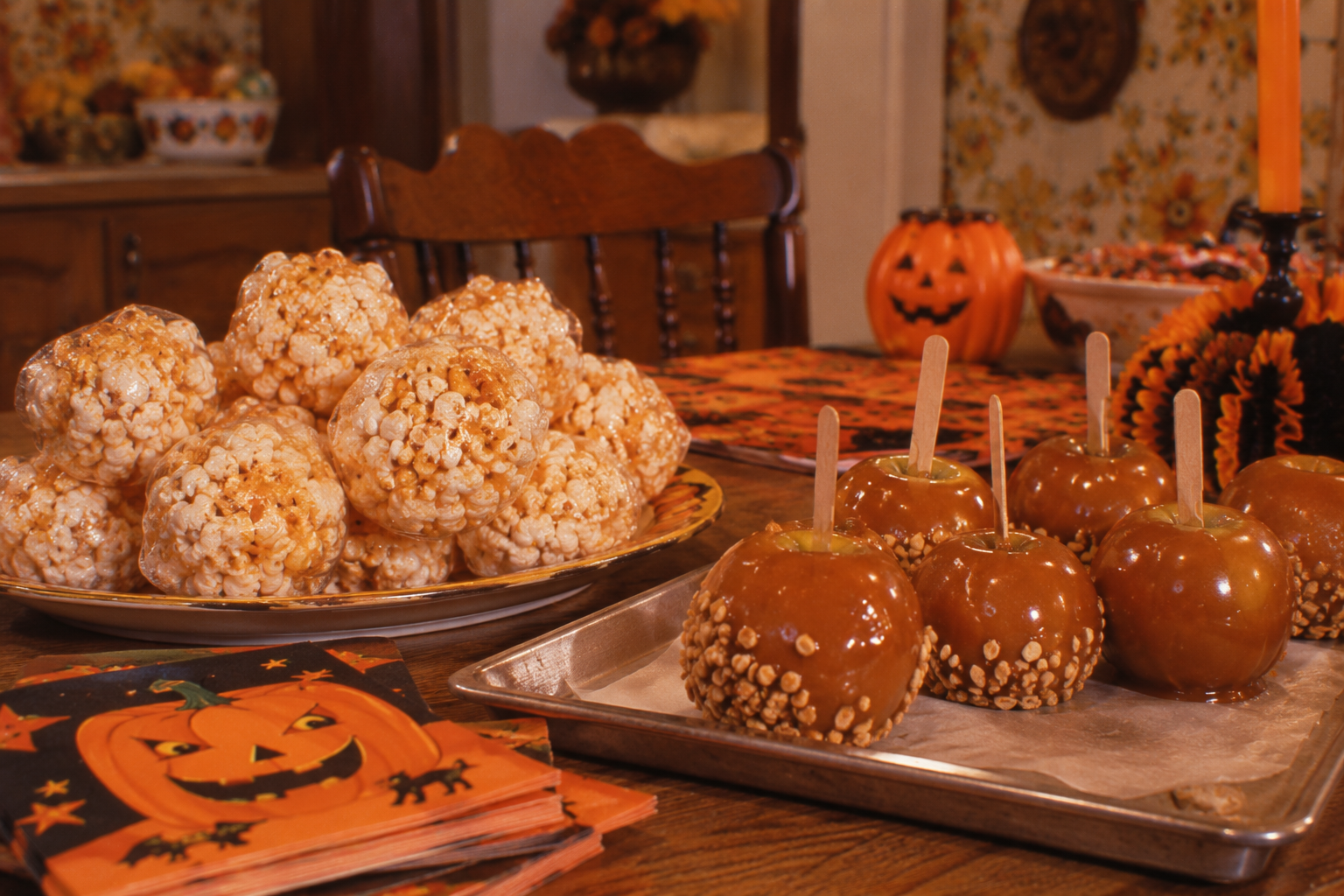
Not every Halloween treat in the 1970s came wrapped in brightly colored plastic. In some households, preparing for the holiday meant spending an afternoon making popcorn balls, caramel apples, or batches of homemade cookies. Kitchens filled with the smell of melted caramel and freshly popped corn while parents tried to keep sticky little hands away from the finished treats. Popcorn balls were sometimes wrapped in wax paper or cellophane, while caramel apples were left to cool on trays before being handed out or served at parties. Homemade Halloween treats became less common as concerns about candy tampering grew, but for many families, making them was as much a part of the holiday as carving pumpkins or putting on costumes.
An Orange UNICEF Trick-or-Treat Collection Box
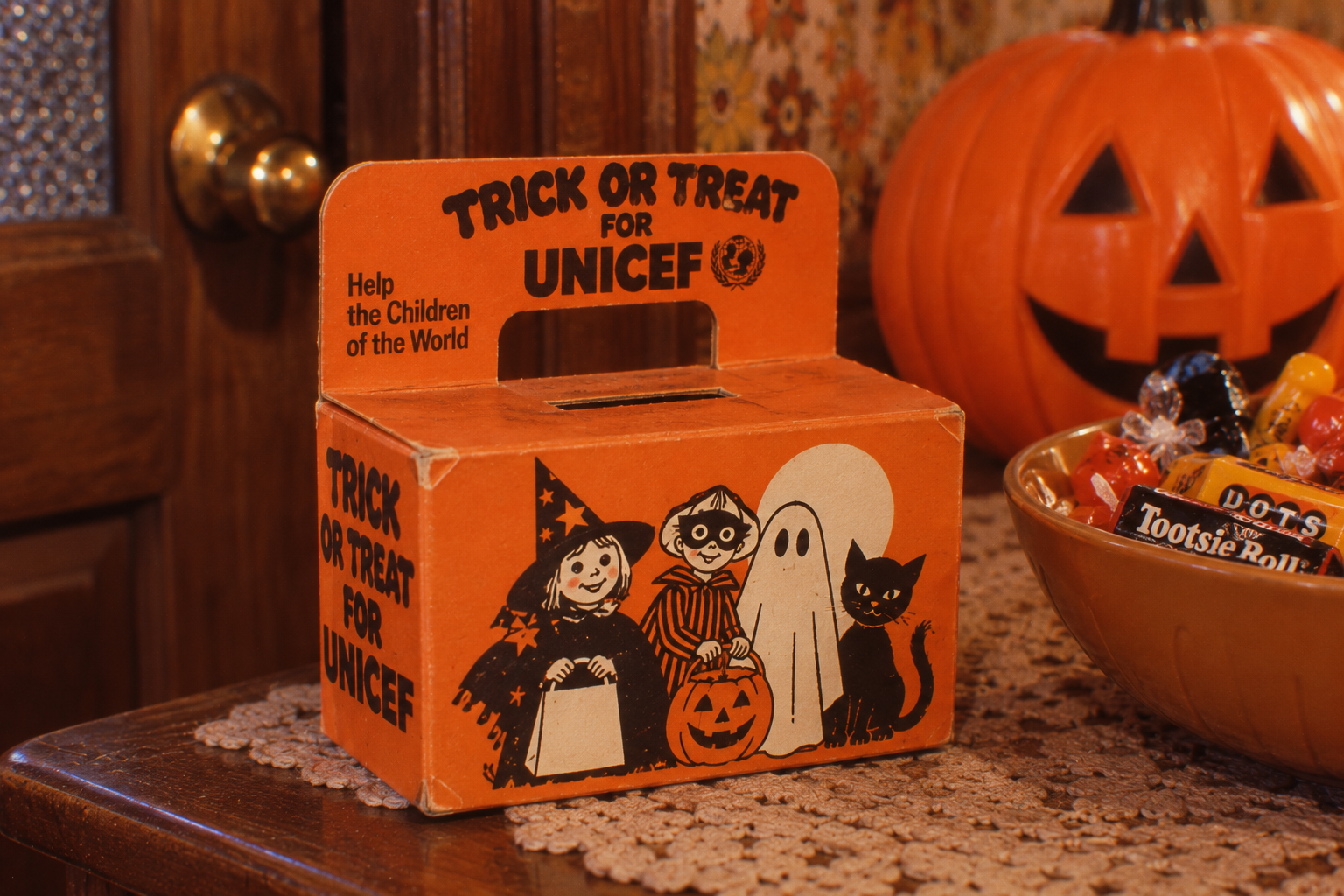
For some children in the 1970s, Halloween wasn’t just about collecting candy. It was also an opportunity to collect spare change for UNICEF. The organization’s Trick-or-Treat campaign had begun in 1950, and by the 1970s, its little orange cardboard collection boxes were a recognizable part of the holiday. Children often received them through schools, churches, or community groups and carried them alongside their candy bags while going door to door. Neighbors could drop a few coins into the box, and by the end of the evening, the change inside would rattle with every step. According to UNICEF, more than 3 million children participated annually during the decade. For kids who took part, that little orange box was just as much a Halloween essential as their plastic pumpkin or homemade costume.
Construction-Paper Ghosts and Black Cats Made by the Kids
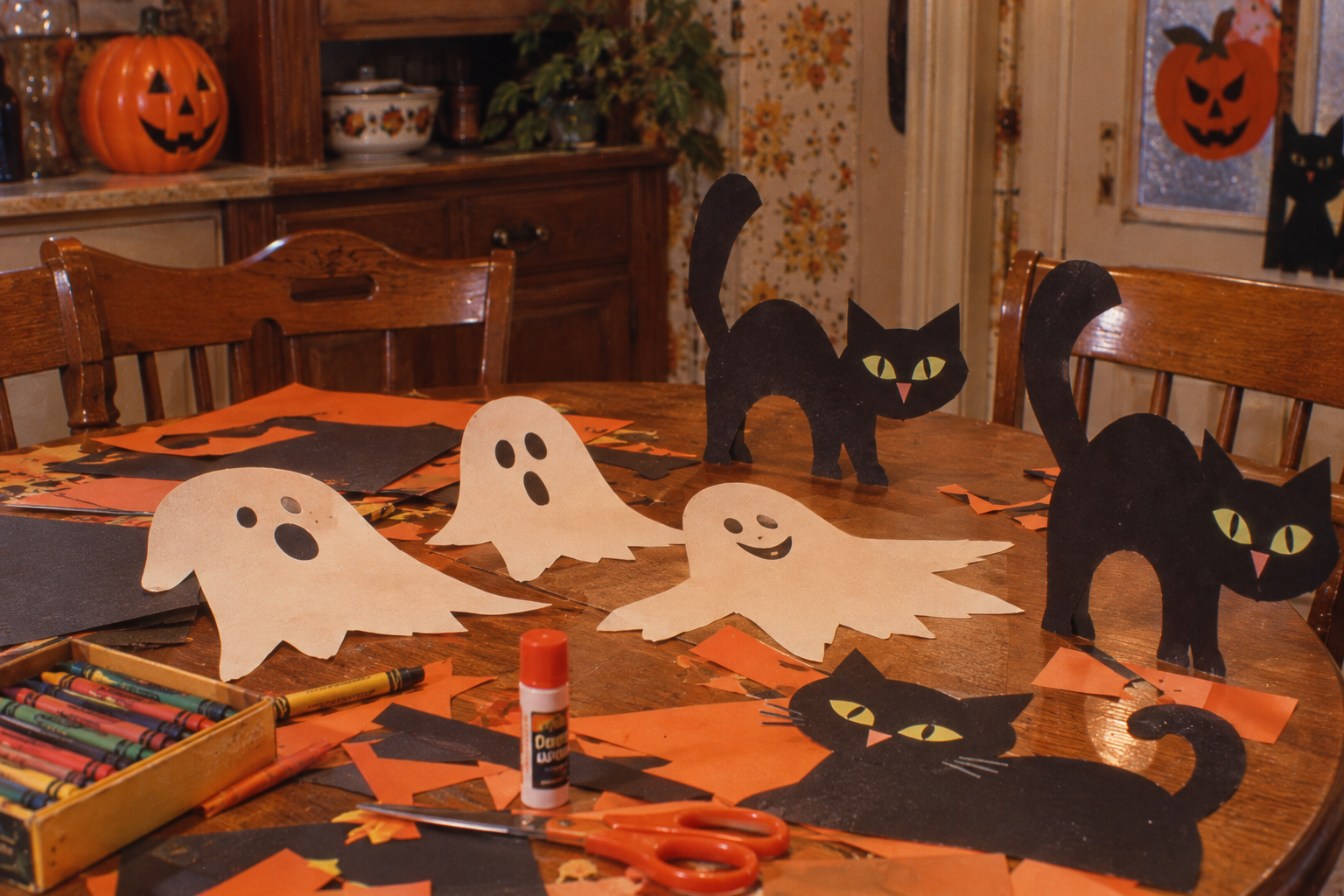
Long before families could order coordinated Halloween decorations online, children often contributed their own spooky masterpieces. All it took was a stack of construction paper, some scissors, crayons, and a little imagination. White paper became ghosts with uneven edges, black construction paper turned into bats and cats, and orange sheets were transformed into pumpkins with wildly different expressions. Some children made paper chains or drew haunted houses, while others covered practically every available surface with their creations. Parents proudly taped the finished artwork to refrigerators, kitchen windows, and bedroom doors, even when the results were more adorable than frightening. And because these decorations were made by the kids themselves, they often became some of the most memorable things about the house at Halloween.
A Stack of Treat Bags and Halloween Party Supplies
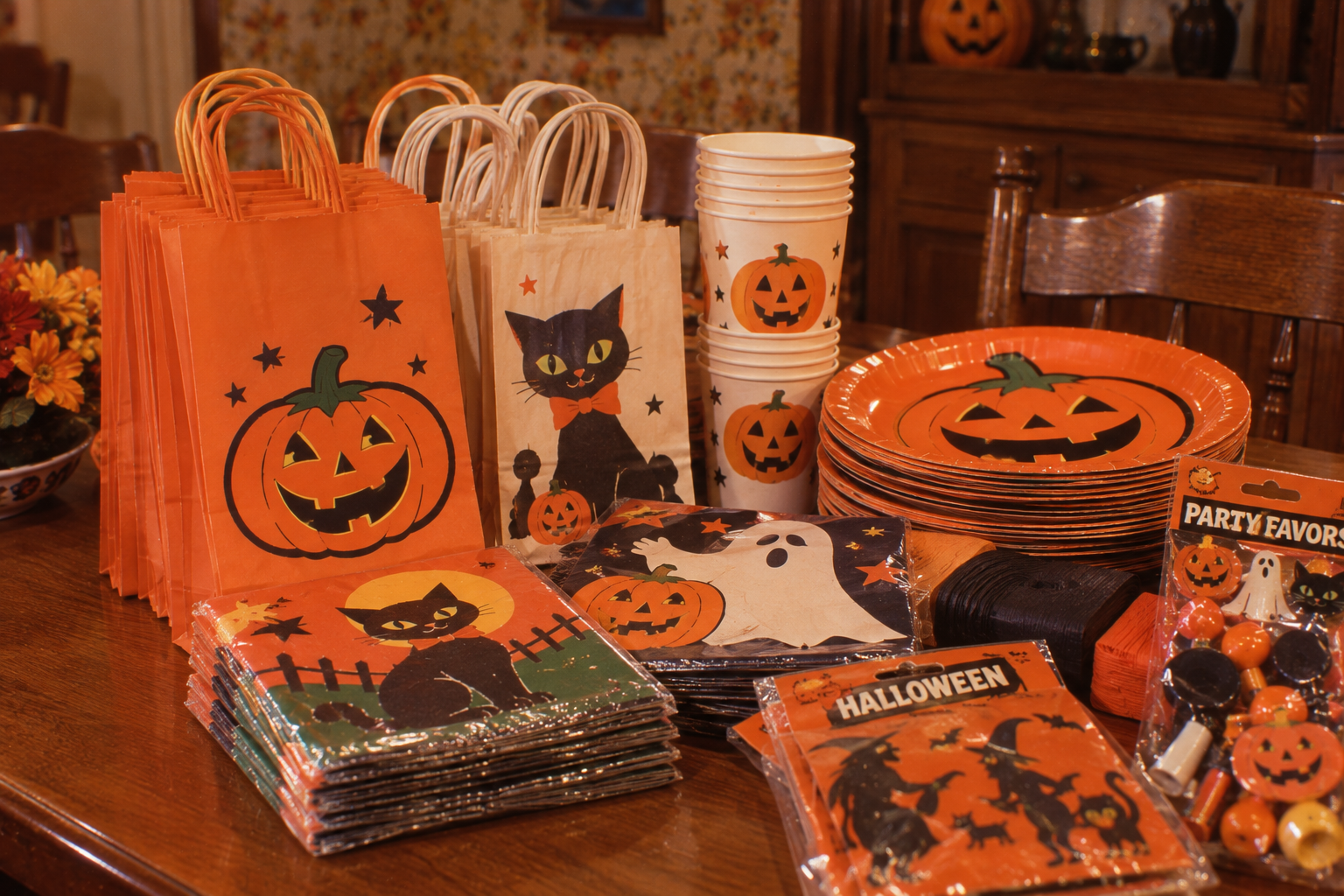
If a family was hosting a Halloween party or preparing treats for neighborhood children, there was a good chance the dining room table was covered in paper bags, candy, and seasonal party supplies. Orange and black paper napkins, disposable cups, decorated plates, and inexpensive table decorations helped make even a small gathering feel festive. Some parents assembled individual treat bags ahead of time, filling them with a few pieces of candy and perhaps a small toy or novelty. Others prepared bowls of snacks and homemade goodies for children who would be stopping by after trick-or-treating. The supplies weren’t particularly fancy, and there was usually some last-minute scrambling to get everything ready. But seeing those little treat bags lined up on the table was a sure sign that Halloween was almost here.
When Halloween at Home Was All About the Little Things
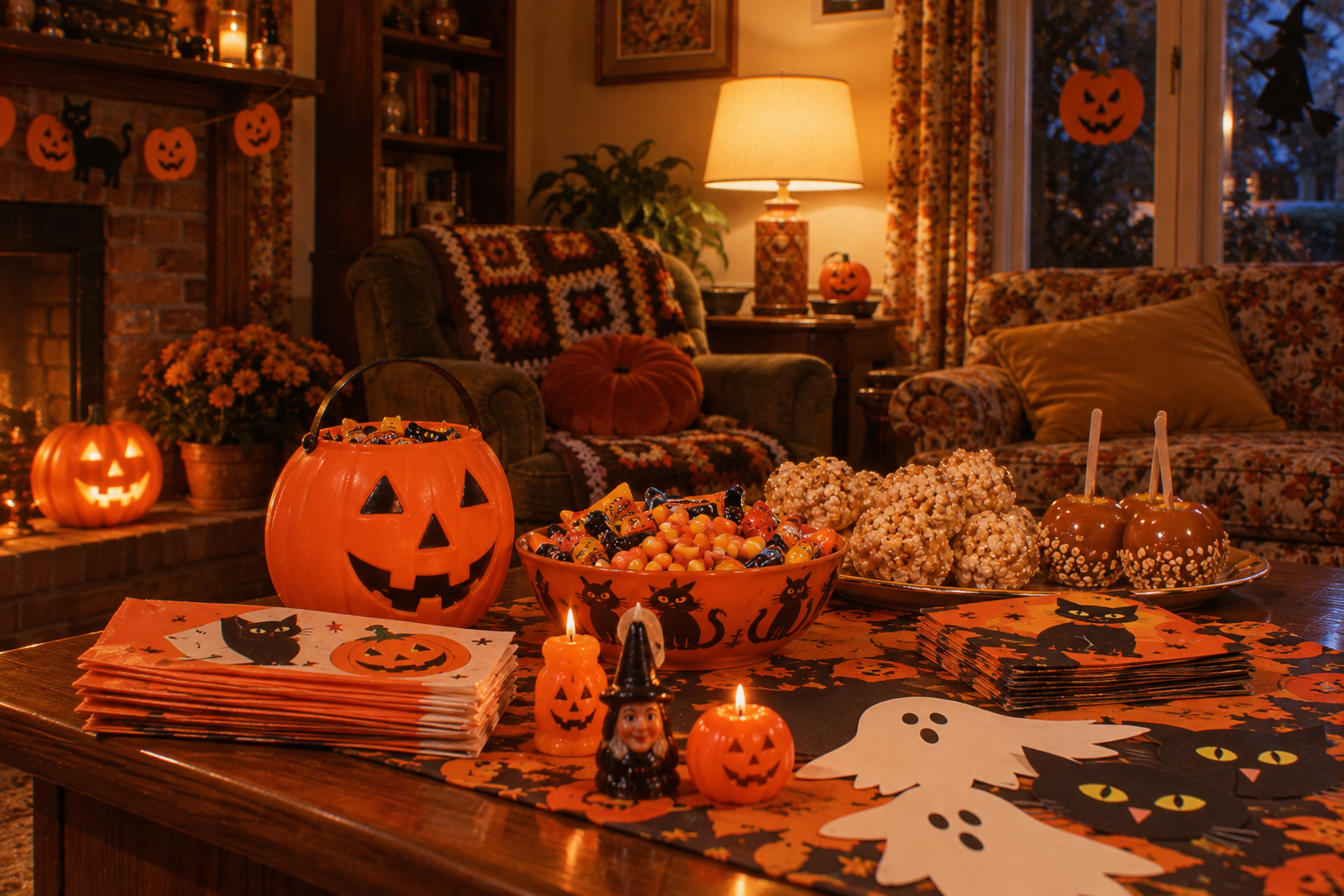
Looking back, it’s surprising how little it took to make a house feel ready for Halloween in the 1970s. A few cardboard decorations in the windows, a pumpkin glowing on the porch, some paper streamers, and a bowl of candy were often enough to create the perfect atmosphere. Many of those inexpensive decorations have since become nostalgic collectibles, but back then, they were simply part of the annual routine.
And perhaps that’s what made them so memorable. Halloween wasn’t necessarily about having the biggest decorations or the most elaborate costume on the block. It was about the excitement of getting everything ready, knowing that the best night of October was just around the corner.