American cities in the 1960s weren’t exactly quiet places. Downtown sidewalks were crowded with commuters, shoppers, newspaper vendors, and kids, while the streets were packed with buses, taxis, streetcars, and enormous American sedans. But despite all that activity, everyday city life looked noticeably different from what we’re used to today.
There were newsstands overflowing with papers on busy corners, pay phones outside stores, giant movie marquees glowing after dark, and department stores that could draw crowds to an entire downtown block. Even the way people dressed made the average sidewalk look surprisingly formal by today’s standards.
These 16 scenes capture some of the everyday details that made American city life in the 1960s look like another world.
Downtown Streets Packed With Department Stores
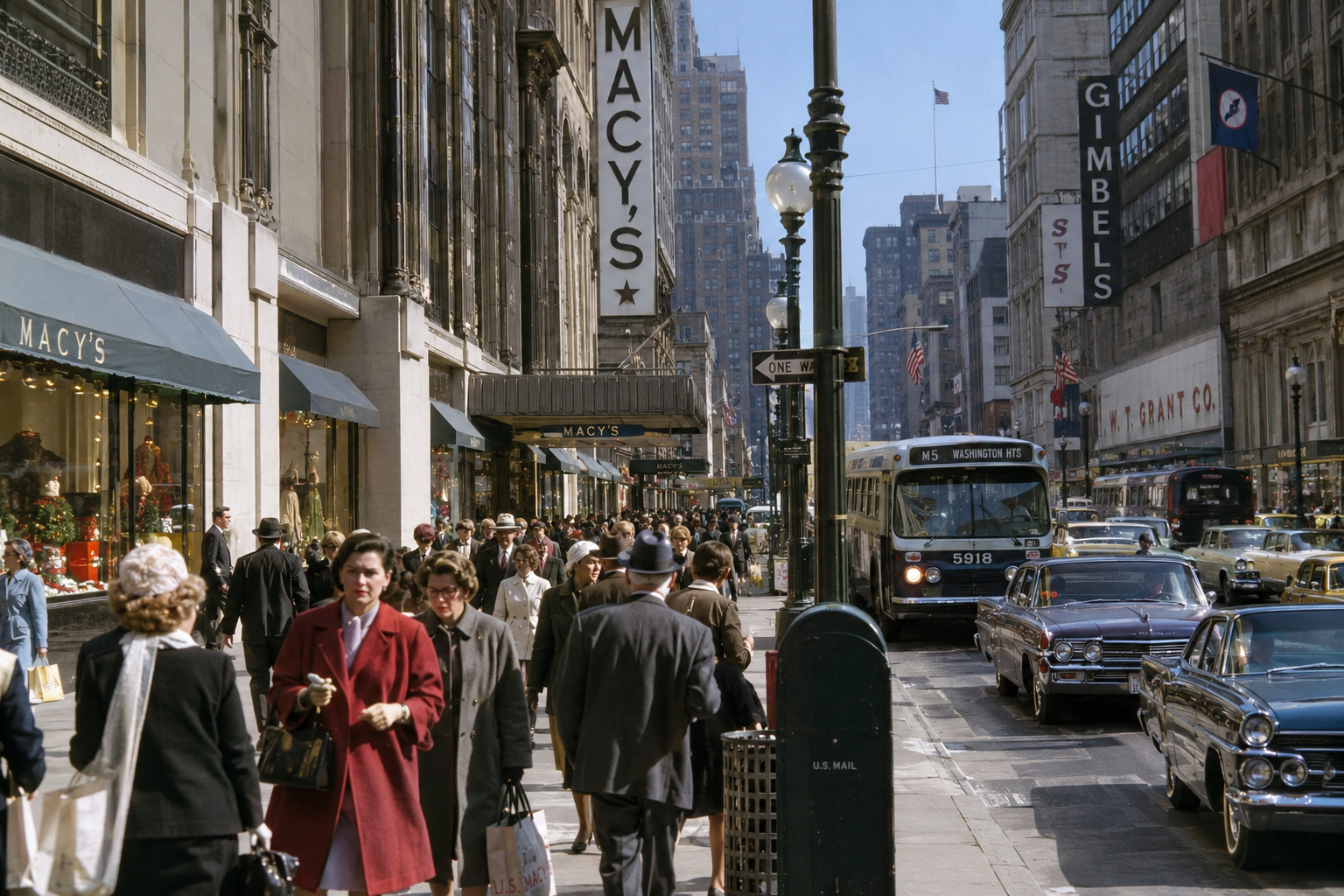
Before suburban malls and online shopping changed where Americans spent their money, downtown department stores were major destinations. A busy city block might have enormous display windows, elaborate awnings, shoppers carrying paper bags, and sidewalks packed with people moving between stores. Add buses and rows of mid-century cars along the curb, and even an ordinary afternoon of shopping could make downtown look remarkably busy.
Crowded Sidewalk Newsstands
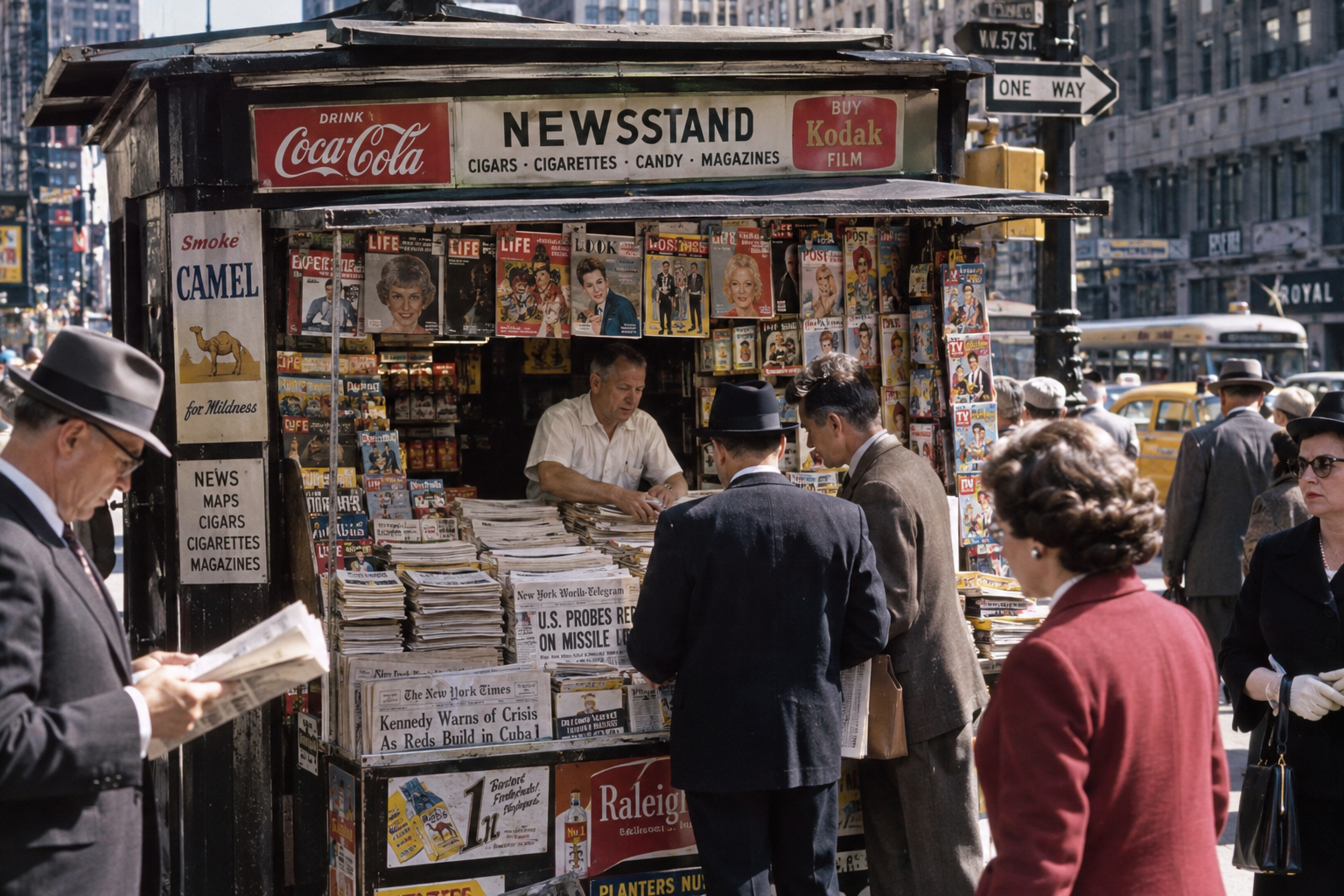
Getting the day’s news didn’t involve pulling a phone out of your pocket. Newsstands were fixtures on busy corners, especially around downtown offices and transit stations, with newspapers, magazines, comics, cigarettes, gum, and candy crammed into remarkably small spaces. Commuters could grab a paper on the way to work, making printed headlines a highly visible part of the city streetscape.
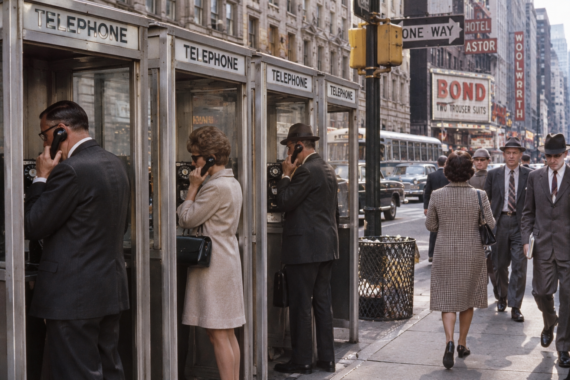
Pay Phones on Nearly Every Busy Corner
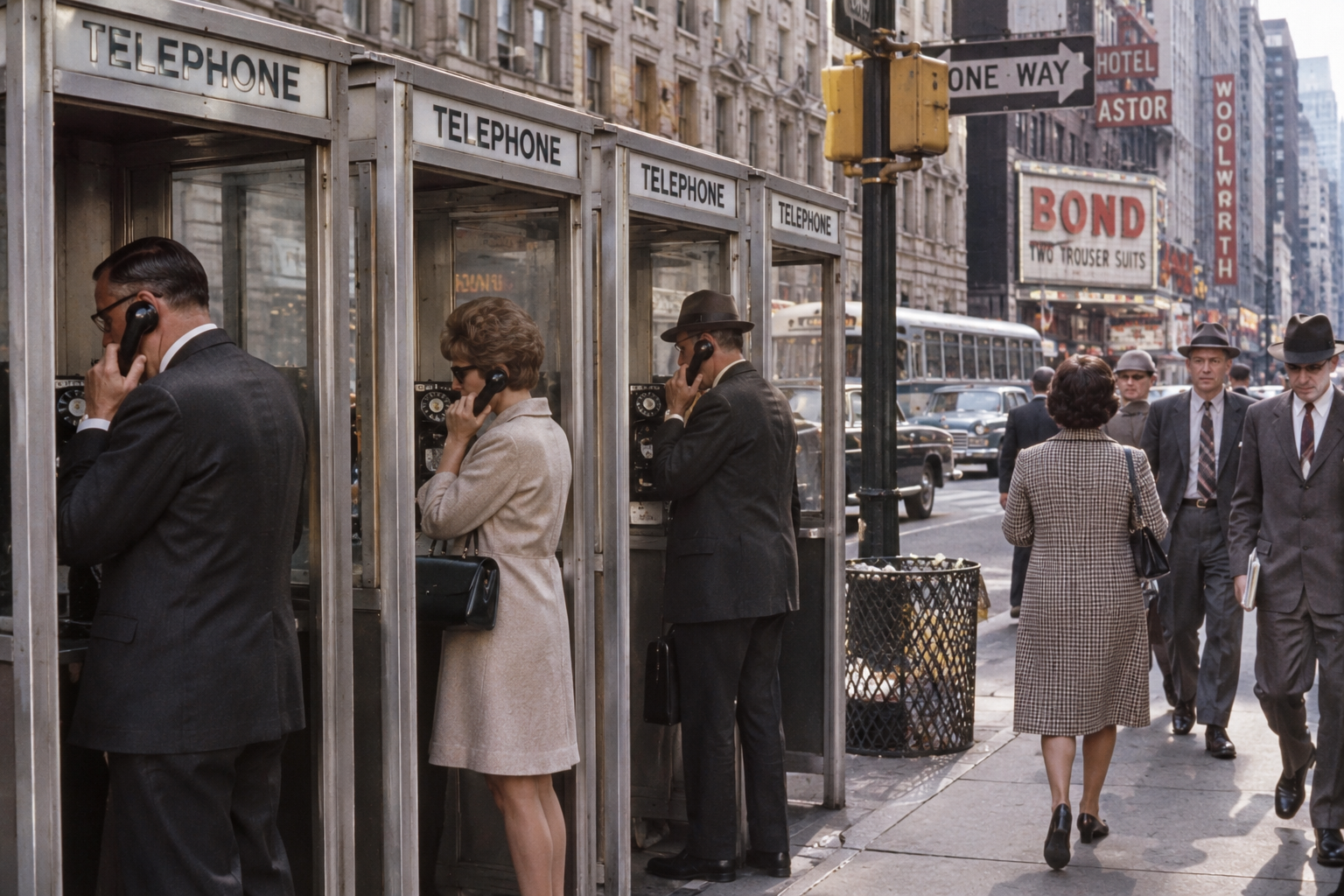
Calling someone while you were away from home required a little more planning in the 1960s. Public phones could be found outside businesses, inside transit stations, and along busy streets, sometimes with several booths or phones grouped together. You needed coins, the number you wanted to call, and occasionally enough patience to wait for the person ahead of you to finish.
Men Going to Work in Suits and Hats
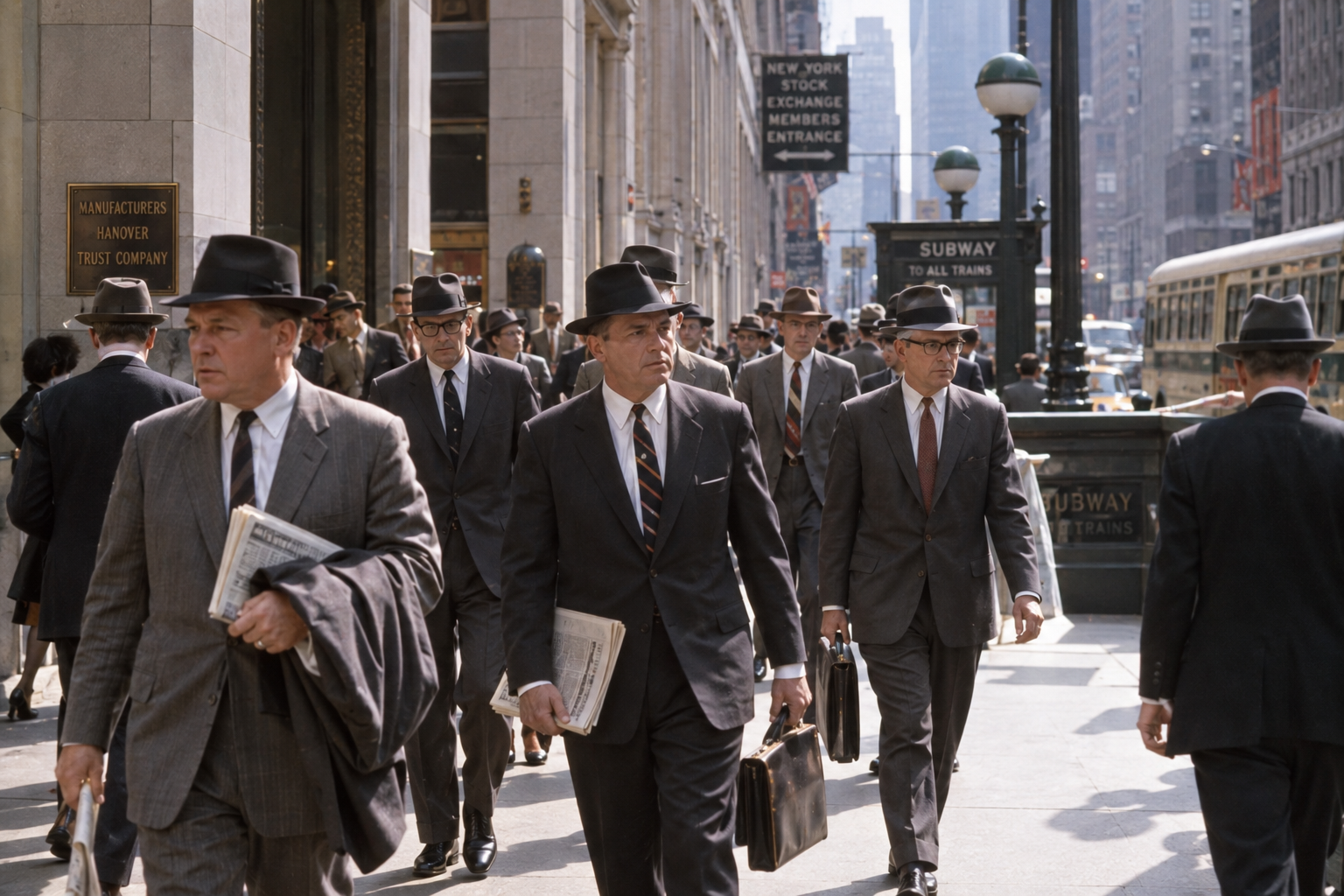
A weekday morning crowd could look surprisingly dressed up by modern standards. Many male office workers headed downtown wearing suits, ties, polished leather shoes, overcoats, and, particularly earlier in the decade, brimmed hats. Briefcases and folded newspapers completed a commuter uniform that would look unusually formal on many American office workers today.
Women Shopping in Dresses, Gloves, and Structured Coats
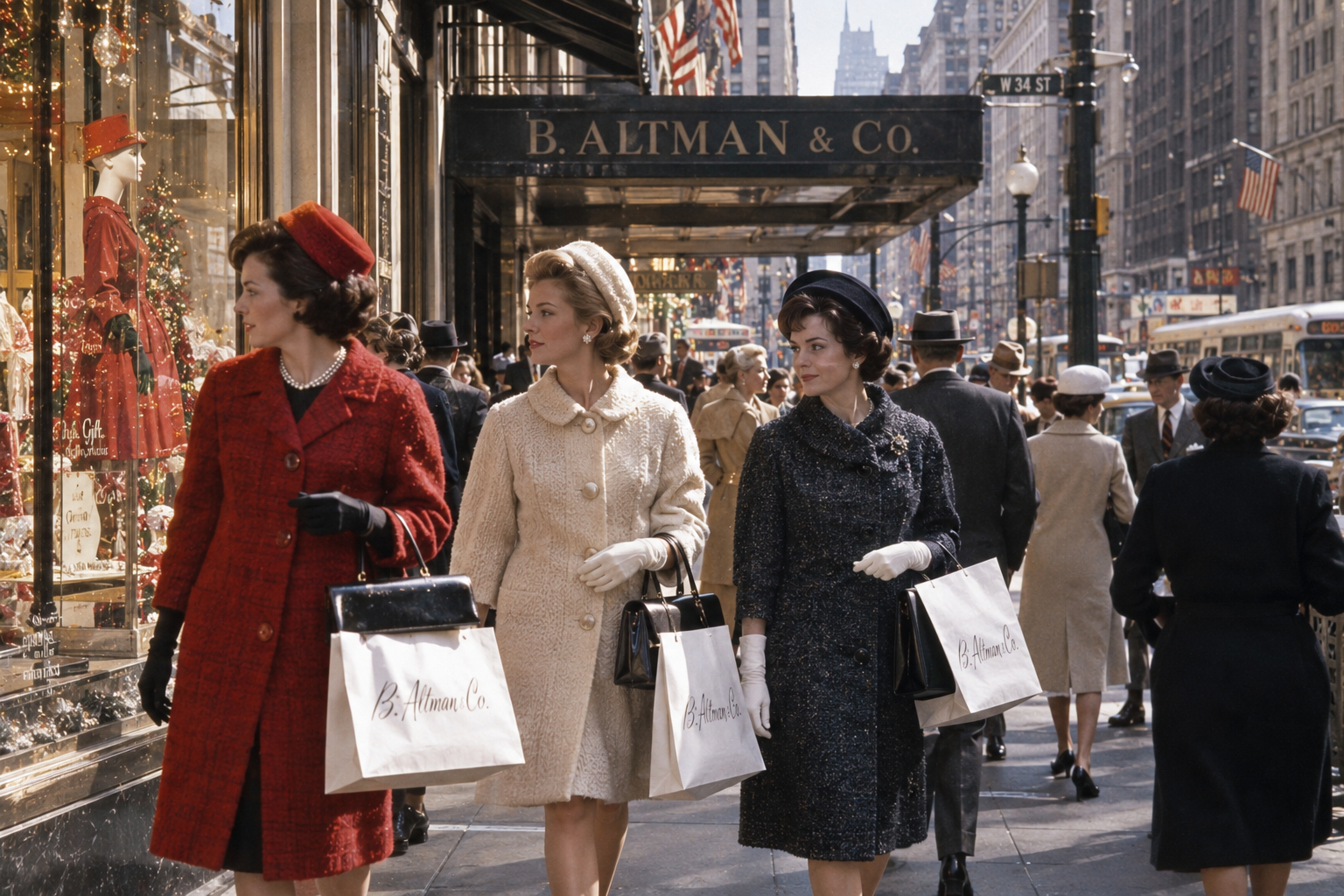
Running downtown errands didn’t necessarily mean throwing on leggings and sneakers. Depending on the occasion, season, city, and individual, women could be seen shopping in dresses or skirts, structured coats, pumps, handbags, and sometimes hats or gloves. Photographs of busy shopping districts capture just how different an everyday crowd could look when casual clothing wasn’t as dominant as it is today.
Trending on Cheapism


City Buses and Streetcars Dominating the Road
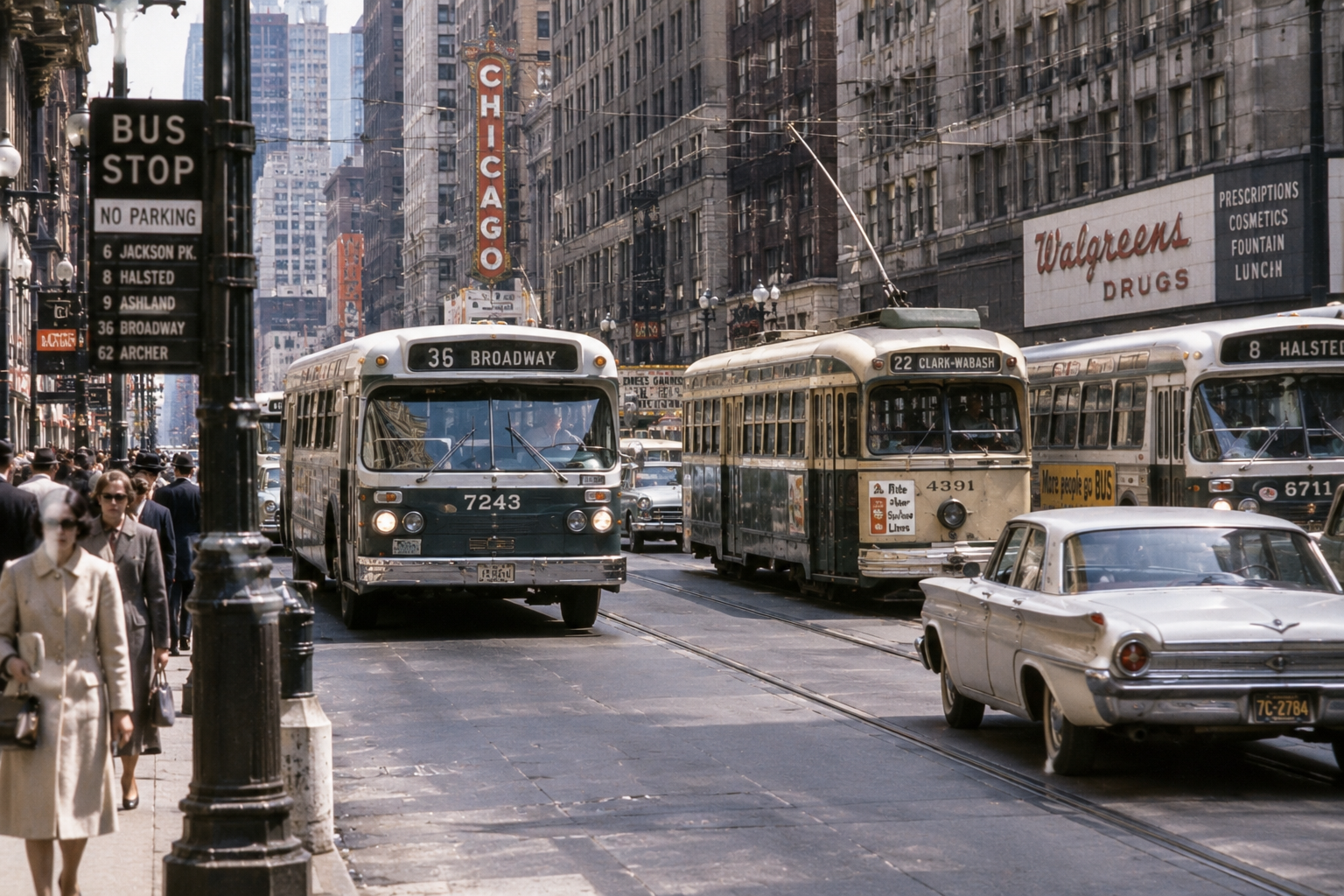
Look at a photograph of a busy 1960s intersection and the public transportation can be almost as noticeable as the cars. Buses, taxis, and, in cities where they remained in service, streetcars competed for space while overhead wires and large destination signs added to the visual clutter. For commuters without cars, these systems were an essential part of getting around town.
Huge Movie-Theater Marquees
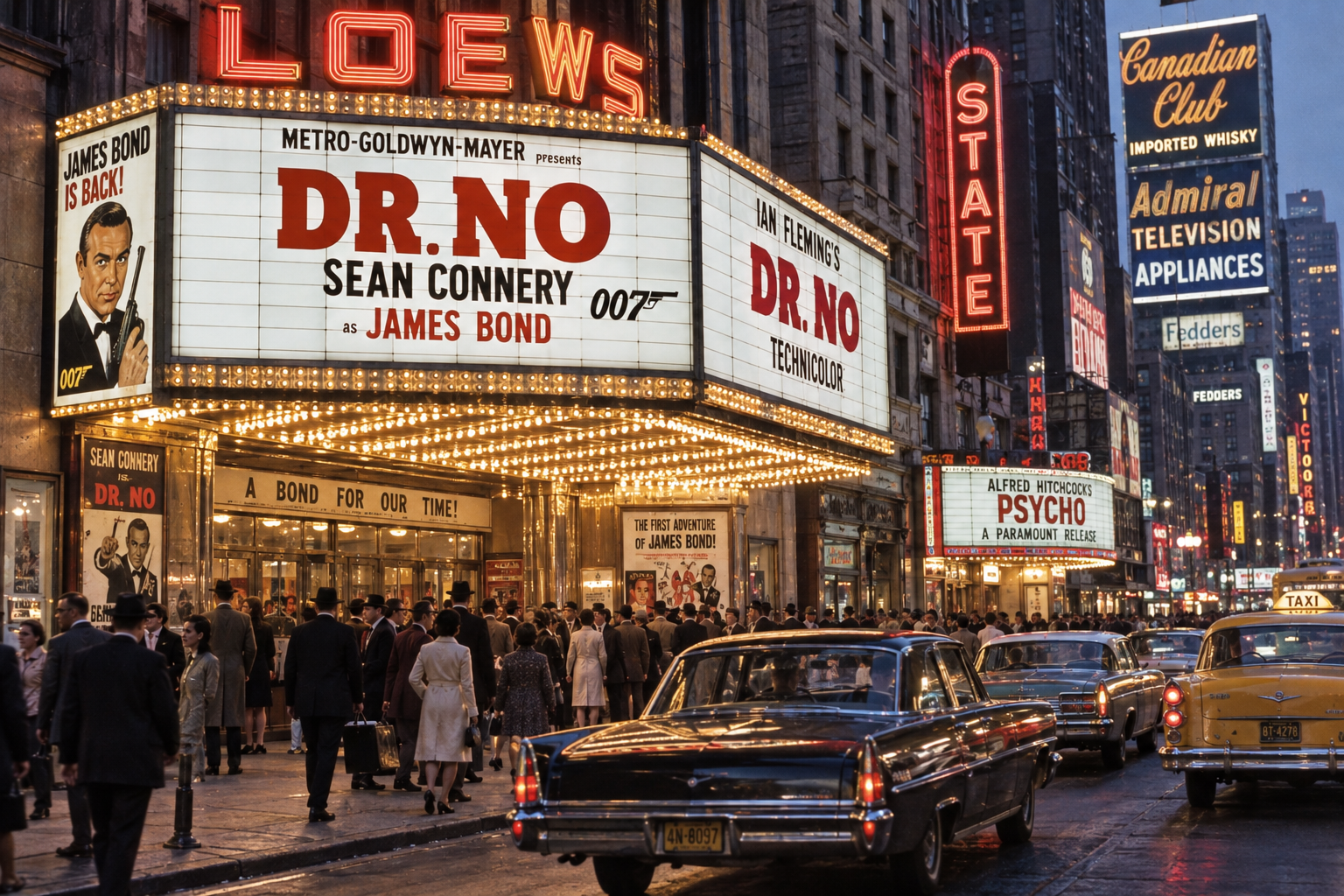
Movie theaters weren’t always tucked inside sprawling multiplexes. Downtown and neighborhood theaters could announce themselves with enormous marquees stretching over the sidewalk, neon lights, poster cases, and prominent signs advertising the films currently playing. When a popular movie opened, crowds lining up near the ticket booth could turn the sidewalk outside into an event of its own.
Diners and Lunch Counters Packed at Noon
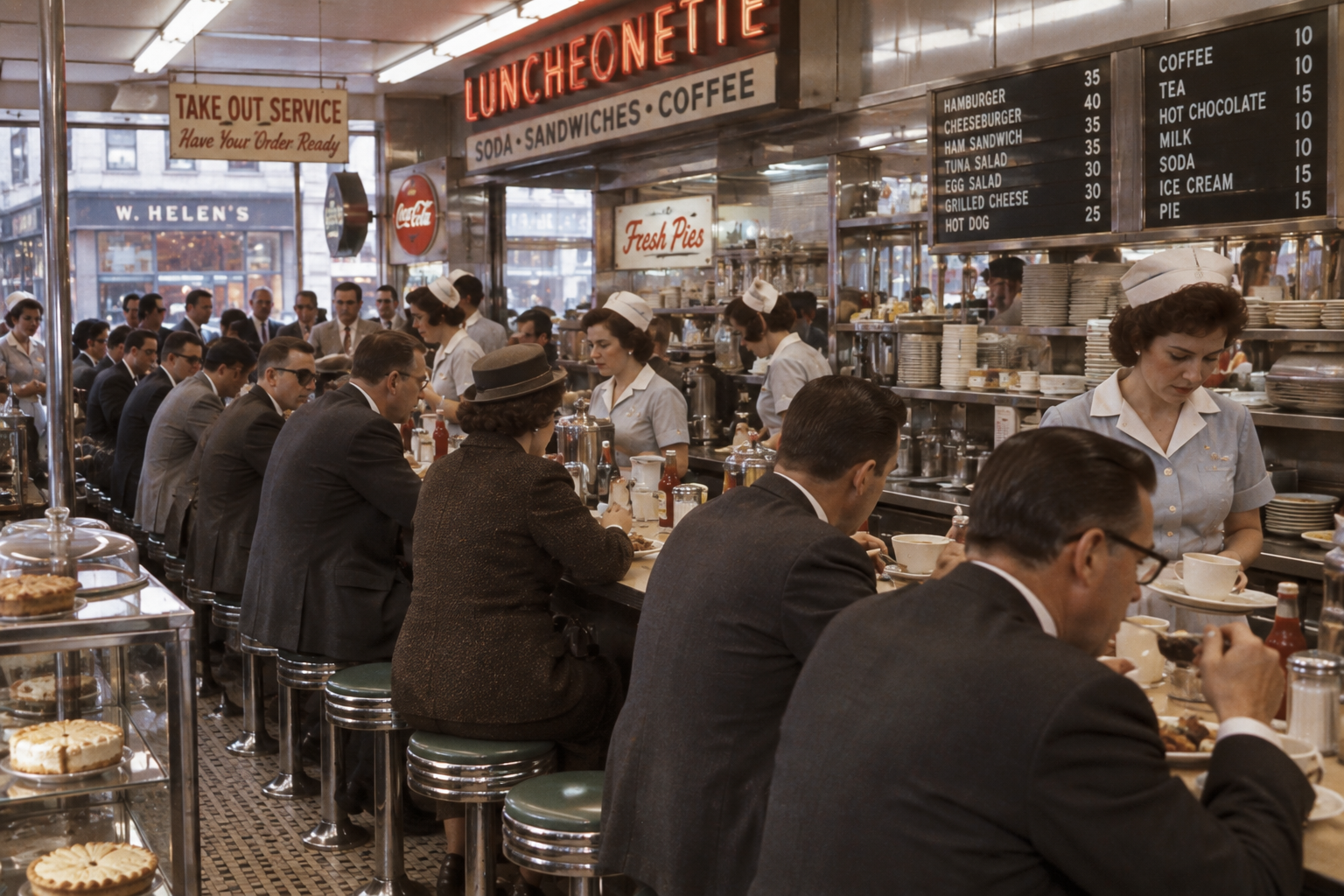
Downtown workers and shoppers needed somewhere quick to eat, and diners and lunch counters filled that role. During the lunch rush, customers might squeeze onto chrome stools for a sandwich, burger, slice of pie, and endless cups of coffee while uniformed servers worked behind the counter. Department stores and drugstores could have their own counters, too, making lunch a convenient stop in the middle of a day downtown.
Sign up for our newsletter
Shoe-Shine Stands in Transit Stations
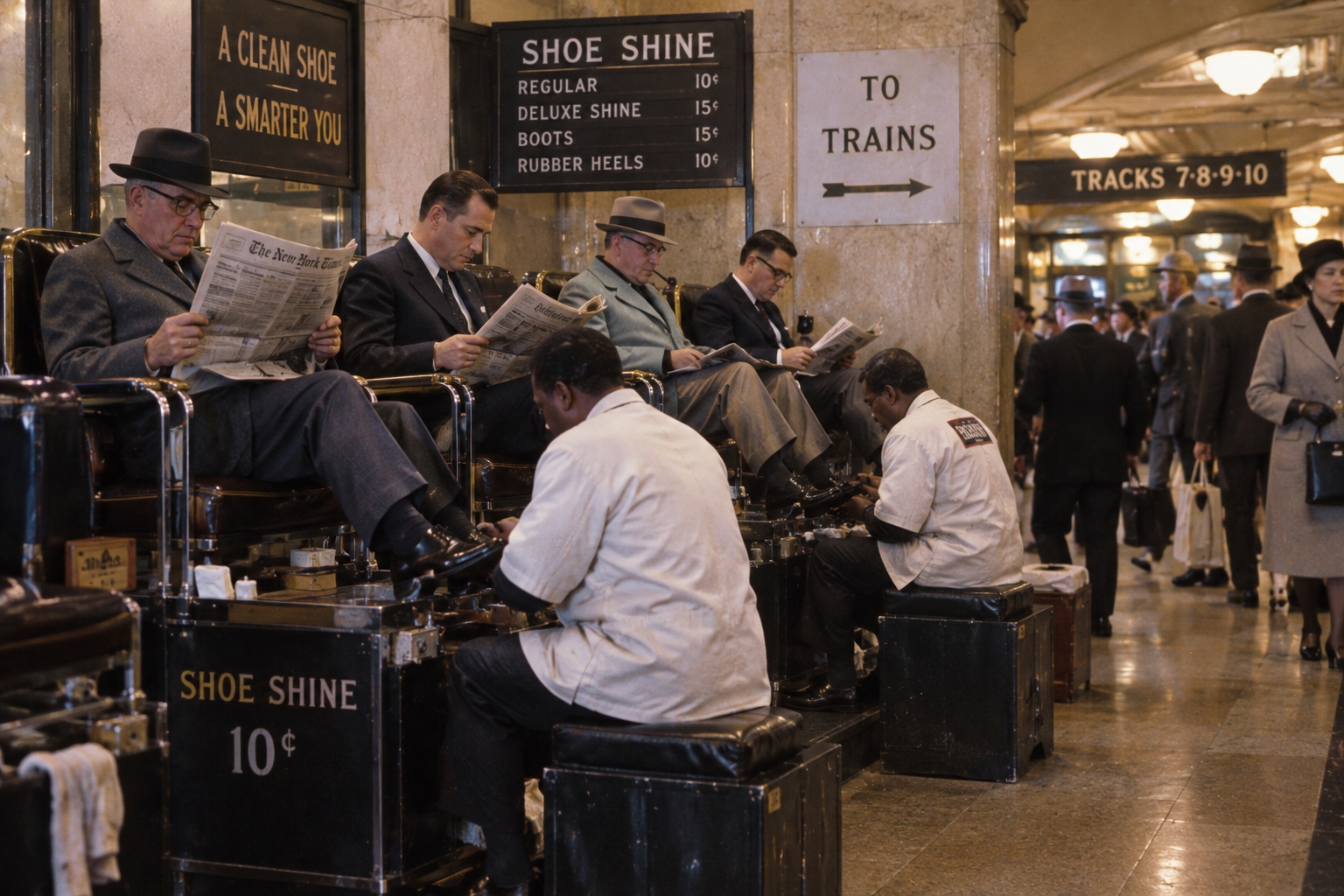
When leather dress shoes were standard office wear, keeping them polished was a more routine chore. Train stations, terminals, hotels, and busy downtown areas could have shoe-shine stands with elevated chairs where customers sat reading the newspaper while someone worked below. It’s an everyday service that has become far less prominent as workplace clothing and footwear have grown more casual.
Kids Playing Right on City Sidewalks
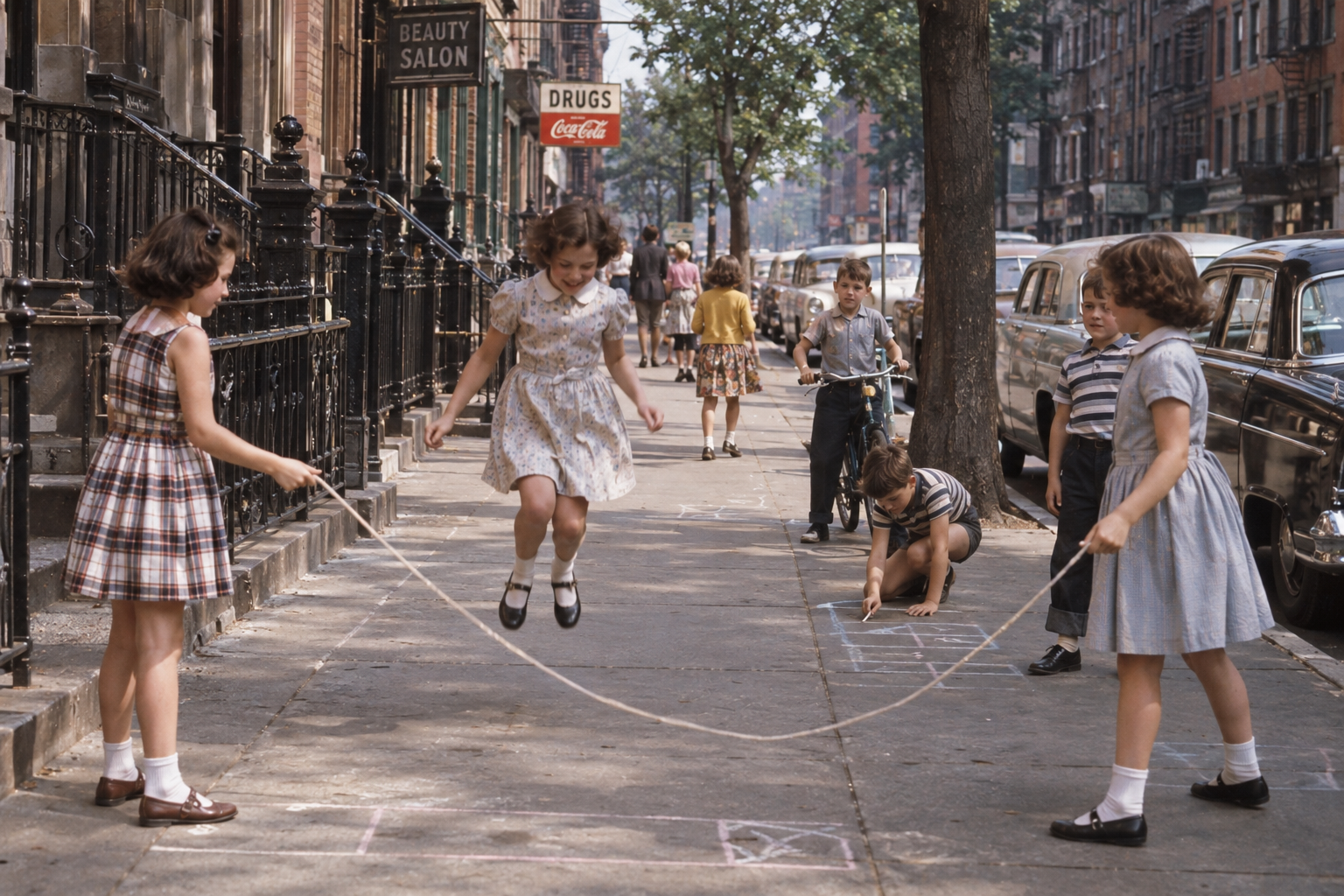
For plenty of city kids, the neighborhood itself doubled as a playground. Sidewalks, stoops, alleys, and quieter stretches of street became places for jumping rope, roller skating, chalk games, and stickball. With apartment buildings, parked cars, and fire escapes in the background, these scenes capture an era when children’s play was often woven directly into neighborhood street life.
Grocery Deliveries Arriving at Apartment Buildings
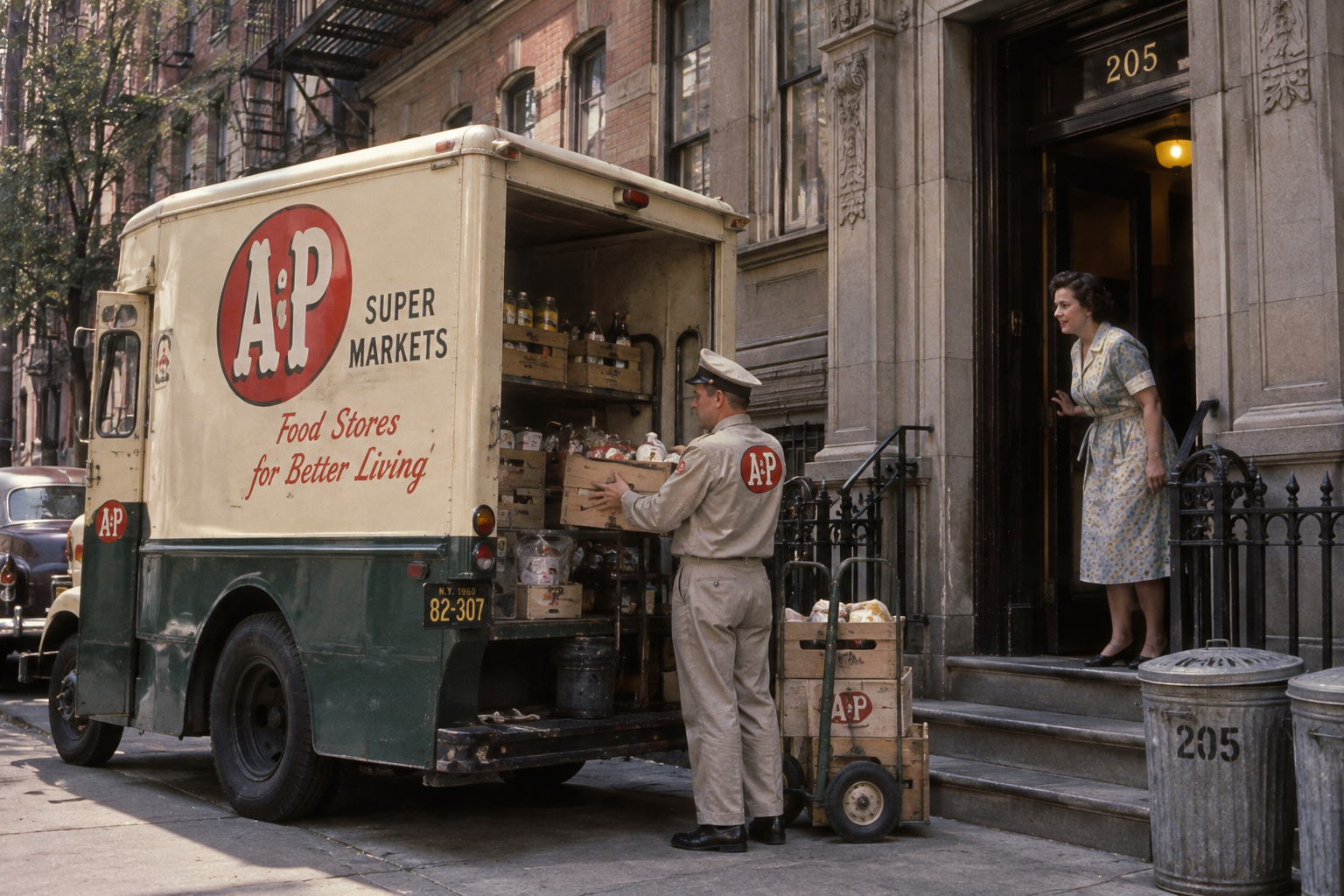
Grocery delivery existed long before anyone could order dinner from a smartphone. Neighborhood grocers sometimes delivered purchases to nearby homes, with workers carrying paper bags or boxes into apartment buildings or transporting orders by hand truck or delivery vehicle. The technology was different, but the desire to avoid hauling a week’s worth of groceries upstairs certainly wasn’t.
Crowded Fire Escapes and Apartment Windows
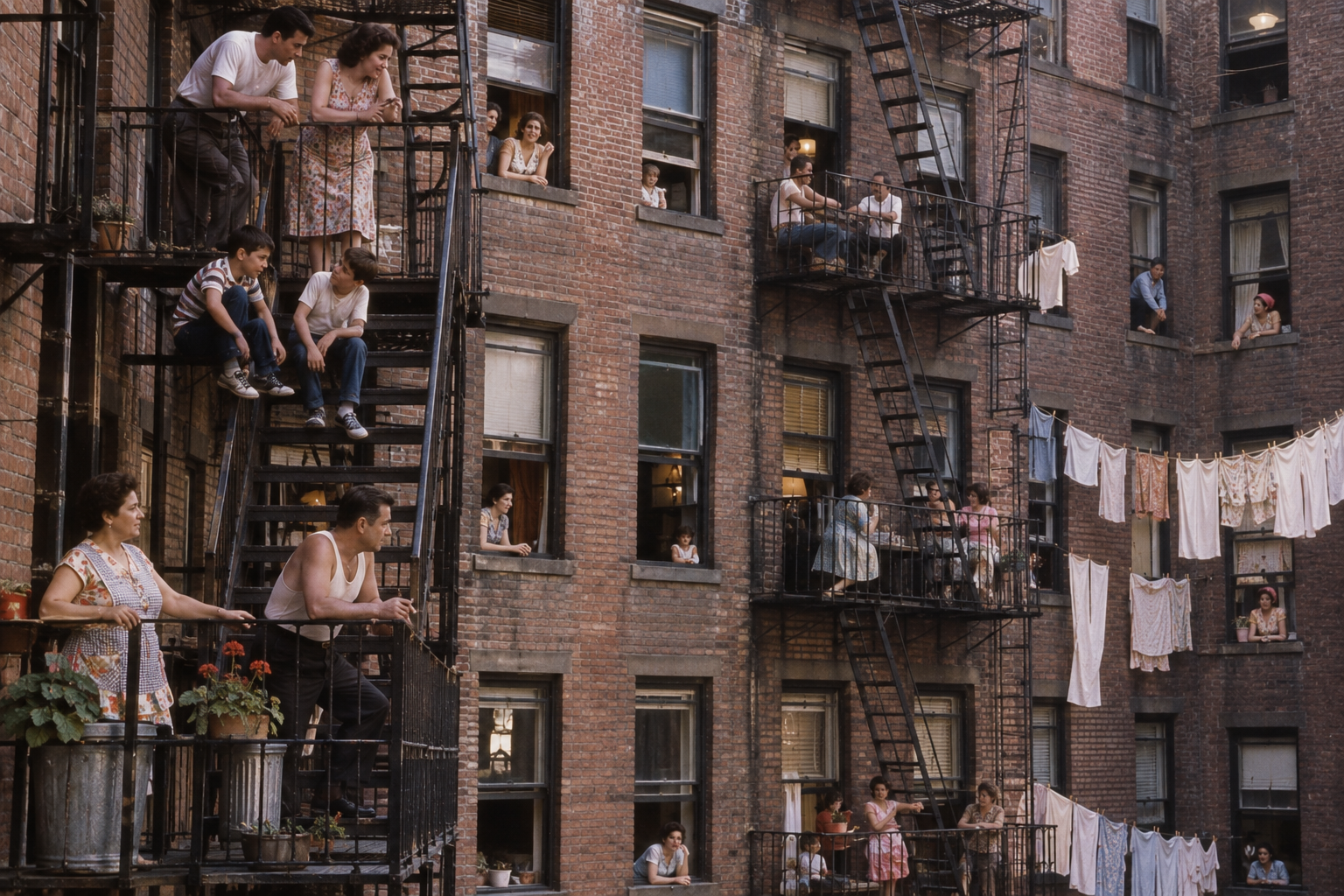
Before air conditioning became as common as it is today, hot weather pushed more of daily life toward open windows and outdoor spaces. On dense residential blocks, windows might be propped open, fans pointed toward the street, laundry hung outside, and residents gathered on stoops or near fire escapes. The result was an apartment building that could appear much more connected to the street below.
Neon Signs Everywhere
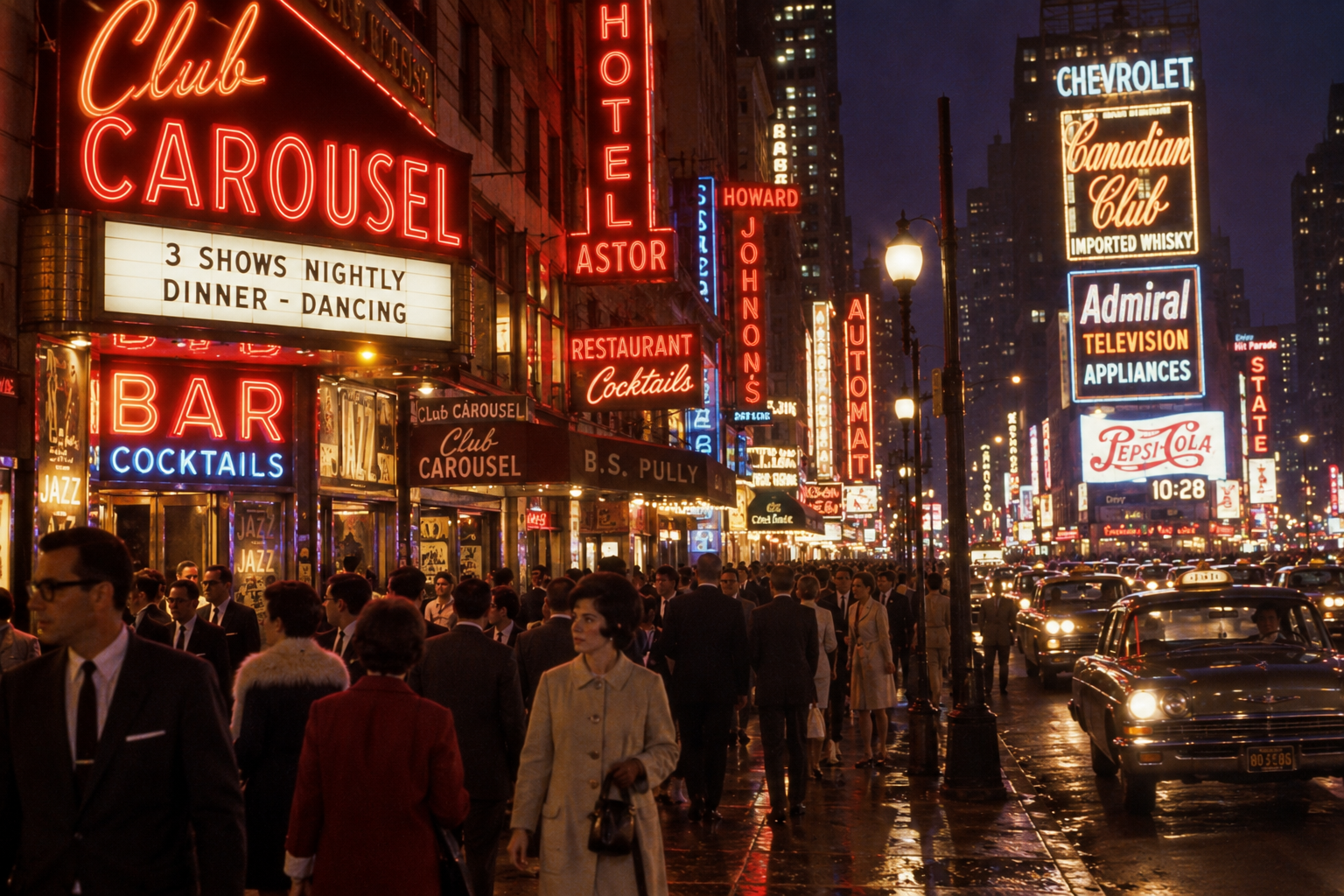
City streets could become especially colorful after sunset. Diners, hotels, theaters, bars, pharmacies, and other businesses competed for attention with neon, vertical signs, hand-painted lettering, and glowing storefronts. Before national chains brought more standardized branding to commercial districts, signage could give individual blocks a distinctive, sometimes wonderfully chaotic personality.
Traffic Filled With Giant American Sedans
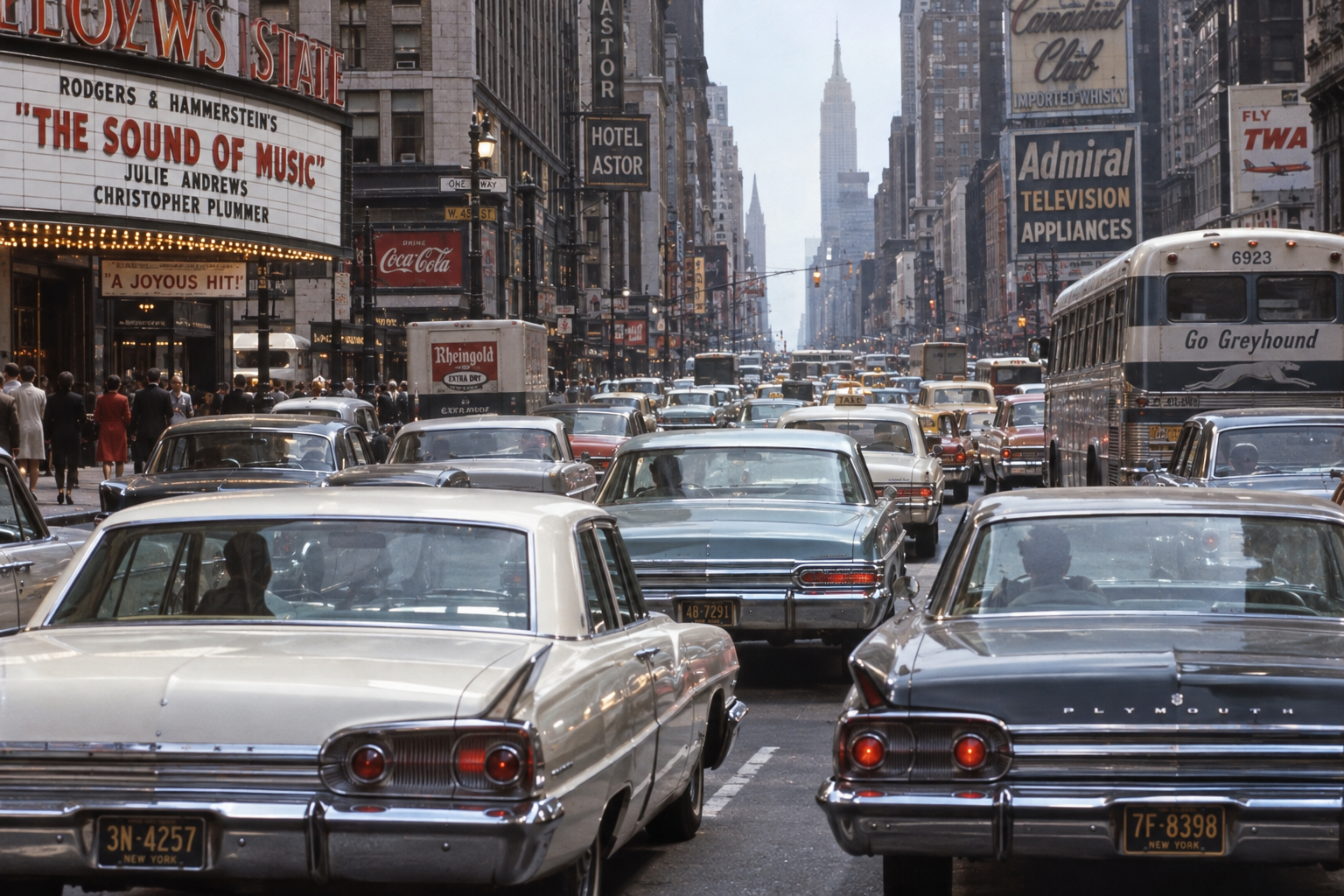
Today’s city traffic is filled with SUVs and crossovers, but a packed avenue in the 1960s had a very different silhouette. Long sedans, station wagons, taxis, and older cars with tail fins crowded lanes and curbside parking spots, with plenty of chrome catching the light. Many were enormous by modern passenger-car standards, making a traffic jam look like a sea of steel.
Corner Drugstores With Soda Fountains
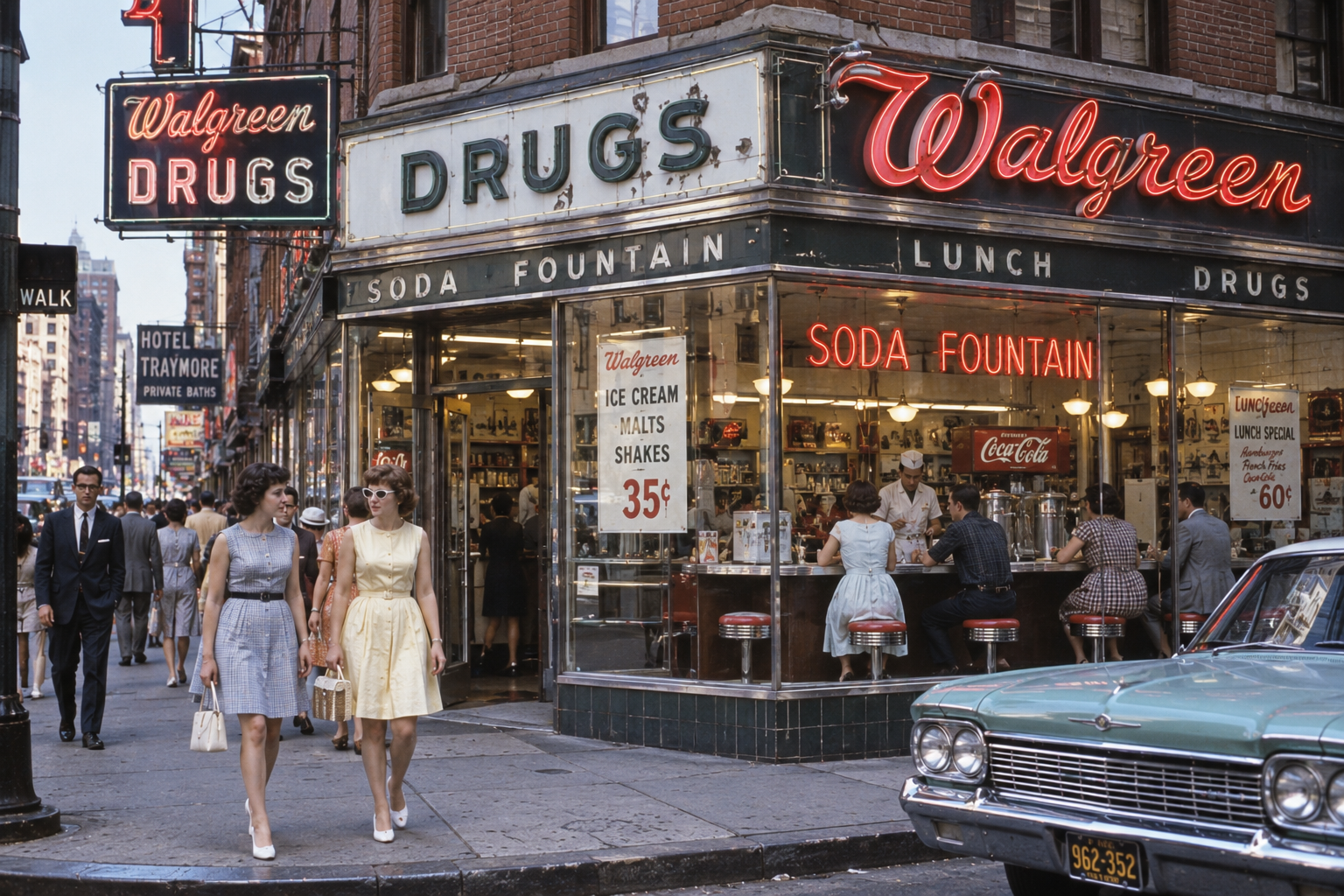
A neighborhood drugstore could offer a lot more than prescriptions and toiletries. Many pharmacies also had soda fountains or lunch counters where customers could grab a sandwich, coffee, ice cream, or fountain drink. Throw in magazine racks, candy, cosmetics, and household basics, and the local drugstore could function as both an errand stop and a neighborhood gathering place.
Rooftops and Stoops as Social Spaces
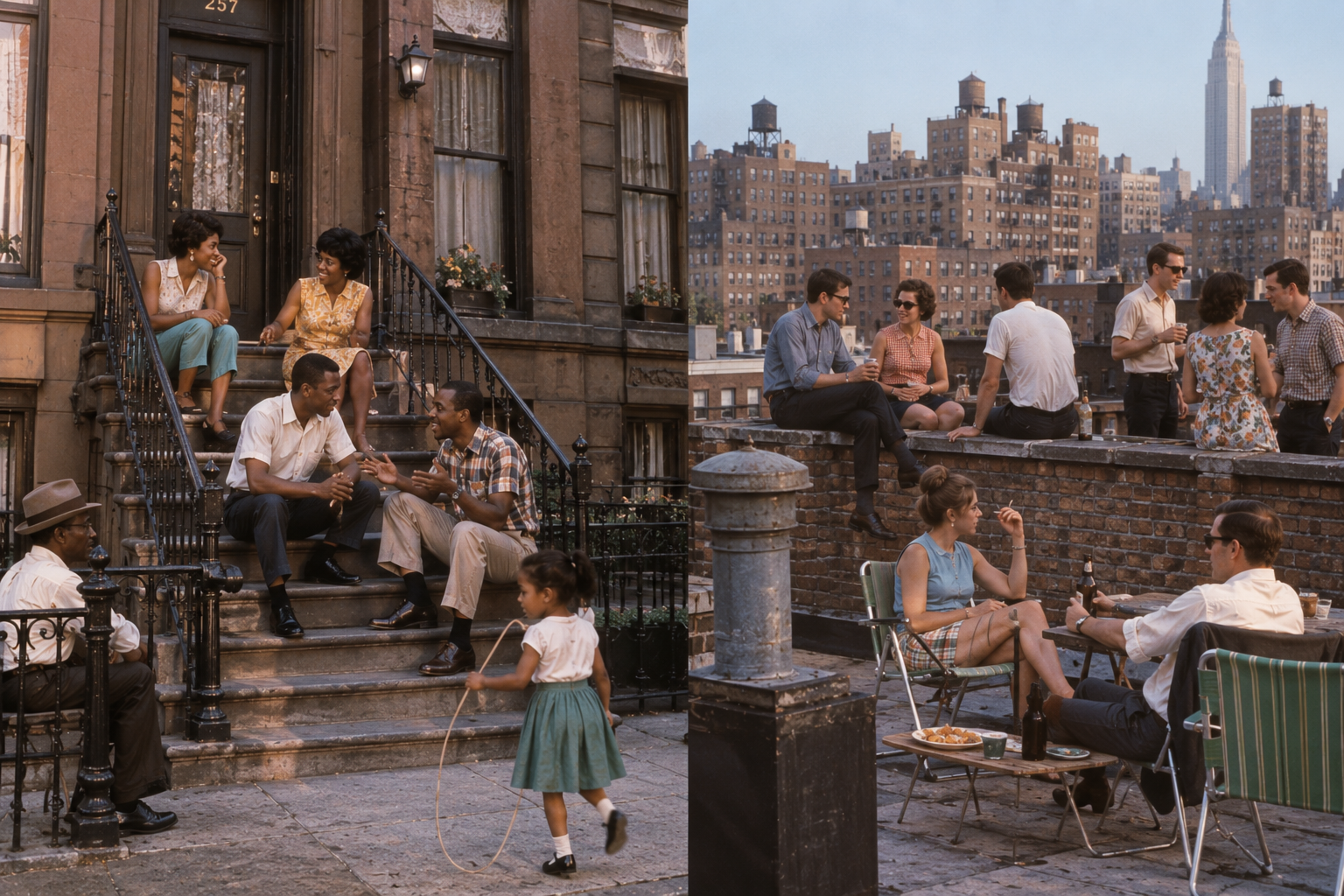
Not every evening required going somewhere. In dense neighborhoods, front stoops and apartment rooftops provided convenient places to sit outside, talk with neighbors, listen to a radio, and watch kids play nearby. Before home air conditioning and digital entertainment became ubiquitous, these semi-public spaces could serve as extensions of the home, making neighborhood life considerably more visible from the street.
The Everyday City Looked Very Different
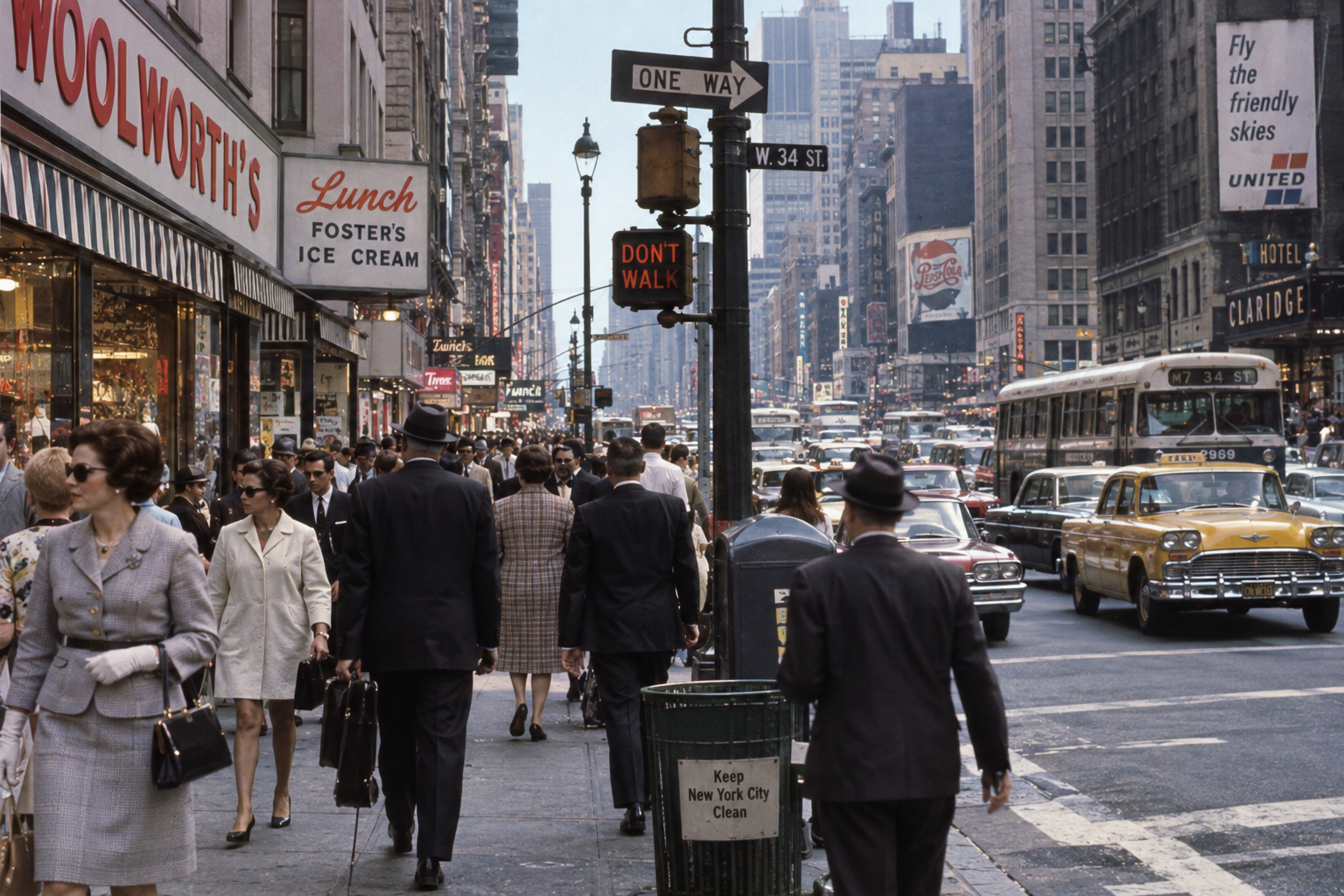
What makes photographs of American city life in the 1960s so interesting isn’t necessarily the famous buildings in the background. It’s everything happening around them. A pay phone on the corner, a shoe-shine stand in a station, newspapers piled high at a kiosk, or neighbors talking on a stoop can reveal more about everyday life than a recognizable skyline ever could. Put enough of those little details together, and an ordinary city street from six decades ago can feel surprisingly unfamiliar.