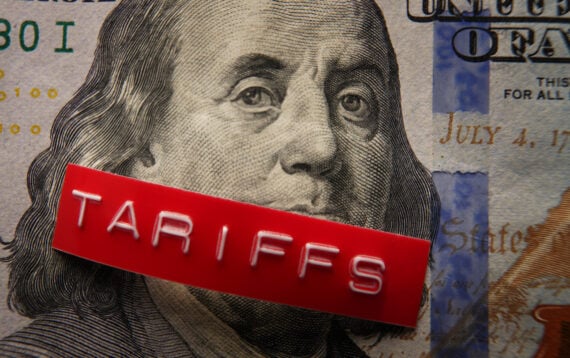
In news that will shock absolutely no one who has taken a basic economics class — or paid for groceries recently — a new report from the Federal Reserve Bank of New York confirms that tariffs mostly hurt the people who live in the country imposing them. That’s us, Americans.
According to the New York Fed’s analysis, U.S. businesses and consumers paid nearly 90% of all import taxes in 2025 (that’s just about the whole shebang, guys).
Who Pays What?
The recent CBO Report showed that businesses are expected to absorb a sliver of the cost by shaving their margins, but the bulk of it — about 70% — gets passed directly to consumers. As for those foreign exporters, they’re covering about 5%, according to the CBO. That translated to an average tax increase of about $1,000 per household in 2025, per the Tax Foundation.
When the Averages Lie
All these headlines we’ve been seeing lately make it look like the economy is booming, but the price tags we see and “Open to Work” banners on LinkedIn profiles have us second-guessing. That’s because the economy is measured in averages and aggregates — a method that tends to smooth over a lot of individual misery. Take January’s jobs report. It showed a surprisingly strong gain of 130,000 jobs, nearly double what economists expected. But no matter what numbers reveal, there’s almost always another story unfolding in day-to-day realities.
We’re not alone in our eyebrow-raising, either. On a Reddit thread discussing the tariffs, one user commented, “Go to the big box hardware store. What used to be a cornucopia of capitalism is now limited selection, high prices, and stretched stock. Aisles of plastic organizing containers. Shelves and shelves of the same soap. Am I the only one seeing this? Take me back to Home Depot/Lowes circa 1995.” In fact, we grow more nostalgic for 1995 every day.
More From Cheapism

- Report Says Inflation Cooled in January. Consumers Aren’t Buying It — On paper, we’re experiencing the slowest pace of inflation since last spring. So why doesn’t it feel like it?
- These 5 States Are Feeling the Inflation Punch the Hardest — Here are five states where paychecks grew on paper but shrank in reality — and ten where wage increases actually made a difference.
- Don’t Expect Cheaper Ground Beef Just Because the U.S. Is Importing More — The amount of beef we’re getting is only 0.6% of the overall U.S. beef supply, which isn’t enough to drastically impact prices.